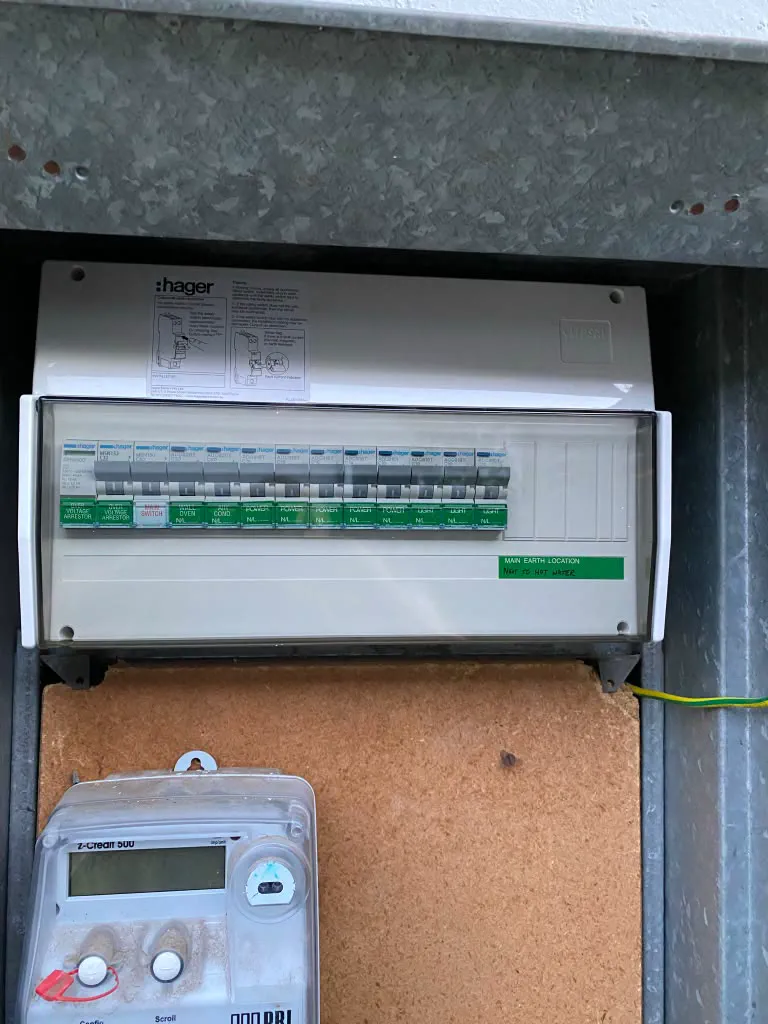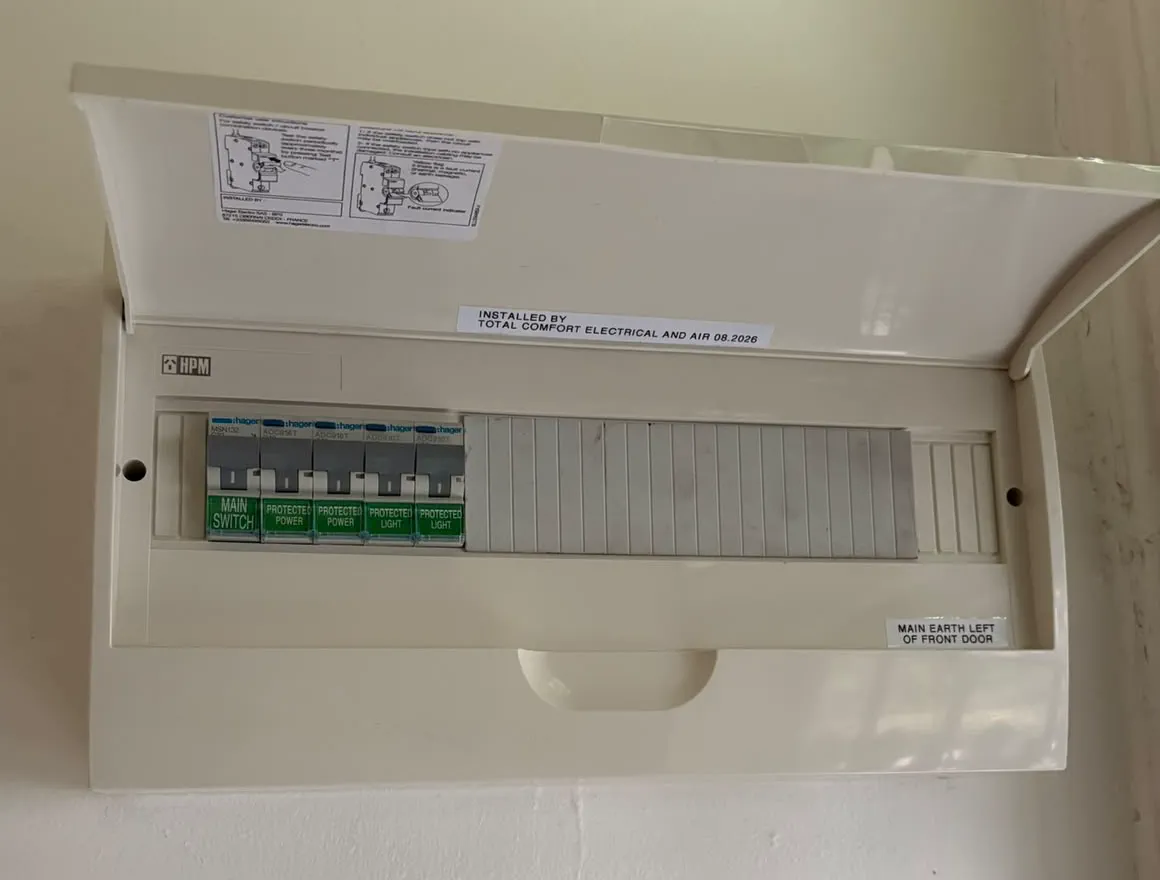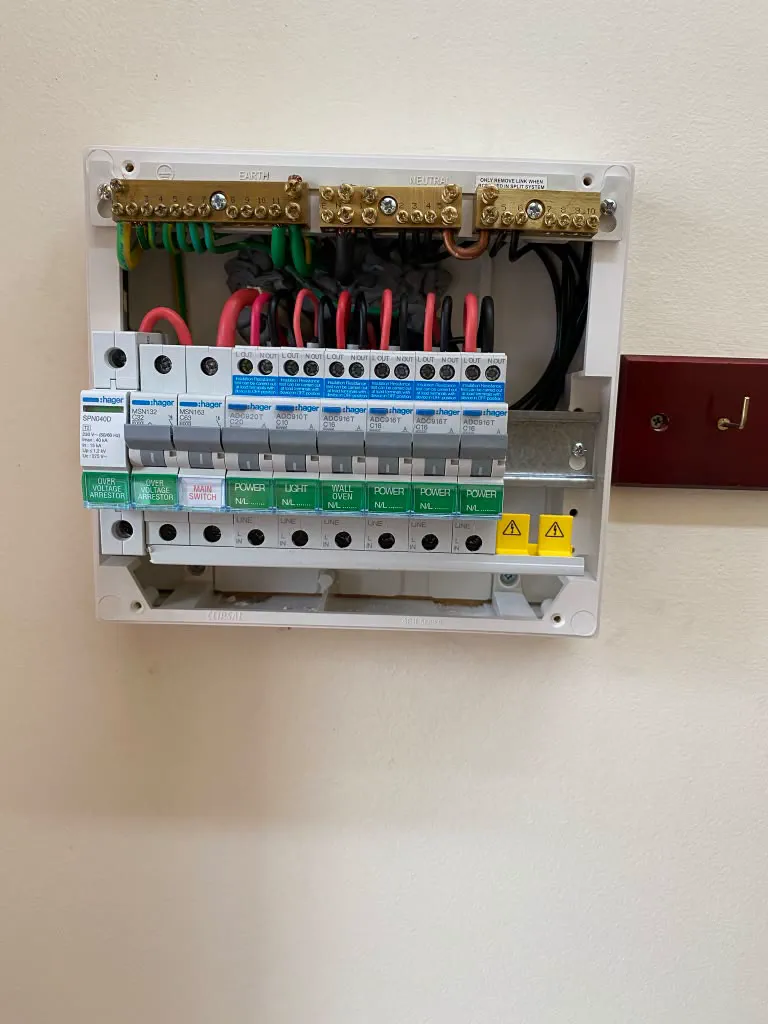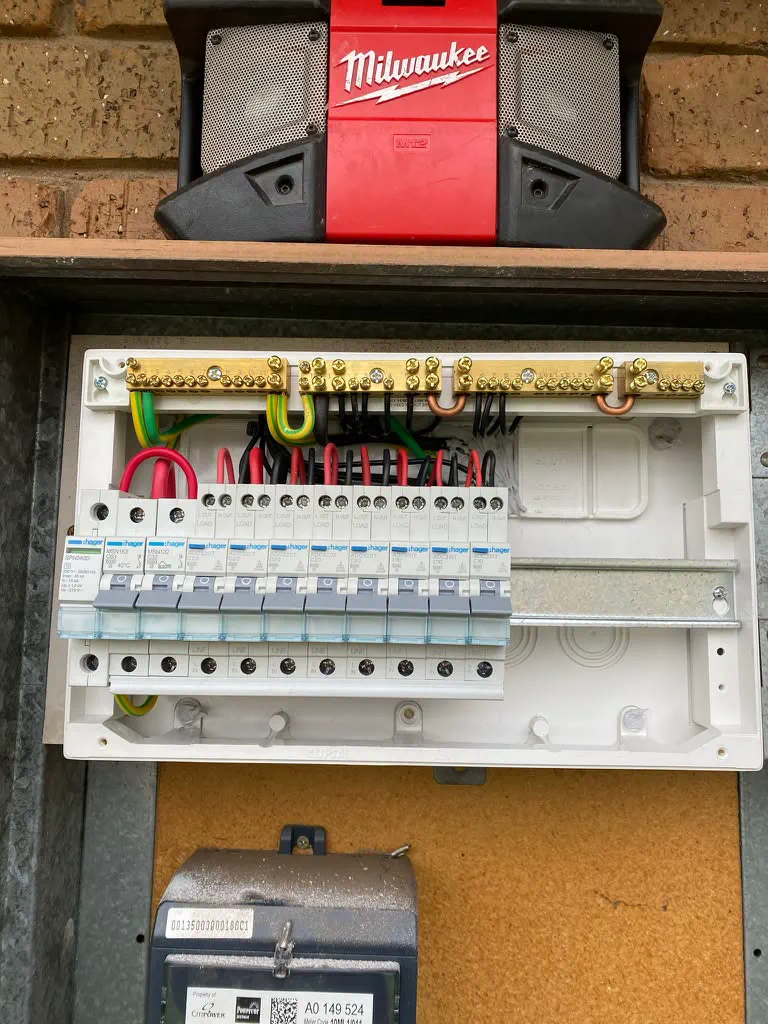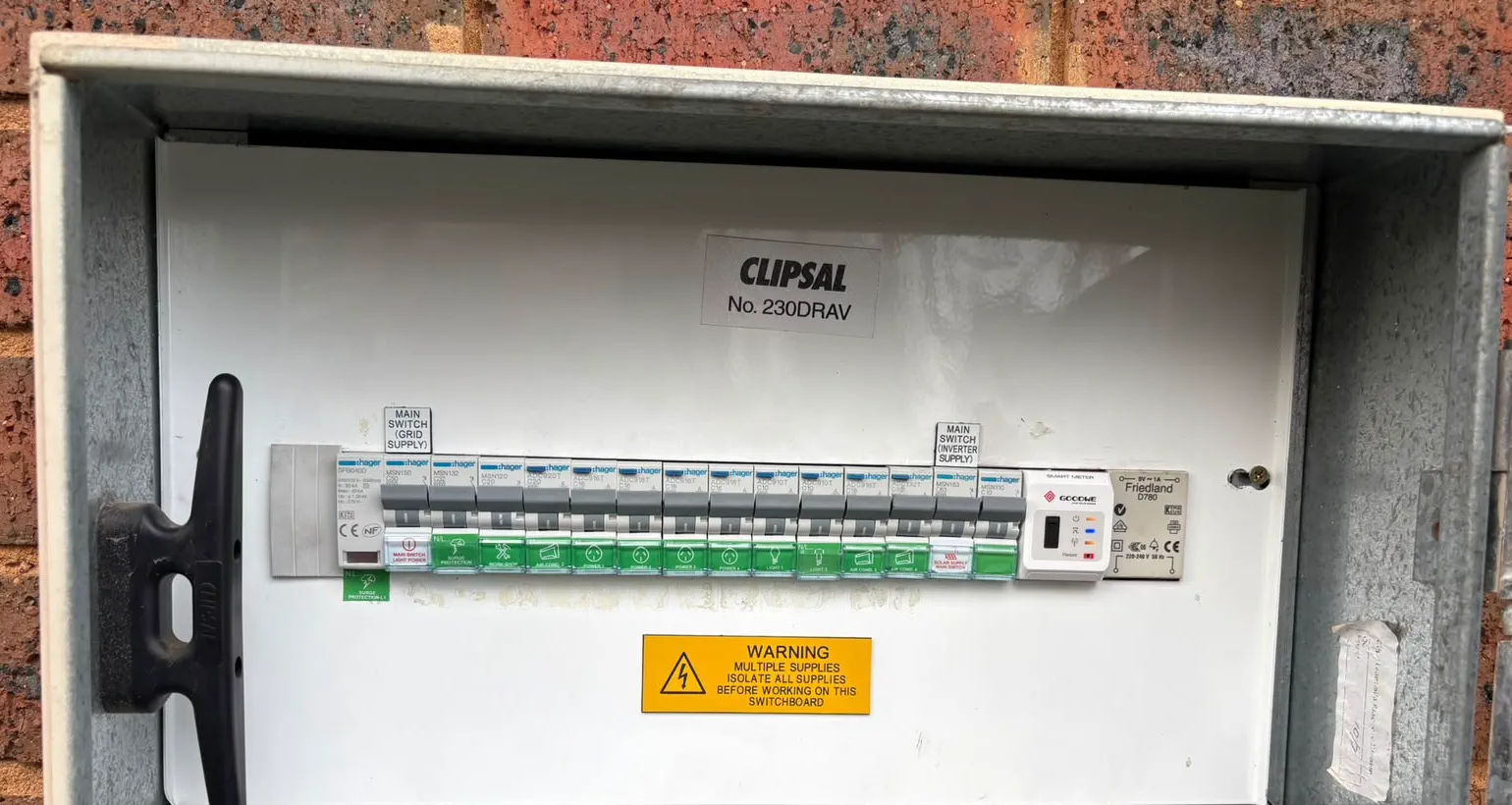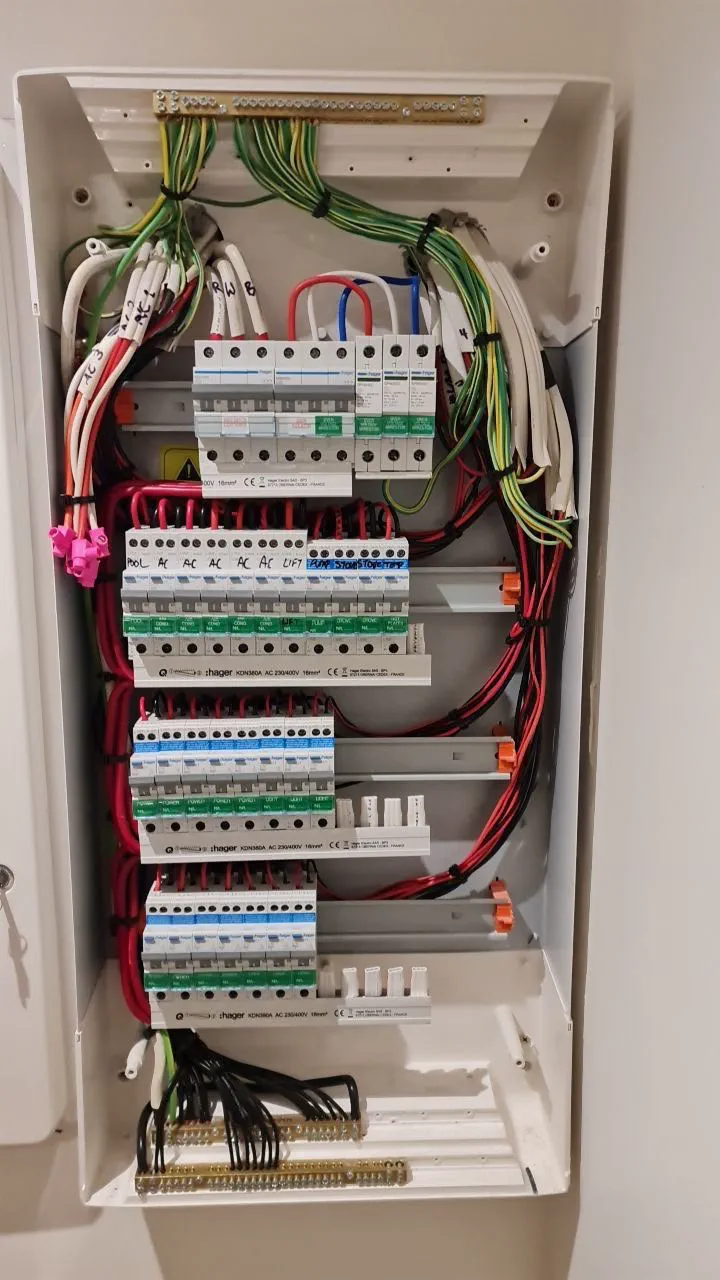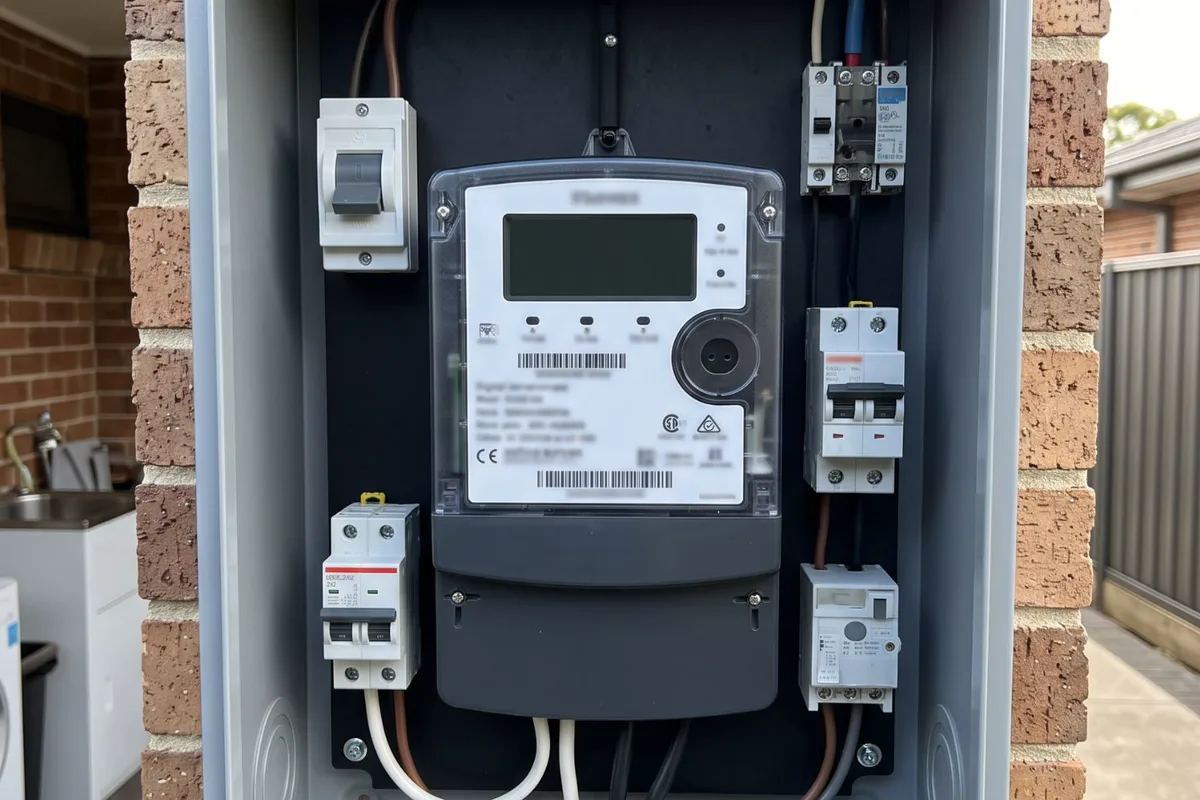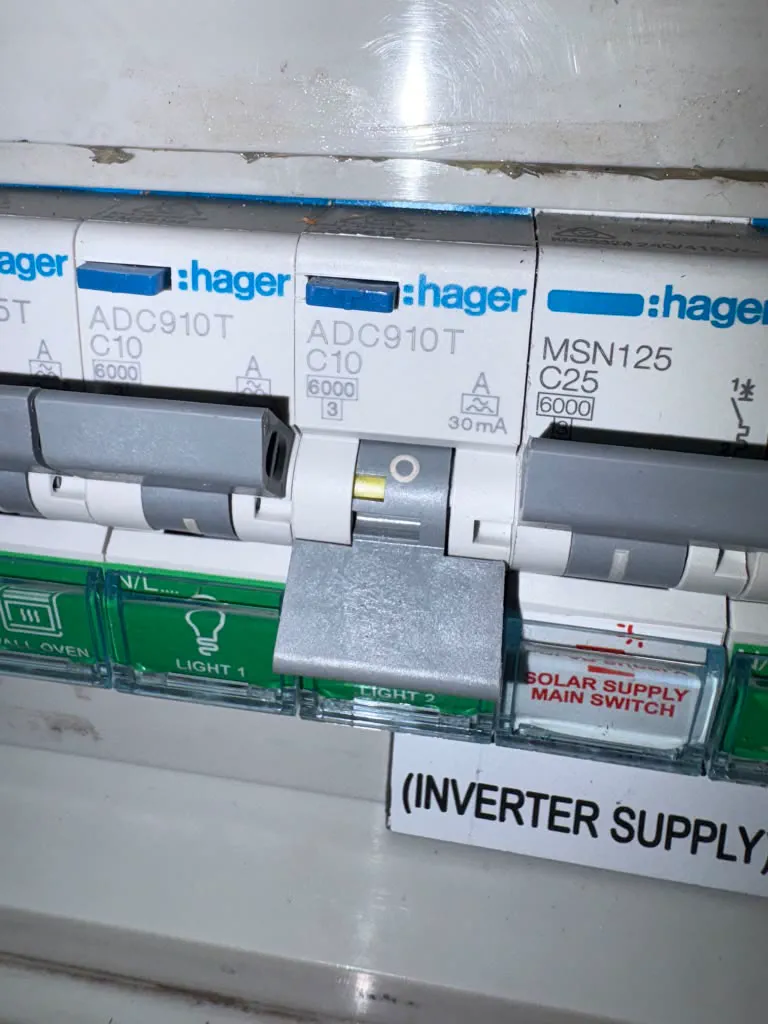
An RCBO is a circuit breaker and safety switch in one, protecting a single circuit. We map your board, add RCBOs where circuits have no shock protection, and test every circuit before it goes onto its new device.
When to get it checked
Only some circuits have a safety switch
One safety switch covers the power points, while the lights, oven or hot water have a breaker alone. Those circuits have no shock protection.
One trip blacks out half the house
A faulty kettle trips a safety switch that also runs the fridge, the lights and the home office. Grouped circuits share every outage.
A breaker that's worn out
It won't latch, feels loose, or trips under loads it used to handle. Breakers are mechanical, and the springs and contacts inside wear.
A new circuit is going in
An air conditioner, oven, EV charger or shed needs its own breaker and protection, and altering the board brings safety switch rules with it.
A rental has to meet the standard
Every power outlet and lighting circuit in a Victorian rental must be on a switchboard-type circuit breaker and safety switch.
Why it happens
4 common causes
Boards from before safety switches were standard
Many boards had one safety switch added for the power points, if any. Lighting and fixed-appliance circuits were left on breakers alone.
Grouped safety switches
Two or three safety switches each carry several circuits. Small leakage from several appliances adds up on one device, and one fault takes out the whole group.
New loads
Heat pumps, induction cooktops, chargers and split systems each bring a new circuit, and the Wiring Rules ask for added safety switch protection when an installation is altered.
Age
Older breakers and safety switches can stick, trip slowly or fail their test, particularly on circuits that have tripped a lot.
What the job covers
What we usually do on this job. Your quote confirms it for your place.
- Every circuit identified and mapped
- Board make, space and condition checked
- Insulation test before each circuit moves
- RCBOs fitted to suit your board
- Worn breakers replaced
- Shared neutrals separated where needed
- Each RCBO trip-tested
- Board dressed, blanked and labelled
- Certificate of Electrical Safety issued
Your options, explained
RCBOs on unprotected circuits
Low disruption- Best for
- Boards with a safety switch on the power points only
- How it works
- Lighting and other unprotected circuits move onto their own RCBOs. Circuits already protected stay as they are.
- Worth knowing
- A targeted fix, if the board has room and takes compatible devices.
An RCBO on every circuit
Medium disruption- Best for
- Busy homes where one trip takes out several rooms
- How it works
- Grouped safety switches come out and every circuit gets its own RCBO.
- Worth knowing
- More devices, but a fault stays on its own circuit. The board needs the space.
Add or replace a single breaker
Low disruption- Best for
- A new dedicated circuit, or one worn breaker
- How it works
- A breaker rated for the cable goes in, with the safety switch protection the alteration calls for.
- Worth knowing
- The simplest job, provided the board is sound.
New switchboard
High disruption- Best for
- Fuse boards, full boards or discontinued ranges
- How it works
- The board is replaced, with safety switch protection on all final sub-circuits and an independent inspection.
- Worth knowing
- Needed when the old board can't take modern devices.
The people behind the work
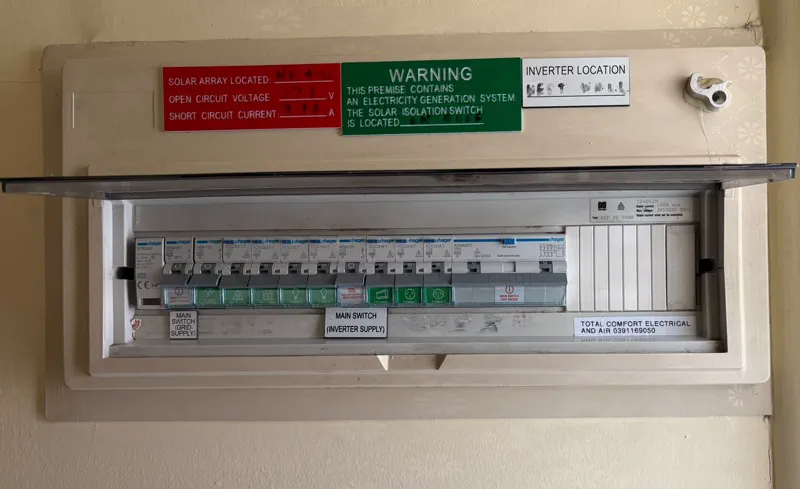
Our own photos from jobs like this one. Based in Altona Meadows, with 19 years in the industry.
Licensed electrical contractor (REC 38187)See more team photos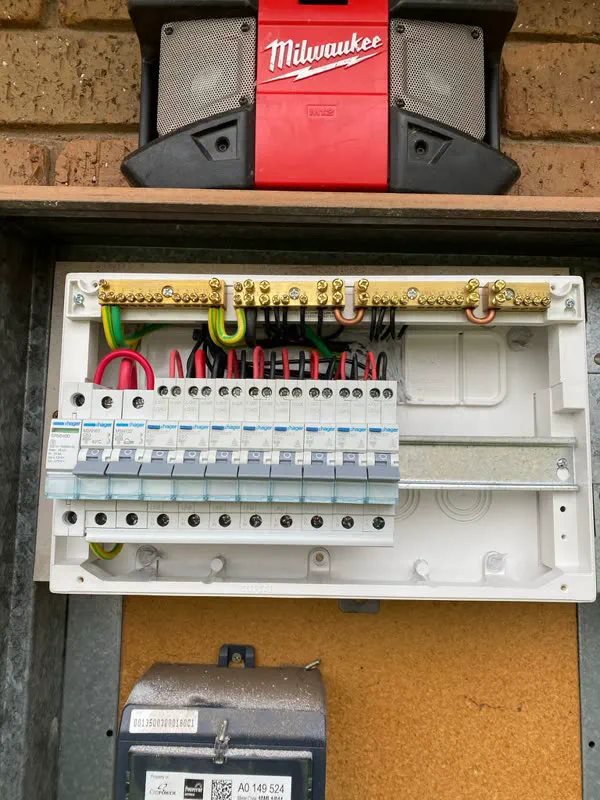
Worth knowing before you book
- Not every board can take them
- Fuse boards and some discontinued ranges can't.
- Old faults may surface
- A circuit that leaks will trip its new RCBO, so we test first.
- Rentals have a standard
- Power and lighting circuits need a breaker and a safety switch.
What affects the price?
The right scope depends on your installation. These are the details we check so your quote is useful, with any additional work explained before it proceeds.
How many circuits move
Each RCBO is a device, a connection, a test and a label. Converting a whole board is more work than covering two lighting circuits.
Space and compatibility
RCBOs must suit the board's chassis. If there's no room, or the range is discontinued, an extra enclosure or a new board comes into it.
Circuits that fail testing
A circuit leaking to earth has to be repaired before it goes onto an RCBO, or it will keep tripping.
Shared neutrals
Older boards sometimes have circuits sharing a neutral. Each RCBO needs its own circuit's neutral, so these have to be separated first.
New cable runs
If the RCBO is for a new appliance, running the cable to it is part of the job.
How it runs
- 1
Map the board
Circuits, devices and spare space checked.
- 2
Agree the layout
Which circuits move, and the price.
- 3
Test and fit
Circuits tested, RCBOs in, board dressed.
- 4
Trip-test and certify
Every device tested, labelled and certified.
Step by step, in more detail
5 steps
Map the board
We identify every circuit, what it runs and what protects it now, and check the board's make, chassis, spare space and condition.
Agree the layout
We agree which circuits move to RCBOs, which stay behind an existing safety switch and what new circuits need. Then you get the price for that scope.
Test each circuit first
Each circuit's insulation is tested before it goes onto an RCBO, because a circuit that leaks to earth will trip its new protection straight away.
Fit and connect
Devices that suit your board go in, each circuit gets its own neutral and device, and the board is dressed and blanked.
Trip-test and label
Every RCBO is tested with an RCD tester for trip time, circuits are labelled, and you get a Certificate of Electrical Safety.
What is safe to do, and what to leave to us
Safe for you to do
- Press the test button on each safety switch and RCBO every three months, as Energy Safe Victoria advises. If the power doesn't go off, call a licensed electrician.
- If an RCBO trips, unplug what's on that circuit and reset it once. If it trips again, leave it off.
- Read the label before switching anything off, so you know what you're isolating.
Leave these to us
- Buying breakers or RCBOs online to fit yourself.
- Swapping a breaker for a higher rating to stop it tripping.
- Opening the switchboard cover or touching anything behind it.
- Letting anyone unlicensed work on the board. Energy Safe Victoria says unlicensed electrical work is illegal and potentially fatal.
When to get us in
- Some of your circuits have no safety switch
- One trip regularly takes out several rooms
- A breaker won't latch, feels loose or trips under normal use
- You're adding a circuit for a new appliance
- A rental needs to meet the electrical safety standard
More detail
Breaker, safety switch or RCBO
A circuit breaker watches current. When more flows than the cable can safely carry, from an overload or a short circuit, it trips. It does nothing for a person touching a live part, because that current is far too small to trip it.
A safety switch watches for current leaking to earth. Energy Safe Victoria says it turns the power off within 0.03 of a second when it detects a problem that may put people at risk, and that it won't prevent every shock. An RCBO puts both jobs into one device for one circuit.
What the Wiring Rules ask for
Energy Safe Victoria notes that the Wiring Rules require additional safety switch protection when an existing installation is altered, and safety switches on all final sub-circuits when a switchboard is replaced. An Electrical Regulatory Authorities Council note gives the example that extending one power circuit means only that altered circuit needs an RCD.
Type AC safety switches must not be installed in Australia, even as like-for-like replacements, so new RCBOs are a type that's permitted today. Existing Type AC devices installed, tested and certified before 1 May 2023 don't have to be replaced.
Why RCBOs cut nuisance tripping
Every appliance leaks a tiny amount of current to earth in normal use. On a grouped safety switch, the leakage from a fridge, a washing machine and a few chargers adds up on one device, and one more small leak can tip it over. Spread across RCBOs, each circuit carries only its own.
When something does trip, you know straight away which circuit it was. The fault is quicker to trace, and the fridge, lights and modem stay on while it's sorted out.
Local rules and conditions
Victorian requirements and local conditions that shape this job, with the sources listed at the foot of the page.
Rental circuits need both
Since 29 March 2023, every power outlet and lighting circuit in a Victorian rental must connect to a switchboard-type circuit breaker and a switchboard-type safety switch. Energy Safe Victoria says that when an existing rental board is modified, circuits for hard-wired appliances such as ovens and air conditioners don't have to be RCD protected. The rental provider engages the electrician.
Victoria has its own RCBO rule
Energy Safe Victoria has prohibited certain RCBOs from being supplied to consumers in Victoria since 3 July 2019, and the prohibition applies only here. A device sold interstate or online isn't automatically one that can go in your board.
Useful reading
Guides to read before you decide, with checklists and questions to bring to the quote.
- How and when to test your safety switchesHow to run the push-button test at home, what an electrician’s trip-time test measures that the button can’t, and what to do when a switch fails.
- A safety switch keeps tripping: what to record and when to callUnderstand the difference between a protective device doing its job and a fault that needs investigation.
- Planning a switchboard upgrade without surprisesWhat the electrician needs to check, how to compare the scope and what to organise before the power goes off.
- Landlords: heating, cooling and electrical obligations in VictoriaA rental provider's map of the heating, switchboard, safety check and repair duties on a Victorian rental, and what the 2027 energy standards change.
Common questions
Questions people ask about this
- What do the numbers and letters on my circuit breakers mean?The number is the breaker's rating in amps: the current it can carry continuously without tripping.
- What's the difference between a safety switch and a circuit breaker?A safety switch protects people.
Sources for the rules and local facts on this page
11 sources, with the date each was checked
- 1.Consumer Affairs Victoria: From 29 March 2023 all power outlets and lighting circuits in a rental premises must connect to both a switchboard-type circuit breaker that complies with AS/NZS 3000 and a switchboard-type residual current device that… Accessed 30 September 2026.
- 2.Energy Safe Victoria: This means that when modifying an existing switchboard to comply, RCD protection shall be provided to all power circuits supplying socket outlets and all lighting circuits. Circuits with hard-wired appliances such as… Accessed 30 September 2026.
- 3.Consumer Affairs Victoria: Rental providers are responsible for engaging an electrician to ensure their rental property complies with the electrical safety standard. Accessed 30 September 2026.
- 4.Energy Safe Victoria: After 3 July 2019, it is an offence for any person to supply a consumer in Victoria with a prohibited RCBO. No, the prohibition is only applicable in Victoria. Accessed 30 September 2026.
- 5.Energy Safe Victoria: monitors the flow of electricity through a circuit detects a problem that may pose a risk to personal safety turns the power off within 0.03 of a second always has a test button and '30ma' printed on them. Accessed 30 September 2026.
- 6.Energy Safe Victoria: Clause 2.6.3.2.5 of the Wiring Rules states: Additional protection by RCDs shall be provided in existing electrical installations where alterations or a switchboard replacement is completed. Accessed 30 September 2026.
- 7.Electrical Regulatory Authorities Council (ERAC): An existing final sub-circuit for socket outlets is extended and an additional socket outlet is installed. Only that circuit that is altered is required to have a RCD fitted. Accessed 30 September 2026.
- 8.Energy Safe Victoria: Type AC RCDs must not be installed in Australia. This includes like for like replacement. We recommend that electrical contractors advise customers of the new requirements. However, it is not mandatory to replace… Accessed 30 September 2026.
- 9.Energy Safe Victoria: Follow these steps to check your safety switch every three months: Press in the test buttons on each safety switch which will cut the power and trip the switch into the off position. You may hear a clunking sound. If… Accessed 30 September 2026.
- 10.Energy Safe Victoria: Whenever a licensed electrician completes any electrical installation work, they must provide a Certificate of Electrical Safety (COES). Accessed 30 September 2026.
- 11.Energy Safe Victoria: Gas and electricity are inherently dangerous and it’s illegal and potentially fatal for unlicensed and unqualified people to undertake any electrical or gasfitting work. Homeowners and consumers must always use… Accessed 30 September 2026.