
The key points
- Do not repeatedly reset a device that keeps tripping.
- Record which rooms and appliances are affected.
- Routine test-button checks are different from fault diagnosis.
Treat the trip as information
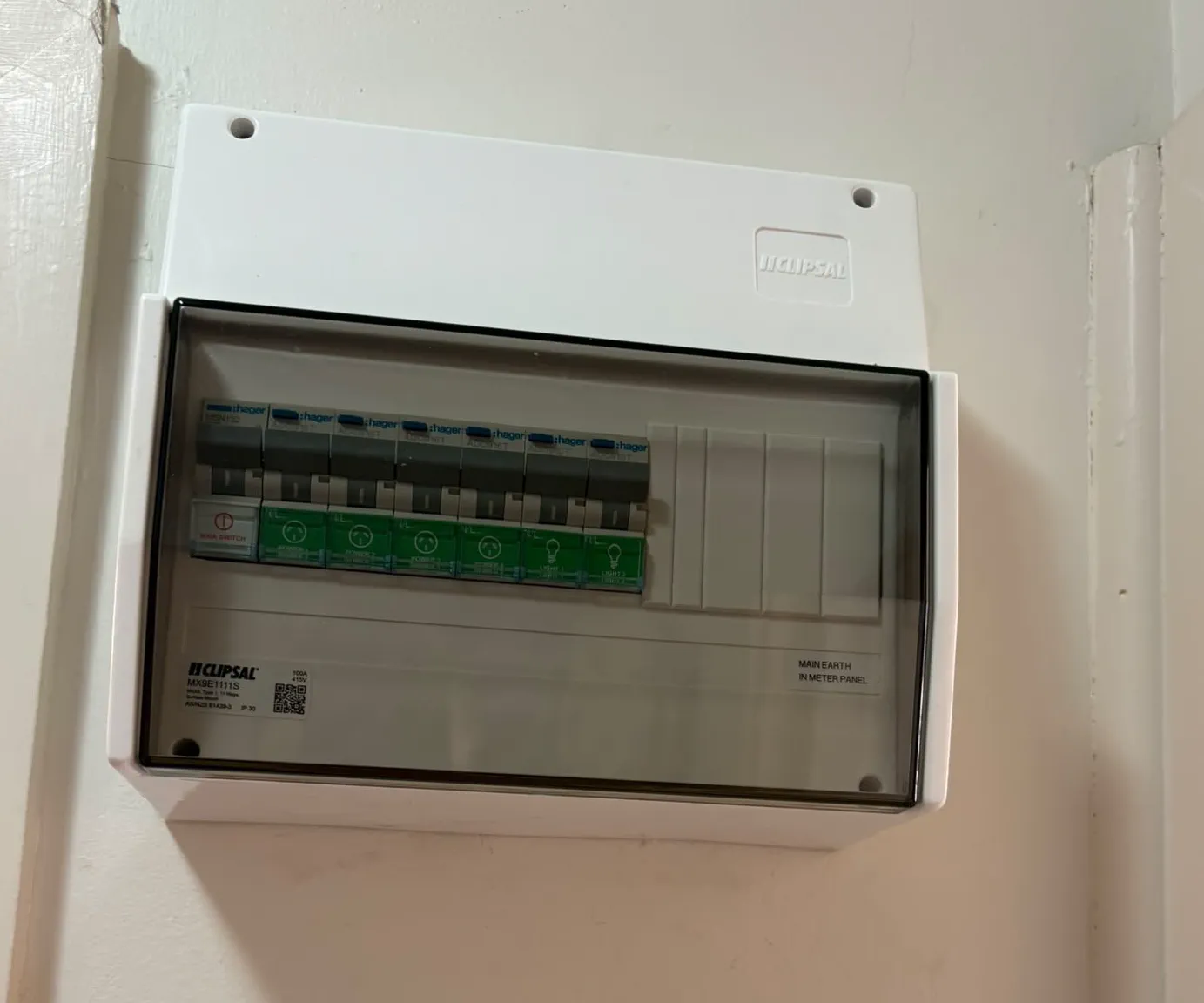
A protective device operating is a sign to investigate. It does not automatically mean the device itself is defective. The problem could be associated with an appliance, moisture, wiring or a connection, and a circuit breaker and safety switch do different jobs.
If there is heat, smoke, sparking, a shock or water near electrical equipment, stop the investigation and keep away. Do not remove a switchboard cover or touch damaged equipment to find the cause. If there is smoke, fire or immediate danger, get everyone out and keep them away.
Make a short symptom record
You can help diagnosis without doing electrical work. Note which lights or outlets stopped working, what had just been switched on and whether the trip happened during rain or after cleaning. If a device or controller shows a code, record it from a safe position.
An intermittent fault may be absent during the visit. A pattern can be useful: only when an oven heats up, only after irrigation runs, or when several appliances run together. Report the observation without assuming which part has failed.
- Time and frequency of the trip.
- Rooms and appliances affected.
- Recent weather, cleaning or renovation work.
- Any smell, noise, visible damage or error code.
Avoid a cycle of resetting
Repeatedly restoring power does not fix a fault. If the device trips again, leave the affected circuit off and ask an electrician for advice. Do not bypass protection or use an extension lead to keep a suspect appliance running from another circuit.
Tell the electrician if losing the circuit affects essential equipment, home-based care or food storage. A safe temporary arrangement needs to be discussed in the context of the fault; it should not involve improvised wiring or opening fixed equipment.
Keep routine testing separate from fault finding
Energy Safe Victoria recommends checking safety switches with their test buttons every three months. Follow its instructions and the device information, let occupants know power will be interrupted and arrange any critical-equipment precautions first. If the expected power does not disconnect, have a licensed electrician investigate.
That routine user check is not the same as diagnosing a repeated trip or verifying an entire installation. If you are unsure which devices are present or what they protect, ask for an assessment rather than guessing.
What a useful repair visit should establish
The electrician should identify the affected circuit, use appropriate tests and explain what the evidence points to. Ask whether the proposed repair addresses the cause or only replaces a symptom, and whether any part of the circuit must remain isolated.
Before the visit, make access available and keep previous reports handy. Afterwards, note what was repaired and any remaining limitations. If the fault returns, that record helps the next investigation start from established facts.
Quick answers
- Why does my washing machine or dishwasher trip the safety switch?Water and worn heating elements are the usual causes.
- Why does the kettle or toaster trip the safety switch?Usually the appliance has a fault that lets a little current leak to earth.
- Why does my main switch trip?Many main switches are only isolators and can't trip on their own.
- How do I describe an electrical fault in my enquiry?Tell us what stopped working, when it started, what was running at the time and what the switchboard shows.
Planning advice for homeowners. Installation requirements depend on the property and equipment. Where this guide refers to Victorian safety or rental rules, use the linked official guidance for the current requirements.