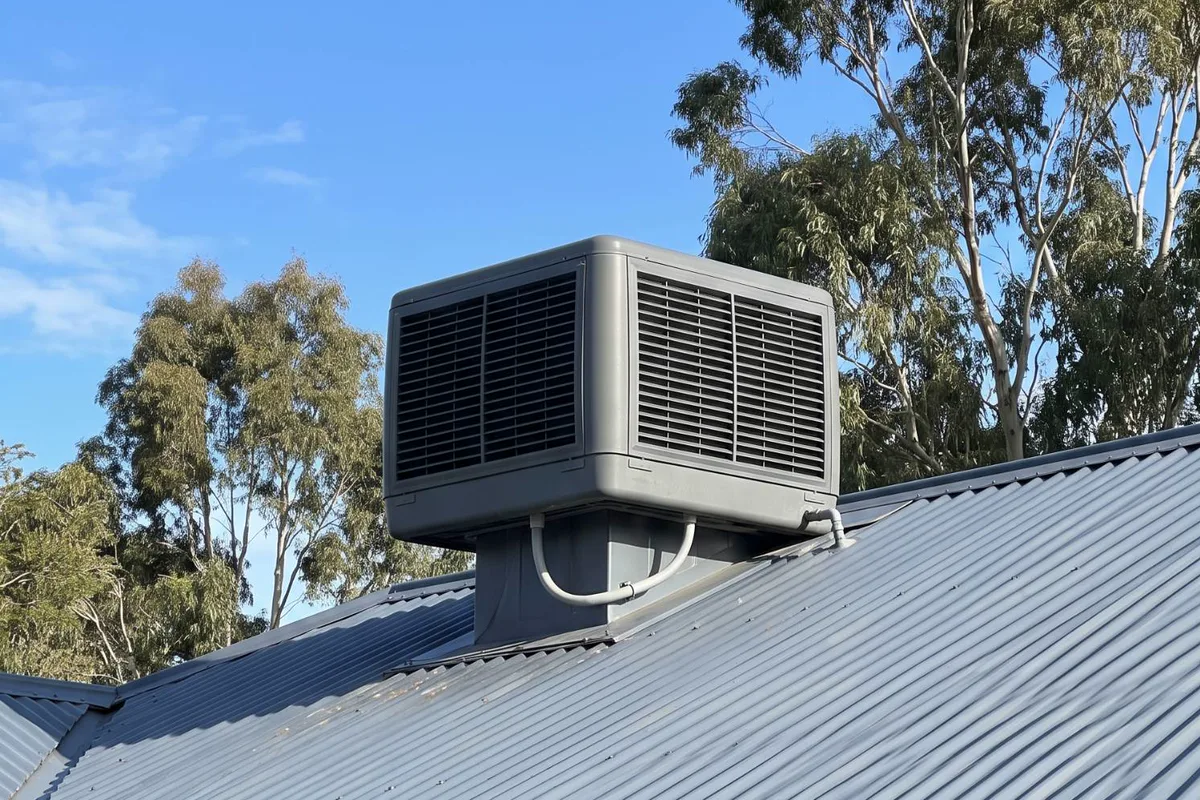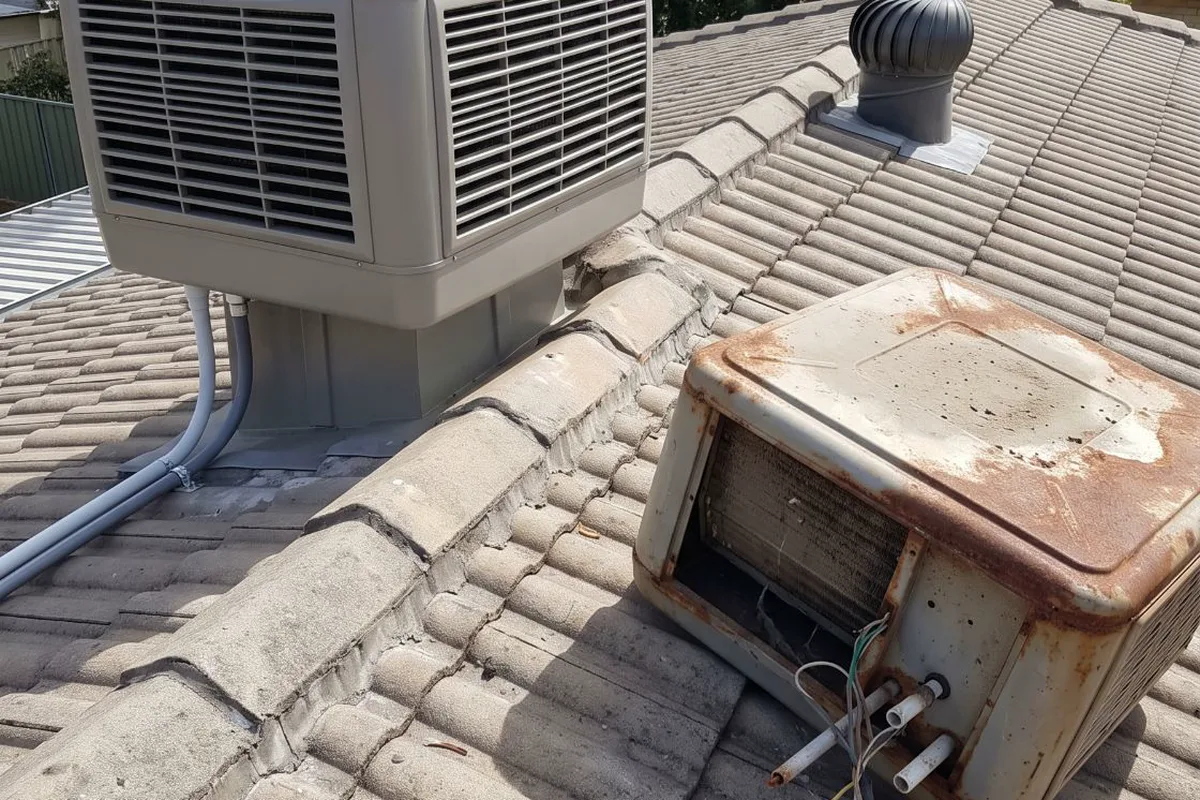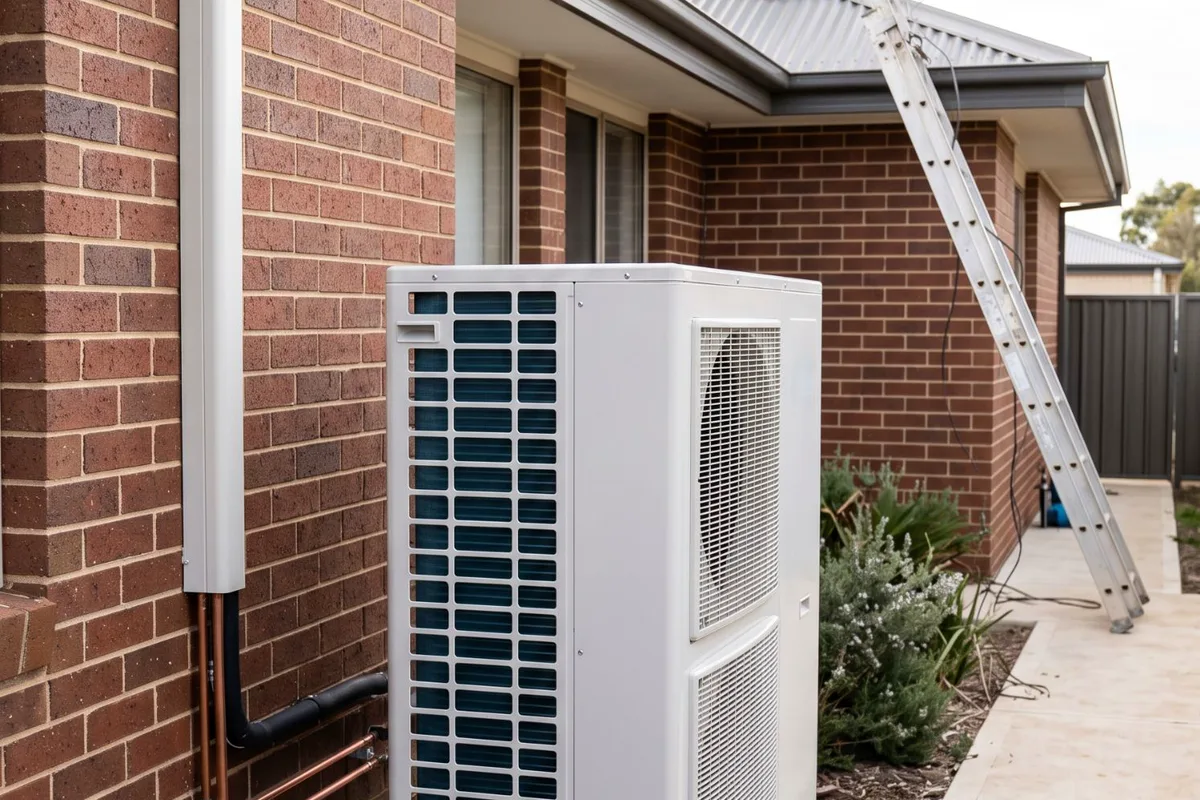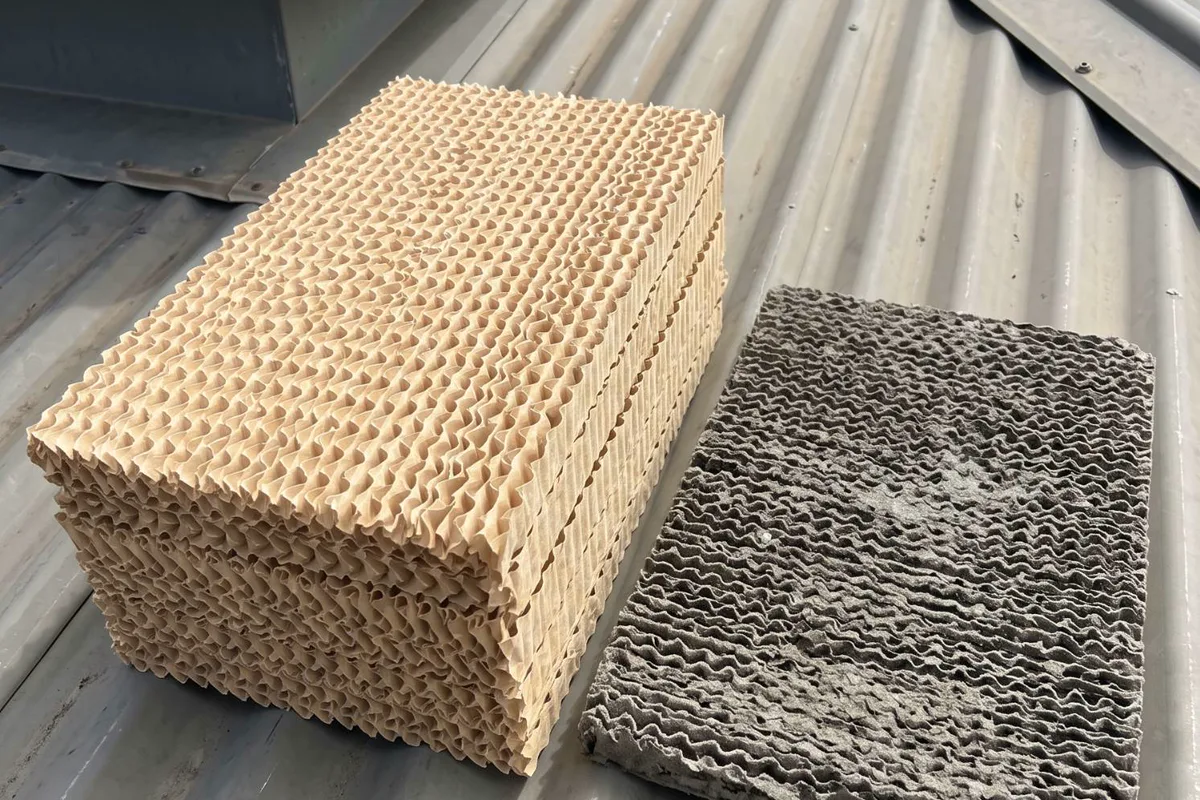
Worn pads are one of the most common reasons an evaporative cooler blows warm or smells. We fit new pads on every side, clean the tank and distributor, and check the valves that decide how long the new pads will last.
When to get it checked
White or brown crust on the pads
Minerals left behind as water evaporates build up as a hard crust. Crusted pads wet unevenly and block airflow.
Dry patches while it runs
If parts of a pad stay dry while the cooler runs, warm air passes straight through those patches.
A smell that won't clear
A musty or swampy smell that lasts beyond the first few minutes often comes from pads holding algae or stale water.
Sagging or gaps at the top
Loose-fibre pads thin and slump with age, leaving gaps where air gets through without touching wet pad.
Debris at the outlets
Fibres, grit or leaves coming out of the ceiling outlets mean the pads have broken down or no longer fill the frame.
Why it happens
5 common causes
Minerals in the water
As water evaporates, its minerals stay behind on the pads and slowly harden into scale.
A bleed or drain valve that isn't working
These keep salts down by dumping some of the water. When one sticks, scale builds much faster.
Water sitting between runs
Pads that stay damp over a tank of stale water grow algae and start to smell.
Running dry
A failed pump or float lets the pads dry out and bake in the sun, which hardens and cracks them.
Sun, wind and wildlife
Roof units cop UV, dust and leaves, and birds sometimes pick at loose-fibre pads.
What the job covers
What we usually do on this job. Your quote confirms it for your place.
- Pad type and size matched to your model
- Old pads removed from every side
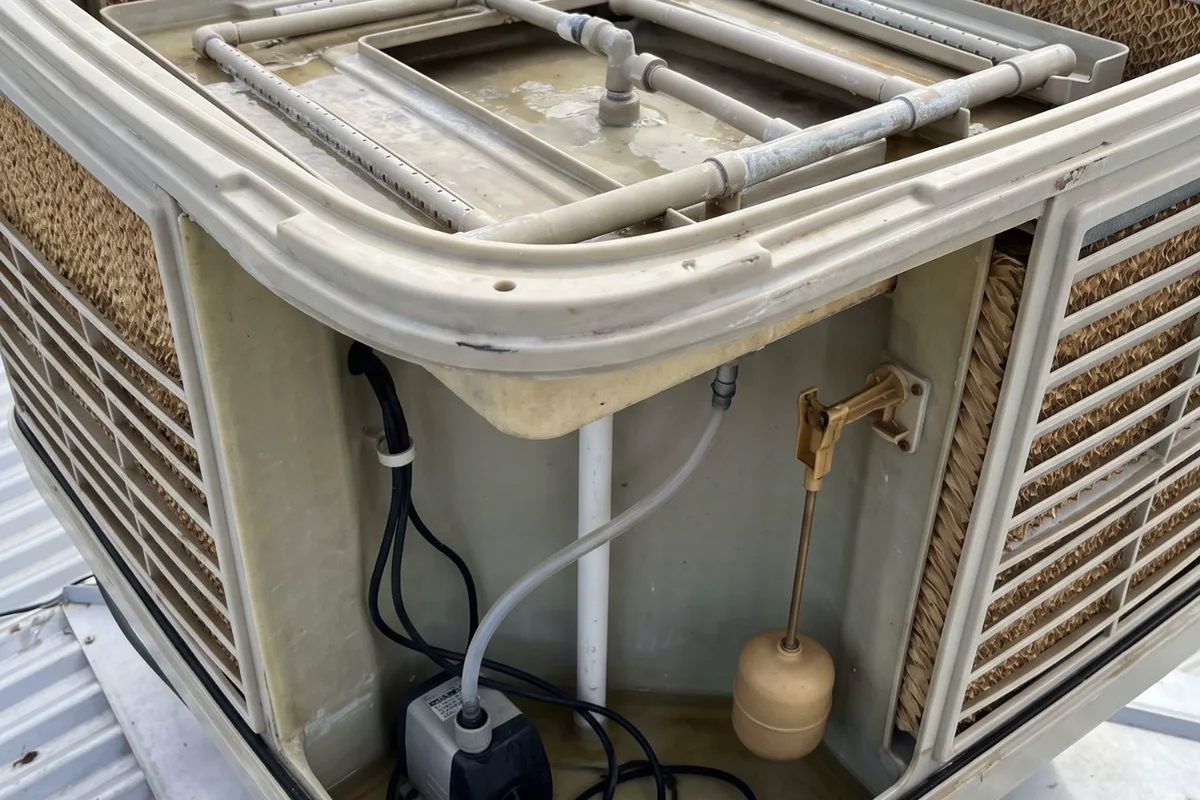
- Tank drained and cleaned
- Distributor lines and pump inlet cleared
- New pads fitted in every frame
- Pad frames and clips checked
- Bleed or drain valve and float checked
- Test run until every pad is evenly wet
Your options, explained
Like-for-like pads
Low disruption- Best for
- Most coolers with sound pad frames
- How it works
- New pads of the same type and size go into the existing frames.
- Worth knowing
- The simplest option. The frames stay as they are.
Rigid pads, where the model allows
Low disruption- Best for
- Owners tired of sagging loose-fibre pads
- How it works
- Rigid honeycomb-style pads replace loose-fibre ones, where the manufacturer offers them for your model.
- Worth knowing
- Not every cooler can take them. They generally keep their shape longer.
Pads as part of a full service
Low disruption- Best for
- A cooler that hasn't been serviced for a season or more
- How it works
- New pads plus the full service: pump, float, drain, fan, belt, motor and electrical checks.
- Worth knowing
- One trip onto the roof covers everything. See our evaporative cooler servicing page.
The people behind the work
One local team for electrical, heating and cooling, based in Altona Meadows, with 19 years in the industry.
Licensed electrical contractor (REC 38187)See more team photos
Worth knowing before you book
- Book in spring
- Pads are best changed before the first hot spell.
- All sides together
- Every pad is replaced, not just the worst one.
- Fix the cause
- A stuck bleed valve wears new pads out early.
What affects the price?
The right scope depends on your installation. These are the details we check so your quote is useful, with any additional work explained before it proceeds.
Pad type and size
Loose-fibre and rigid pads differ in price, and bigger coolers take larger pads.
Number of sides
Coolers have pads on several sides, and all of them are replaced together.
The tank and distributor
Heavy scale or sludge in the tank and lines takes longer to clear.
Pad frames
Cracked or warped frames, or missing clips, may need replacing at the same time.
Roof access
Steep, high or double-storey roofs take more setup.
How it runs
- 1
Tell us the model
A photo of the cooler label or controller helps.
- 2
Remove and clean
Old pads out, tank and lines cleaned.
- 3
Fit and check
New pads in, valves and float checked.
- 4
Test run
Every pad evenly wet, airflow checked.
Step by step, in more detail
5 steps
Identify the pads
We check the cooler model, the pad frames and the pad type and size, so the new pads fit snugly with no gaps.
Isolate and remove
Power and water are isolated, the pad frames come off, and the old pads are removed from the roof.
Clean the water system
The tank is drained and cleaned, and the distributor lines and pump inlet are cleared of scale and sludge.
Fit and check
New pads go in on every side and the frames are refitted. The bleed or drain valve and the float are checked so the new pads last.
Run it
We run the cooler until every pad is evenly wet, then check the airflow at the outlets.
What is safe to do, and what to leave to us
Safe for you to do
- Open windows or doors in the rooms you want cooled whenever the cooler runs.
- If a smell lasts beyond the first few minutes of a run, switch off and have the pads and tank checked.
- Close off the ducts and cover the roof unit in winter if it has no automatic seals.
Leave these to us
- Climbing onto the roof to change the pads yourself.
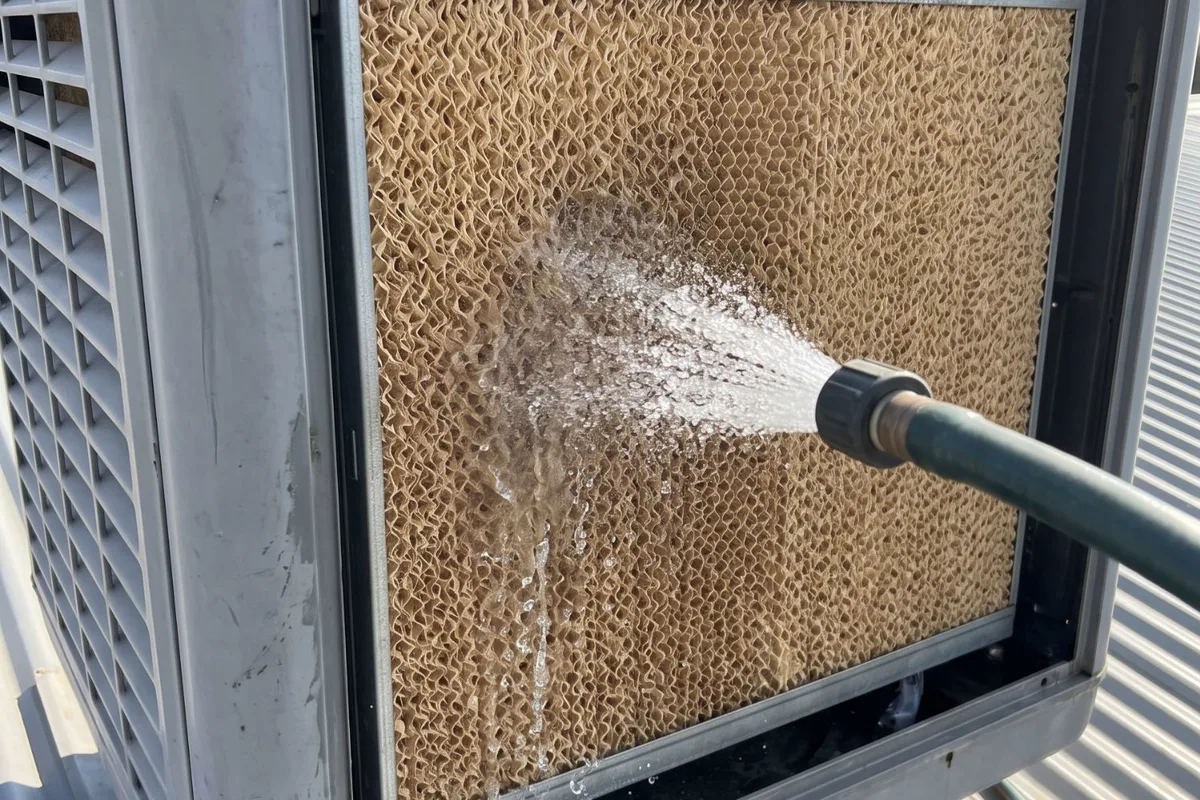
- Hosing the pads at high pressure. It tears loose-fibre pads and washes debris into the tank.
- Opening the roof isolator or the controller. Electrical work isn't a DIY job, even small ones.
When to get us in
- The pads are crusted, sagging or torn
- A smell lingers whenever the cooler runs
- The air feels barely cool on a hot, dry day
- Fibres or grit are coming out of the outlets
- You want the cooler ready before summer
More detail
Loose-fibre or rigid pads
Loose-fibre pads, made from wood wool or synthetic fibre, hold plenty of water but thin and sag with age. Rigid honeycomb-style pads generally keep their shape longer and let air through more evenly, but not every cooler can take them.
The right choice depends on your model. We check what the manufacturer allows before suggesting a change, because a pad that doesn't fit its frame properly leaves gaps that let warm air straight through.
Why pads wear out early
Pads don't wear out on a calendar. How long they last depends on your water, how much the cooler runs, the pad type and whether the bleed or drain valve is doing its job. When that valve sticks, minerals build up much faster and new pads scale up far sooner than they should.
That's why we check the bleed, the drain valve and the float every time we fit pads. Replacing pads without fixing the cause just buys you the same problem next summer.
What worn pads do to the air
An evaporative cooler blows outside air over wet pads to cool it, then pushes it through the house and out through open windows and doors. The cooling comes from water evaporating off the pads, so a pad that's crusted or dry in patches simply cools less of the air.
Worn pads also make the cooler work harder for less: more fan time, more water and air that still feels warm. The Australian Government's YourHome advice notes central systems can use 25 litres or more of water an hour on hot, dry days.
Local rules and conditions
Victorian requirements and local conditions that shape this job, with the sources listed at the foot of the page.
Health advice mentions the pads
Victoria's Department of Health advises checking your cooling works before extreme heat and keeping filters, pads and vents clean. Hobsons Bay, Wyndham, Brimbank and Maribyrnong all sit in the Central district for heat health warnings.
Ready before the hot northerlies
Laverton averages 27 days a year at or above 30 °C, mostly from December to February, and warm northerly winds often bring the heat. New pads fitted in spring are clean, wet evenly and ready for the first of those days.
Rental coolers
The Victorian Government says existing evaporative cooling meets the 2027 rental cooling standard, and a cooling appliance supplied by the rental provider that isn't working is an urgent repair. Fresh pads are part of keeping it working.
Useful reading
Guides to read before you decide, with checklists and questions to bring to the quote.
- Evaporative or refrigerated cooling for Melbourne's west?How evaporative and refrigerated cooling handle dry northerly days, muggy nights and winter, and what switching from one to the other really involves.
- Getting your air conditioning ready for a heatwaveA spring test run, clean filters, a clear outdoor unit and a backup plan: how to find a tired air conditioner before the first hot northerly does.
- Air conditioner maintenance: what to watch between servicesKeep useful records, follow model-specific filter care and recognise symptoms that need a repair visit.
- Choosing a new evaporative cooler: size, airflow, pads and controlsWhat to compare when replacing or adding an evaporative cooler: airflow, outlets and ducts, pad type, water management, controls and the roof itself.
Common questions
Sources for the rules and local facts on this page
9 sources, with the date each was checked
- 1.Better Health Channel (Department of Health, Victoria): Check that your fan and air-conditioner works well. Have your air-conditioner serviced if needed. Ensure the filters, pads and air vents are clean. Accessed 30 September 2026.
- 2.Department of Health, Victoria: In response to a new Bureau severe or extreme heatwave warning, we will issue a heat health warning. ... The following list shows all the local government areas in Victoria and what forecast district they belong to… Accessed 30 September 2026.
- 3.Bureau of Meteorology: Mean number of days ≥ 30 °C 6.9 6.0 4.5 0.7 0.0 0.0 0.0 0.0 0.1 0.9 2.8 5.1 27.0 82 1943 2026 Mean number of days ≥ 35 °C 3.6 2.4 0.9 0.0 0.0 0.0 0.0 0.0 0.0 0.1 0.5 1.9 9.4 Accessed 30 September 2026.
- 4.Bureau of Meteorology (article issued 3 August 2026): To the north lies Australia's hot, dry interior, while to the south stretches the cold Southern Ocean. ... Warm northerly winds arrive first, bringing higher temperatures and clear skies. Then, as a cold front moves in… Accessed 30 September 2026.
- 5.Department of Energy, Environment and Climate Action (energy.vic.gov.au), page last updated 05/08/26: From 1 March 2027, at the start of a new lease, rental homes must include: energy-efficient cooling in the living area (noting that if evaporative cooling is already installed, it meets the standard) ... By 1 July 2030… Accessed 30 September 2026.
- 6.Consumer Affairs Victoria: a cooling appliance or service provided by the rental provider is not working the property does not meet minimum standards a safety-related device, such as a smoke alarm or pool fence, is not working Accessed 30 September 2026.
- 7.energy.gov.au (Australian Government, DCCEEW): Evaporative coolers work by blowing air over a film of water on a filter or sponge, cooling the sponge and the air through the process of evaporation. Outside air is drawn through the evaporative unit (generally on the… Accessed 30 September 2026.
- 8.YourHome (Australian Government): Evaporative coolers cool outside air and blow it into the house; some windows or doors will need to be left open when the cooler is in use to allow indoor air to exit. ... For central systems, water use can be 25 L or… Accessed 30 September 2026.
- 9.Energy Safe Victoria: Electrical work isn’t a DIY job, even for small jobs such as changing power points or light switches. Accessed 30 September 2026.