An air conditioner that runs without cooling has stopped moving heat outside. The cause can be a clogged filter, a failed fan or a leak. We're licensed electricians and heating and cooling technicians, so one team tests the power supply and the refrigeration side.
When to get it checked
Air moving, but not cold
The fan blows and the louvres swing, but the air at the vents is barely cooler than the room.
Outdoor unit silent or struggling
The outdoor fan isn't turning, the unit hums without starting, or it stops and starts every few minutes.
Ice on the coil or pipes
Frost behind the indoor filter, or on the thinner copper pipe outside, points to poor airflow or a low refrigerant charge.
Losing ground by afternoon
The house cools in the morning, then warms through a hot afternoon with the system running flat out.
Why it happens
5 common causes
Settings and controls
The controller is on Fan or Dry, a timer or quiet mode is limiting output, or a ducted zone is shut. Multi-heads run one mode at a time, so a head set to heat sits idle while others cool.
Choked airflow
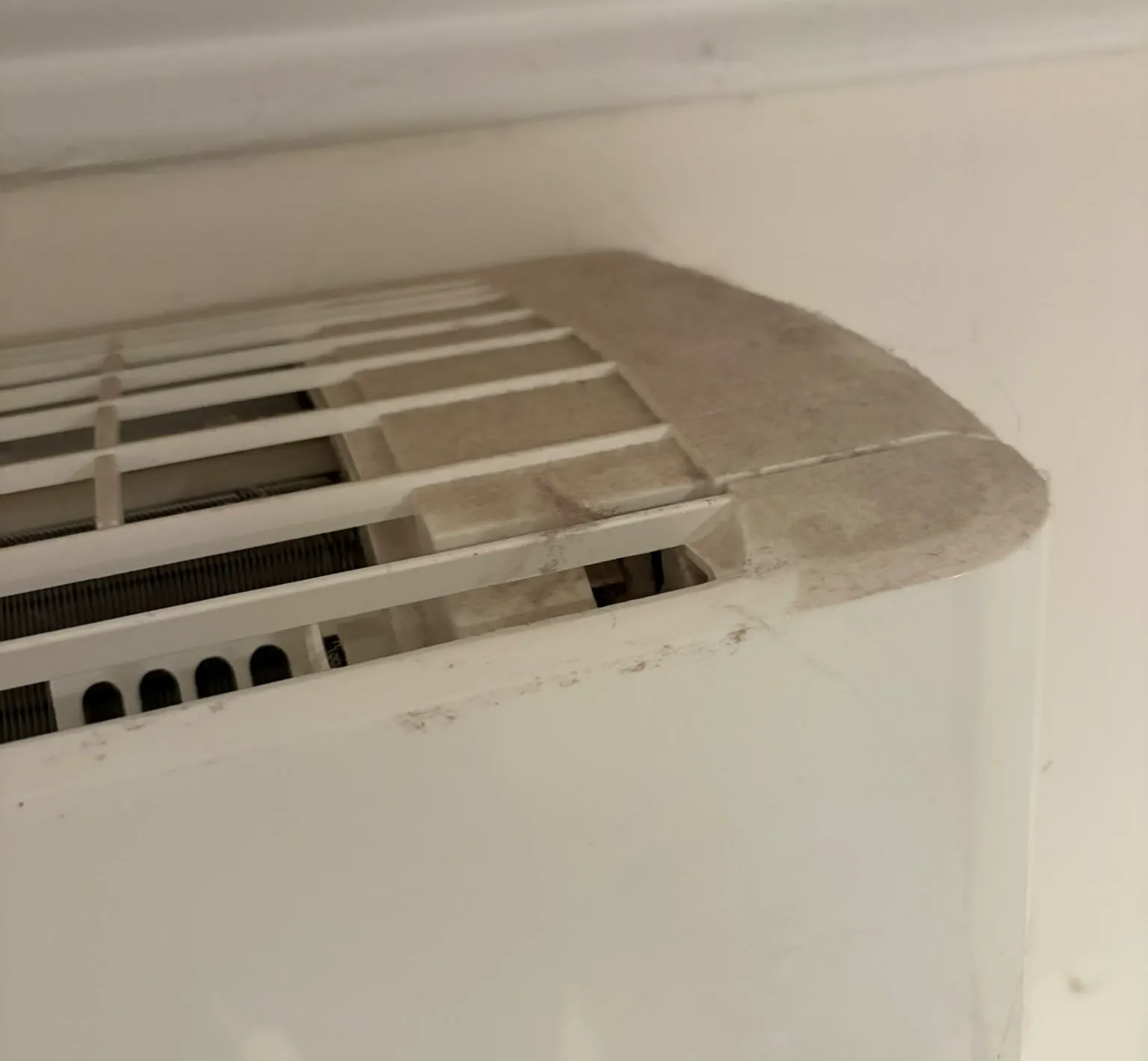
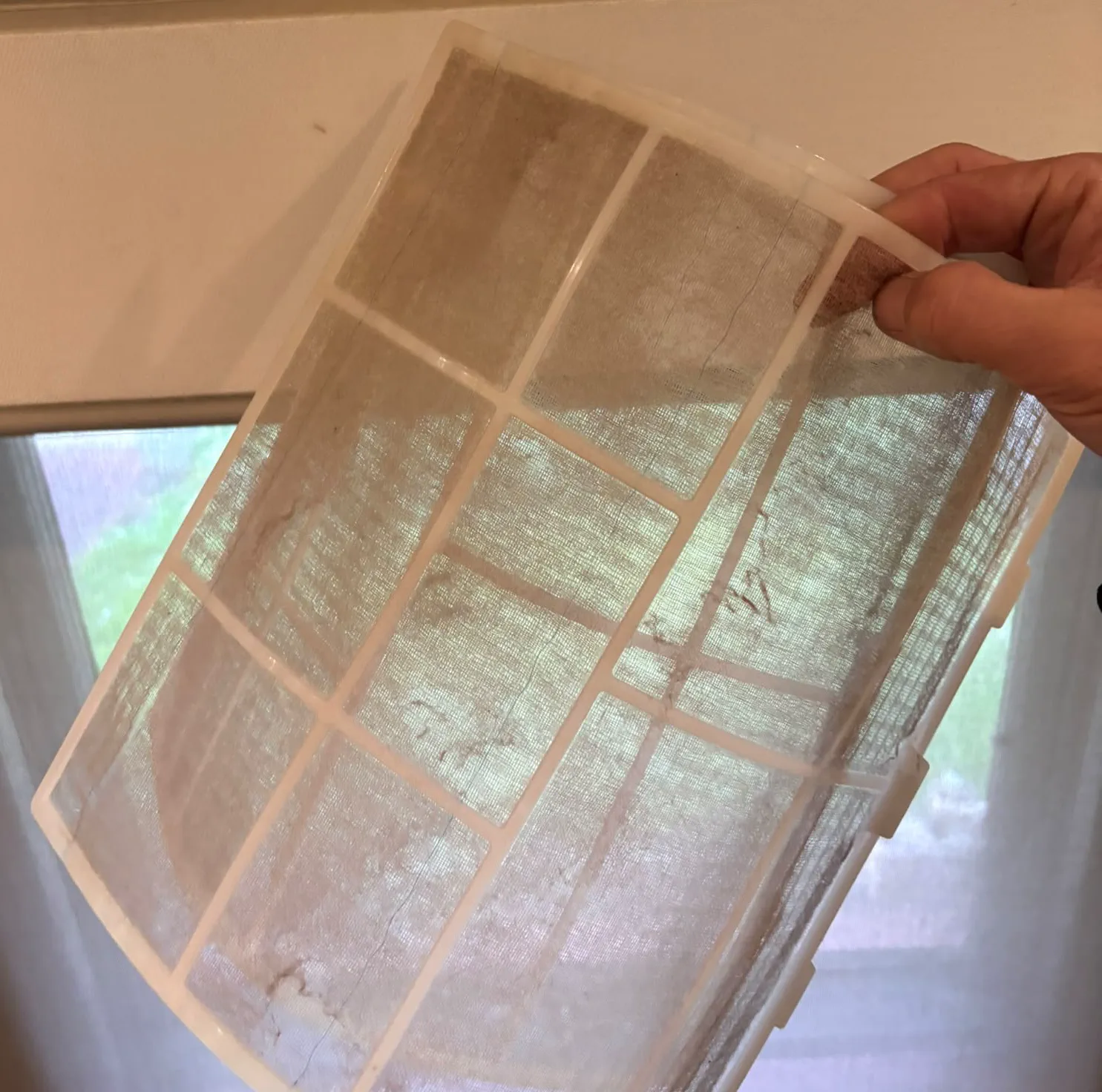
Dirty filters significantly cut airflow and efficiency. Outside, a coil packed with leaves, lint or dust can't shed heat on a hot day.
Electrical and control faults
A failed capacitor, contactor, fan motor, sensor or inverter board can stop the outdoor unit. So can a tripped breaker or a burnt isolator connection.
A refrigerant leak
Refrigerant circulates in a sealed loop and isn't used up. A low charge means it has escaped, through a flare joint, a rubbed pipe or a corroded coil.
More heat than it can move
A unit sized for a bedroom won't cool an open-plan extension, and an outdoor unit boxed into a hot corner keeps breathing its own exhaust air.
What the job covers
What we usually do on this job. Your quote confirms it for your place.
- Settings and error codes checked
- Filters, return air and coils inspected
- Indoor and outdoor fans tested
- Power supply, breaker and isolator tested
- Compressor operation checked
- Air temperature measured in and out
- Refrigerant pressures checked if a leak is likely
Your options, explained
Clean and restore airflow
Low disruption- Best for
- Clogged filters, dusty coils or a smothered outdoor unit
- How it works
- Filters, coils and the fan wheel are cleaned, then the cooling is measured again.
- Worth knowing
- Won't help if airflow was fine already.
Repair the fault
Medium disruption- Best for
- A failed fan, capacitor, sensor or board, or a refrigerant leak
- How it works
- Testing confirms the faulty part before it's replaced. A leak is repaired and pressure tested before recharging.
- Worth knowing
- Covered by our lifetime workmanship guarantee.
Replace the system
High disruption- Best for
- A dead compressor on an older unit, or one that never kept up
- How it works
- A system sized for the room's real heat load, on a checked electrical supply.
- Worth knowing
- We price the repair and the replacement side by side.
The people behind the work
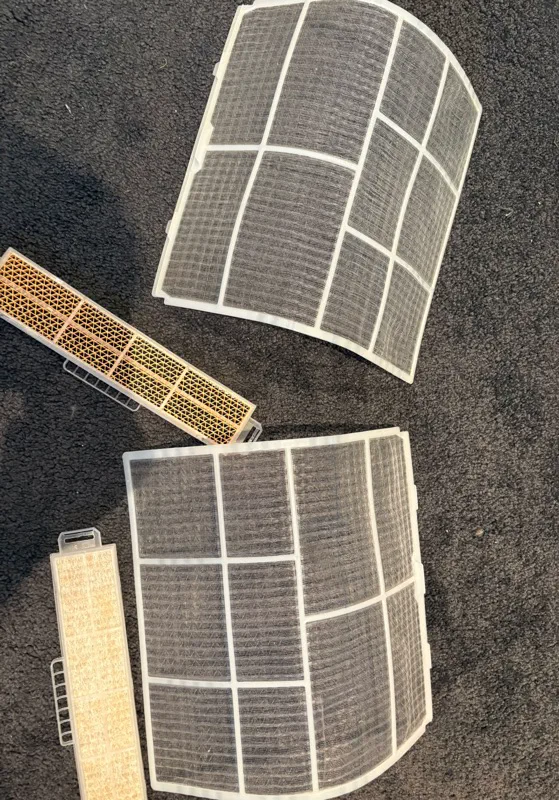
Our own photos from jobs like this one. Family-run, based in Altona Meadows, with 19 years in the industry.
Licensed electrical contractor (REC 38187)See more team photos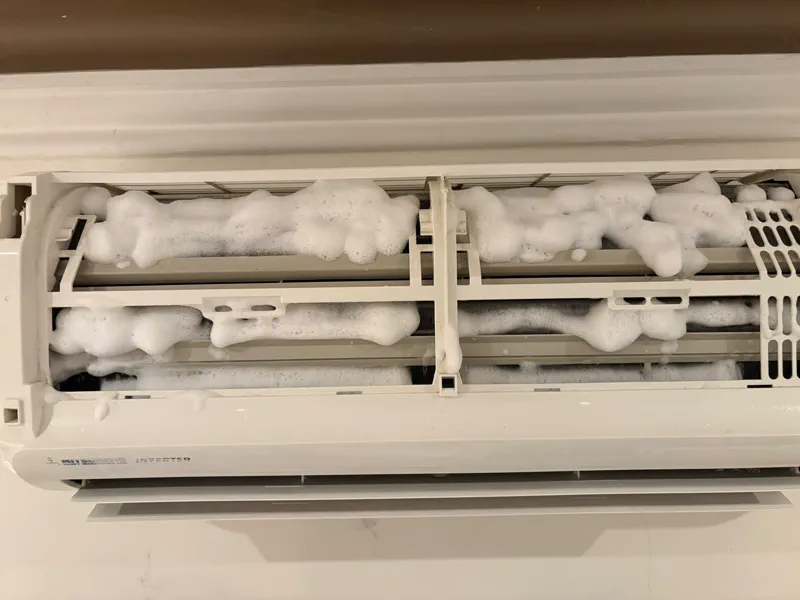
Worth knowing before you book
- Check the mode first
- Cool, not Dry or Fan, set below room temperature.
- A short wait is normal
- Many systems hold the outdoor unit off for a few minutes after a restart.
- Ice means switch it off
- Frost on the coil or pipes means it's struggling. Let it thaw.
What affects the price?
The right scope depends on your installation. These are the details we check so your quote is useful, with any additional work explained before it proceeds.
What the fault is
A clean, a new fan motor and a leak repair are very different jobs, so we diagnose before we price.
Access
A head above a stairwell, a ducted unit in a low roof or an outdoor unit on a high bracket takes longer to reach safely.
Parts and model age
Boards and motors for older or discontinued models are harder to source and can mean a return visit.
How long it ran faulty
A weak capacitor caught early is a small part. A compressor left labouring on a low charge can make it a much bigger job.
How it runs
- 1
Tell us what it's doing
Symptoms, error codes and model label photos.
- 2
Test and measure
Airflow, power, fans, compressor and, if needed, refrigerant.
- 3
Explain and price
Cause, options and price before we start.
- 4
Repair and re-test
Cooling re-measured before we leave.
Step by step, in more detail
4 steps
Start with the symptoms
What it's doing, when it started, which rooms and any error code. Model label photos help us bring the likely parts.
Rule out the simple causes
We check settings, filters, both coils and the space around the outdoor unit, then test the power supply, breaker and isolator.
Measure the cooling
We measure the air in and out, the fans, the compressor and its electrical draw. Gauges go on only if the readings point to refrigerant.
Price, repair, prove it
You get the cause, the options and the price before we start, and we re-measure after the repair.
What is safe to do, and what to leave to us
Safe for you to do
- Check it's on Cool and set below room temperature, with zones open and no timer running.
- Clean the dust filters as the manual describes, if you can reach them safely.
- Clear bins, plants and stored items from around the outdoor unit.
- If you see ice, switch the system off at the controller and let it thaw.
Leave these to us
- Paying for a top-up before the system is fully tested and the leak repaired. It's illegal.
- Removing panels or touching wiring. Electrical work isn't DIY, and only licensed technicians can handle refrigerant.
- Hosing the outdoor unit, combing its fins or chipping ice off a coil.
- Resetting a tripped breaker or safety switch more than once.
When to get us in
- Still blowing warm after checking the mode and filters
- It trips the power as it starts
- Someone over 65, a baby or someone unwell at home in hot weather
- A burning smell: switch off at the switchboard if it's safe to reach, and get everyone out if there's smoke or fire
More detail
Low on gas, or just looks it
Ice on the pipes and weak cooling are textbook signs of a low charge, but a clogged filter or a stalled fan looks much the same. So we check airflow and the fans before any gauges go on. A genuinely low charge means a leak, and topping up before the system is fully tested and every identified leak repaired is illegal.
Cold at the vents, warm in the room
We measure the air going into the indoor unit and coming out, and a weak drop points to a fault. If the drop is right and the room still won't come down on a hot afternoon, the unit is doing all it can. Then the honest answer is a larger or second system, not a repair.
When the compressor has failed
Most cooling faults are parts worth replacing. A failed compressor is the exception: it's the dearest part, and it often goes on older units. The Victorian Government says a reverse-cycle system more than 15 years old typically uses more than three times the energy of a modern one. Victorians typically use more energy heating than cooling, so weigh heating efficiency in any replacement.
Local rules and conditions
Victorian requirements and local conditions that shape this job, with the sources listed at the foot of the page.
Record heat at Laverton
The Laverton weather station has recorded 47.5 °C, on 7 February 2009, and averages 9.4 days a year at or above 35 °C, mostly December to February. Those are the afternoons a weak capacitor or a dusty outdoor coil gives out.
When cooling fails in a heatwave
Victoria's health department counts people with limited ways to keep cool, such as those without air conditioning, among the most at risk in extreme heat. Heat health warnings for Hobsons Bay, Wyndham, Brimbank, Maribyrnong and Port Phillip come under the Central district.
Renting with a unit that won't cool
Consumer Affairs Victoria lists a rental provider's cooling appliance that isn't working as an urgent repair, to be made immediately, and the rental provider pays unless the renter caused it. From 1 March 2027, new leases also need energy-efficient cooling in the living area.
Useful reading
Guides to read before you decide, with checklists and questions to bring to the quote.
- Getting your air conditioning ready for a heatwaveA spring test run, clean filters, a clear outdoor unit and a backup plan: how to find a tired air conditioner before the first hot northerly does.
- Air conditioner maintenance: what to watch between servicesKeep useful records, follow model-specific filter care and recognise symptoms that need a repair visit.
- What size split system do you need?What a split system's kW rating measures, why floor area alone gets it wrong, and how glass, ceilings and afternoon sun change the size a room needs.
- Landlords: heating, cooling and electrical obligations in VictoriaA rental provider's map of the heating, switchboard, safety check and repair duties on a Victorian rental, and what the 2027 energy standards change.
Common questions
Questions people ask about this
More in the Help centreFrom the blog
Sources for the rules and local facts on this page
14 sources, with the date each was checked
- 1.Bureau of Meteorology: Highest temperature (°C) 45.6 47.5 41.4 35.5 27.3 24.3 23.5 26.8 31.3 37.2 42.4 45.2 47.5 82 1943 2026 Date 27 Jan 2026 07 Feb 2009 Accessed 30 September 2026.
- 2.Department of Health, Victoria (updated 3 February 2026): Use air conditioning or a fan, wear light and loose-fitting clothing, keep your skin wet (for example, with a spray bottle or damp sponge), and take cool showers or foot baths. ... People most at risk include those over… Accessed 30 September 2026.
- 3.Department of Health, Victoria: In response to a new Bureau severe or extreme heatwave warning, we will issue a heat health warning. ... The following list shows all the local government areas in Victoria and what forecast district they belong to… Accessed 30 September 2026.
- 4.Consumer Affairs Victoria: a cooling appliance or service provided by the rental provider is not working the property does not meet minimum standards a safety-related device, such as a smoke alarm or pool fence, is not working Accessed 30 September 2026.
- 5.Department of Energy, Environment and Climate Action (energy.vic.gov.au), page last updated 05/08/26: From 1 March 2027, at the start of a new lease, rental homes must include: energy-efficient cooling in the living area (noting that if evaporative cooling is already installed, it meets the standard) ... By 1 July 2030… Accessed 30 September 2026.
- 6.Energy Rating (GEMS Regulator / DCCEEW): Dirty filters significantly reduce the amount of airflow and the energy efficiency of the unit. It can also impact the effectiveness of its heating. Cleaning clogged filters, or replacing a worn one, can lower the… Accessed 30 September 2026.
- 7.Solar Victoria (updated 20 November 2025): Check the manufacturer’s instructions or manual and have the air conditioner serviced regularly at the recommended frequency to ensure it continues to operate efficiently. Cleaning the filters regularly helps the system… Accessed 30 September 2026.
- 8.Australian Refrigeration Council (ARC), Fact Sheet 13 (ARC5225, 11/22): ‘Topping-up’ a system before the system has been fully tested and all identified leaks repaired by any individual is illegal. Accessed 30 September 2026.
- 9.Department of Climate Change, Energy, the Environment and Water (DCCEEW): It's illegal to release regulated refrigerants into the air. This is because some refrigerants can stay in the atmosphere for decades or more and can be thousands of times worse for climate change than carbon dioxide… Accessed 30 September 2026.
- 10.Energy Safe Victoria: Electrical work isn’t a DIY job, even for small jobs such as changing power points or light switches. Accessed 30 September 2026.
- 11.Energy Safe Victoria: Locate your electricity box outside your home and check whether the safety switch has tripped. If it has tripped, reset the switch. If the switch won’t reset, call a licensed electrician. Accessed 30 September 2026.
- 12.energy.gov.au (Australian Government, DCCEEW): Evaporative coolers work by blowing air over a film of water on a filter or sponge, cooling the sponge and the air through the process of evaporation. Outside air is drawn through the evaporative unit (generally on the… Accessed 30 September 2026.
- 13.Solar Victoria (updated 2 October 2025): A system that is more than 15 years old for example will typically use more than three times the amount of energy than a modern reverse-cycle air conditioner. Accessed 30 September 2026.
- 14.Department of Energy, Environment and Climate Action (energy.vic.gov.au), page last updated 14/04/25: Victorians typically use more energy for heating than cooling, so look for a unit with a higher heating efficiency. Accessed 30 September 2026.