
Is it better to pre-cool my house before a hot day?
- Close up and start refrigerated cooling by mid-morning, before the house soaks up heat.
- A house that heats through keeps giving heat back for hours, even after the change.
- Air conditioners work more easily in the cooler morning air than at the afternoon peak.
- Evaporative coolers need windows open, but they also do best started early on dry northerly days.
Our view: start early, close up early
On a forecast hot northerly day, start cooling by mid-morning rather than when the house is baking at four in the afternoon. Close the windows and blinds while it's still cooler outside, set a moderate temperature and let the system hold it through the afternoon. With refrigerated air conditioning, that's almost always the more comfortable way to get through the day.
The Bureau of Meteorology describes Melbourne's typical pattern: warm northerly winds arrive first with higher temperatures, then a cold front can change conditions within minutes. Laverton averages 27 days a year at or above 30 °C and 9.4 at or above 35 °C, mostly from December to February. Those are the days this tactic is for.
Why starting early works
A house soaks up heat all day through the roof, walls and glass, and stores it in floors, furniture and plasterboard. Once all of that has warmed through, it keeps releasing heat into the rooms for hours, which is why the house can still feel hot late at night after the change has come through. Keeping the inside cool from the morning stops that store of heat building up.
Air conditioners also work more easily when the outside air is cooler, because the outdoor unit has less trouble getting rid of heat. A unit running gently from mid-morning has an easier day than one switched on at the afternoon peak with a hot house to catch up on. On the hottest days, a system that starts from behind may never catch up.
How to do it with split or ducted systems
These steps suit split systems and ducted reverse-cycle alike.
Resist dropping the set point to 18 °C when you feel hot. It won't cool the room faster; it just keeps the unit running longer and overshooting. A ceiling fan helps you feel cooler at a higher setting.
- Check the forecast the night before and note when the change is due
- If it's cooler outside overnight or early, open up, then close everything by mid-morning
- Close blinds on the east side in the morning and the west side from midday
- Start cooling mid-morning at 24 to 26 °C; the Victorian Government says each degree lower adds around 10% to running costs
- On a ducted system, cool the zones you're using and add the bedrooms in the afternoon
- If nobody's home during the day, use a timer or app to start it well before the afternoon peak
Evaporative cooling plays by different rules
An evaporative cooler pushes outside air over wet pads and through the house, and it needs some windows or doors open so hot air can escape. You can't close up and pre-cool in the same way. But hot northerly winds come off the dry interior, and evaporative coolers work best in low humidity, so these are often their best days.
Start it early too, before the house heats, with a few windows open in the rooms you want cooled. Expect the air from the outlets to warm up as the outside temperature climbs. When the change arrives and the air turns damp, switch to fan only or turn it off and let the cooler air in.
When the change arrives
The change can arrive within minutes. Once it's cooler outside than in, switch off and open up: windows on both sides of the house and the doors between rooms, to flush out the heat stored through the day. If the change brings strong wind or dust, wait for it to settle first.
If the change is due late or not at all, keep the bedrooms cool into the evening and let the living areas go. Deciding which rooms or zones matter after dark keeps running costs in check.
Make sure it's ready before the first hot day
Pre-cooling only helps if the system is working. Victoria's Department of Health advises checking before extreme heat that your fan and air conditioner work, and having the air conditioner serviced if needed. Give it a proper run on a mild spring day and listen for anything new.
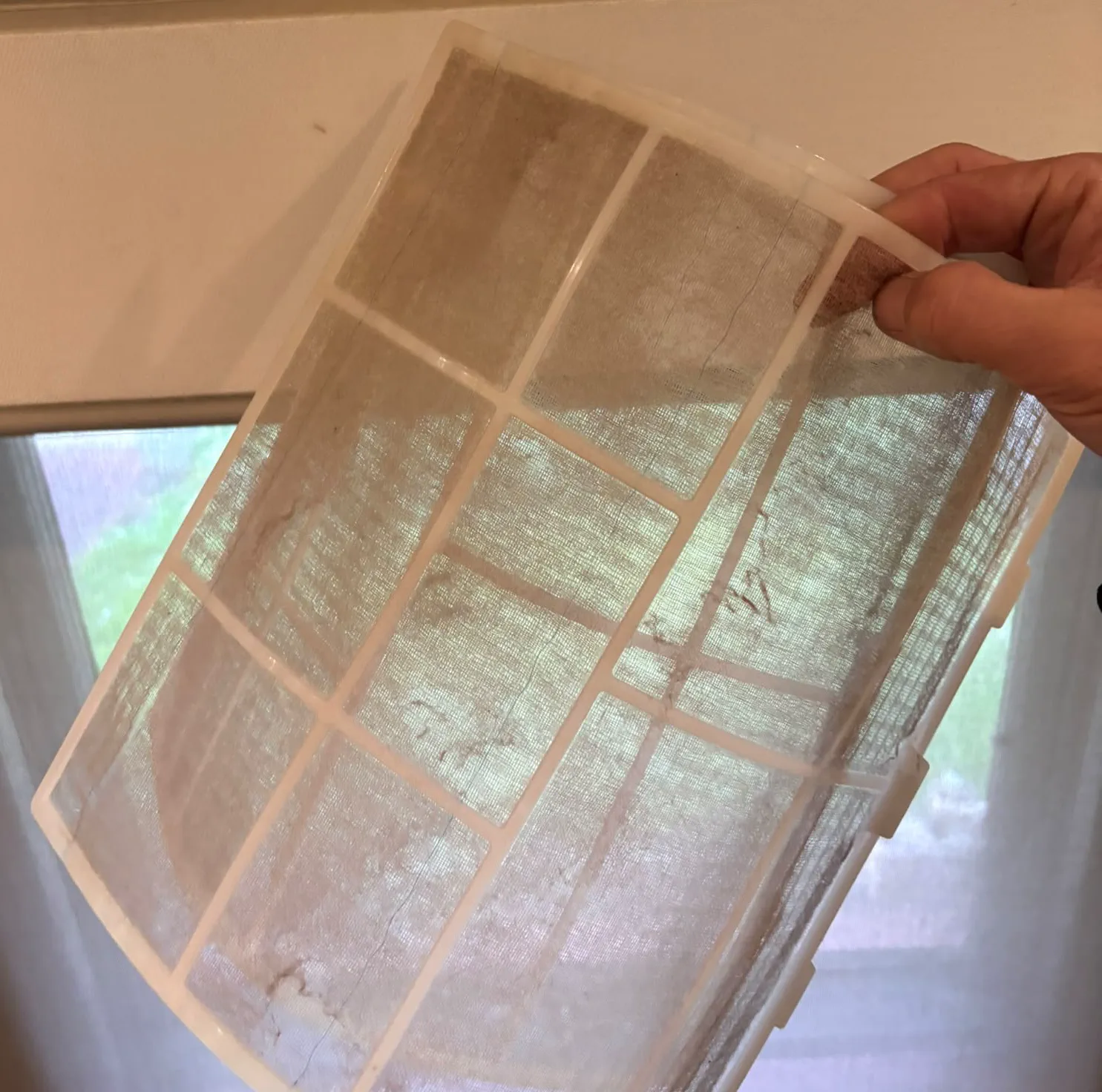
Clean filters, a clear outdoor unit and a drain that runs freely all help it keep up when it counts. If it struggles on the first warm day, book a service then rather than in the middle of a heatwave.
Questions that come next
Sources for this article
7 sources, with the date each was checked
- 1.Bureau of Meteorology (article issued 3 August 2026): To the north lies Australia's hot, dry interior, while to the south stretches the cold Southern Ocean. ... Warm northerly winds arrive first, bringing higher temperatures and clear skies. Then, as a cold front moves in… Accessed 30 September 2026.
- 2.Bureau of Meteorology: Mean number of days ≥ 30 °C 6.9 6.0 4.5 0.7 0.0 0.0 0.0 0.0 0.1 0.9 2.8 5.1 27.0 82 1943 2026 Mean number of days ≥ 35 °C 3.6 2.4 0.9 0.0 0.0 0.0 0.0 0.0 0.0 0.1 0.5 1.9 9.4 Accessed 30 September 2026.
- 3.Solar Victoria (updated 20 November 2025): To heat a room, try setting the temperature between 18°C to 20°C. Every 1°C higher will add around 10% to your heating bill. Set your air conditioner thermostat for cooling between 24°C and 26°C for living areas – every… Accessed 30 September 2026.
- 4.Department of Energy, Environment and Climate Action (energy.vic.gov.au), page last updated 14/04/25: We recommend providing 1.1 to 1.4kW of heating output for every 10m² of your home covered by a ducted system, depending on the individual characteristics of your home. ... We recommend zones for your ducted system, as… Accessed 30 September 2026.
- 5.energy.gov.au (Australian Government, DCCEEW): Evaporative coolers work by blowing air over a film of water on a filter or sponge, cooling the sponge and the air through the process of evaporation. Outside air is drawn through the evaporative unit (generally on the… Accessed 30 September 2026.
- 6.YourHome (Australian Government): Evaporative coolers cool outside air and blow it into the house; some windows or doors will need to be left open when the cooler is in use to allow indoor air to exit. ... For central systems, water use can be 25 L or… Accessed 30 September 2026.
- 7.Better Health Channel (Department of Health, Victoria): Check that your fan and air-conditioner works well. Have your air-conditioner serviced if needed. Ensure the filters, pads and air vents are clean. Accessed 30 September 2026.