
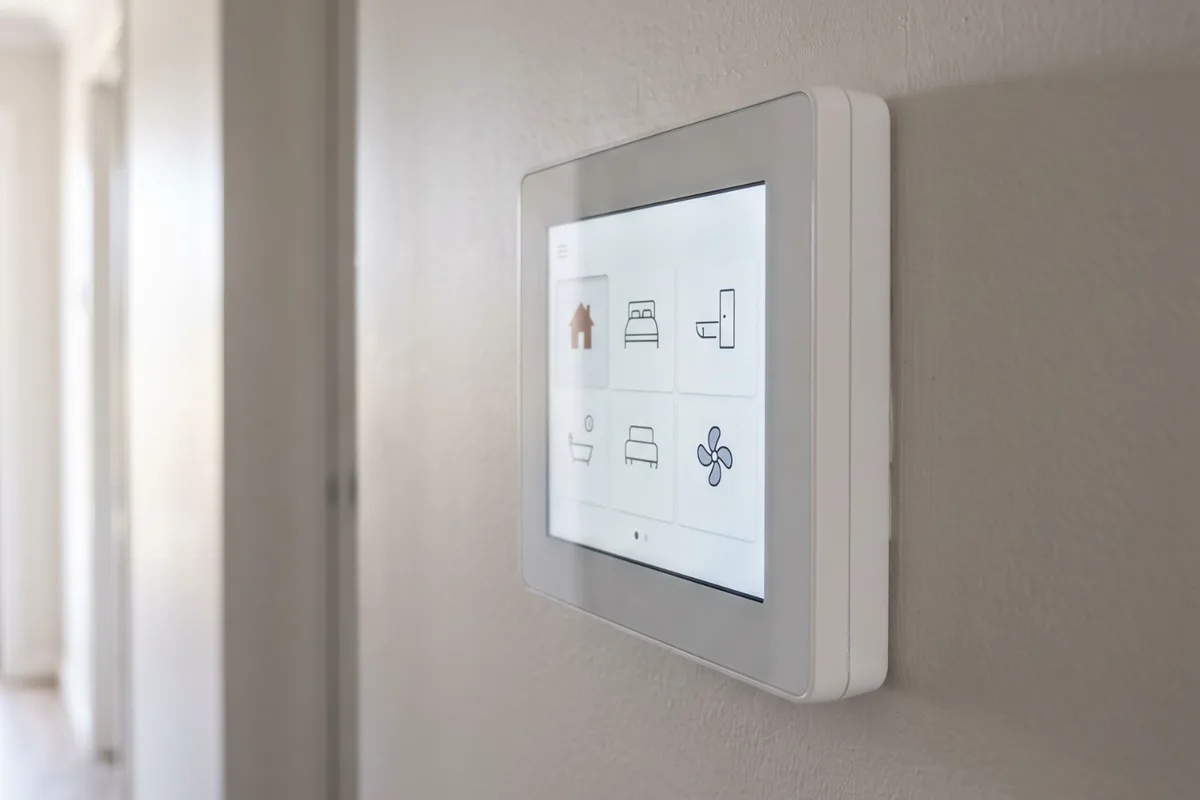
Is it better to heat the whole house or only the rooms I'm using?
- For most households, heating the rooms in use is cheaper and works well.
- Open-plan layouts and open stairwells make room-by-room heating harder.
- Splits suit room-by-room heating; ducted systems need zoning to do it well.
- Keep unheated rooms cool rather than cold, with doors shut and a little ventilation.
Our view: heat the rooms you're in, within reason
For most households, heating only the rooms in use is cheaper and works fine. Victorians typically use more energy for heating than cooling, so this is where habits make the biggest dent in the bill. But it can be taken too far. One hot room with the rest of the house near outdoor temperature on a July night is miserable to move around in, and cold, unheated rooms are where condensation and mould take hold.
The right answer usually sits in between, and it depends on three things: how your household uses the house, the layout and the system you have.
Start with your routine
A couple out at work all day who spend the evening in the lounge have a simple pattern: heat the living area in the evening and the bedroom for a while before bed. A family moving between bedrooms, bathroom and living areas all evening, or someone working from home in a study, needs more of the house warm for more of the day.
Write down which rooms are used, by whom and when, on a typical winter workday and a day at home. It takes ten minutes and tells you more than any rule of thumb.
Layout decides what's possible
Rooms with doors are easy to heat one at a time. Open-plan living with a void or open stairwell isn't, because warm air flows wherever the house is open and rises to the landing. In those homes the room you're heating is really the whole open area, and keeping doors shut to bedrooms and the laundry is what stops the heat spilling everywhere.
Older homes in Altona, Laverton and Footscray often have a central hallway with rooms off it, which suits room-by-room heating well. Newer estate homes in Point Cook and Tarneit tend towards large open living areas, which suit zoned or whole-area heating better.
What your system is good at
Wall splits are the natural room-by-room option. Each heats its own space and you run only the ones you need. A reverse-cycle air conditioner moves 3 to 5 units of heat for each unit of electricity, compared with about 1 for a standard electric heater, so a split in the living room is an efficient way to heat the room you spend most time in.
Ducted systems, reverse-cycle or gas, are built for whole-house heating but can work room by room with zoning, which the Victorian Government recommends so each area can be heated on its own. Ducted systems are less efficient than wall units, and running every zone when you're in two rooms is the expensive habit. There's a limit, though: a ducted unit needs a minimum airflow, so you can't usually shut every zone but one.
A sensible middle ground
This is what works in most of the homes we see through winter.
The Victorian Government suggests 18 to 20 °C for heating living areas and says each degree beyond that adds around 10% to running costs. A few rooms at a sensible temperature will almost always cost less than the whole house at a high one.
- Heat the living areas through the evening
- Warm the bedrooms for a short time before bed, then switch off or turn down
- Keep the rest of the house cooler but not cold, especially the bathroom
- Shut doors to rooms you aren't heating and block draughts under them
- Air unheated rooms briefly each day to keep condensation down
When whole-house heating makes sense
Whole-house heating earns its place when the house is busy all day and evening, when someone at home feels the cold more, such as a newborn, an older parent or someone unwell, or in a well-insulated home that holds its warmth. On the coldest nights, with Laverton's July mean minimum at 5.2 °C, a gently heated house can feel better than one hot room and a freezing hallway.
If you have gas ducted heating, owner-occupiers aren't required to switch gas space heating to electric, so the choice is yours. Some households keep the gas ducted for busy whole-house days and add a split in the main living area for everyday heating.
Questions that come next
Sources for this article
6 sources, with the date each was checked
- 1.Department of Energy, Environment and Climate Action (energy.vic.gov.au), page last updated 14/04/25: Victorians typically use more energy for heating than cooling, so look for a unit with a higher heating efficiency. Accessed 30 September 2026.
- 2.Energy Rating (GEMS Regulator / DCCEEW): Reverse cycle air conditioners are much more efficient at heating than standard electric heaters (bar heaters, convection, or radiant heaters). ... During the normal operating range in Australia for every unit of… Accessed 30 September 2026.
- 3.energy.gov.au (Australian Government, DCCEEW): The energy efficiency of reverse-cycle air conditioners on the Australian market ranges between 300% to 600% efficient. Air conditioners can achieve such high rates of energy efficiency because they do not use… Accessed 30 September 2026.
- 4.Solar Victoria (updated 20 November 2025): To heat a room, try setting the temperature between 18°C to 20°C. Every 1°C higher will add around 10% to your heating bill. Set your air conditioner thermostat for cooling between 24°C and 26°C for living areas – every… Accessed 30 September 2026.
- 5.Bureau of Meteorology: Mean minimum temperature (°C) 14.0 14.4 12.7 10.0 7.8 5.9 5.2 5.7 6.8 8.4 10.3 12.2 9.5 81 1943 2026 Accessed 30 September 2026.
- 6.Department of Energy, Environment and Climate Action (Victoria): From 1 March 2027, if a gas hot water appliance breaks and cannot be repaired, it must be replaced with an electric alternative. No requirement to upgrade gas space heating or stovetop gas cooking to electric, however… Accessed 30 September 2026.