
The key points
- The set temperature is the biggest lever you have. The Victorian Government says each degree beyond its suggested range adds around 10% to running costs.
- Only heat or cool the rooms you're in: close doors, shut ducted zones and use timers rather than leaving everything running.
- Clean filters and regular servicing keep a system close to the efficiency it was sold on.
- Curtains, blinds, door seals and shading cut the load the system has to fight.
- Where a home has both gas heating and reverse-cycle, the federal energy guide rates reverse-cycle as the more cost-efficient way to heat.
Start with the set temperature
The Victorian Government suggests 18 to 20 °C for heating and 24 to 26 °C for cooling living areas, and says every degree beyond that adds around 10% to running costs. A household that heats to 23 °C in July and cools to 21 °C in February is paying a premium at both ends of the year without noticing.
Bedrooms can sit lower in winter, especially overnight with decent bedding. Most people sleep comfortably at a cooler temperature than they'd want on the couch.
Change one thing at a time and give it a week. Comfort is partly habit, and a degree that feels cool on the first night often feels normal by the third.
Heat and cool only the rooms you're in
A wall split works best on one room with the doors shut. Leave the lounge open to the hallway and kitchen and it is trying to condition half the house through a doorway. In the post-war houses around Altona and Laverton, where rooms often open off a central passage, closing a couple of doors can make a split feel a size bigger.
On a ducted system, zones do the same job. The Victorian Government recommends zoning so each area can be heated or cooled on its own. Shut the bedroom zone during the day and the living zone overnight. Don't close more zones than the system was designed for, though: a ducted unit needs somewhere to send its air, and too few open outlets can make it noisy or cut out.
Timers beat leaving the system on all day in an empty house, and they beat walking into a cold house and setting 28 °C. Start the heating half an hour before you get up or get home, and set it to switch off at bedtime.
Filters, servicing and the efficiency you paid for
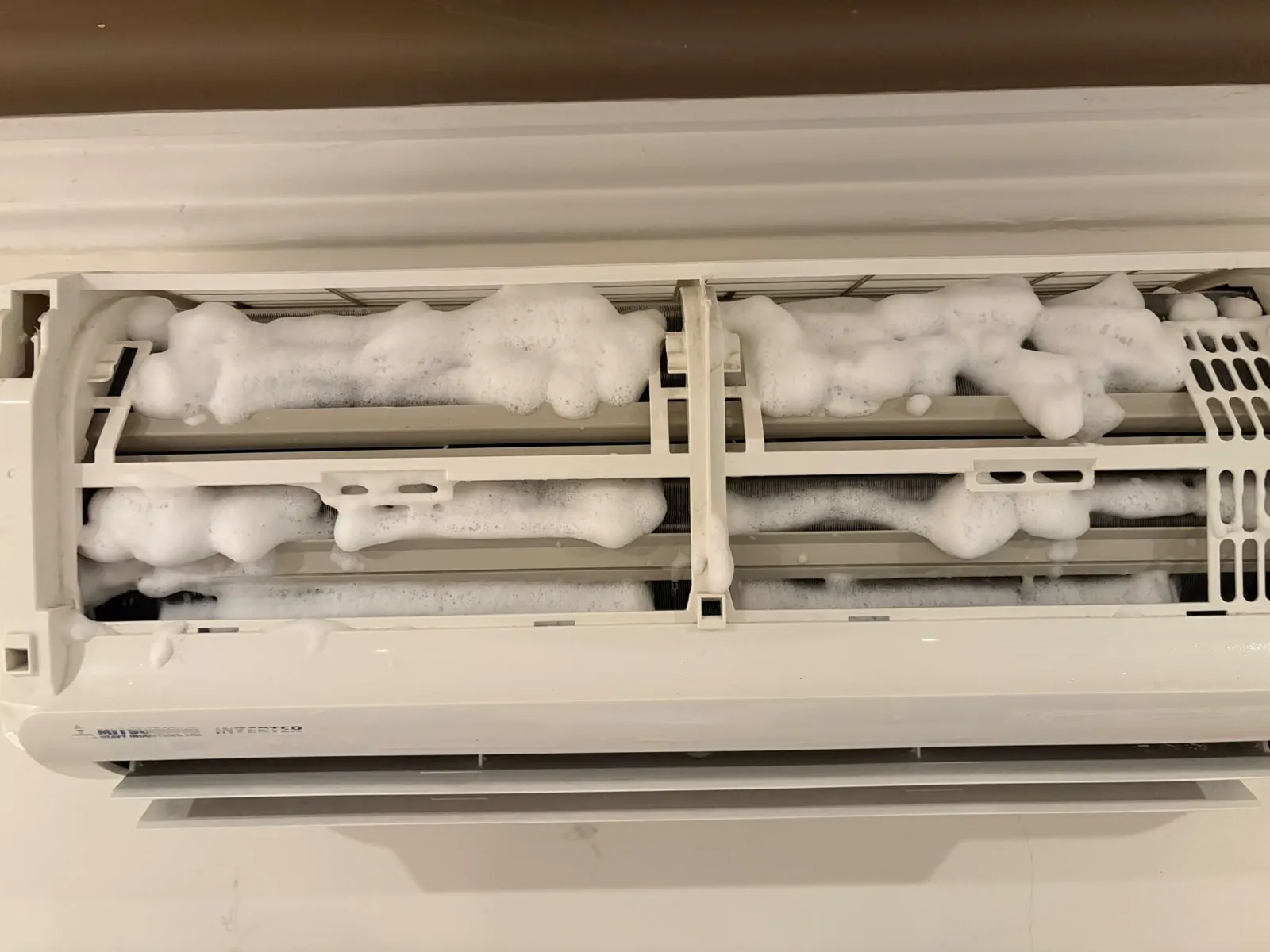
Dirty filters significantly cut airflow and efficiency and can reduce heating performance. The Victorian Government suggests cleaning reverse-cycle filters about twice a year, more often with heavy use, and servicing the system at the frequency the manufacturer recommends.
Servicing pays back in running costs. In federal bench tests, common faults in refrigeration and air conditioning equipment caused average energy losses of 14% to 20% in most tests. A slow refrigerant leak, a dirty coil or a blocked outdoor unit doesn't stop the system working. It just makes it run longer for the same result.
Outside, keep the outdoor unit clear of plants, stored timber and bins, so it isn't breathing its own exhaust. On a ducted system, ducts should be insulated to at least R1.5 with sealed joints. A torn or disconnected duct in the roof heats or cools the roof space instead of the rooms below.
- Filters washed in the last six months
- Outdoor unit clear on all sides, with nothing stacked on top
- No new noises, smells or ice on the pipes
- Service date known, and booked if it is overdue
- Ducted outlets blowing evenly, with none noticeably weak
Windows, curtains and doors
Glass is where much of the heat moves. Close curtains and blinds on winter evenings as the sun goes down, and open north-facing ones on sunny winter days to let the sun do some of the heating. In summer, shut east blinds in the morning and west blinds from lunchtime, before the glass heats up.
Close-fitting curtains with a pelmet or a ceiling-mounted track work better than loose ones, because they stop warm air sliding down the cold glass and out under the hem. For summer, external blinds or awnings beat anything inside the window, since they stop the sun before it reaches the glass.
Draughts under external doors and around old windows let conditioned air out all day. Door snakes and stick-on seals cost little and come off again, which makes them renter-friendly. If the house has an open-flued gas heater, talk to a gasfitter before sealing up: Energy Safe Victoria warns that weather-sealing can change the ventilation needed to clear carbon monoxide.
Ceiling fans and air movement
A ceiling fan uses a small fraction of an air conditioner's power and makes 26 °C feel cooler by moving air across your skin. Run it with the cooling and the set point can sit at the top of the suggested range. Switch it off when you leave the room, because it cools people, not rooms.
In winter, reverse the fan and run it on its lowest speed to ease warm air down from the ceiling without a breeze. That helps most under high ceilings, such as in older cottages around Williamstown and Yarraville, where warmth pools well above head height.
Controls that help
A smart controller or Wi-Fi adapter won't make the system more efficient on its own. What it does is make good habits easy: switching the heating off from the train when plans change, checking the bedroom zone wasn't left running, or setting schedules that differ for weekdays and weekends.
On ducted systems, where the temperature is read matters. If the only sensor is in the wall controller in a hallway, the rooms you actually sit in may be warmer or colder than the system thinks. Zone sensors in the main rooms stop one area overheating while another catches up.
Age is worth knowing too. The Victorian Government says a reverse-cycle system more than 15 years old will typically use more than three times the energy of a modern one. This guide is about getting the most from what you have, but if yours is that old and struggling, it helps to know what it costs you.
If you have both gas and reverse-cycle
Many homes in Melbourne's west have gas ducted heating with a split system or two added later. Australian Government guidance puts reverse-cycle air conditioners at 300% to 600% efficient because they move heat rather than make it, and rates even ducted reverse-cycle as more cost-efficient than gas heating.
So on an ordinary winter evening when you're only using the lounge, the split there is usually the more efficient way to heat it, leaving the gas ducting for the coldest mornings or whole-house warmth. While gas heating stays in use, Energy Safe Victoria recommends a qualified gasfitter services it at least every two years, including a carbon monoxide test.
Common questions
Quick answers
- Can I book a Saturday appointment?Yes.
- Why does my heater smell when I turn it on for the first time in winter?A dusty, slightly burnt smell on the first run of the season is usually dust burning off the heat exchanger, coil or element, and it fades.
- Who is responsible for servicing the air conditioner in a rental?The rental provider, for an air conditioner they supplied.
- Do I need to be home for the visit?Not always, but someone needs to give us access to everything the job involves.
Sources for this guide
9 sources, with the date each was checked
- 1.Solar Victoria (updated 20 November 2025): To heat a room, try setting the temperature between 18°C to 20°C. Every 1°C higher will add around 10% to your heating bill. Set your air conditioner thermostat for cooling between 24°C and 26°C for living areas – every… Accessed 30 September 2026.
- 2.Victorian Government, Hobsons Bay Planning Scheme (PDF snapshot, last updated by VC292 on 11/09/2025): The heritage places of Hobsons Bay reflect the key themes that have shaped the development of the city since the establishment of Williamstown in the 1840s as the first port of Melbourne, through the development of… Accessed 30 September 2026.
- 3.Department of Energy, Environment and Climate Action (energy.vic.gov.au), page last updated 14/04/25: We recommend providing 1.1 to 1.4kW of heating output for every 10m² of your home covered by a ducted system, depending on the individual characteristics of your home. ... We recommend zones for your ducted system, as… Accessed 30 September 2026.
- 4.Energy Rating (GEMS Regulator / DCCEEW): Dirty filters significantly reduce the amount of airflow and the energy efficiency of the unit. It can also impact the effectiveness of its heating. Cleaning clogged filters, or replacing a worn one, can lower the… Accessed 30 September 2026.
- 5.energy.gov.au (Australian Government, DCCEEW): The findings indicated that on average there were energy losses between 14% and 20% across most tests. When several faults co-existed, energy use increased substantially, with a high likelihood of system failure if… Accessed 30 September 2026.
- 6.YourHome (Australian Government): Ducts must be well insulated, to at least R1.5, and joints sealed to prevent condensation and leakage. The roof should have reflective foil insulation installed and be vented to dispel hot air. Zoned systems cool only… Accessed 30 September 2026.
- 7.Energy Safe Victoria: If you have renovated or weather-sealed your home and kept your open-flued gas heater, you may have inadvertently altered the ventilation your home needs to clear carbon monoxide from your gas heater. This might be… Accessed 30 September 2026.
- 8.Solar Victoria (updated 2 October 2025): A system that is more than 15 years old for example will typically use more than three times the amount of energy than a modern reverse-cycle air conditioner. Accessed 30 September 2026.
- 9.Energy Safe Victoria: To avoid the risk, we recommend that all gas heaters are serviced at least every two years by a qualified gasfitter. A qualified gasfitter will inspect your heater and check its installation, including testing for CO… Accessed 30 September 2026.
Planning advice for homeowners. Installation requirements depend on the property and equipment. Where this guide refers to Victorian safety or rental rules, use the linked official guidance for the current requirements.