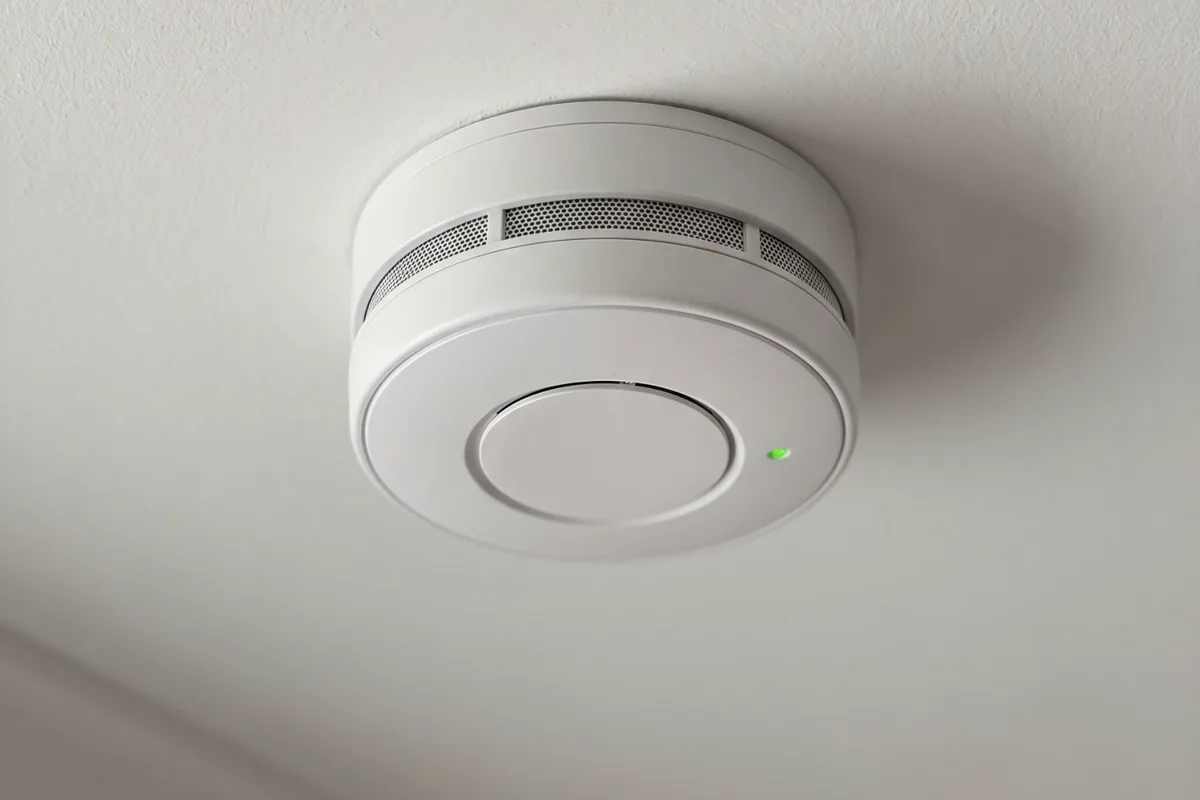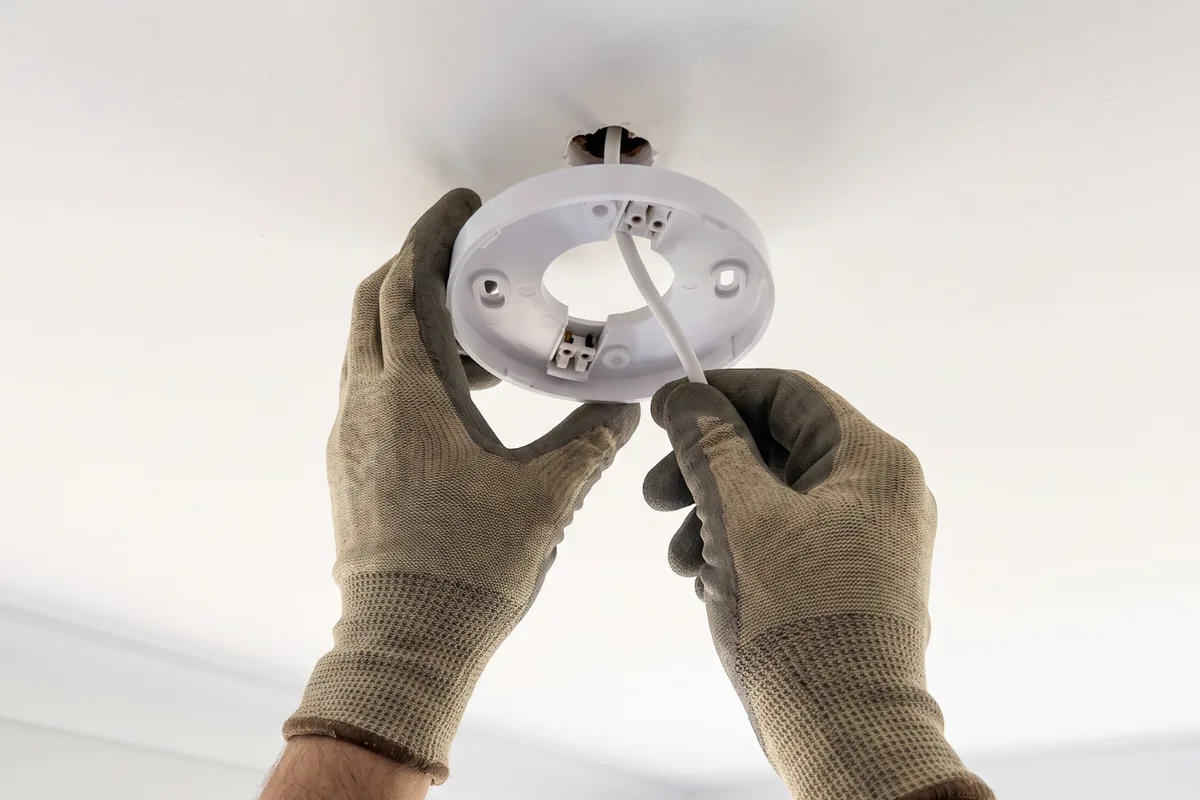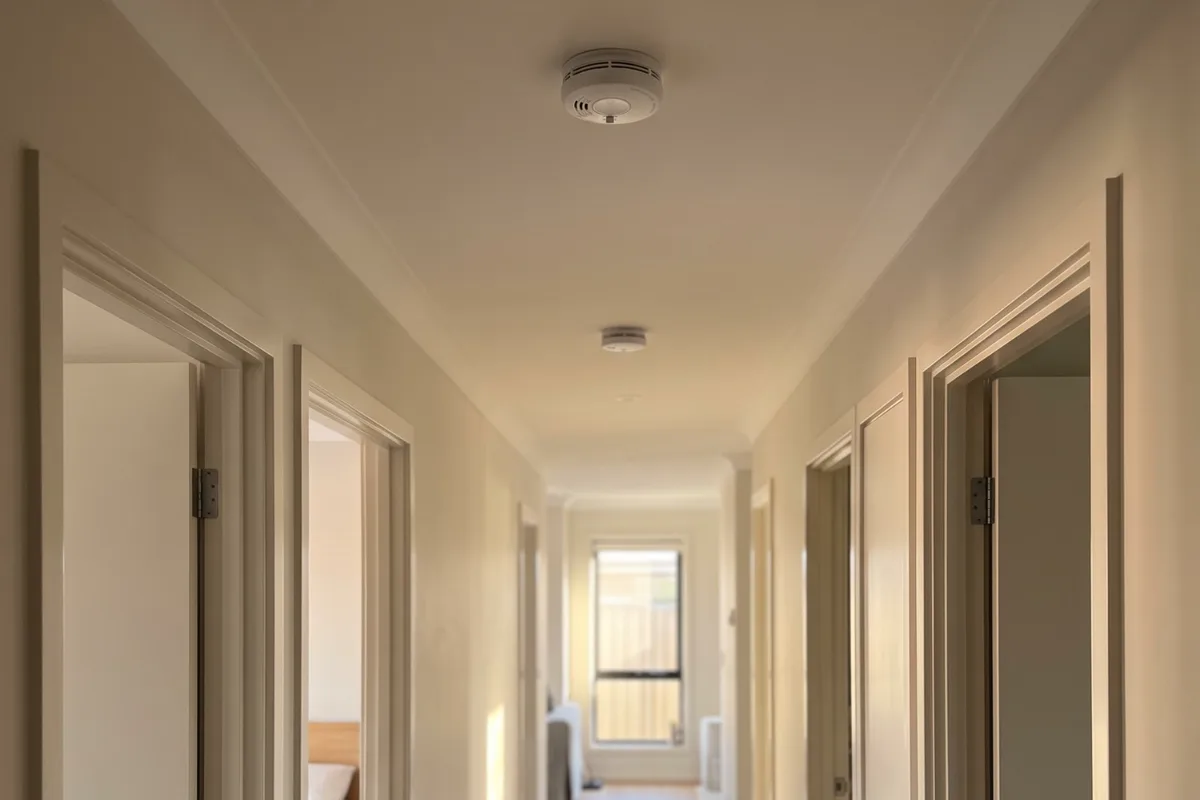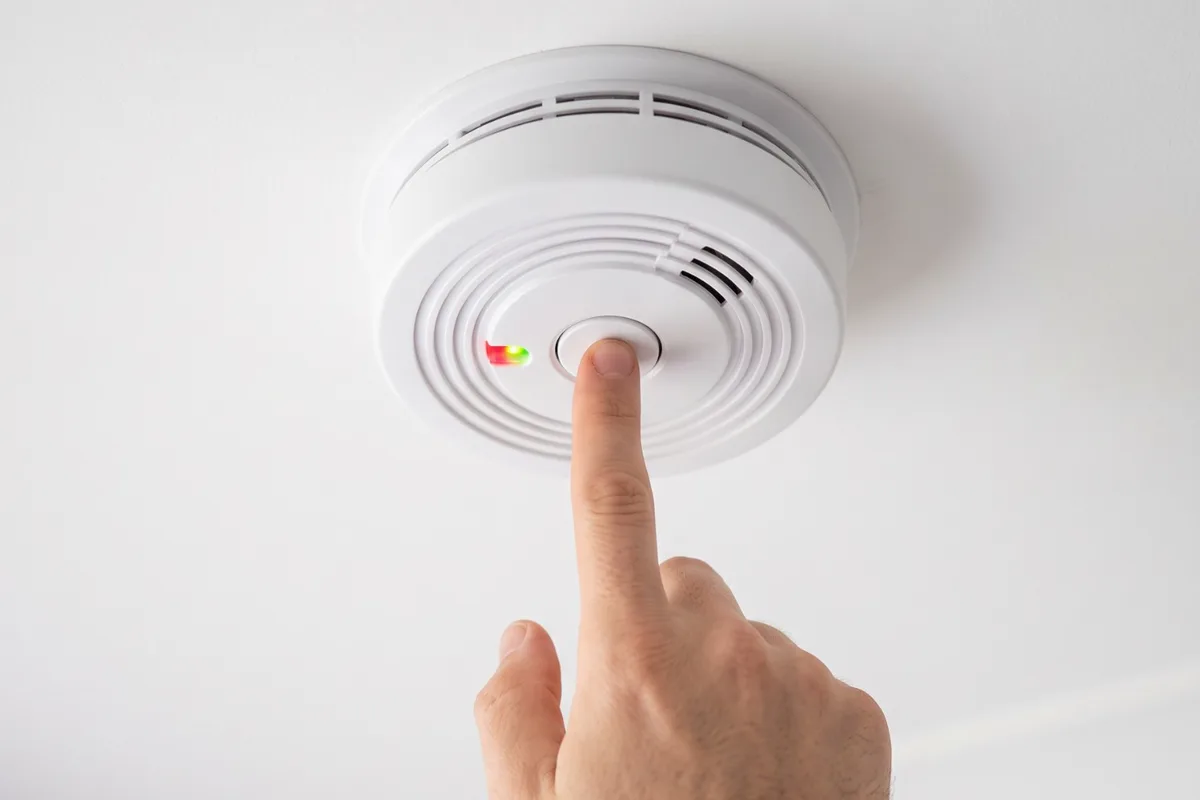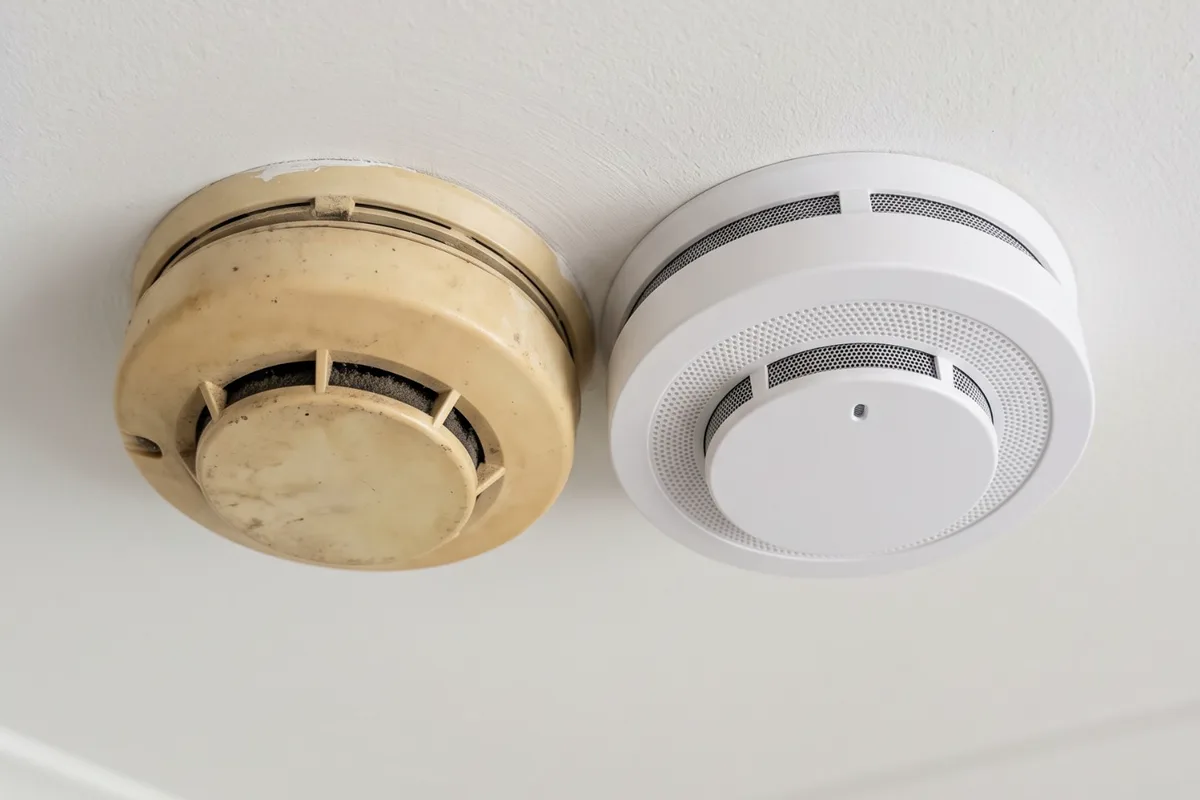
Smoke alarms are generally due for replacement after ten years, and a chirp a new battery won't fix often means one has reached the end. We replace alarms singly or as a set, keep linked alarms compatible, and test each one before we leave.
When to get it checked
Past its date
New alarms carry an expiry date under the battery or on the back. If you can't find a date at all, the alarm is probably well past it.
Chirping after a new battery
A replaceable battery chirps when it's flat. If a fresh one doesn't stop it, the alarm itself may be failing or at end of life.
It fails the monthly test
Press and hold the test button. If it stays silent or sounds weak, it needs replacing.
False alarms with no smoke
Ageing sensors collect dust and drift, so they go off at night, when someone showers or when the heating comes on.
The power light has gone dark
On a hardwired alarm, no power light usually means it isn't getting mains power and is running on its battery.
Why it happens
4 common causes
Sensors age
The sensing chamber gathers dust and its sensitivity drifts over the years, which is why each alarm carries an expiry date.
Whole sets age together
Alarms fitted at the same time tend to fail around the same time, one chirp after another.
Dust, steam and insects
Building work, steam from bathrooms and tiny insects inside the chamber all cause faults and false alarms.
Power or wiring faults
A hardwired alarm on a tripped circuit, a loose base or a damaged cable runs on its battery until that goes flat.
What the job covers
What we usually do on this job. Your quote confirms it for your place.
- Each alarm's date, type and power checked
- Positions checked against the layout
- Expired or faulty alarms removed
- Bases replaced where needed
- Photoelectric alarms fitted
- Linked sets kept compatible
- Every alarm tested on mains and battery
- New expiry dates noted
- Certificate of Electrical Safety for hardwired work
Your options, explained
Like-for-like replacement
Low disruption- Best for
- Hardwired alarms in good positions with compatible bases
- How it works
- New alarms of the same type go onto the existing bases, or new bases go on the existing cable.
- Worth knowing
- Quick, as long as the maker's base and connectors suit.
Replace and interconnect
Medium disruption- Best for
- Two-storey homes, or homes where the far alarm can't be heard from the bedrooms
- How it works
- The new set is linked by cable or radio so every alarm sounds together.
- Worth knowing
- Interconnection is required in homes built, largely renovated or extended after 1 May 2014.
Sealed long-life battery alarms
Low disruption- Best for
- Homes built before 1 August 1997 that may use battery alarms
- How it works
- Sealed alarms with a built-in battery replace ones that need regular battery changes.
- Worth knowing
- Not an option where the home must have mains-powered alarms.
Replace and reposition
Medium disruption- Best for
- Alarms near kitchens, bathrooms or air outlets that keep false-alarming
- How it works
- New alarms go in better spots, with the cable extended and old holes patched.
- Worth knowing
- Cuts false alarms and can improve coverage.
The people behind the work
One local team for electrical, heating and cooling, based in Altona Meadows, with 19 years in the industry.
Licensed electrical contractor (REC 38187)See more team photos
Worth knowing before you book
- Check the date first
- It's on the back or under the battery cover.
- Hardwired needs an electrician
- Anyone can change a battery, but the wiring is a licensed job.
- Replace linked sets together
- Alarms from different makers may not link.
What affects the price?
The right scope depends on your installation. These are the details we check so your quote is useful, with any additional work explained before it proceeds.
How many alarms
Every storey and bedroom area needs coverage, so a double-storey home, or one with bedrooms at both ends, needs more alarms.
Alarm type
Hardwired, cable-linked, radio-linked and sealed battery alarms differ in parts and fitting time.
The existing bases
If the new alarms don't suit the old bases, new bases go on the existing cable.
Positions and access
Moving an alarm means extending its cable. High ceilings, stairwells and tight roof spaces take longer.
How it runs
- 1
Check
Dates, types, power and positions.
- 2
Agree
Like for like or an upgrade, priced.
- 3
Replace and test
New alarms in, every one tested.
- 4
Hand over
Test buttons shown, paperwork provided.
Step by step, in more detail
5 steps
Check what you have
We note each alarm's type, date, power supply and whether it's linked, and check the positions still suit the layout of the house.
Agree the replacements
You choose like for like or an upgrade, such as linking the set. We price the agreed alarms before we start.
Swap and fit
Old alarms come down, bases are replaced if the new alarms don't suit them, and any linking is set up as a matching set.
Test every alarm
Each alarm is tested on mains and battery, and a linked set is tested so one alarm sets off all the others.
Hand over
We show you the test and hush buttons, note the new expiry dates, and provide a Certificate of Electrical Safety for hardwired work.
What is safe to do, and what to leave to us
Safe for you to do
- Test each alarm every month by pressing and holding the test button until it beeps three times, as Fire Rescue Victoria advises.
- Check the expiry date under the battery cover or on the back of each alarm.
- Change a replaceable battery when it chirps. Anyone can change a smoke alarm battery.
- If there is smoke or fire, get everyone out of the house and stay out.
Leave these to us
- Replacing or rewiring a hardwired alarm yourself, even if the new one clips onto the old base.
- Taking a chirping alarm down and leaving it off.
- Painting over an alarm, or leaving a dust cover on after building work.
- Mixing makers in a linked set.
When to get us in
- Your alarms are past their date, or have no date at all
- A new battery doesn't stop the chirp
- An alarm fails its test or goes off for no reason
- A hardwired alarm's power light is off
- You're selling, leasing out or renovating
More detail
Reading the date and the chirp
The Building and Plumbing Commission says to replace smoke alarms according to the manufacturer's specifications, generally after ten years, and notes that new units have an expiry date under the battery. If you can't find a date, assume the alarm is old.
A single chirp every minute or so usually means a low battery. Some alarms also chirp to say they've reached end of life, and that chirp won't stop with a new battery. If you've changed the battery and it carries on, the alarm needs replacing.
Why we usually replace the whole set
Alarms installed together age together. Replacing one at a time means another visit, and another chirp, a few months later. In a linked set the alarms also have to be compatible, so a new alarm from a different maker may not talk to the old ones.
Replacing the set at once puts every alarm on the same expiry date, gives you one brand and one way of testing, and lets us check that each position still suits the house after renovations, new air conditioning or a ceiling fan.
Choosing the replacement
We fit photoelectric alarms, which respond well to smouldering fires and are less prone to cooking false alarms, and all smoke alarms must meet AS 3786. In a home that must have mains-powered alarms, the replacement stays hardwired with a backup battery.
In an older home allowed battery alarms, sealed long-life alarms beat ones that rely on someone remembering a battery change. If the house has been largely renovated or extended since 1 May 2014, the replacements need to be hardwired and interconnected.
Local rules and conditions
Victorian requirements and local conditions that shape this job, with the sources listed at the foot of the page.
Which alarms your home needs
The Building and Plumbing Commission says homes built after 1 August 1997 must have alarms on 240V mains power with a backup battery, while older homes may have battery alarms. Fire Rescue Victoria's summary says homes built, largely renovated or extended after 1 May 2014 need them interconnected. A replacement has to keep the home at that standard.
Rentals are checked every year
Since 25 November 2025, every Victorian rental must have an annual smoke alarm safety check. A smoke alarm that isn't working is on Consumer Affairs Victoria's list of urgent repairs, so a faulty one shouldn't wait for the next check.
Replace before winter
CFA and Fire Rescue Victoria figures show 21 preventable residential fire deaths in Victoria in 2025, with the most in winter. Laverton's July mean minimum is 5.2 °C, and heaters run long on nights like that, so expired alarms are best replaced before the cold sets in.
Useful reading
Guides to read before you decide, with checklists and questions to bring to the quote.
- Smoke alarm rules for Victorian homesWhat Victoria expects of the alarms in the home you own: the type your build date calls for, where they go, interconnection and when to replace them.
- Rental electrical and smoke alarm checks in VictoriaKnow which records to gather, how to arrange access and where to verify the current Victorian requirements.
- What electrical work you can and can't do yourself in VictoriaWhere Victorian law draws the line on home electrical work, the short list of jobs that are yours, and what to do when a job goes past it.
- Between tenancies: electrical and heating jobs while the property is emptyHow to use a vacancy for the checks, repairs, servicing and upgrades that are hard to fit around renters, starting with the minimum standards for advertising.
Common questions
Questions people ask about this
- How do I check when my smoke alarm expires?Twist the alarm off its base or open the battery cover, as you would to change the battery, and look for a date on the back or under the battery.
- Am I allowed to change the smoke alarm battery in my rental?Yes.
- What does an annual rental smoke alarm check involve?It's a yearly visit to confirm every smoke alarm is correctly installed and working.
From the blog
- Is a pre-purchase electrical inspection worth it on a newer home?A newer home won't have crumbling cable, but uncertified additions, doubled-up circuits and expired smoke alarms are common finds. Here's when an inspection pays off.
- Upgrading battery smoke alarms to hardwired: what's involved?Alarm positions, cable paths, cable or radio interconnection and what changes day to day when an older home moves from battery alarms to mains power.
Sources for the rules and local facts on this page
7 sources, with the date each was checked
- 1.Building and Plumbing Commission (formerly Victorian Building Authority): Homes constructed after 1st August 1997 must have smoke alarms connected to 240V mains power and have a backup battery. Homes constructed before 1st August 1997 may have smoke alarms powered by a battery. Accessed 30 September 2026.
- 2.Fire Rescue Victoria: Residential home constructed, largely renovated, or extended after 1 May 2014 Interconnected, hard wired smoke alarms that are connected to 240 volt mains power and have a back-up battery. Accessed 30 September 2026.
- 3.Consumer Affairs Victoria: From 25 November 2025, it will be mandatory for all rental properties to have annual smoke alarm safety checks to ensure they are correctly installed and in working condition. Accessed 30 September 2026.
- 4.Consumer Affairs Victoria: a cooling appliance or service provided by the rental provider is not working the property does not meet minimum standards a safety-related device, such as a smoke alarm or pool fence, is not working Accessed 30 September 2026.
- 5.Fire Rescue Victoria: Across Victoria, in figures compiled by CFA and FRV, there were a total of 21 preventable residential fire fatalities in 2025. This compares to 18 equivalent fatalities in 2024, with the highest number of deaths… Accessed 30 September 2026.
- 6.Bureau of Meteorology: Mean minimum temperature (°C) 14.0 14.4 12.7 10.0 7.8 5.9 5.2 5.7 6.8 8.4 10.3 12.2 9.5 81 1943 2026 Accessed 30 September 2026.
- 7.Energy Safe Victoria: Whenever a licensed electrician completes any electrical installation work, they must provide a Certificate of Electrical Safety (COES). Accessed 30 September 2026.