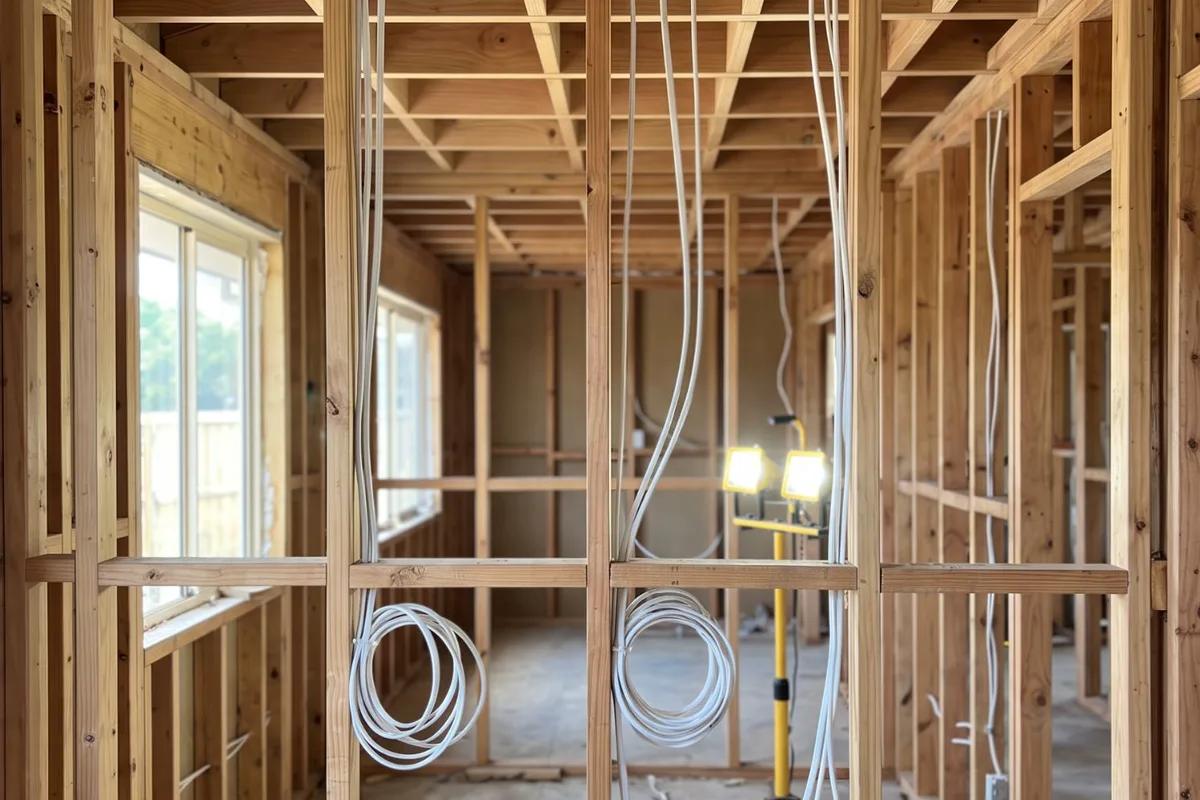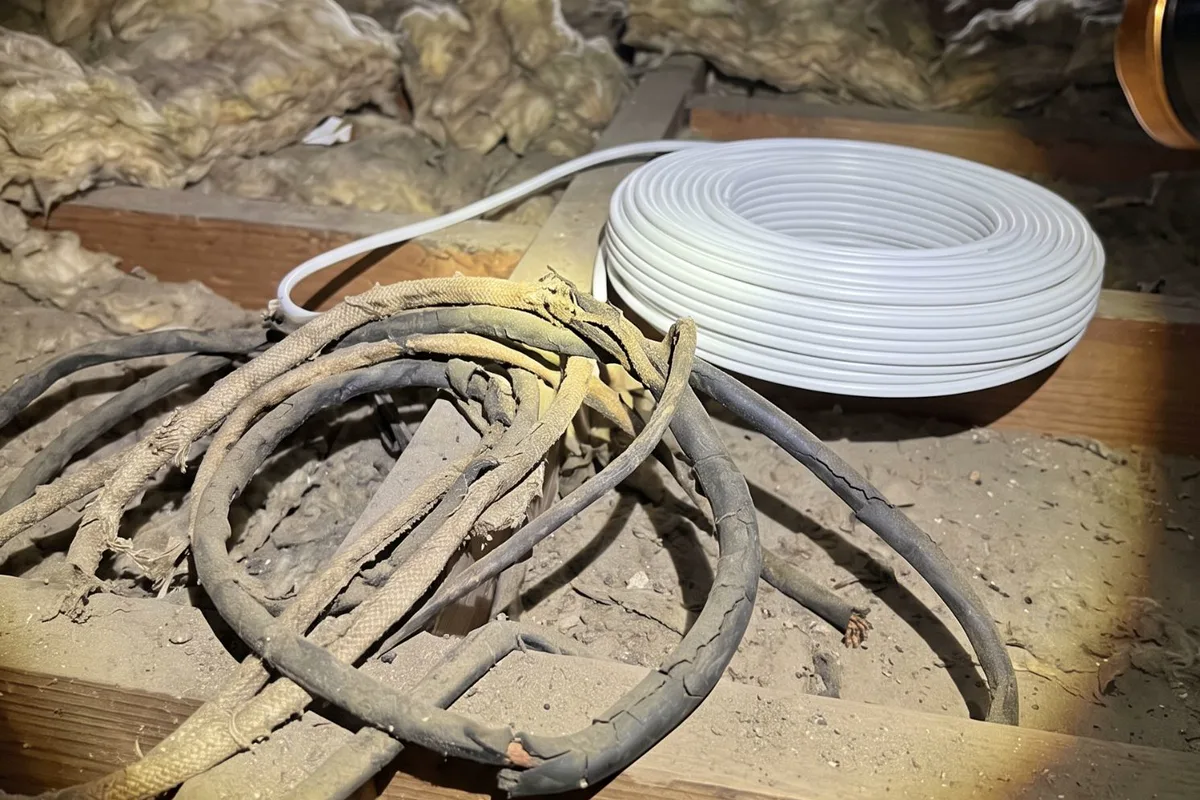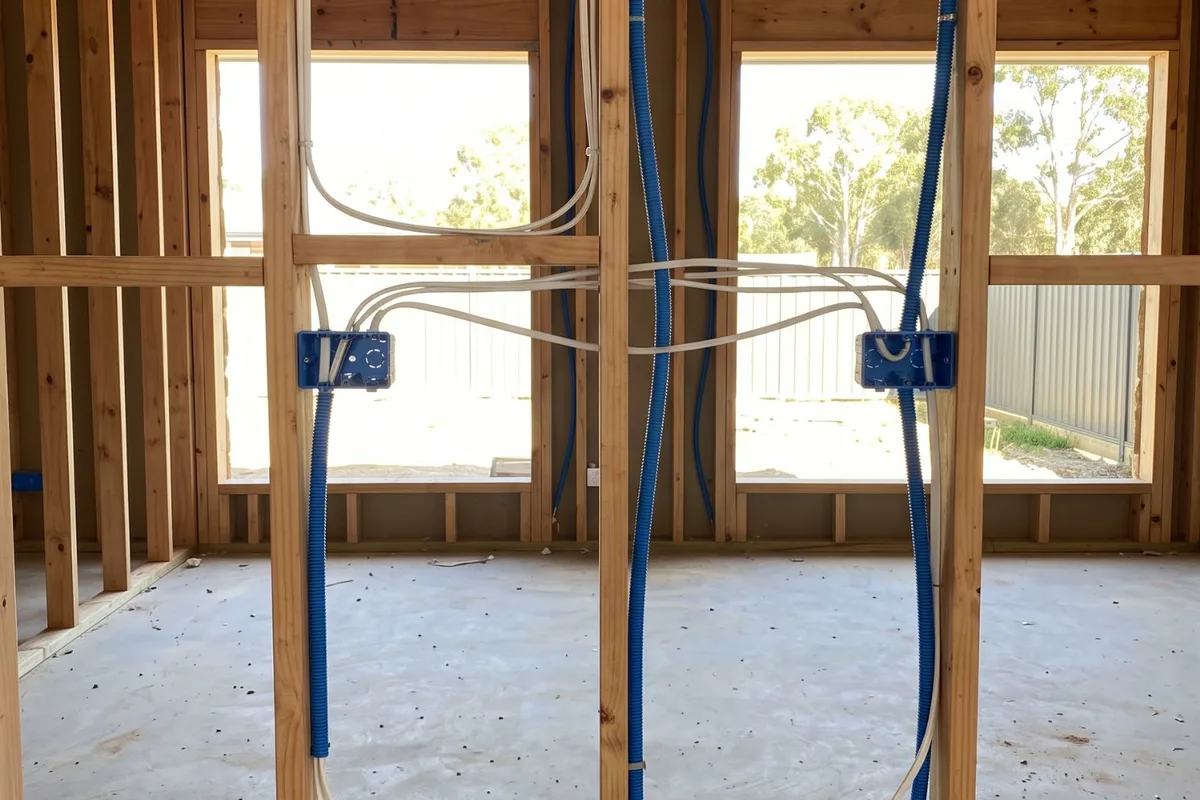
A new home is the one chance to put every point, switch and light where you’ll use it. We work from your drawings, walk the frame with you before plaster and set the board up for an all-electric home.
When to get it checked
The plan is dots on a page
The builder’s drawing shows symbols but not what they’re for. Nobody asked where the bed, TV or fridge goes, so points end up behind furniture.
The frame is up and nobody has walked it
Rough-in is booked but you haven’t stood in the rooms with the plan. After plaster, moving a switch means cutting, patching and repainting.
You’re going all-electric
Induction, heat pump hot water and reverse-cycle heating usually each get their own circuit. A board laid out like an old gas home’s runs short of room.
A knock-down rebuild
Rebuilding on a post-war block in Altona or Laverton means the supply, consumer mains and meter box are planned from scratch, not copied from the old house.
Why it happens
4 common causes
Plans that count fittings, not uses
A standard allowance puts a set number of points and lights in each room. It rarely matches where the desk, bedside tables or appliances end up.
Appliances chosen late
Cooktops, ovens and air conditioners set their own supply requirements. If the model changes after rough-in, the cable can be the wrong size or in the wrong place.
Trades competing for the ceiling
Ducts, downlights, exhaust fans and smoke alarms all want the same ceiling space. Without one shared plan, something gets shifted on the day.
Future loads left off the list
Nobody mentioned a car charger, battery or extra air conditioner, so there’s no spare board space and no cable route to the garage or roof.
What the job covers
What we usually do on this job. Your quote confirms it for your place.
- Electrical plan marked up from your drawings
- Fixed price for the agreed scope, by stage
- Frame walk with you before plaster
- Dedicated appliance and air conditioning circuits
- Safety switch protection on every circuit
- Board, mains and earthing inspected before power-on
- Interconnected hard-wired smoke alarms
- Labelled board and Certificate of Electrical Safety
Your options, explained
Single-phase, planned for all-electric
Low disruption- Best for
- A typical family home, all-electric included
- How it works
- Dedicated circuits for the cooktop, oven, hot water and air conditioning, with spare room left on the board.
- Worth knowing
- Most household appliances, induction cooktops included, run on single-phase power. We size the board and mains with room to grow.
Three-phase supply
Medium disruption- Best for
- Larger homes with several big loads, or 22 kW car charging
- How it works
- Heavy loads are spread across three phases, settled with the distributor when the connection is arranged.
- Worth knowing
- Worth it when you plan a large ducted system, more than one EV charger, a 22 kW charger or a workshop. It's easiest to settle before the connection is arranged.
Future-ready rough-in
Low disruption- Best for
- A car charger or more air conditioning down the track
- How it works
- Conduits with draw wires run to the garage and outdoor unit spots, with spare positions kept on the board.
- Worth knowing
- Far easier with the frame open than through finished walls.
The people behind the work
Our own photos from jobs like this one. Family-run, based in Altona Meadows, with 19 years in the industry.
Licensed electrical contractor (REC 38187)See more team photos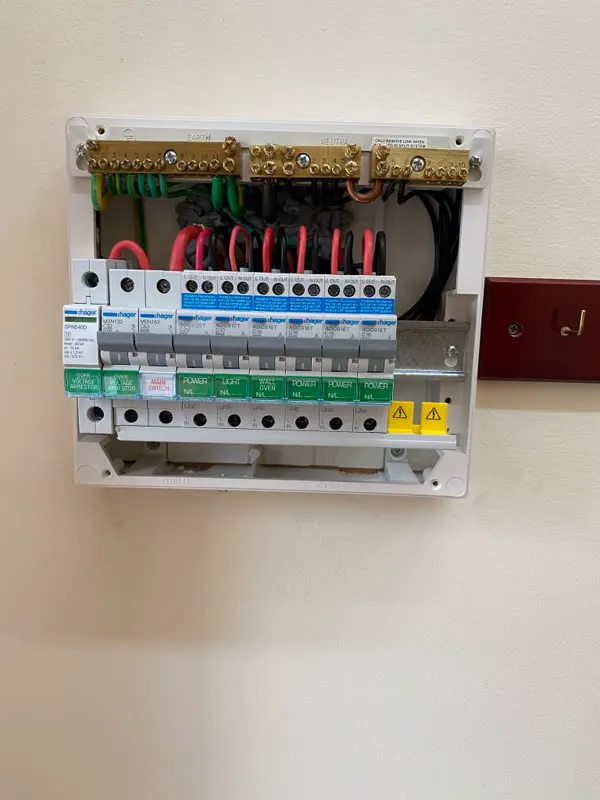
Worth knowing before you book
- Fix the board position early
- The meter box and switchboard are where every cable run starts. Moving them once the slab or frame is in is a big change.
- Smoke alarms are wiring work
- Hard-wired smoke alarms must be installed by a qualified electrician, so they’re roughed in with the rest of the house.
- Think past moving day
- A conduit to the garage and spare board space now make a car charger or extra air conditioning simpler later.
What affects the price?
The right scope depends on your installation. These are the details we check so your quote is useful, with any additional work explained before it proceeds.
Size and layout
Floor area, storeys and ceiling heights set how much cable goes in.
What you specify
The number of points, lights and appliance circuits, and the fittings you choose. Feature and smart lighting take more wiring than plain downlights.
Supply and mains run
Single or three-phase, and the distance from the point of supply to the meter box, set the size and length of the consumer mains.
Stages and changes
Extra visits when the build schedule moves, and changes after rough-in, both add time. Settling the plan early keeps them down.
How it runs
- 1
Send the drawings
Plans, your appliance list and the build schedule.
- 2
Plan and quote
We mark up the plan with you, then price the agreed scope by stage.
- 3
Rough-in to handover
Cabling before plaster, board inspected, then fit-off, testing and your certificate.
Step by step, in more detail
5 steps
Mark up the drawings
We go through your plans room by room: points, lighting and switching, appliance circuits, fans and smoke alarms, checked against where your furniture will sit.
Price it by stage
A fixed price for the agreed scope, split into rough-in, board and mains, and fit-off.
Rough in, then walk it together
Cables, boxes, conduits and fan mounting blocks go in before insulation and plaster. We walk the frame with you, so any moves happen while they’re easy.
Board, mains and inspection
The main switchboard, consumer mains, meter box and main earthing are prescribed work. A licensed electrical inspector checks them before they can be switched on.
Fit off, test and certify
After painting, fittings go on and appliances are connected. Every circuit is tested and labelled, and you get a Certificate of Electrical Safety.
What is safe to do, and what to leave to us
Safe for you to do
- With your builder’s OK, photograph each wall and ceiling before plaster, from a safe spot. It’s your map of the cable runs.
- Once you’re in, press the test button on each safety switch every three months, as Energy Safe Victoria suggests.
- Reset a tripped safety switch once. If it trips again, leave it off and call us.
Leave these to us
- Running cable or fitting off points yourself, even as an owner-builder.
- Fixing shelves, TV brackets or joinery near switches and points without checking your photos first.
- Letting anyone but a licensed electrician wire new circuits, including an air conditioning installer on a restricted licence.
When to get us in
- Before the drawings are final, while the board and meter box can still move
- When your appliance selections go to the builder
- Before the frame walk, well before plaster
- If you’re an owner-builder and need a registered electrical contractor
More detail
The mains are yours from day one
Energy Safe Victoria says that from the point of supply, where the network meets your installation, the property owner is responsible for maintaining and repairing it. On a new home, the consumer mains and meter box sit on your side of that line, so their route and position deserve as much thought as the kitchen.
A safety switch on every circuit
Energy Safe Victoria says a safety switch is now compulsory on new residential installations. Its guidance says the Wiring Rules require an RCD on every final sub-circuit in a home, hot water included, and Type AC RCDs must not be installed. A combined breaker and safety switch per circuit means one faulty appliance only drops its own circuit.
One plan for power, heating and cooling
Total Comfort is one local team for electrical, heating and cooling. When we do both, the air conditioning circuits match the units you’ve chosen, and the outdoor units, board and cable routes are set out together. If another company is doing the heating and cooling, send us their unit list before rough-in.
Local rules and conditions
Victorian requirements and local conditions that shape this job, with the sources listed at the foot of the page.
All-electric from the start
Under Victoria’s Gas Substitution Roadmap, new homes needing a planning permit have had to be all-electric since 1 January 2024. The Building and Plumbing Amendment Regulations 2025 have been finalised, and from 1 January 2027 all new homes will be required to be built all-electric.
Western growth corridor on Powercor
Powercor’s Altona Terminal Station (West) supplies part of Melbourne’s western growth corridor, including Point Cook, Tarneit, Werribee and Wyndham Vale. If you’re building there, settle the meter box position and the consumer mains route early, while the connection is being arranged.
Smoke alarms in a new home
Every new home falls under Fire Rescue Victoria’s rule for homes built after 1 May 2014: interconnected, hard-wired smoke alarms on 240-volt mains power with a backup battery. The Building and Plumbing Commission says they go on or near the ceiling of every storey, between each bedroom area and the rest of the house.
Useful reading
Guides to read before you decide, with checklists and questions to bring to the quote.
- Planning the electrical in a new build or extensionMark up the power and lighting plan, decide the dedicated circuits, pre-wire air conditioning and EV charging, then walk the frame before plaster.
- A room-by-room lighting plan that goes beyond more downlightsPlan task lighting, comfortable evening light and outdoor coverage around how each space is used.
- Certificates of Electrical Safety explainedWhat a Victorian COES records, how prescribed and non-prescribed work differ, when your copy should arrive and why it belongs in your house file.
- Going all-electric in a Melbourne homeHot water, heating and cooking don't have to go electric at once. How to stage the move off gas, check the switchboard once and time each step.
Common questions
From the blog
Sources for the rules and local facts on this page
18 sources, with the date each was checked
- 1.Department of Energy, Environment and Climate Action (Victoria): from 1 January 2024, new homes requiring a planning permit are required to be all-electric Accessed 30 September 2026.
- 2.Department of Transport and Planning (Victoria): Victoria’s new Building and Plumbing Amendment Regulations 2025 have been finalised, advancing Victoria’s shift toward all-electric buildings. From 1 January 2027, all new homes and most new commercial buildings will be… Accessed 30 September 2026.
- 3.Powercor Australia, Project Assessment Draft Report: Altona Terminal Station (West) (June 2025): It supplies part of Melbourne’s western growth corridor. This includes the areas of Laverton, Laverton North, Altona Meadows, Werribee, Wyndham Vale, Mount Cottrell, Eynesbury, Tarneit, Hoppers Crossing and Point Cook… Accessed 30 September 2026.
- 4.Fire Rescue Victoria: Residential home constructed, largely renovated, or extended after 1 May 2014 Interconnected, hard wired smoke alarms that are connected to 240 volt mains power and have a back-up battery. Accessed 30 September 2026.
- 5.Building and Plumbing Commission (formerly Victorian Building Authority): Smoke alarms are compulsory and must be installed in every residential building, on or near the ceiling of every storey. Smoke alarms need to be positioned to wake sleeping occupants. They must be located between each… Accessed 30 September 2026.
- 6.Energy Safe Victoria: 'Prescribed' certificates are for electrical installation work that requires inspection by a Licensed Electrical inspector. This includes (but is not limited to): Consumer mains cables, main switchboard, meter box and… Accessed 30 September 2026.
- 7.Energy Safe Victoria: The point of supply is the changeover point from the electricity distribution network to the electrical installation, where the property owner becomes responsible for the maintenance and repair of the electrical… Accessed 30 September 2026.
- 8.CitiPower & Powercor: Customer installation defects fall under customer responsibility and require prompt rectifications to ensure either the safety of the electrical installation, unhindered access to our assets by our employees or that our… Accessed 30 September 2026.
- 9.Energy Safe Victoria: Whenever a licensed electrician completes any electrical installation work, they must provide a Certificate of Electrical Safety (COES). Accessed 30 September 2026.
- 10.Energy Safe Victoria: Gas and electricity are inherently dangerous and it’s illegal and potentially fatal for unlicensed and unqualified people to undertake any electrical or gasfitting work. Homeowners and consumers must always use… Accessed 30 September 2026.
- 11.Energy Safe Victoria: This licence type only allows the disconnection and reconnection of ‘like for like’ equipment, for the purposes of repair, replacement or maintenance. The Restricted Electrical Worker’s licence does not allow a person… Accessed 30 September 2026.
- 12.Energy Safe Victoria: Having a safety switch installed is now compulsory on new residential installations and a great step to electrical safety in your home, if you are unsure if a safety switch is installed at your property, contact a… Accessed 30 September 2026.
- 13.Energy Safe Victoria: Clause 2.6.3.2.2 requires all final sub-circuits in a domestic installation be protected by a residual current device (RCD). A hot water service is included in this requirement Accessed 30 September 2026.
- 14.Energy Safe Victoria: Type AC RCDs must not be installed in Australia. This includes like for like replacement. We recommend that electrical contractors advise customers of the new requirements. However, it is not mandatory to replace… Accessed 30 September 2026.
- 15.Energy Safe Victoria: Follow these steps to check your safety switch every three months: Press in the test buttons on each safety switch which will cut the power and trip the switch into the off position. You may hear a clunking sound. If… Accessed 30 September 2026.
- 16.Energy Safe Victoria: Locate your electricity box outside your home and check whether the safety switch has tripped. If it has tripped, reset the switch. If the switch won’t reset, call a licensed electrician. Accessed 30 September 2026.
- 17.Consumer Affairs Victoria: A hard-wired smoke alarm must be installed by a qualified electrician, but anyone can change a smoke alarm battery. Accessed 30 September 2026.
- 18.Victorian Government, Hobsons Bay Planning Scheme (PDF snapshot, last updated by VC292 on 11/09/2025): The heritage places of Hobsons Bay reflect the key themes that have shaped the development of the city since the establishment of Williamstown in the 1840s as the first port of Melbourne, through the development of… Accessed 30 September 2026.