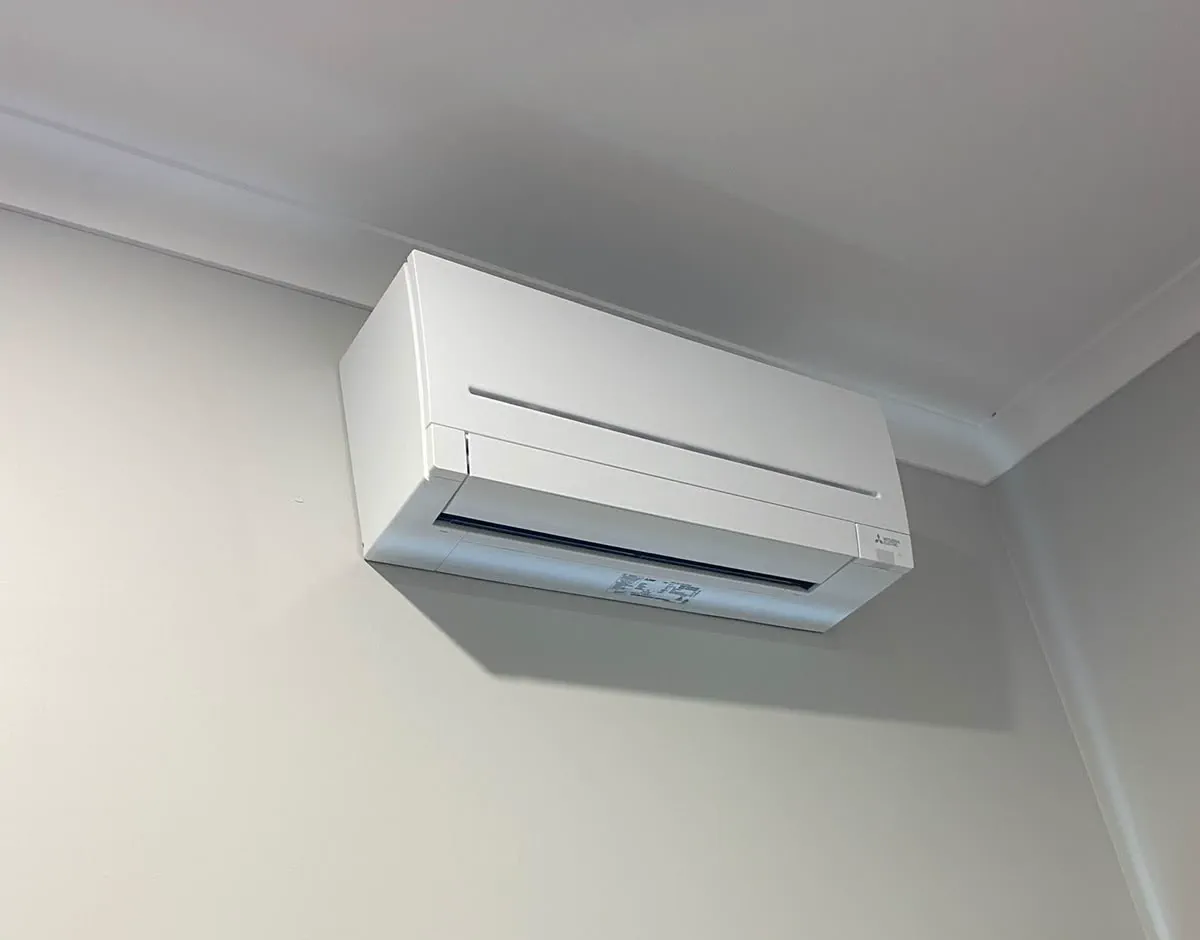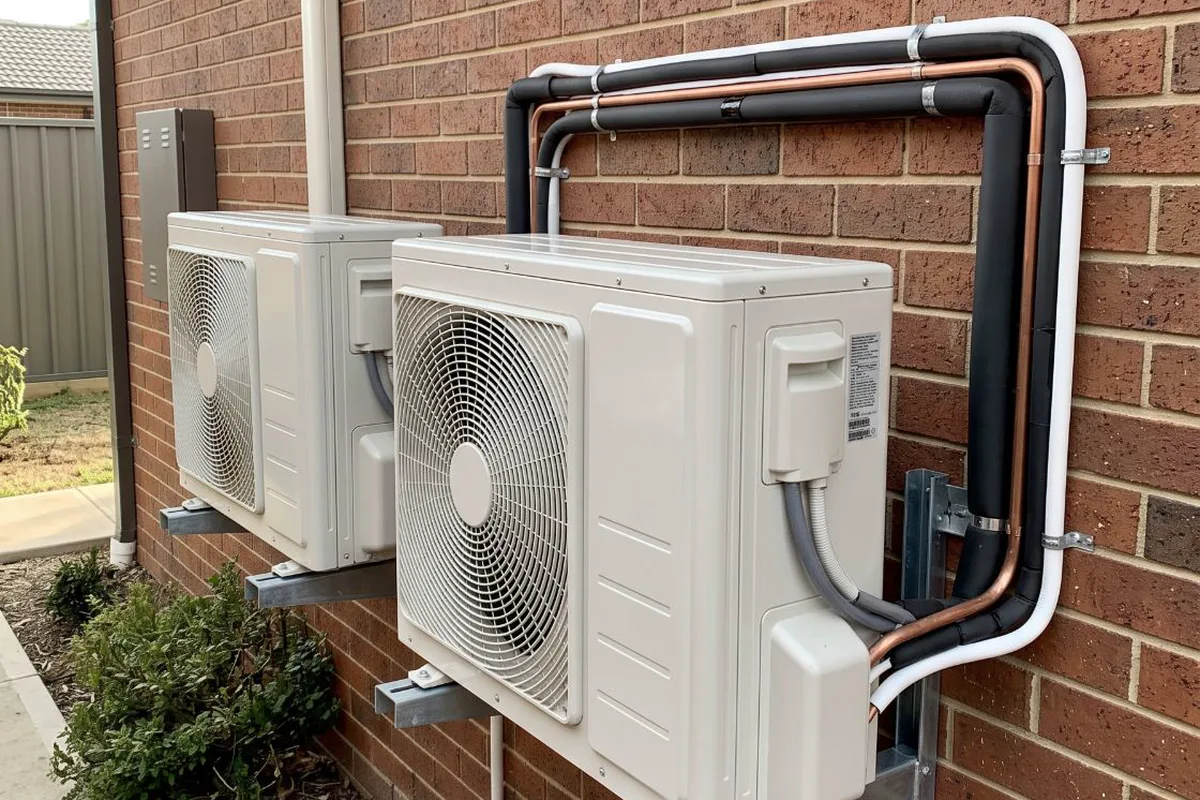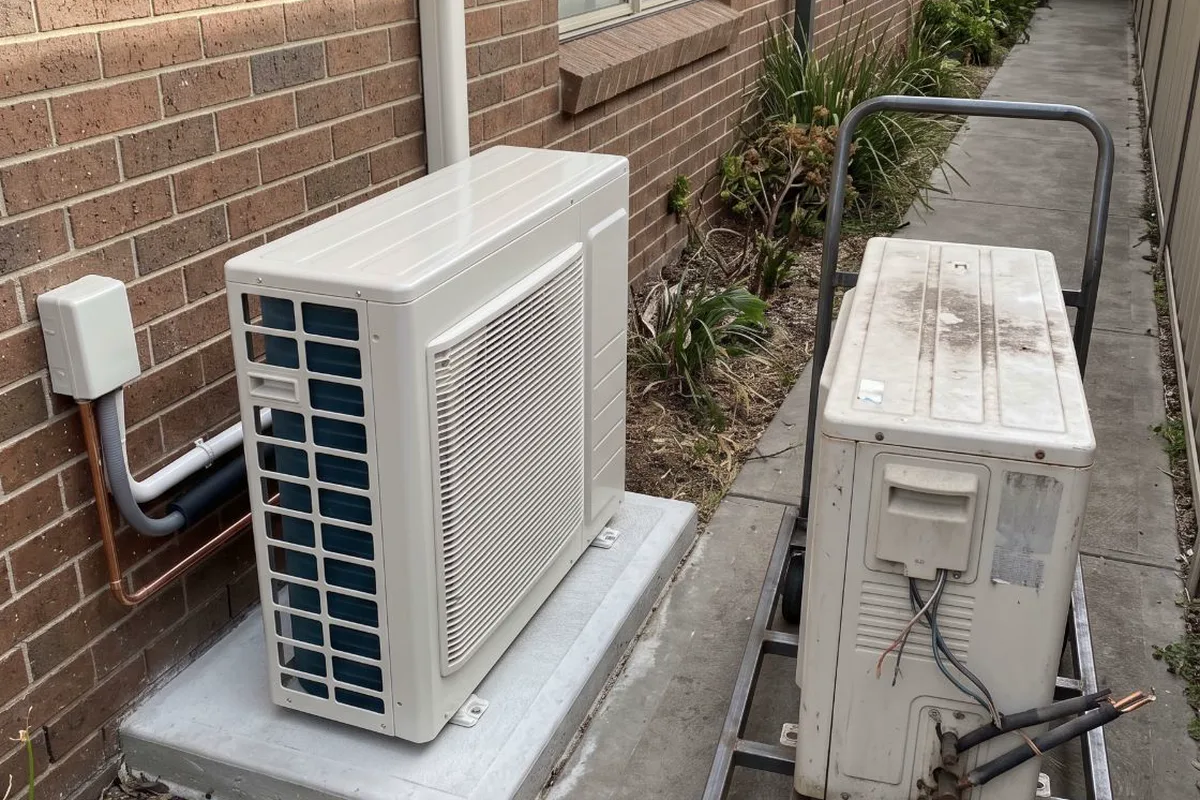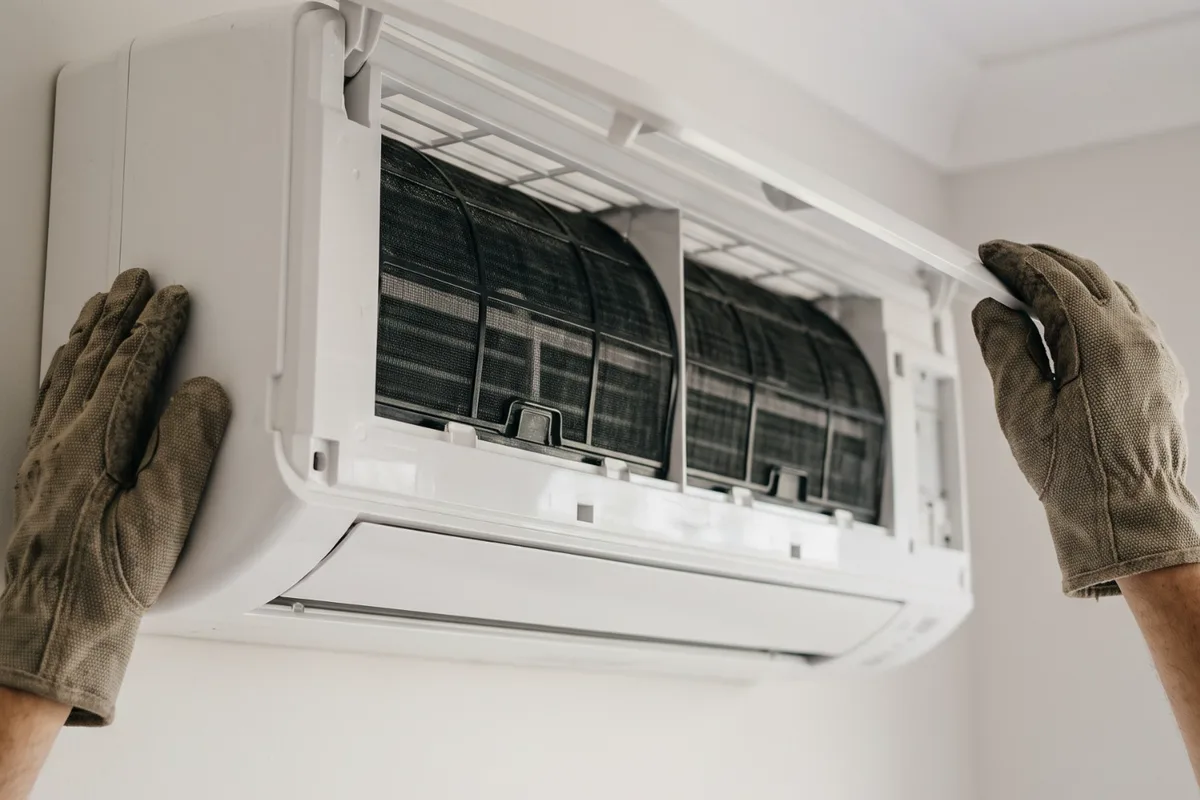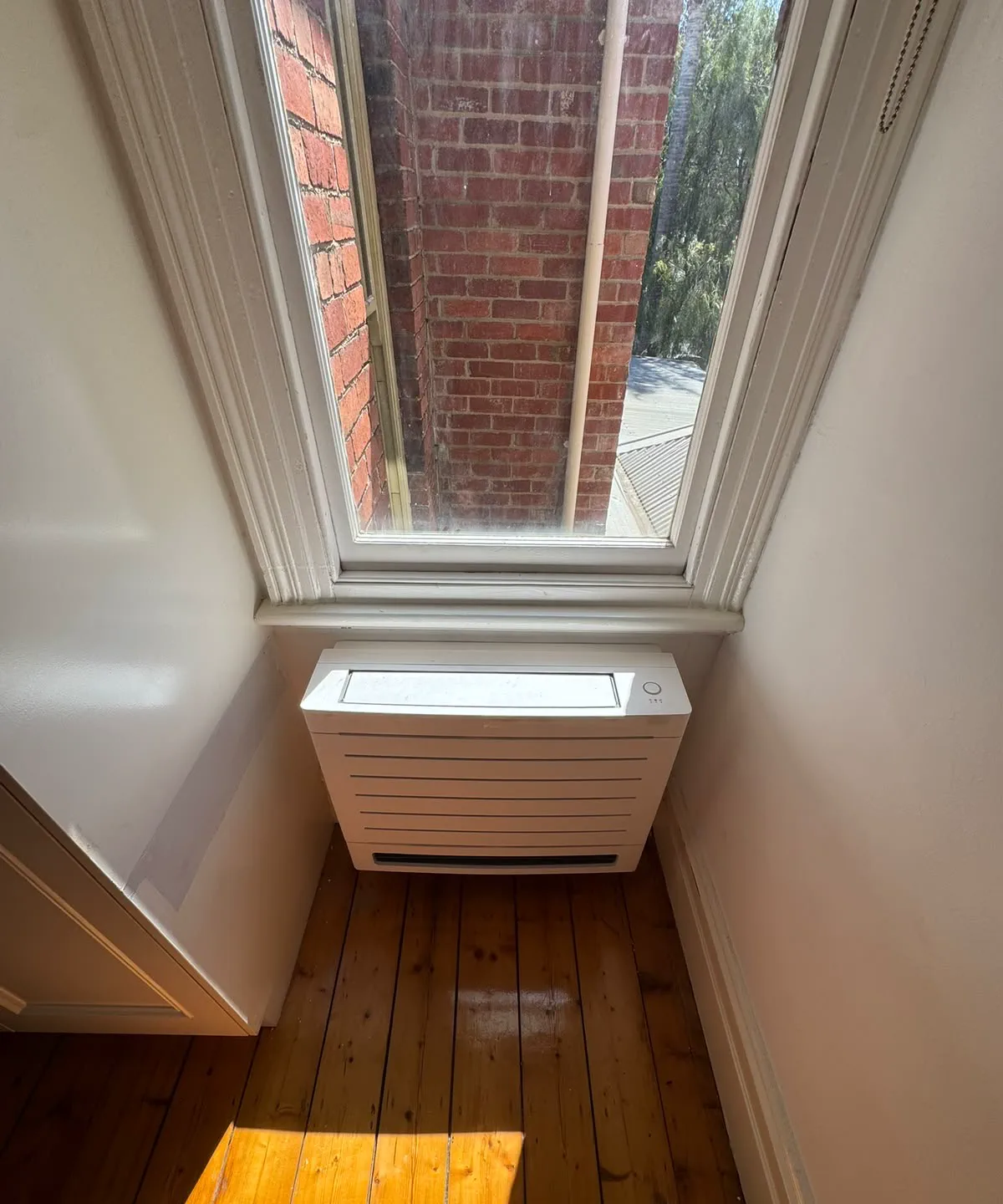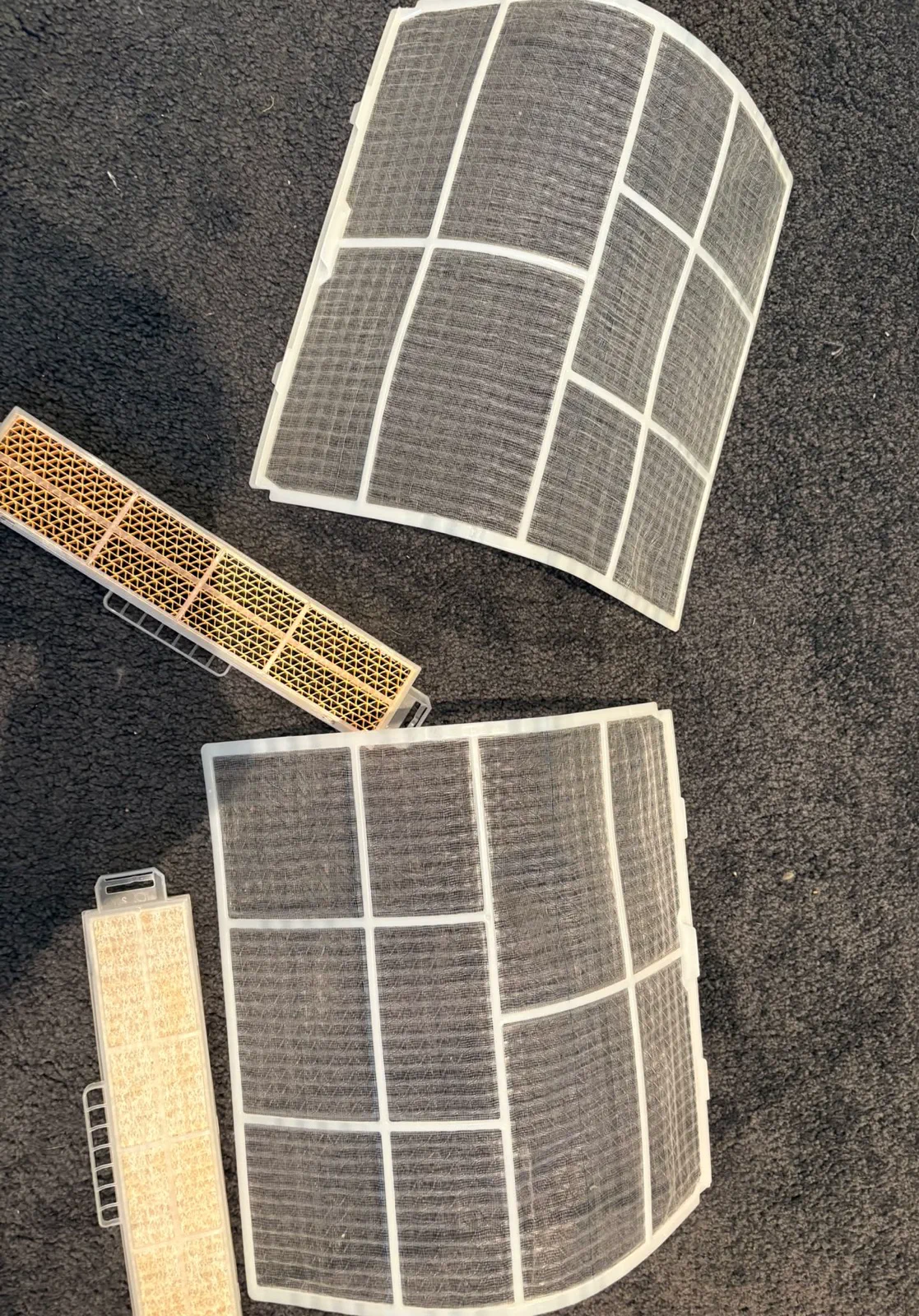
A multi-head relies on one outdoor unit and several heads that are rarely used evenly. We service them all on the same visit, clean what a filter wash doesn't reach, and run every head together to see how the system copes.
When to get it checked
One room smells musty
Heads in spare rooms and studies can sit idle for weeks. A damp coil or drain tray grows a smell that comes out the first time you switch on.
Weaker air from some heads
Dust on the filters and coil cuts airflow head by head, so the room you use most is often the first to feel it.
Struggling when several rooms run
The system copes with one head but falls behind with three. A dusty outdoor coil is a common reason, because it serves every room.
Drips or gurgling from a head
A slow drain on one head can overflow the tray and run down the wall, often after the first long cooling run of the season.
No service record
You can't remember when it was last serviced, or you've just bought or moved into a home that has one. Start with a full check.
Why it happens
4 common causes
One outdoor coil for every room
The outdoor unit moves the heat for every head. When its coil clogs with dust, leaves or cobwebs, every room loses capacity together.
Heads that rarely run
A head used a few times a season never dries out the way a busy one does, so mould and slime can build in the coil and drain.
Long drain runs
Heads on internal walls and upstairs rooms often have long drain lines or a condensate pump, and both block more easily.
Hard work in both seasons
Victorians typically use more energy heating than cooling, so a multi-head often runs hard in winter and summer with little rest in between.
What the job covers
What we usually do on this job. Your quote confirms it for your place.
- Filters cleaned on every head
- Coil, fan wheel and louvres cleaned
- Each drain tray and line flow-tested
- Outdoor coil cleaned and debris cleared
- Fan, casing and mounts checked
- Isolator, terminals and cabling inspected
- Every head run in heating and cooling
- All heads run together at full load
- A short note on each room
Your options, explained
Routine service
Low disruption- Best for
- A system that's been serviced recently and is running well
- How it works
- Filters, coils, fans and drains on every head, the outdoor coil and electrical checks, then a full run.
- Worth knowing
- Book it before summer or before winter, when the system is about to work hardest.
Deep clean
Medium disruption- Best for
- Heads that smell, show dark spots or haven't been serviced in years
- How it works
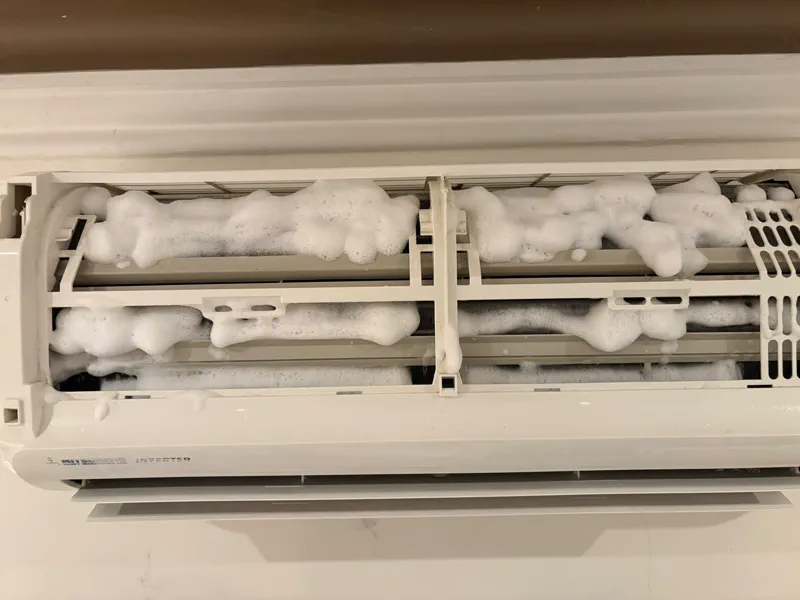
- Each head is bagged and its coil and fan wheel washed more thoroughly, with extra time on the drain and tray.
- Worth knowing
- Takes longer per head and needs clear space underneath each one.
Service with fault diagnosis
Low disruption- Best for
- A system with an error code, or one head that isn't right
- How it works
- The full service, plus fault-finding on the problem head or the outdoor unit.
- Worth knowing
- You get the diagnosis and the price before any repair. See our multi-head split system repairs page.
The people behind the work
Our own photos from jobs like this one. Based in Altona Meadows, with 19 years in the industry.
Licensed electrical contractor (REC 38187)See more team photos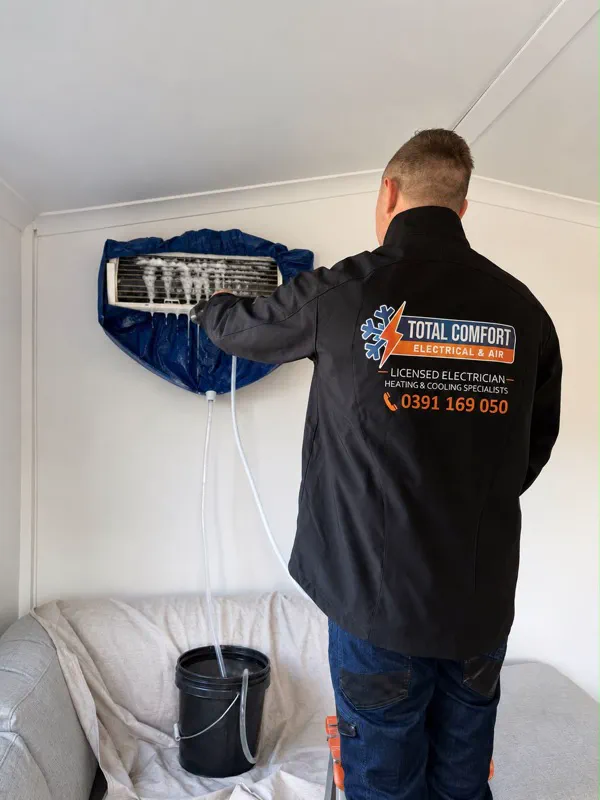
Worth knowing before you book
- Idle heads matter
- Spare-room heads are often the dirtiest inside.
- No routine re-gas
- Refrigerant only drops through a leak, which is found and fixed first.
- Clear the space
- Furniture under each head needs a little room around it.
What affects the price?
The right scope depends on your installation. These are the details we check so your quote is useful, with any additional work explained before it proceeds.
Number of heads
Each head is cleaned and tested on its own, so a five-head system takes longer than a two-head one.
Head types and positions
Wall heads are quickest. Ceiling cassettes, floor consoles, very high walls and upstairs rooms take more time.
Condition
A head with heavy mould or a blocked drain needs a deeper clean than one serviced last year.
Outdoor unit access and repairs
A unit on a ground pad is simple; a high bracket or roof mount takes more setup. Worn parts, leaks or electrical faults are priced separately before any work.
How it runs
- 1
Tell us about the system
Heads, model numbers and anything that isn't right.
- 2
Isolate and clean
Every head and the outdoor unit serviced.
- 3
Run it together
Each head alone, then all at once.
- 4
Report back
A note on each room, repairs priced separately.
Step by step, in more detail
5 steps
Get the history
Model numbers, which heads you use most, any error codes or rooms that feel weak, and when it was last serviced.
Isolate and protect
We isolate the system, cover furniture and floors under each head, and confirm nothing is live before covers come off.
Clean each head
Filters, coil, fan wheel, louvres and drain tray are cleaned, and each drain is flow-tested with water.
Service the outdoor unit
The coil is cleaned, debris cleared and the fan and casing checked. The isolator, terminals and cabling are inspected.
Run it together and report
Every head runs in heating and cooling, first alone and then all at once. You get a note on each room, with anything worth fixing priced separately.
What is safe to do, and what to leave to us
Safe for you to do
- Clean each head's washable dust filters about twice a year, more often with heavy use, with the system switched off.
- Run spare-room heads now and then, so their coil and drain don't sit damp for months.
- If a head drips onto anything electrical, switch the system off at the controller.
Leave these to us
- Spraying cleaners into a head or the outdoor unit. Water and chemicals near the electronics can do real damage.
- Opening covers, the isolator or any wiring. Electrical work isn't a DIY job, even small ones.
- Letting anyone top up refrigerant during a service without finding and repairing a leak first.
When to get us in
- It's been more than a year since the last service
- One head smells musty or shows dark spots on the louvres
- The system falls behind once several rooms are running
- Water is dripping from a head
- You've moved into a home with a multi-head and no service history
More detail
Why every head gets checked
It's tempting to service only the heads you use. But the idle ones are often the dirtiest inside, because a coil that rarely runs never dries out properly, and their drains can grow slime while nobody's watching.
The outdoor unit works for every head as well. A clogged outdoor coil shows up as weaker air in every room, not just one, so the whole system is serviced on the same visit.
What a filter clean doesn't reach
The Victorian Government suggests cleaning the dust filters about twice a year and having the system serviced at the frequency the manufacturer recommends. Dirty filters significantly cut airflow and efficiency and can reduce heating performance.
A filter wash doesn't reach the coil, the fan wheel or the drain tray. In federal bench tests, common faults in refrigeration and air conditioning equipment caused average energy losses of 14% to 20% in most tests. Dirty coils, slow drains and a clogged outdoor unit often turn up together, so we check them as a set.
Running every head at once
A multi-head is often sized on the idea that not every room peaks together. On a hot afternoon or a cold evening, though, they often do. At the end of a service we run each head alone and then every head together, so you can see how the system copes at full load and whether one room falls behind.
Cleaning, refrigerant and wiring are separate jobs
In Victoria, refrigerated air-conditioning work is a class of plumbing work regulated by the Building and Plumbing Commission, and work involving refrigerant needs a Refrigerant Handling Licence. Nobody is allowed to top up refrigerant until the system has been fully tested and every identified leak repaired.
Repairs to the isolator or wiring are electrical installation work. Our electricians handle that side, so an electrical fault found during a service doesn't need a second trade.
Local rules and conditions
Victorian requirements and local conditions that shape this job, with the sources listed at the foot of the page.
Before the hot run
Laverton averages 27 days a year at or above 30 °C, most between December and February. Victoria's health department advises checking your air conditioner works before extreme heat and keeping filters and vents clean. A multi-head runs every room on those afternoons, so spring is the time to service it.
Salt air near the bay
A marine-environment guide based on AS 4312 classes Port Phillip Bay from Altona to Portsea as 'exposed' marine, and Williamstown as 'calm' marine. Outdoor units near the water collect salt on the coil fins, so we look closely for corrosion when we clean them.
Renting with a multi-head
A cooling appliance supplied by the rental provider that isn't working is on Consumer Affairs Victoria's list of urgent repairs, and the rental provider pays for repairs unless the renter caused the problem. Regular servicing makes a breakdown on the first hot day less likely.
Useful reading
Guides to read before you decide, with checklists and questions to bring to the quote.
- Air conditioner maintenance: what to watch between servicesKeep useful records, follow model-specific filter care and recognise symptoms that need a repair visit.
- Getting your air conditioning ready for a heatwaveA spring test run, clean filters, a clear outdoor unit and a backup plan: how to find a tired air conditioner before the first hot northerly does.
- Landlords: heating, cooling and electrical obligations in VictoriaA rental provider's map of the heating, switchboard, safety check and repair duties on a Victorian rental, and what the 2027 energy standards change.
- Air conditioner filters, dust and allergiesHow filters, return grilles and coils affect dust, smells and hay fever season at home, which filter upgrades help, and where your own cleaning should stop.
Common questions
Questions people ask about this
More in the Help centreSources for the rules and local facts on this page
13 sources, with the date each was checked
- 1.Bureau of Meteorology: Mean number of days ≥ 30 °C 6.9 6.0 4.5 0.7 0.0 0.0 0.0 0.0 0.1 0.9 2.8 5.1 27.0 82 1943 2026 Mean number of days ≥ 35 °C 3.6 2.4 0.9 0.0 0.0 0.0 0.0 0.0 0.0 0.1 0.5 1.9 9.4 Accessed 30 September 2026.
- 2.Better Health Channel (Department of Health, Victoria): Check that your fan and air-conditioner works well. Have your air-conditioner serviced if needed. Ensure the filters, pads and air vents are clean. Accessed 30 September 2026.
- 3.BlueScope, Technical Bulletin TB-35 Australian salt marine classifications (March 2026, Revision 9): Exposed Port Phillip Bay (Altona to Portsea Beaches) Calm Port Phillip Bay (Williamstown), Yarra River (Docklands and Melbourne CBD), Maribyrnong River Accessed 30 September 2026.
- 4.Consumer Affairs Victoria: a cooling appliance or service provided by the rental provider is not working the property does not meet minimum standards a safety-related device, such as a smoke alarm or pool fence, is not working Accessed 30 September 2026.
- 5.Department of Energy, Environment and Climate Action (energy.vic.gov.au), page last updated 14/04/25: Victorians typically use more energy for heating than cooling, so look for a unit with a higher heating efficiency. Accessed 30 September 2026.
- 6.Solar Victoria (updated 20 November 2025): Check the manufacturer’s instructions or manual and have the air conditioner serviced regularly at the recommended frequency to ensure it continues to operate efficiently. Cleaning the filters regularly helps the system… Accessed 30 September 2026.
- 7.Energy Rating (GEMS Regulator / DCCEEW): Dirty filters significantly reduce the amount of airflow and the energy efficiency of the unit. It can also impact the effectiveness of its heating. Cleaning clogged filters, or replacing a worn one, can lower the… Accessed 30 September 2026.
- 8.energy.gov.au (Australian Government, DCCEEW): The findings indicated that on average there were energy losses between 14% and 20% across most tests. When several faults co-existed, energy use increased substantially, with a high likelihood of system failure if… Accessed 30 September 2026.
- 9.Building and Plumbing Commission (Victorian Building Authority, trading as the Building and Plumbing Commission): Under Part 4 of the Plumbing Regulations 2018, Refrigerated Air-conditioning work is: The construction, installation, replacement, repair, alteration, maintenance, testing or commissioning of refrigerated… Accessed 30 September 2026.
- 10.Australian Refrigeration Council (ARC): A Refrigerant Handling Licence must be held by any person who carries out work in relation to refrigeration and air conditioning (RAC) equipment. Carrying out work in relation to RAC equipment means to do anything with… Accessed 30 September 2026.
- 11.Australian Refrigeration Council (ARC), Fact Sheet 13 (ARC5225, 11/22): ‘Topping-up’ a system before the system has been fully tested and all identified leaks repaired by any individual is illegal. Accessed 30 September 2026.
- 12.Victorian Legislation (legislation.vic.gov.au) - Electricity Safety Act 1998, authorised version 089 (effective 8 Sep 2026): electrical installation work means installation, alteration, repair or maintenance of an electrical installation; Accessed 30 September 2026.
- 13.Energy Safe Victoria: Electrical work isn’t a DIY job, even for small jobs such as changing power points or light switches. Accessed 30 September 2026.