
The key points
- The filter's main job is protecting the coil and fan. A clean one also traps dust, lint and pet hair, but an air conditioner isn't a medical device.
- Musty smells and black specks usually come from a dirty coil, fan wheel or drain tray, not the filter, and need a proper clean.
- Finer filter media catches more dust but also restricts airflow, so only fit media the manufacturer or installer says suits your system.
- A split or ducted reverse-cycle system recirculates indoor air with the windows shut. An evaporative cooler has to draw outside air in.
- Washing filters is owner work. Coils, fans, drains, wiring and refrigerant are service work.
What the filter is there for
Every split system head has mesh filters behind its front panel, and a ducted system has a filter in the return-air grille, often in a hallway ceiling. Their first job is mechanical: catching dust, lint and hair before it coats the indoor coil and fan, which have to stay clean to move heat and air properly.
A side benefit is cleaner air in the room. A clean filter takes some dust and pollen out of the air each time it passes through. But standard filters aren't designed as air purifiers, and they can't help much once they're clogged. The Australian Government's Energy Rating site says dirty filters significantly reduce airflow and efficiency and can cut heating performance.
So for anyone sensitive to dust, the filter is less a cure than a habit: keep it clean and the system stops adding to the problem. If allergy or asthma symptoms are bothering someone at home, their GP is the person to ask about managing them.
Where the dust and smells come from
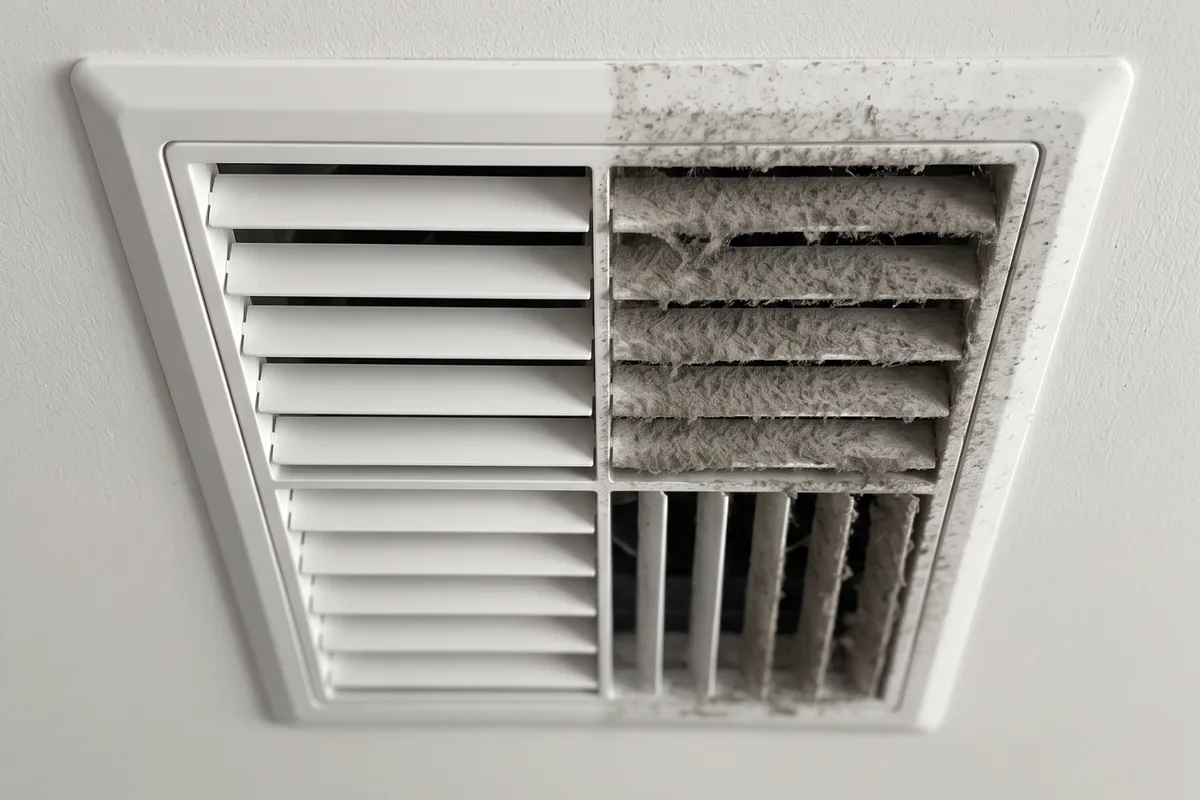
A loaded filter lets fine dust slip around its edges and settle on the coil. In cooling mode that coil is wet, so the dust turns into a film that grows mould and gives off the musty smell you notice in the first few minutes after switching on. Black specks blown out of a split system usually mean the fan wheel inside the head has a coating of the same grime.
Ducted systems have extra paths. A return grille that doesn't seal, or a torn return duct in the roof, can pull dusty roof-space air into the system without it passing through the filter. Grey streaks on the ceiling around outlets are dust carried in the airflow.
Heads in spare rooms are often the worst. A unit that rarely runs never dries its coil and drain tray properly, so it can smell even though it has done very little work.
- A musty smell that returns within days of washing the filters
- Black specks on the louvres or the wall below a split
- Grey streaks around ducted ceiling outlets
- Dust settling quickly in rooms with outlets
- Weak airflow even with clean filters
Cleaning the filters yourself
The Victorian Government suggests cleaning the dust filters on a reverse-cycle air conditioner about twice a year, or more often if it's used a lot. In a house with pets, building work nearby or someone with allergies, checking them every month or two through the busy seasons is a sensible habit. Homes in growing estates such as Tarneit, Truganina and Wyndham Vale pick up construction dust that goes straight into the filters.
Turn the system off at the remote or controller first. On a split, lift the front panel and slide the mesh filters out. On a ducted system, open the return grille from a stable step and check whether the filter is washable or a replaceable pad. Follow the manual for your model.
- Vacuum the dusty side first, then rinse from the clean side with lukewarm water
- Use mild detergent only if the manual allows it
- Let filters dry fully in the shade before refitting
- Never run the system with filters out
- Replace ducted filter pads that are torn, flattened or won't come clean
Filter upgrades that can help
Many split systems can take extra fine-dust or deodorising filters that clip onto the main mesh. They're model-specific, need replacing on the schedule in the manual, and do nothing if they're left in long after they've loaded up.
On ducted systems the return filter media can sometimes be upgraded to a denser grade that catches finer particles. The trade-off is airflow. A ducted unit is designed around a certain resistance, and a filter that's too dense starves it of air, which cuts capacity and can make it cut out. Ask for media the manufacturer or installer confirms suits your unit, and make sure it seals in the frame, because air that goes around a filter isn't filtered at all.
If one bedroom matters most, such as a child with asthma, a portable air purifier in that room can do more than any change to the air conditioner. It's worth weighing before paying for a filter upgrade across the whole system.
Pollen season and dusty northerly days
Better Health says Victoria's grass pollen season usually runs from 1 October to 31 December. Maribyrnong City Council's thunderstorm asthma advice is to stay indoors with windows and doors closed, especially during storm winds, and to use air conditioners in recirculate mode if available.
That's where the type of system matters. A wall split or ducted reverse-cycle system cools and heats the air already inside, so it keeps the house comfortable with everything shut. An evaporative cooler works by blowing outside air over wet pads and pushing it through the house, so on a high-pollen or dusty north-wind day it brings the outside in. If someone at home reacts badly to pollen, that's worth knowing before you choose a system.
After a run of dusty days, check the filters. They will have done more work than usual.
Where owner cleaning stops and servicing starts
The filters and the outside of the grilles are yours. The coil, fan wheel and drain tray sit behind covers and close to wiring, and cleaning them properly means partly dismantling the head or working in the roof space. Energy Safe Victoria says electrical work isn't a DIY job, even small ones, and work that risks refrigerant escaping needs a Refrigerant Handling Licence. Spray cans pushed into a running unit can wet electrical parts without reaching the fan wheel at all.
A service cleans what the filter can't reach and checks how the system runs. Federal bench tests found common faults in air conditioning equipment caused average energy losses of 14% to 20% in most tests, so it pays in running costs as well as smell. On a ducted system, cleaning the inside of every duct run is a separate, specialist job, and on old brittle duct it can do more harm than good.
Gas ducted heating has a return filter too, and you can clean it the same way. The heater itself is a different matter: Energy Safe Victoria recommends servicing gas heaters at least every two years by a qualified gasfitter, including a carbon monoxide test.
Common questions
Quick answers
- How do I clean my split system filters?Turn the unit off, lift the front panel, slide the filters out and vacuum off the dust.
- Why is my air conditioner blowing out black specks?Black specks are almost always mould and grime from inside the unit.
- Does my gas ducted heater have a filter I can clean?Many do.
- Who is responsible for servicing the air conditioner in a rental?The rental provider, for an air conditioner they supplied.
Sources for this guide
7 sources, with the date each was checked
- 1.Energy Rating (GEMS Regulator / DCCEEW): Dirty filters significantly reduce the amount of airflow and the energy efficiency of the unit. It can also impact the effectiveness of its heating. Cleaning clogged filters, or replacing a worn one, can lower the… Accessed 30 September 2026.
- 2.Solar Victoria (updated 20 November 2025): Check the manufacturer’s instructions or manual and have the air conditioner serviced regularly at the recommended frequency to ensure it continues to operate efficiently. Cleaning the filters regularly helps the system… Accessed 30 September 2026.
- 3.Victorian Electoral Commission (2023 electoral structure review fact sheet): New housing developments are planned in residential growth areas including Truganina, Tarneit, Wyndham Vale and Manor Lakes, as well as near activity centres and public transport. Accessed 30 September 2026.
- 4.energy.gov.au (Australian Government, DCCEEW): Evaporative coolers work by blowing air over a film of water on a filter or sponge, cooling the sponge and the air through the process of evaporation. Outside air is drawn through the evaporative unit (generally on the… Accessed 30 September 2026.
- 5.Energy Safe Victoria: Electrical work isn’t a DIY job, even for small jobs such as changing power points or light switches. Accessed 30 September 2026.
- 6.Australian Refrigeration Council (ARC): A Refrigerant Handling Licence must be held by any person who carries out work in relation to refrigeration and air conditioning (RAC) equipment. Carrying out work in relation to RAC equipment means to do anything with… Accessed 30 September 2026.
- 7.Energy Safe Victoria: To avoid the risk, we recommend that all gas heaters are serviced at least every two years by a qualified gasfitter. A qualified gasfitter will inspect your heater and check its installation, including testing for CO… Accessed 30 September 2026.
Planning advice for homeowners. Installation requirements depend on the property and equipment. Where this guide refers to Victorian safety or rental rules, use the linked official guidance for the current requirements.