A split system pulls room air through a filter, coil and fan every time it runs. Dust build-up and a restricted drain can gradually change airflow, noise and water drainage even while the unit still starts normally. A service checks those areas and the system’s operation, then separates routine cleaning from faults needing repair. If there is an active leak, repeated tripping or an error code, tell us at booking so we allow time for diagnosis.
When to get it checked
Weaker airflow
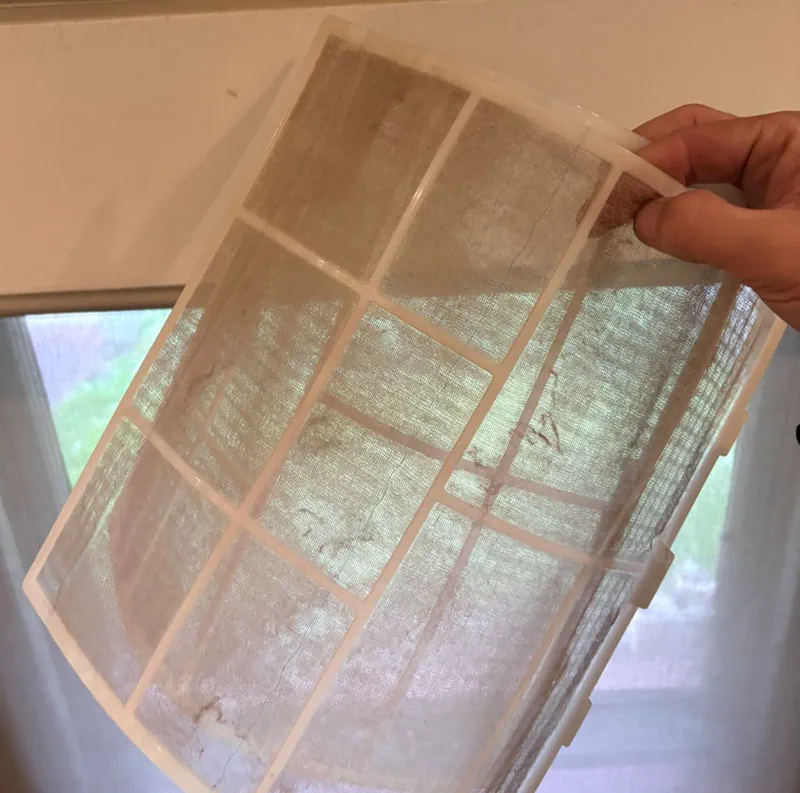
The fan sounds the same, but less air reaches the far side of the room. Dust packed into the filter and coil fins is the usual reason.
A musty smell at start-up
A damp, sour smell for the first minute often comes from a dirty coil, a slimy drain tray or grime on the fan wheel.
Dark specks from the louvres
Grey fluff on the filter is normal. Black spots on the louvres, or flecks blown into the room, mean dirt and moisture have reached the fan.
Slower to heat or cool
The room still gets there, just more slowly, and the unit runs longer on cold mornings and hot afternoons than it used to.
No service history
You've bought the house or started a lease and there's no sticker, report or record. That's reason enough for a look before heavy use.
Why it happens
5 common causes
Dust gets past the filter
Filters stop the big stuff. Fine dust, pet hair and cooking grease still settle on the coil and fan, and hold moisture once they're there.
The drain grows slime
Condensate mixed with dust becomes a jelly-like film in the tray and hose. Spiders and mud wasps move into the open end outside.
The outdoor coil clogs
Leaves, lawn clippings and street dust pack into the fins, and a choked coil makes the compressor work harder in both modes.
Long hours in both seasons
A reverse-cycle unit that heats all winter and cools all summer rarely rests. Fan bearings and motor mounts wear with the hours.
Weather on the outdoor gear
Sun breaks down pipe insulation and plastic isolator covers, and wind drives rain into the cracks. Brackets and fixings loosen over the years.
What the job covers
What we usually do on this job. Your quote confirms it for your place.
- Filter condition assessed and filters cleaned as suitable
- Indoor coil, louvres and fan inspected
- Cleaning method agreed for the condition of the unit
- Condensate drainage checked
- Outdoor airflow and debris checked
- Electrical connection and isolation condition assessed
- Operation checked in available modes
- Findings and recommended repairs explained
Your options, explained
Routine service
Low disruption- Best for
- A unit that works but hasn't been looked at for a while
- How it works
- Filters, coil, fan, drain and outdoor unit are inspected and cleaned within the agreed scope, then tested in each mode.
- Worth knowing
- How often depends on the model, how hard it works and the dust around it. The manual is the starting point.
Deeper clean
Medium disruption- Best for
- Mould on the fan wheel or a heavily clogged coil
- How it works
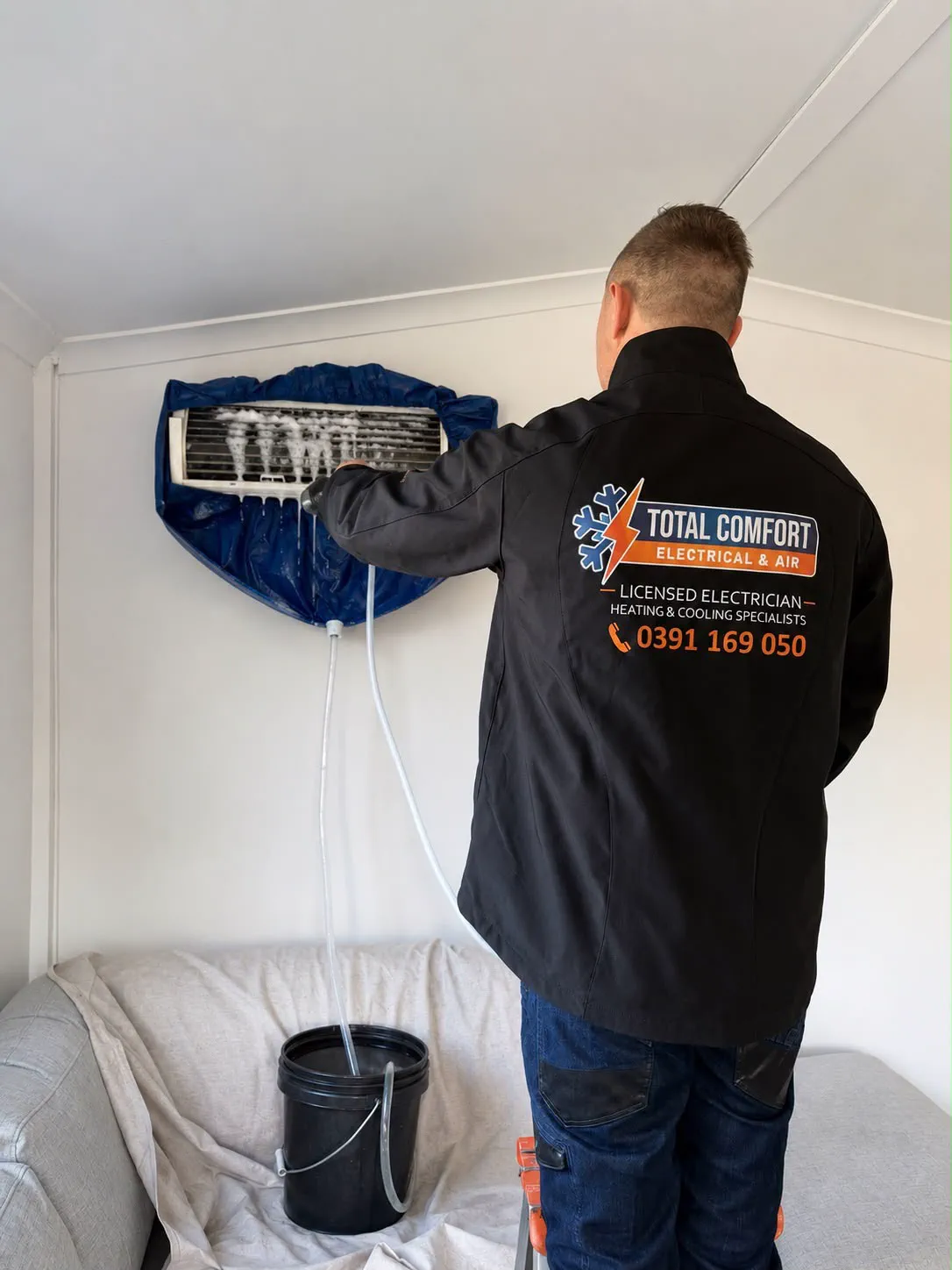
- Once we've seen the unit, we agree a more thorough method, such as more dismantling or a wash-down under a catch cover.
- Worth knowing
- Takes longer. It's agreed after inspection, not assumed at booking.
Service with fault diagnosis
Medium disruption- Best for
- Leaks, error codes, tripping or a noisy fan
- How it works
- Time is allowed to find the fault as well as clean. A blocked drain and a failing fan both cut airflow but need different fixes.
- Worth knowing
- Tell us the symptom when you book. Any repair is priced before it starts.
The people behind the work
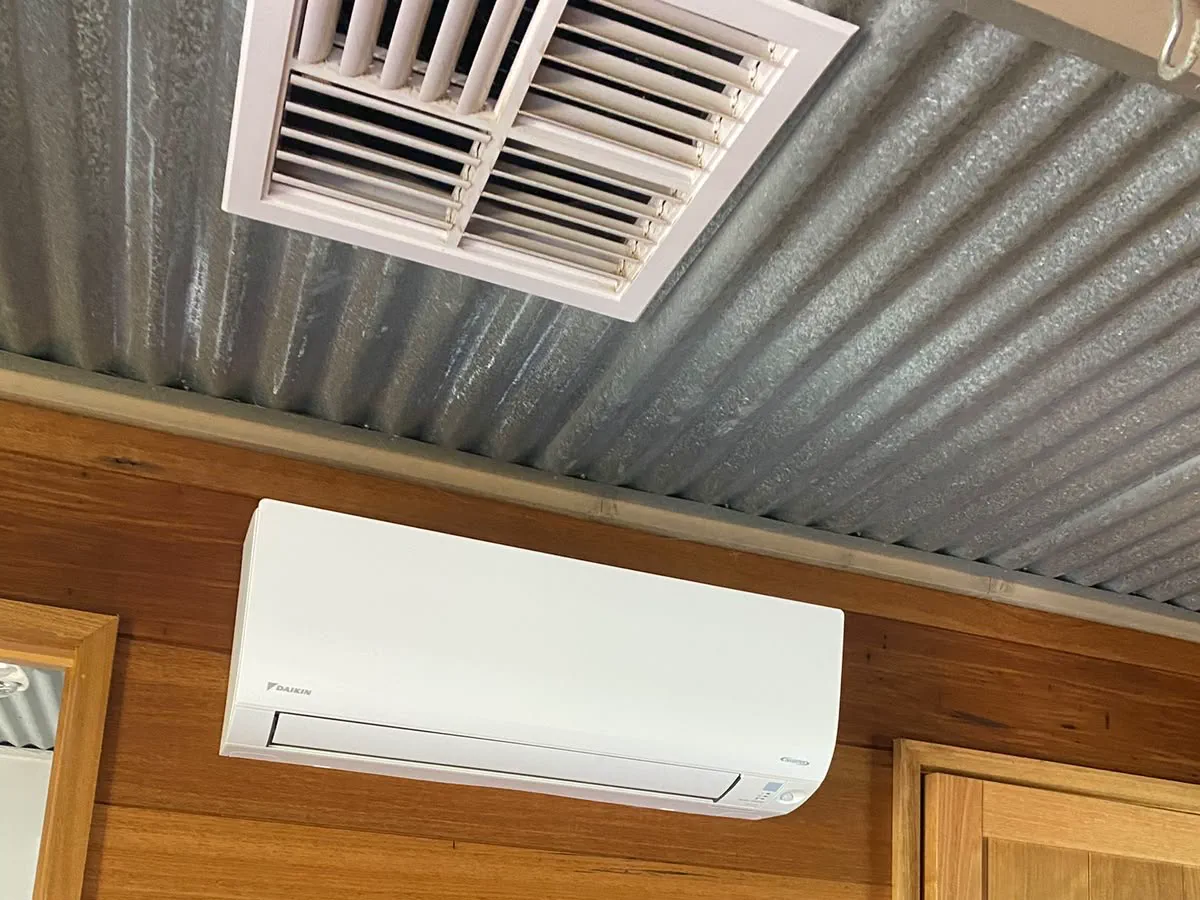
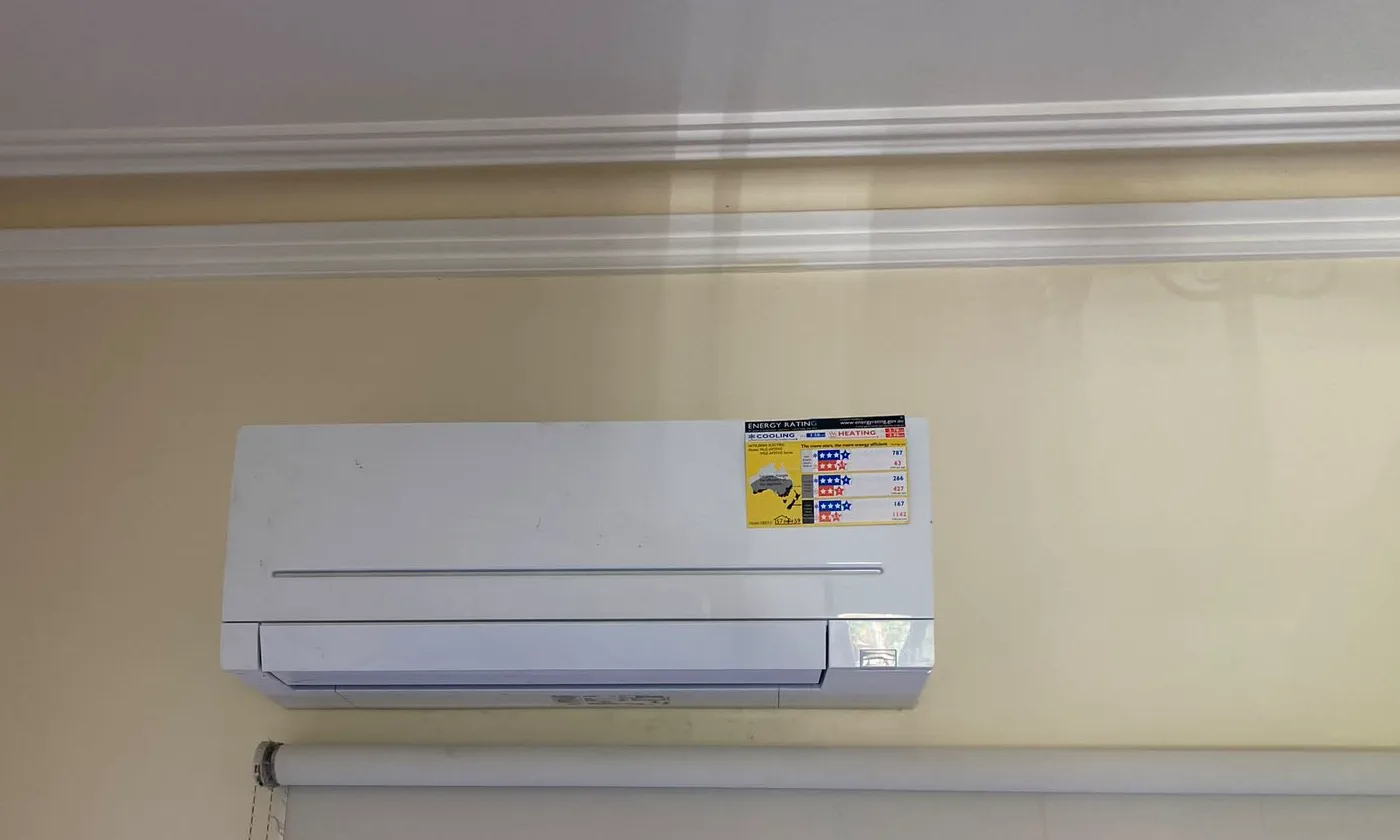
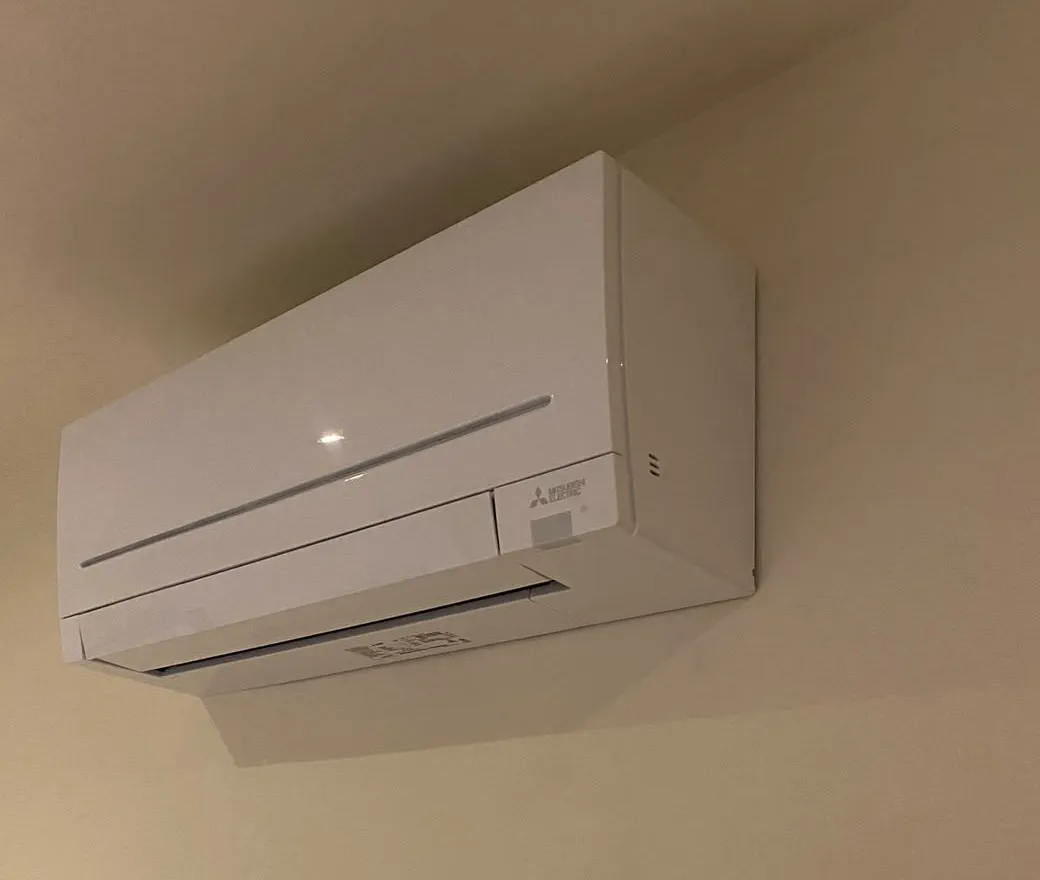
Our own photos from jobs like this one. Family-run, based in Altona Meadows, with 19 years in the industry.
Licensed electrical contractor (REC 38187)See more team photos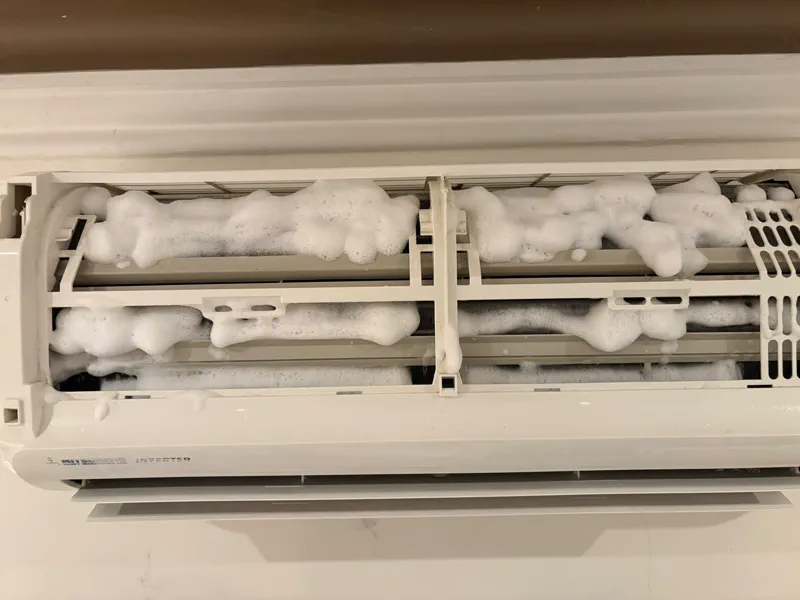
Worth knowing before you book
- A service does not automatically include a major repair
- If a failed part or refrigerant problem is found, we explain the diagnosis and quote the next step.
- Leave safe working access
- Move small belongings from below the head unit and tell us if the unit is high above stairs or behind large fixed furniture.
- Follow the model’s maintenance guide
- Filter care and service needs vary. Keep the manual handy and tell us how often the system runs.
What affects the price?
The right scope depends on your installation. These are the details we check so your quote is useful, with any additional work explained before it proceeds.
How many systems
Each indoor head is its own clean. A multi-head system also needs its shared outdoor unit checked.
Condition of the unit
A lightly dusty head is a routine clean. Mould on the fan wheel or a matted coil needs the deeper method.
Indoor access
A head above a staircase or behind fixed furniture takes more setup than one reached from a stepladder.
Outdoor access
Units on roofs, high brackets or apartment balconies, or behind a locked side gate, add time.
Repairs found on the day
A re-run drain, a new isolator or a fan motor sits outside routine servicing and is priced separately for your approval.
Before the visit
- Clear small items beneath the indoor head.
- Send model details and the last service date.
- Describe symptoms rather than requesting a gas top-up without diagnosis.
How it runs
- 1
Tell us the system
Share the model, last service and any change in smell, noise or airflow.
- 2
Inspect and clean
We assess the unit and carry out the agreed cleaning.
- 3
Test operation
Check drainage and performance and investigate abnormal behaviour.
- 4
Plan upkeep
Explain accessible filter care and any follow-up repairs.
Step by step, in more detail
5 steps
Get the history
We ask for the model, its age, the last service and anything that has changed. A leak, error code or tripping gets flagged so we allow time to diagnose it.
Isolate and protect
Drop sheets go down and the unit is isolated before any covers come off. We note the condition of the isolator as we switch it.
Clean the indoor unit
Filters are washed, the coil and louvres are cleaned by the method agreed for their condition, and the fan wheel is inspected. The drain is flow-tested through to the outlet.
Check the outdoor unit
We clear debris from the coil and fan, then check clearances, brackets, pipe insulation, cable entries and the drain outlet.
Run it and report back
It runs in cooling and heating while we check airflow, noise and drainage. You get a plain account of what we found and a separate price for any repair.
What is safe to do, and what to leave to us
Safe for you to do
- Wash the filters if the manual shows how and you can reach them from a stable step. The Victorian Government suggests about twice a year, more with heavy use.
- Keep plants, bins and stored items clear of the outdoor unit.
- If the unit smells hot or drips onto electrics, turn it off and switch its circuit off at the switchboard if that's safe.
- If a safety switch trips, reset it once. If it won't reset, call a licensed electrician.
Leave these to us
- Taking covers off to reach the coil or fan wheel.
- Spraying water, coil cleaner or disinfectant into either unit.
- Opening the isolator or touching the wiring. Electrical work isn't DIY, even small jobs.
- Buying a refrigerant top-up. Topping up before a system is fully tested and every identified leak repaired is illegal.
When to get us in
- Before heavy summer or winter use, when the last service date is unknown
- Airflow, heating or cooling has dropped off even with clean filters
- A musty smell, or dark specks from the louvres
- Water inside, a new noise or an error code
- A safety switch has tripped while the air conditioner was running
More detail
What a filter clean doesn't reach
The Victorian Government suggests cleaning the dust filters about twice a year and having the system serviced at the frequency the manufacturer recommends. Energy Rating says dirty filters significantly reduce airflow and efficiency and can affect heating. But fine dust still settles on the coil, the fan wheel and the drain tray, and the last two sit out of sight.
Small faults add up
In federal bench tests, common faults in refrigeration and air conditioning equipment caused average energy losses of 14% to 20% in most tests. Where several faults existed together, energy use rose substantially. On a split system, a clogged filter, a dusty outdoor coil and a slow drain often turn up together, so we check them as a set.
Cleaning, refrigerant and wiring are different jobs
In Victoria, maintenance of any part of a single-head split system is refrigerated air-conditioning work, a class of plumbing work regulated by the Building and Plumbing Commission. Work that risks releasing refrigerant needs a Refrigerant Handling Licence. Repairs to the isolator or wiring are electrical installation work, which a refrigeration mechanic's restricted electrical licence doesn't cover beyond like-for-like reconnection. Total Comfort is a licensed electrical contractor (REC 38187), so electrical faults found during a service stay with one local team.
Local rules and conditions
Victorian requirements and local conditions that shape this job, with the sources listed at the foot of the page.
Get ahead of the hot run
Laverton's weather station averages 27.0 days a year at or above 30 °C, most of them December to February. Victoria's health department advises checking your air conditioner works before extreme heat and having it serviced if needed.
Winter is the bigger workload
Victorians typically use more energy for heating than cooling, and Laverton's July nights average a minimum of 5.2 °C. An autumn service matters as much as a spring one.
Salt air along the bay
Hobsons Bay has more than 20 kilometres of bay frontage. Outdoor units close to the water collect salt on the coil fins and fixings, so on bayside homes we look harder for corrosion.
Split systems in rentals
A non-ducted air conditioner rated 2 stars or above can be the efficient fixed heater a rental's living area needs. A heating appliance, or a rental provider's cooling appliance, that isn't working is an urgent repair, and the rental provider pays unless the renter caused it.
Useful reading
Guides to read before you decide, with checklists and questions to bring to the quote.
- Air conditioner maintenance: what to watch between servicesKeep useful records, follow model-specific filter care and recognise symptoms that need a repair visit.
- Getting your air conditioning ready for a heatwaveA spring test run, clean filters, a clear outdoor unit and a backup plan: how to find a tired air conditioner before the first hot northerly does.
- Landlords: heating, cooling and electrical obligations in VictoriaA rental provider's map of the heating, switchboard, safety check and repair duties on a Victorian rental, and what the 2027 energy standards change.
- Split system or ducted: choose around the rooms you useCompare layouts, zoning, installation work and quote details before choosing equipment for your home.
Common questions
Questions people ask about this
- How do I clean my split system filters?Turn the unit off, lift the front panel, slide the filters out and vacuum off the dust.
- Why is my air conditioner blowing out black specks?Black specks are almost always mould and grime from inside the unit.
- Who is responsible for servicing the air conditioner in a rental?The rental provider, for an air conditioner they supplied.
- How do I prepare for an air conditioning service or installation?Clear a working space around the indoor unit and the outdoor unit, make sure the roof manhole is easy to reach if you have a ducted system, and secure pets.
- Why does my air conditioner keep switching on and off?Frequent stopping and starting, called short cycling, usually means the unit reaches its set temperature too quickly or keeps tripping its own protection.
From the blog
- DIY split system cleaning kits: are they worth it?Spray cans and bag kits promise a professional clean at home. Here's what they reach, what they can damage, and where filter cleaning ends and a service begins.
- Is a split system too noisy for a bedroom?A well-sized, well-placed split is quiet enough for most bedrooms. Noise ratings, sizing, airflow direction and the outdoor unit decide whether light sleepers agree.
- Why is my split system leaking water inside?Stop the indoor leak becoming a larger problem, record what happened and arrange a diagnosis without dismantling the system.
Sources for the rules and local facts on this page
17 sources, with the date each was checked
- 1.Bureau of Meteorology: Mean number of days ≥ 30 °C 6.9 6.0 4.5 0.7 0.0 0.0 0.0 0.0 0.1 0.9 2.8 5.1 27.0 82 1943 2026 Mean number of days ≥ 35 °C 3.6 2.4 0.9 0.0 0.0 0.0 0.0 0.0 0.0 0.1 0.5 1.9 9.4 Accessed 30 September 2026.
- 2.Better Health Channel (Department of Health, Victoria): Check that your fan and air-conditioner works well. Have your air-conditioner serviced if needed. Ensure the filters, pads and air vents are clean. Accessed 30 September 2026.
- 3.Department of Energy, Environment and Climate Action (energy.vic.gov.au), page last updated 14/04/25: Victorians typically use more energy for heating than cooling, so look for a unit with a higher heating efficiency. Accessed 30 September 2026.
- 4.Hobsons Bay City Council: Hobsons Bay has more than 20 kilometres of bay frontage, quality residential areas, a huge expanse of environmentally significant open space and a range of major industrial complexes, which contribute significantly to… Accessed 30 September 2026.
- 5.Consumer Affairs Victoria: An energy efficient fixed heater must be one of the following: a non-ducted air conditioner or heat pump with a 2 star or above energy rating a gas space heater with a 2 star or above energy rating a ducted heating… Accessed 30 September 2026.
- 6.Consumer Affairs Victoria: Anything on this list is legally defined as an urgent repair: burst water service blocked or broken toilet system serious roof leak gas leak dangerous electrical fault flooding or serious flood damage serious… Accessed 30 September 2026.
- 7.Solar Victoria (updated 20 November 2025): Check the manufacturer’s instructions or manual and have the air conditioner serviced regularly at the recommended frequency to ensure it continues to operate efficiently. Cleaning the filters regularly helps the system… Accessed 30 September 2026.
- 8.Energy Rating (GEMS Regulator / DCCEEW): Dirty filters significantly reduce the amount of airflow and the energy efficiency of the unit. It can also impact the effectiveness of its heating. Cleaning clogged filters, or replacing a worn one, can lower the… Accessed 30 September 2026.
- 9.energy.gov.au (Australian Government, DCCEEW): The findings indicated that on average there were energy losses between 14% and 20% across most tests. When several faults co-existed, energy use increased substantially, with a high likelihood of system failure if… Accessed 30 September 2026.
- 10.Building and Plumbing Commission (Victorian Building Authority, trading as the Building and Plumbing Commission): Under Part 4 of the Plumbing Regulations 2018, Refrigerated Air-conditioning work is: The construction, installation, replacement, repair, alteration, maintenance, testing or commissioning of refrigerated… Accessed 30 September 2026.
- 11.Australian Refrigeration Council (ARC): A Refrigerant Handling Licence must be held by any person who carries out work in relation to refrigeration and air conditioning (RAC) equipment. Carrying out work in relation to RAC equipment means to do anything with… Accessed 30 September 2026.
- 12.Energy Safe Victoria: This licence type only allows the disconnection and reconnection of ‘like for like’ equipment, for the purposes of repair, replacement or maintenance. The Restricted Electrical Worker’s licence does not allow a person… Accessed 30 September 2026.
- 13.Victorian Legislation (legislation.vic.gov.au) - Electricity Safety Act 1998, authorised version 089 (effective 8 Sep 2026): electrical installation work means installation, alteration, repair or maintenance of an electrical installation; Accessed 30 September 2026.
- 14.Australian Refrigeration Council (ARC), Fact Sheet 13 (ARC5225, 11/22): ‘Topping-up’ a system before the system has been fully tested and all identified leaks repaired by any individual is illegal. Accessed 30 September 2026.
- 15.Energy Safe Victoria: 'Prescribed' certificates are for electrical installation work that requires inspection by a Licensed Electrical inspector. This includes (but is not limited to): Consumer mains cables, main switchboard, meter box and… Accessed 30 September 2026.
- 16.Energy Safe Victoria: Locate your electricity box outside your home and check whether the safety switch has tripped. If it has tripped, reset the switch. If the switch won’t reset, call a licensed electrician. Accessed 30 September 2026.
- 17.Energy Safe Victoria: Electrical work isn’t a DIY job, even for small jobs such as changing power points or light switches. Accessed 30 September 2026.