
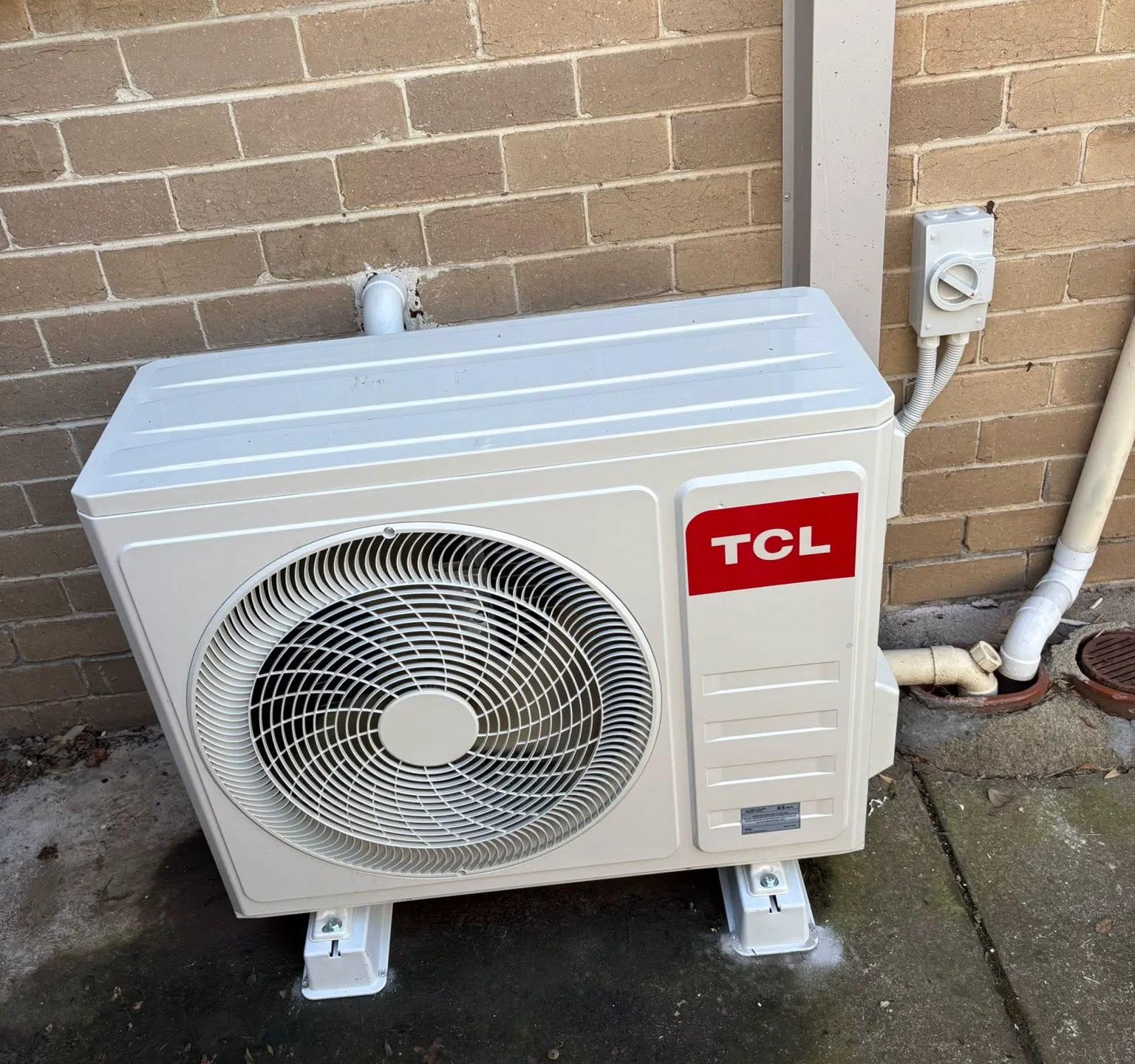
What should I do when water starts dripping from the indoor unit?
- An indoor water leak needs assessment; avoid continuing to run the unit.
- Keep away from wet electrical fittings, and get everyone out if there is smoke, sparking or immediate danger.
- Water on the wall does not, by itself, diagnose a refrigerant leak.
Stop using the leaking unit and protect the area
If it is safe to use the normal controller, turn the leaking air conditioner off and arrange a service assessment. Move belongings away only where it is safe to do so. Keep people clear of wet electrical fittings, damaged ceilings or a slippery floor. Do not touch wet switches, equipment or wiring to investigate the leak.
If water is reaching a power point, switch or light fitting, switch that circuit off at the switchboard if it's safe to reach, and keep everyone away. If there is smoke, sparking or immediate danger, get everyone out. Otherwise, mention any water near electrical fittings when booking so the visit can be planned around it. Repeatedly running the system to see whether the leak returns can make damage worse and is not a substitute for diagnosis.
Separate a symptom from a diagnosis
An indoor leak can require checks of condensate drainage, the indoor assembly, airflow and other system conditions. The technician needs to establish where the water begins and how it travels before deciding on a repair. A damp patch below the unit is evidence to investigate, not proof of one particular failed part.
Water observed outside and water escaping onto an internal wall are different reports. Manufacturer manuals describe model-specific drainage and operating behaviour, so supply the exact model number. Do not assume that visible water means the unit simply needs refrigerant added, and do not open the refrigerant circuit or attempt a drain repair yourself.
Capture details that help the first visit
From a safe location, take a photograph of the leak and a wider image showing the indoor unit and wall. Note whether the system was heating or cooling, how long it had been operating and whether the leak followed recent servicing, installation or building work. If a fault code was already visible, record it without restarting the appliance.
Mention unusual noise, a drop in performance, water staining elsewhere and any previous repairs. You do not need to identify the fault yourself. A concise timeline helps the technician decide what access and diagnostic work to allow for, particularly when the pipe route is concealed.
- Where the water first appeared
- Operating mode and approximate time before leaking
- Visible fault code or other change in operation
- Recent service or building work and any affected electrical fittings
Ask how the cause will be checked after repair
Ask for the identified cause and proposed work before authorising a repair beyond the agreed assessment. Once the work is complete, ask how drainage and operation were checked and whether any hidden damage needs attention from another trade. Keep photographs and paperwork if walls, ceilings or flooring have been affected.
A repair to stop leakage and cosmetic repairs to a stained wall are separate scopes. Clarify both rather than assuming one contractor will complete everything. For tenants, report the issue to the property manager promptly and follow the rental's repair process; do not arrange unapproved alterations to fixed equipment.
Questions that come next
Official information
Rules and product guidance can change. These sources support the relevant safety, energy or property guidance above.