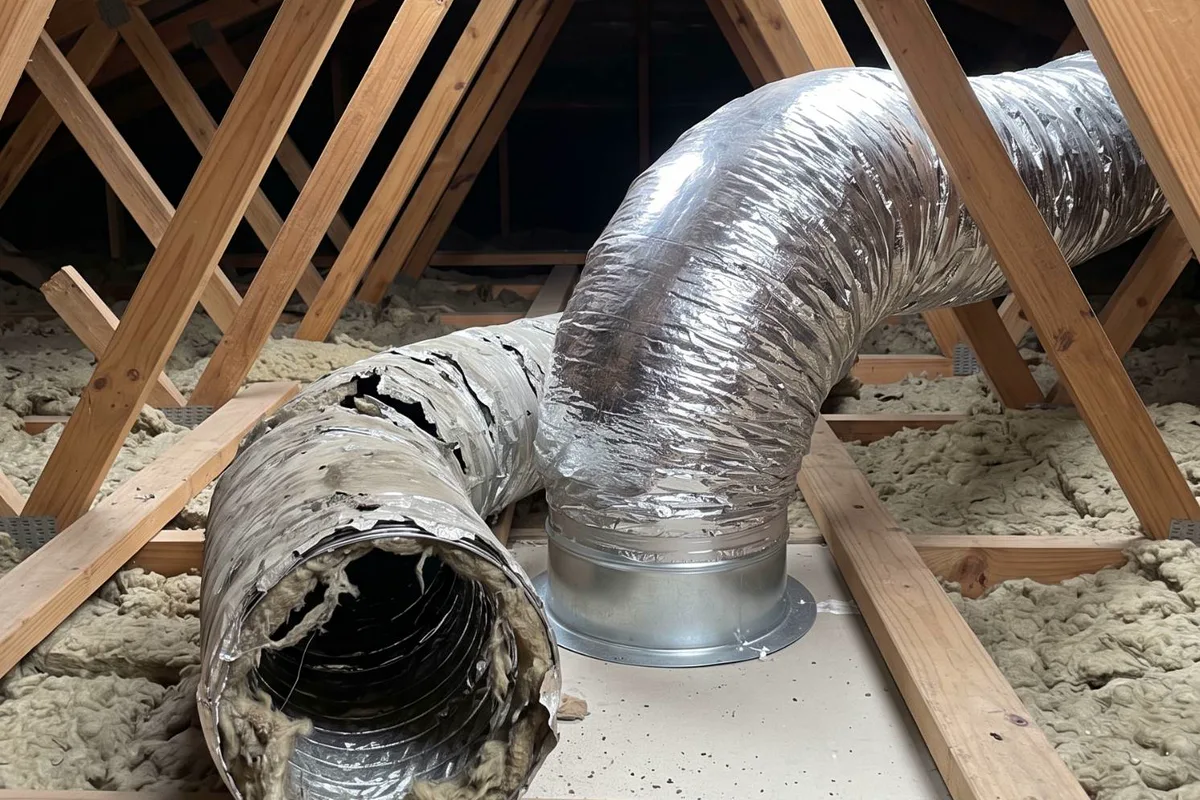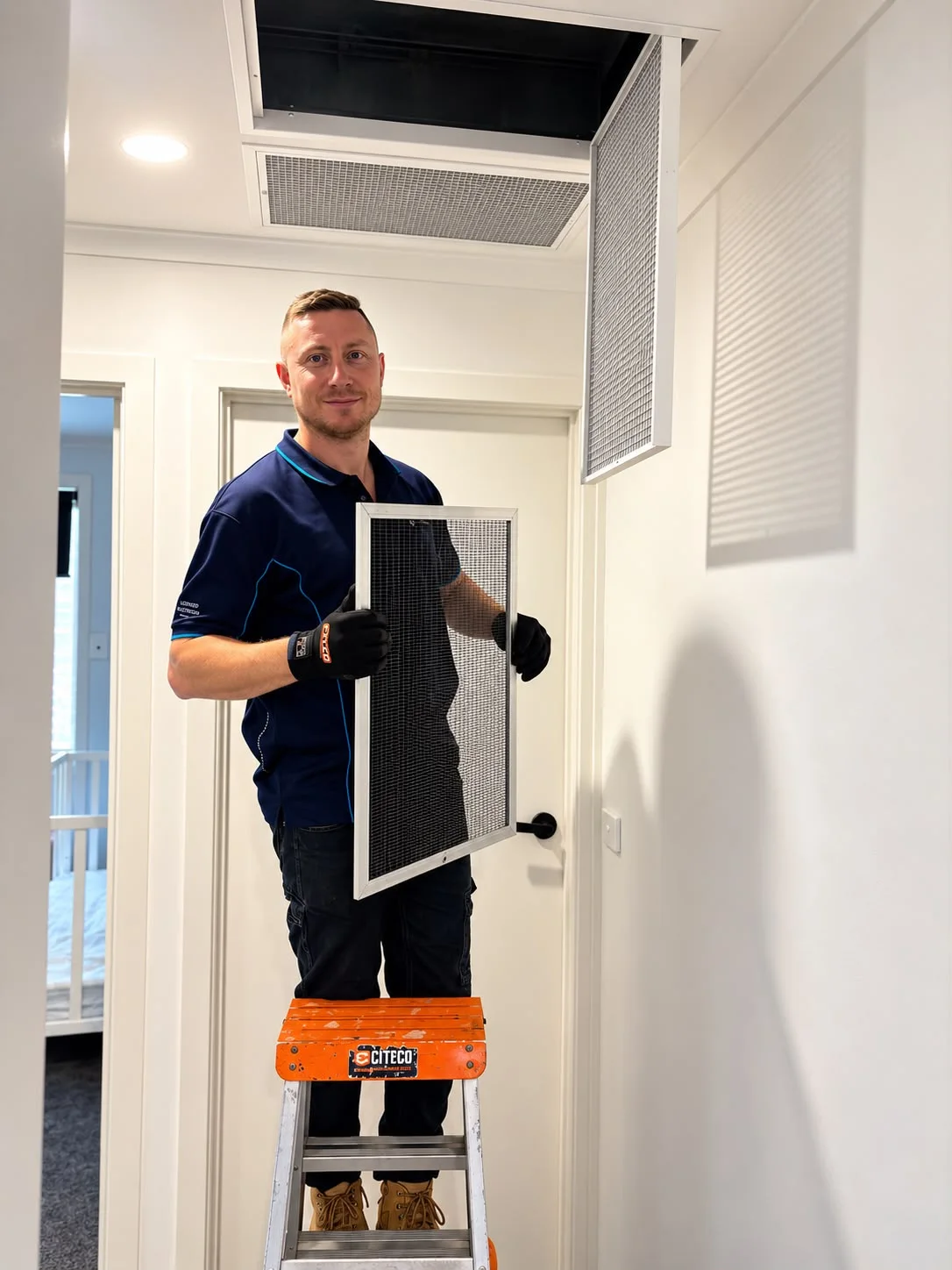
A ducted system depends on more than the main unit. A loaded return-air filter, a zone that is not opening or damaged ductwork can leave one room uncomfortable while the rest of the house seems fine. We review the symptoms room by room and check the accessible system. Roof-space access, zoning and filter arrangements vary, so the booking should include what you know about the installation and where the access hatch is.
When to get it checked
Some rooms never keep up
The living area is comfortable, but the end bedroom stays warm on summer evenings or cold on winter mornings. That usually points to airflow, a zone or a duct, not the whole system.
Weak air at the outlets
Vents that used to push air now barely move it, even on high fan. A loaded return-air filter is the first suspect, but not the only one.
New noises from the roof or outside
A whistle at the return grille, a rattle above the ceiling or a clunk when a zone opens. A change in sound is often the first warning.
Water marks on the ceiling
A stain near the return grille or below the indoor unit can mean the drain tray has overflowed, often after a run of hot days in cooling mode.
Why it happens
4 common causes
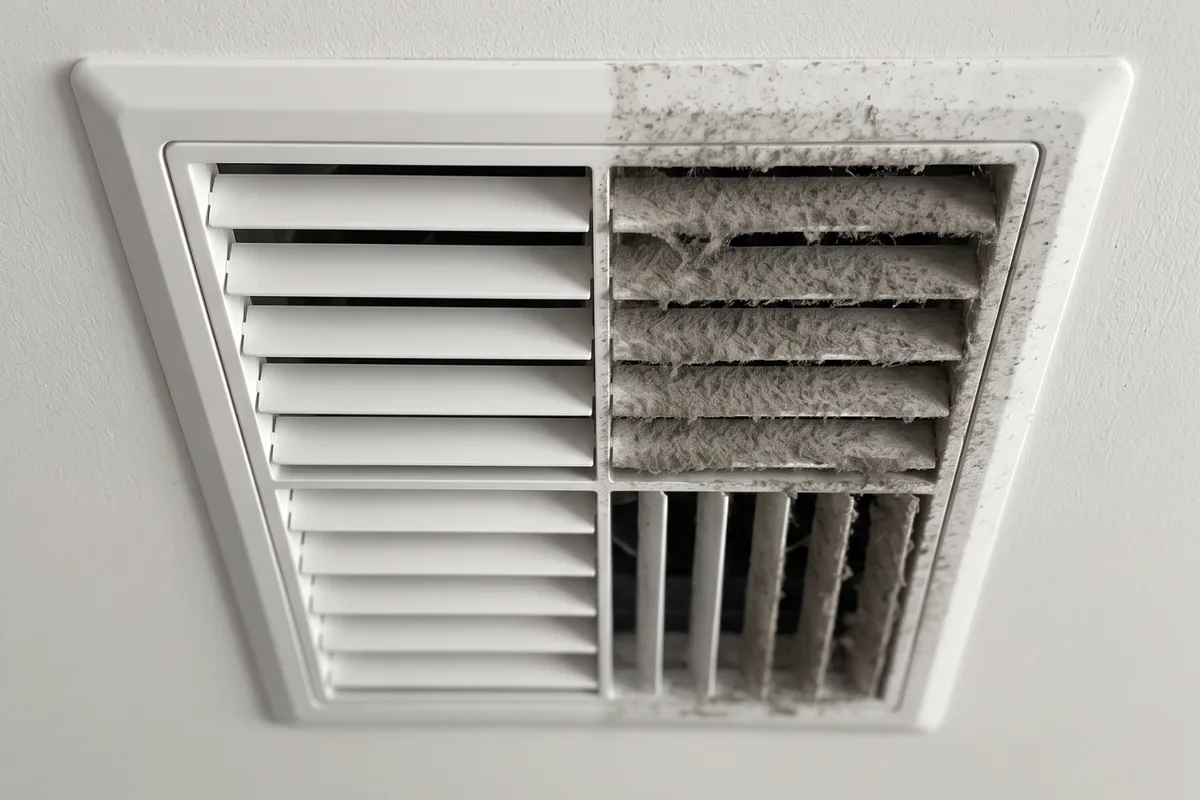
A loaded return-air filter
Nearly all the air the system moves passes through one filter behind the return grille. Dirty filters significantly cut airflow and efficiency, and can weaken heating too.
A dusty coil and a silted drain
What gets past the filter settles on the coil and fan in the roof unit, and in the drain tray below. A furred coil moves less heat, and a slimed drain eventually backs up and overflows.
Zones and dampers that stick
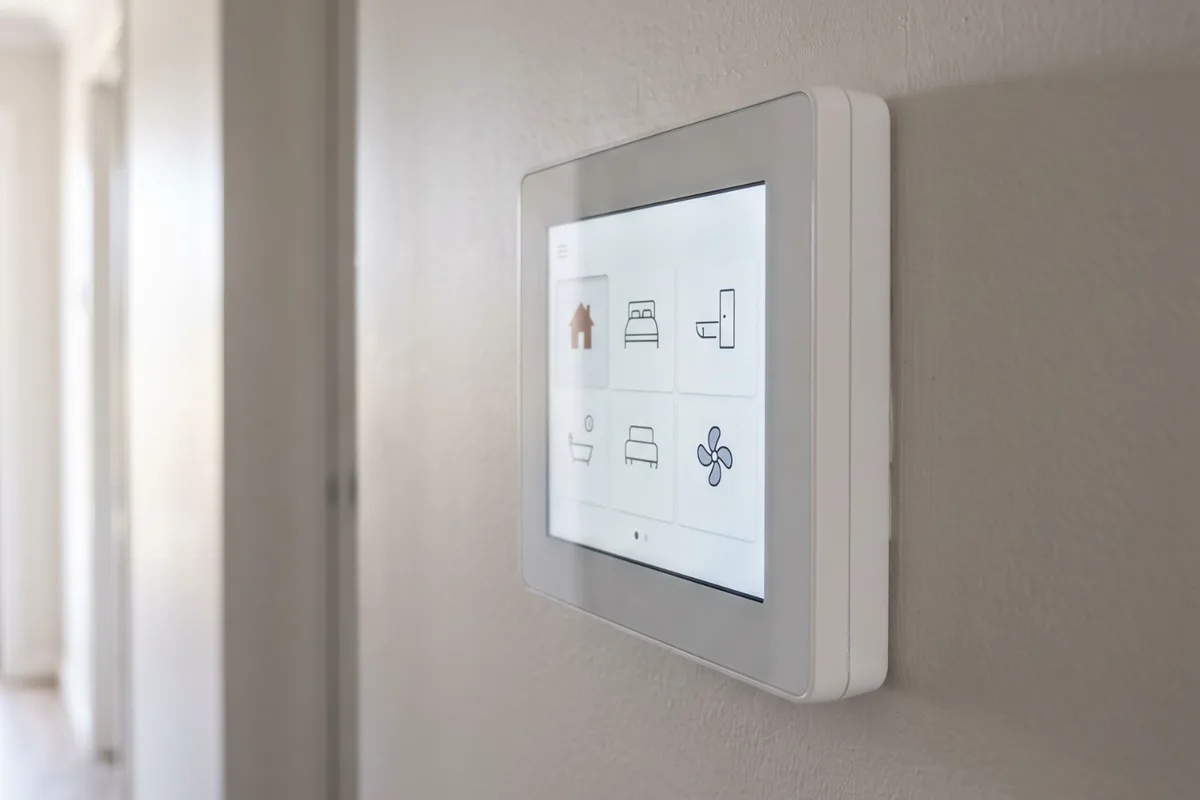
A motorised damper that jams half-shut, or a zone switched off at the controller and forgotten, starves rooms without any obvious fuss.
Duct joints that move
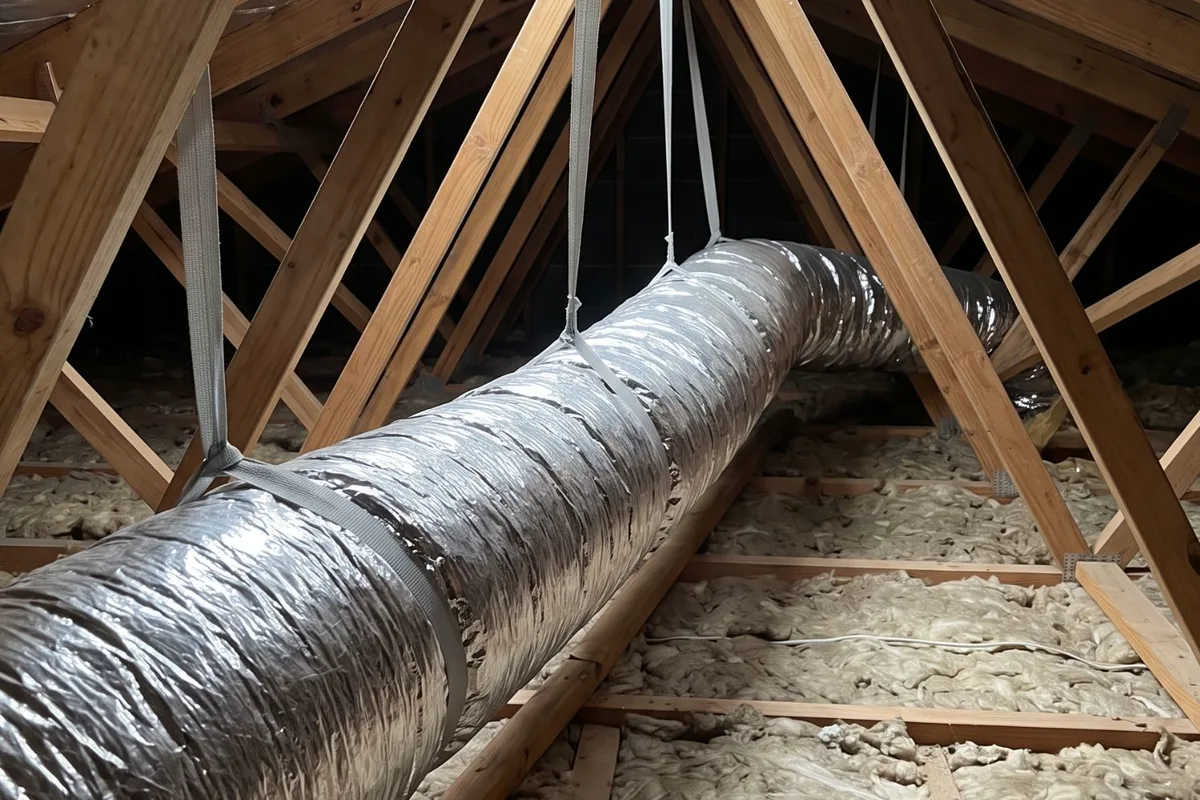
Ducts get stepped on, pulled by other trades and loosened by roof heat. Some energy is always lost through ductwork, and a split joint makes that loss much bigger.
What the job covers
What we usually do on this job. Your quote confirms it for your place.
- Return-air grille and filter condition checked
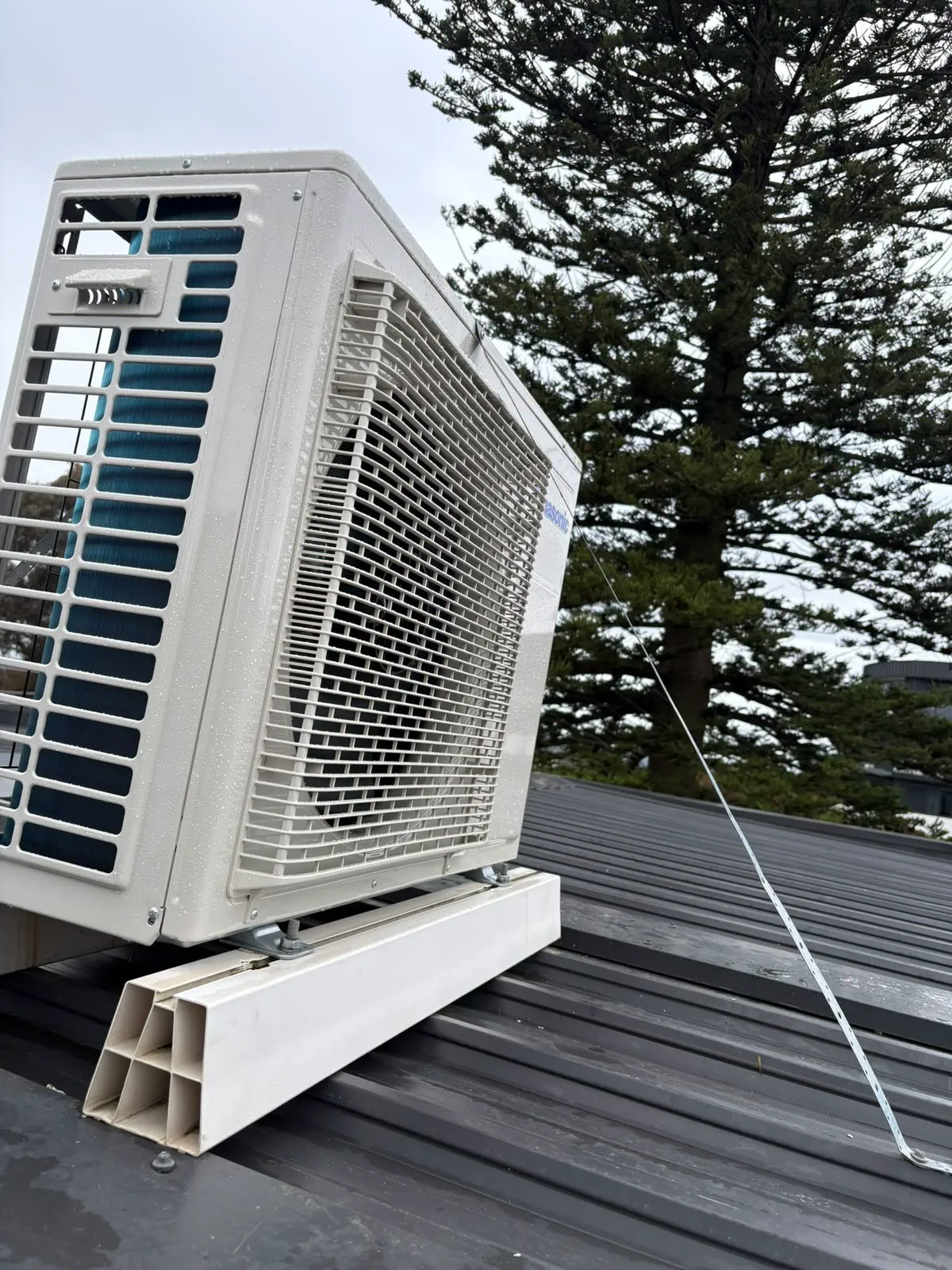
- Accessible indoor and outdoor equipment inspected
- Condensate drain assessed
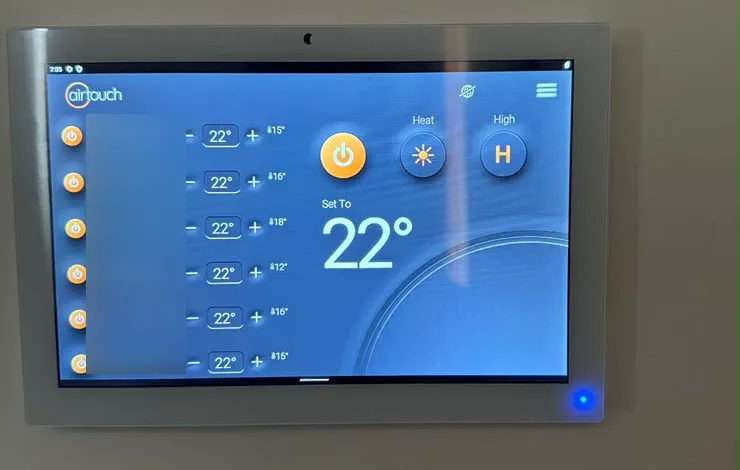
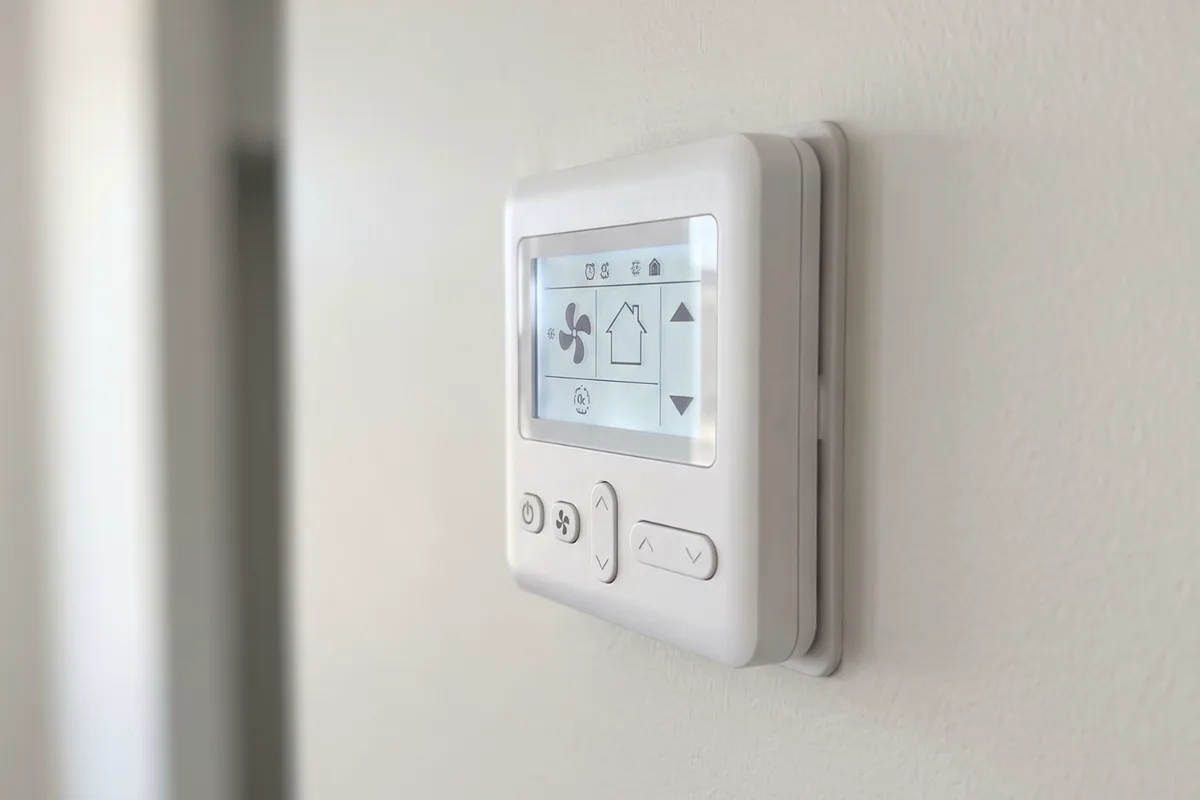
- Controller settings and zone operation reviewed
- Air delivery compared across the home
- Accessible duct connections checked for obvious issues
- Electrical condition assessed within service scope
- Findings and suggested repairs documented
Your options, explained
Routine ducted service
Low disruption- Best for
- Systems running normally that haven't been looked at for a while
- How it works
- Filter, drain, both units, controller, zones and airflow checked and cleaned as quoted, with findings noted.
- Worth knowing
- Book it before the season you rely on most, not after the first heatwave.
Airflow and zone investigation
Medium disruption- Best for
- Rooms that stay uncomfortable after a service
- How it works
- A closer look at the duct runs, dampers, outlets and zone wiring serving the problem rooms.
- Worth knowing
- Often leads to a separate duct or zoning repair, not another service.
Service with a known fault
Medium disruption- Best for
- A leaking drain, noisy fan, error code or dead zone
- How it works
- Serviced and diagnosed on one visit, with the repair priced before it starts.
- Worth knowing
- Mention the fault when you book so we allow for diagnosis.
The people behind the work
Our own photos from jobs like this one. Family-run, based in Altona Meadows, with 19 years in the industry.
Licensed electrical contractor (REC 38187)See more team photos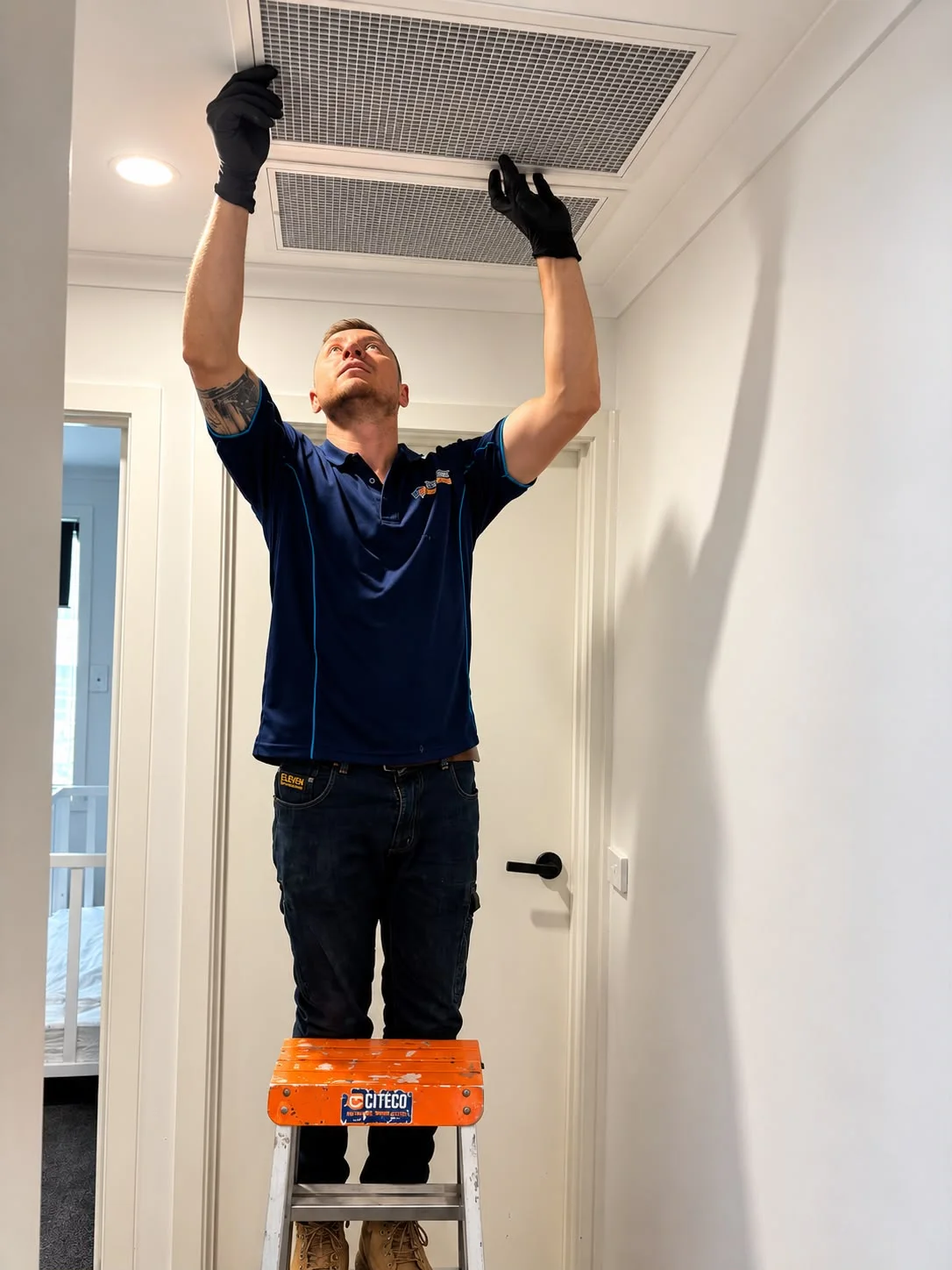
Worth knowing before you book
- Tell us which rooms struggle
- Room-by-room observations help separate equipment, zone and duct problems.
- Roof access sets the scope
- Restricted or unsafe access may limit inspection. We explain what could and could not be checked.
- A filter service is only one part
- Cleaning the return filter helps airflow but will not repair a failed damper or a disconnected duct.
What affects the price?
The right scope depends on your installation. These are the details we check so your quote is useful, with any additional work explained before it proceeds.
System size and zones
A bigger home means a larger indoor unit, more outlets and more zones to check.
Roof and outdoor access
A tight hatch in a wardrobe, a unit behind trusses in a low roof or an outdoor unit on a high bracket all take longer to reach safely.
Filters and returns
Larger and two-storey homes can have two or more returns, each with a filter. New filter media adds to the job when cleaning isn't enough.
Time since the last service
A coil and drain left alone for years take longer to clean than a system serviced regularly.
Repairs found along the way
A seized damper motor, split duct joint or worn fan is quoted separately, before any extra work starts.
Before the visit
- Identify every return-air grille and the access hatch.
- Make a list of affected rooms and controller settings.
- Provide the controller model and past service findings.
How it runs
- 1
Map the concerns
Tell us the rooms, zones and modes where performance changes.
- 2
Inspect the system
Check filtration, accessible equipment, controls and drainage.
- 3
Compare airflow
Review outlets and zone response, then identify further investigation if needed.
- 4
Report back
Explain maintenance completed and any separate repairs worth considering.
Step by step, in more detail
5 steps
Map the rooms and settings
We ask which rooms struggle, in which mode and when, then check the controller settings and zone layout. That tells us where to focus in the roof.
Filter and return air
We check the grille and filter, clean or replace the filter as quoted, and look for gaps where unfiltered roof air could be drawn in.
The indoor unit in the roof
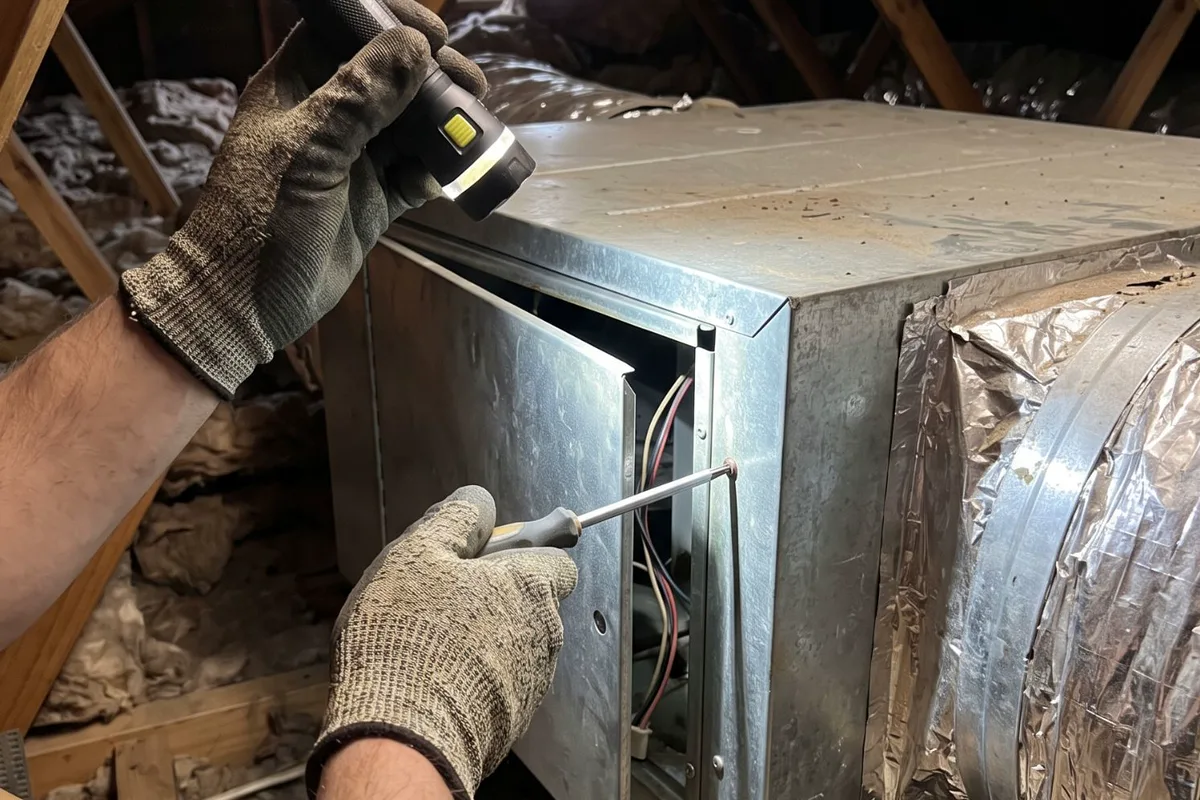
Where access is safe, we inspect the fan, coil, drain tray, drain line and the duct connections at the unit. If something can't be reached safely, we tell you.
Outdoor unit and the electrical side
We clear and inspect the outdoor unit and fan, and check the isolator, connections and supply circuit within the service scope. As licensed electricians, we don't skip that part.
Compare the rooms and report
We cycle each zone and compare air delivery at outlets around the house, then give you a plain summary. Any extra work is priced before we start it.
What is safe to do, and what to leave to us
Safe for you to do
- Clean the return-air filter if it comes out without tools and your manual explains how, working from a stable step.
- Keep the return grille, outlets and outdoor unit clear of furniture, curtains, bins and plants.
- Note which rooms struggle, in which mode and when, and photograph any error code.
- If water comes through the ceiling, turn the system off, keep clear of nearby light fittings and switch off at the switchboard if it's safe.
Leave these to us
- Climbing into the roof space to check the unit or ducts yourself.
- Opening either unit, or touching the wiring or isolator. Electrical work isn't DIY, even for small jobs.
- Letting anyone top up refrigerant before the system is fully tested and the leak repaired. That's illegal.
- Closing most outlets or zones to force air into one room.
When to get us in
- One room or zone stays uncomfortable while the rest is fine
- Water marks on the ceiling near the return grille
- New rattles, whistles or grinding from the roof or outdoor unit
- An error code, or a zone that won't respond
- No service in years, with summer or winter coming
- A burning smell: switch off at the switchboard if it's safe to reach, and get everyone out if there's smoke or fire
More detail
What a filter clean does and doesn't fix
The Victorian Government suggests cleaning reverse-cycle dust filters about twice a year, more often with heavy use, and servicing at the interval the manufacturer recommends. If maintenance so far has been a vacuum of the hallway grille, though, nobody has looked at the coil, drain, dampers or duct connections in the roof. A clean filter won't free a jammed damper or clear a silted drain tray.
Why one room can lag while the rest is fine
The indoor unit makes the same air for the whole house; the ducts, dampers and outlets decide how much each room gets. Rooms at the end of the longest run, or upstairs on the western side, usually fall behind first. If the unit tests healthy and a room still lags, the fix is in the ductwork or zoning, and we'll say so.
Small faults, bigger bills
Federal bench tests found common air conditioning faults caused average energy losses of 14% to 20% in most tests, and when several faults were left unaddressed together, failure became highly likely. The Victorian Government says a reverse-cycle system over 15 years old typically uses more than three times the energy of a modern one. If an older ducted unit keeps needing parts, we'll price replacement alongside the repair.
Local rules and conditions
Victorian requirements and local conditions that shape this job, with the sources listed at the foot of the page.
Worked hard in both seasons
Bureau of Meteorology records for Laverton average 27 days a year at or above 30 °C, mostly December to February, and a July mean minimum of 5.2 °C. Victorians typically use more energy heating than cooling, so service before winter as well as summer.
Before extreme heat
Victoria's health department advises checking that your air conditioner works before extreme heat, having it serviced if needed and keeping filters and vents clean. Hobsons Bay, Wyndham, Brimbank, Maribyrnong and Port Phillip all sit in the Central district for heat health warnings.
Ducted systems in rentals
Every Victorian rental needs a fixed heater in good working order in the main living area, and a ducted system with an outlet there counts as energy efficient under the current standard. Failed heating, or failed cooling the rental provider supplied, is an urgent repair, paid for by the rental provider unless the renter caused it.
Useful reading
Guides to read before you decide, with checklists and questions to bring to the quote.
- Air conditioner maintenance: what to watch between servicesKeep useful records, follow model-specific filter care and recognise symptoms that need a repair visit.
- Ducted zoning explainedZones, dampers, controllers and room sensors in plain terms, plus the airflow limits that decide whether zoning will fix your comfort problem.
- Getting your air conditioning ready for a heatwaveA spring test run, clean filters, a clear outdoor unit and a backup plan: how to find a tired air conditioner before the first hot northerly does.
- Landlords: heating, cooling and electrical obligations in VictoriaA rental provider's map of the heating, switchboard, safety check and repair duties on a Victorian rental, and what the 2027 energy standards change.
Common questions
Questions people ask about this
More in the Help centreSources for the rules and local facts on this page
14 sources, with the date each was checked
- 1.Bureau of Meteorology: Mean number of days ≥ 30 °C 6.9 6.0 4.5 0.7 0.0 0.0 0.0 0.0 0.1 0.9 2.8 5.1 27.0 82 1943 2026 Mean number of days ≥ 35 °C 3.6 2.4 0.9 0.0 0.0 0.0 0.0 0.0 0.0 0.1 0.5 1.9 9.4 Accessed 30 September 2026.
- 2.Department of Energy, Environment and Climate Action (energy.vic.gov.au), page last updated 14/04/25: Victorians typically use more energy for heating than cooling, so look for a unit with a higher heating efficiency. Accessed 30 September 2026.
- 3.Better Health Channel (Department of Health, Victoria): Check that your fan and air-conditioner works well. Have your air-conditioner serviced if needed. Ensure the filters, pads and air vents are clean. Accessed 30 September 2026.
- 4.Department of Health, Victoria: In response to a new Bureau severe or extreme heatwave warning, we will issue a heat health warning. ... The following list shows all the local government areas in Victoria and what forecast district they belong to… Accessed 30 September 2026.
- 5.Consumer Affairs Victoria: All rental properties must have a fixed heater (not portable) in good working order in the main living area. For rental agreements entered into from 29 March 2023, this must be an energy efficient fixed heater in the… Accessed 30 September 2026.
- 6.Consumer Affairs Victoria: Anything on this list is legally defined as an urgent repair: burst water service blocked or broken toilet system serious roof leak gas leak dangerous electrical fault flooding or serious flood damage serious… Accessed 30 September 2026.
- 7.Energy Rating (GEMS Regulator / DCCEEW): Dirty filters significantly reduce the amount of airflow and the energy efficiency of the unit. It can also impact the effectiveness of its heating. Cleaning clogged filters, or replacing a worn one, can lower the… Accessed 30 September 2026.
- 8.Solar Victoria (updated 20 November 2025): Check the manufacturer’s instructions or manual and have the air conditioner serviced regularly at the recommended frequency to ensure it continues to operate efficiently. Cleaning the filters regularly helps the system… Accessed 30 September 2026.
- 9.energy.gov.au (Australian Government, DCCEEW): The energy efficiency of reverse-cycle air conditioners on the Australian market ranges between 300% to 600% efficient. Air conditioners can achieve such high rates of energy efficiency because they do not use… Accessed 30 September 2026.
- 10.Solar Victoria (updated 2 October 2025): A system that is more than 15 years old for example will typically use more than three times the amount of energy than a modern reverse-cycle air conditioner. Accessed 30 September 2026.
- 11.Australian Refrigeration Council (ARC), Fact Sheet 13 (ARC5225, 11/22): ‘Topping-up’ a system before the system has been fully tested and all identified leaks repaired by any individual is illegal. Accessed 30 September 2026.
- 12.Energy Safe Victoria: Electrical work isn’t a DIY job, even for small jobs such as changing power points or light switches. Accessed 30 September 2026.
- 13.Energy Safe Victoria: Gas and electricity are inherently dangerous and it’s illegal and potentially fatal for unlicensed and unqualified people to undertake any electrical or gasfitting work. Homeowners and consumers must always use… Accessed 30 September 2026.
- 14.Energy Safe Victoria: It is recommended that ducted heaters are serviced every two years and during this service a CO test should be conducted at the heating vent outlets in all rooms. Accessed 30 September 2026.