
The key points
- Zoning sends air only to the rooms you choose, which is where a ducted system makes its savings.
- Where the temperature is measured matters as much as the zones themselves.
- A ducted unit needs a minimum airflow, so too many small zones lead to noise and shutdowns.
- Zoning can't fix an undersized unit, damaged ducts or an open-plan space with nothing to divide.
What zoning changes in a ducted system
A ducted system has one indoor unit, in the roof or under the floor, and one fan pushing air through ducts to outlets around the house. Without zoning, every outlet gets air whenever it runs. Heat the main bedroom at 10 pm and you heat the lounge and the empty study too.
Zoning splits the ducts into groups of rooms, with a motorised damper in the duct feeding each group. The Victorian Government recommends zones for ducted systems as the more efficient option, because each zone can be heated on its own rather than the whole home at once.
That matters more with ducted than with a wall split. The Australian Government notes ducted systems aren't as efficient as wall units, because they use a larger fan and lose energy through the ductwork. Sending air only to the rooms you're in claws some of that back.
Dampers, zone modules and controllers
Dampers sit near where the ducts branch off the main supply box. Each is a blade inside a short length of duct, turned by a small motor. They live in a roof space that swings from freezing to baking, so motors and linkages wear, and a zone that won't open or won't shut is a common fault.
A zone module, a small control board, drives the motors and takes its instructions from your wall controller or app. On newer systems it also tells the indoor unit how many zones are open, so the unit can ease back. Many older setups can't. The dampers move, but the unit runs as if the whole house wanted air.
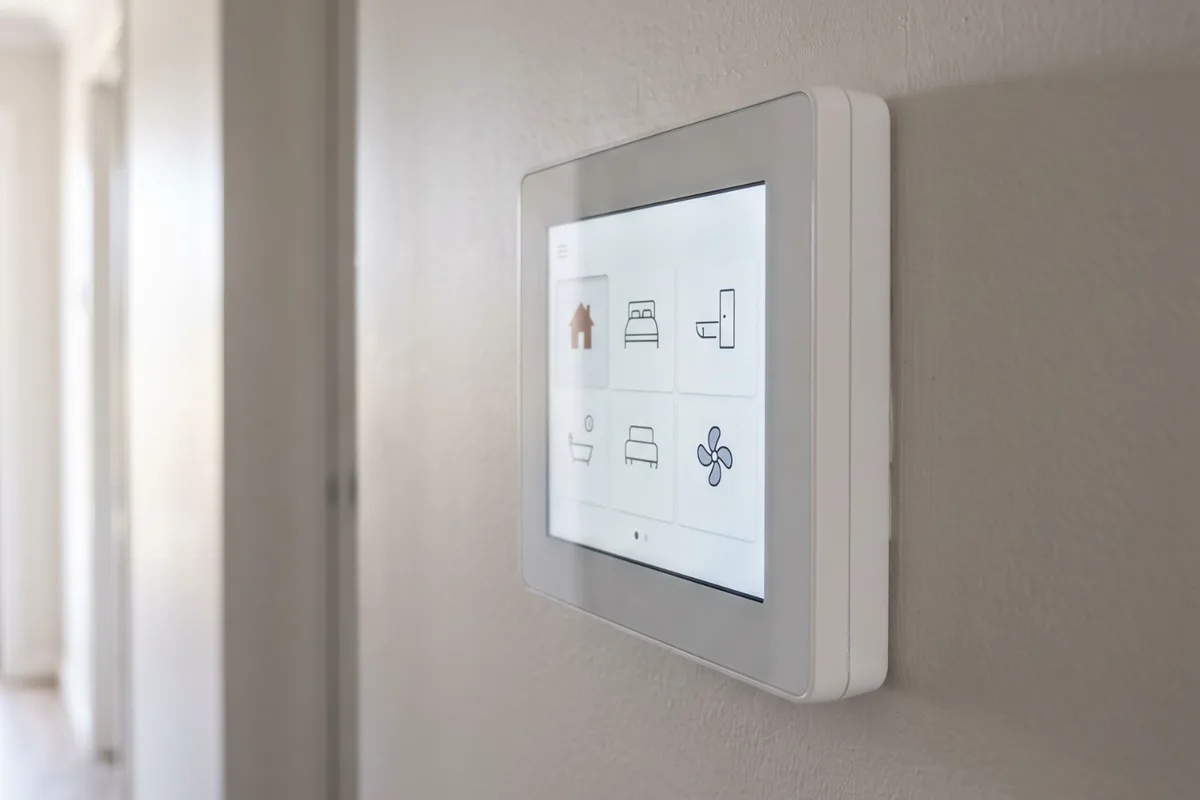
Controllers differ too. Some only switch zones on and off, while others give each zone its own temperature and timer. Find out which kind you have before blaming the system.
Where the temperature is read
Most comfort complaints come back to one question: where is the thermostat? In many older installs the sensor sits in the return air grille, often in a hallway, or inside the wall controller. The system runs until that spot reaches the set temperature. If the hallway warms quickly, the unit backs off while the far bedrooms are still cold.
Basic on/off zoning works this way. You pick the open zones, but one sensor sets the temperature for all of them. Temperature-controlled zoning puts a sensor in each zone, and each damper opens part-way or closes as its zone reaches its own setting, so the lounge can run warmer than the bedrooms.
The Victorian Government suggests 18 to 20 °C for heating and 24 to 26 °C for cooling living areas, and says each degree beyond that adds around 10% to running costs. Room sensors read truest on an internal wall, away from sun, outlets, ovens and televisions.
Why the unit needs somewhere to send its air
A ducted unit is built to move a set volume of air and needs a minimum amount moving. Shut most zones and the fan forces that air into a couple of rooms' worth of duct. Outlets roar, and the coil can run too cold in cooling or too hot in heating until the unit's own protection shuts it down.
Good zone design allows for this, with a common zone that never closes or a spill damper that bleeds off surplus air when a small zone runs alone. Lots of small zones look flexible on the controller, but each extra split makes airflow harder to manage.
Dirty filters add to it. The Australian Government's Energy Rating site notes they significantly reduce airflow and efficiency, and can affect heating. A clogged return air filter plus one small zone is a familiar cause of a system cutting out on cold nights.
- Outlets whistle or roar when only one or two zones are open.
- The unit stops and restarts through the evening or shows a fault code.
- One zone takes far longer than the rest to reach temperature.
- Trouble started after zones were added or changed.
When zoning earns its keep
Zoning pays off when parts of the house are used at different times: living areas from late afternoon, bedrooms overnight, a study during the day. Victorians typically use more energy for heating than cooling, so winter counts most. Laverton's long-term average July minimum is 5.2 °C, and heating just the bedroom zone on those nights is zoning doing its job.
Summer matters too, with Laverton averaging 27 days a year at or above 30 °C. In a double-storey home the upstairs usually heats up faster, so a zone for each level, ideally with its own sensor, stops one floor being overcooled to suit the other.
YourHome notes that zoned systems cool only occupied areas and allow different conditioning in living and sleeping areas. That only happens if you use the zones. Leave every zone open all day and the dampers are just extra parts.
When zoning won't fix the problem
Zoning moves air around. It doesn't add capacity. The Victorian Government suggests 1.1 to 1.4 kW of heating output for every 10 m² a ducted system covers, depending on the home. A unit well short of that will struggle with every zone open. Zoning lets it do fewer rooms properly, not the whole house on the coldest nights.
Ducts are the other usual culprit. YourHome says they should be insulated to at least R1.5, with joints sealed to prevent condensation and leakage. A duct that has slipped off its fitting, been flattened in the roof or lost its insulation leaves a room cold whatever the controller says. That's a ductwork repair, not a zoning one.
Some layouts don't divide. An open-plan kitchen and family area with no doors is one zone, because the air mixes. A single small room such as a home office often can't take enough air on its own, and a split system there can be the simpler answer.
Zoning a gas ducted heater
Plenty of gas ducted heaters have zone dampers, and many without them can have zones added, depending on the heater, its controls and the duct layout. With floor vents the ducts usually run under the house, so underfloor access becomes part of the assessment.
Energy Safe Victoria says it's illegal, and potentially fatal, for unlicensed and unqualified people to do any gasfitting or electrical work. Dampers and controls are duct and control-wiring work, and anything on the gas side belongs with a licensed gasfitter. Adding refrigerated cooling is different again: in Victoria, an add-on condenser unit for a ducted system is refrigerated air-conditioning work, a class of plumbing work.
Energy Safe Victoria also recommends servicing ducted gas heaters every two years, with a carbon monoxide test at the heating vent outlets in all rooms. On a zoned heater that means opening every zone for the test, including rooms you rarely heat.
Planning your zones, and when to call us in
Before anyone climbs into the roof, sketch the house and mark who uses which rooms, and when. Group rooms that are used together and face the same way. A west-facing lounge sharing a zone with a south-facing bedroom means one of them is always uncomfortable. Allow for a future nursery, office or extension too.
It makes sense to get Total Comfort in when a zone stops responding, outlets turn noisy or the unit keeps cutting out, or when you want zones added or are replacing a ducted system. Our technicians check the unit, ducts and controls together, because a zoning complaint is often one of the other two in disguise. Where the job includes electrical installation work, the electrician must give you a Certificate of Electrical Safety.
Quotes are free and no-obligation, and you get the price before we start. If the honest fix is a moved sensor or a new damper motor, that's what we'll tell you.
- Which rooms are in use together: morning, evening and overnight?
- Which rooms take strong afternoon sun?
- Which zone can stay open to protect airflow?
- Where will each zone's temperature be read?
- If it's a rental, does the main living area keep a working outlet?
Common questions
Quick answers
- Why has one zone stopped working on my ducted system?When one zone gets no air but the rest work, check the controller first: the zone may be switched off, on a schedule or, with temperature-controlled zones, already at…
- Why do my heating ducts tick or bang when the heater starts?Light ticking, or a single soft pop as the heating starts or stops, is usually metal parts warming and expanding: the heater's plenum, the return air box, duct collars…
- How do I prepare for an air conditioning service or installation?Clear a working space around the indoor unit and the outdoor unit, make sure the roof manhole is easy to reach if you have a ducted system, and secure pets.
- Does my gas ducted heater have a filter I can clean?Many do.
Sources for this guide
11 sources, with the date each was checked
- 1.Department of Energy, Environment and Climate Action (energy.vic.gov.au), page last updated 14/04/25: We recommend providing 1.1 to 1.4kW of heating output for every 10m² of your home covered by a ducted system, depending on the individual characteristics of your home. ... We recommend zones for your ducted system, as… Accessed 30 September 2026.
- 2.energy.gov.au (Australian Government, DCCEEW): The energy efficiency of reverse-cycle air conditioners on the Australian market ranges between 300% to 600% efficient. Air conditioners can achieve such high rates of energy efficiency because they do not use… Accessed 30 September 2026.
- 3.Solar Victoria (updated 20 November 2025): To heat a room, try setting the temperature between 18°C to 20°C. Every 1°C higher will add around 10% to your heating bill. Set your air conditioner thermostat for cooling between 24°C and 26°C for living areas – every… Accessed 30 September 2026.
- 4.Energy Rating (GEMS Regulator / DCCEEW): Dirty filters significantly reduce the amount of airflow and the energy efficiency of the unit. It can also impact the effectiveness of its heating. Cleaning clogged filters, or replacing a worn one, can lower the… Accessed 30 September 2026.
- 5.Bureau of Meteorology: Mean minimum temperature (°C) 14.0 14.4 12.7 10.0 7.8 5.9 5.2 5.7 6.8 8.4 10.3 12.2 9.5 81 1943 2026 Accessed 30 September 2026.
- 6.YourHome (Australian Government): Ducts must be well insulated, to at least R1.5, and joints sealed to prevent condensation and leakage. The roof should have reflective foil insulation installed and be vented to dispel hot air. Zoned systems cool only… Accessed 30 September 2026.
- 7.Energy Safe Victoria: Gas and electricity are inherently dangerous and it’s illegal and potentially fatal for unlicensed and unqualified people to undertake any gasfitting or electrical work. Accessed 30 September 2026.
- 8.Building and Plumbing Commission (Victorian Building Authority, trading as the Building and Plumbing Commission): Under Part 4 of the Plumbing Regulations 2018, Refrigerated Air-conditioning work is: The construction, installation, replacement, repair, alteration, maintenance, testing or commissioning of refrigerated… Accessed 30 September 2026.
- 9.Energy Safe Victoria: It is recommended that ducted heaters are serviced every two years and during this service a CO test should be conducted at the heating vent outlets in all rooms. Accessed 30 September 2026.
- 10.Energy Safe Victoria: Whenever a licensed electrician completes any electrical installation work, they must provide a Certificate of Electrical Safety (COES). Accessed 30 September 2026.
- 11.Consumer Affairs Victoria: An energy efficient fixed heater must be one of the following: a non-ducted air conditioner or heat pump with a 2 star or above energy rating a gas space heater with a 2 star or above energy rating a ducted heating… Accessed 30 September 2026.
Planning advice for homeowners. Installation requirements depend on the property and equipment. Where this guide refers to Victorian safety or rental rules, use the linked official guidance for the current requirements.