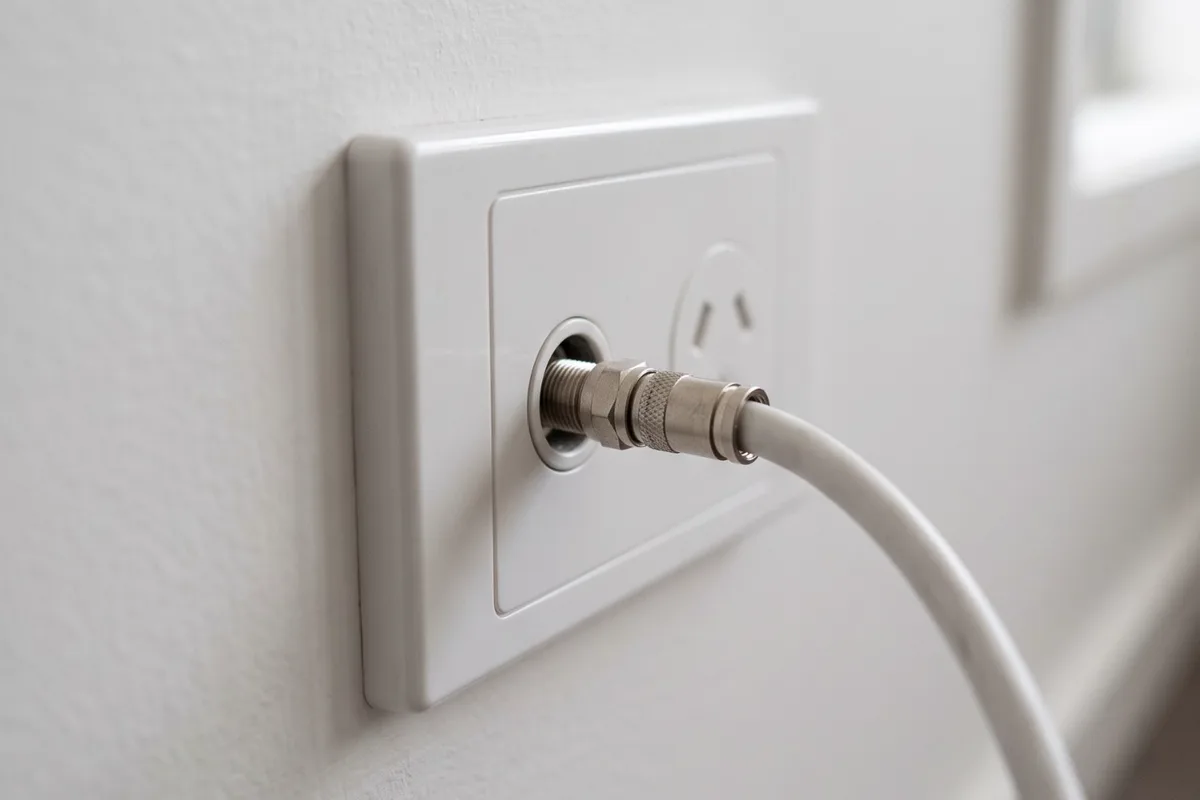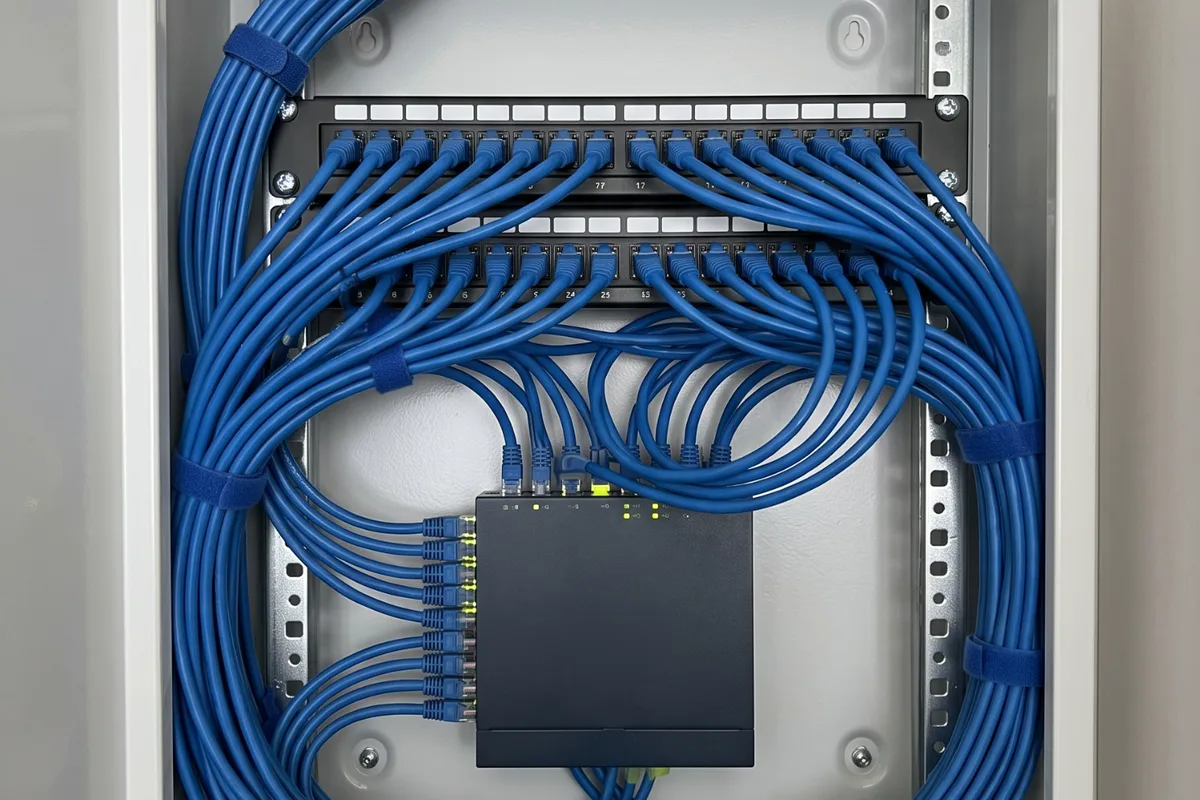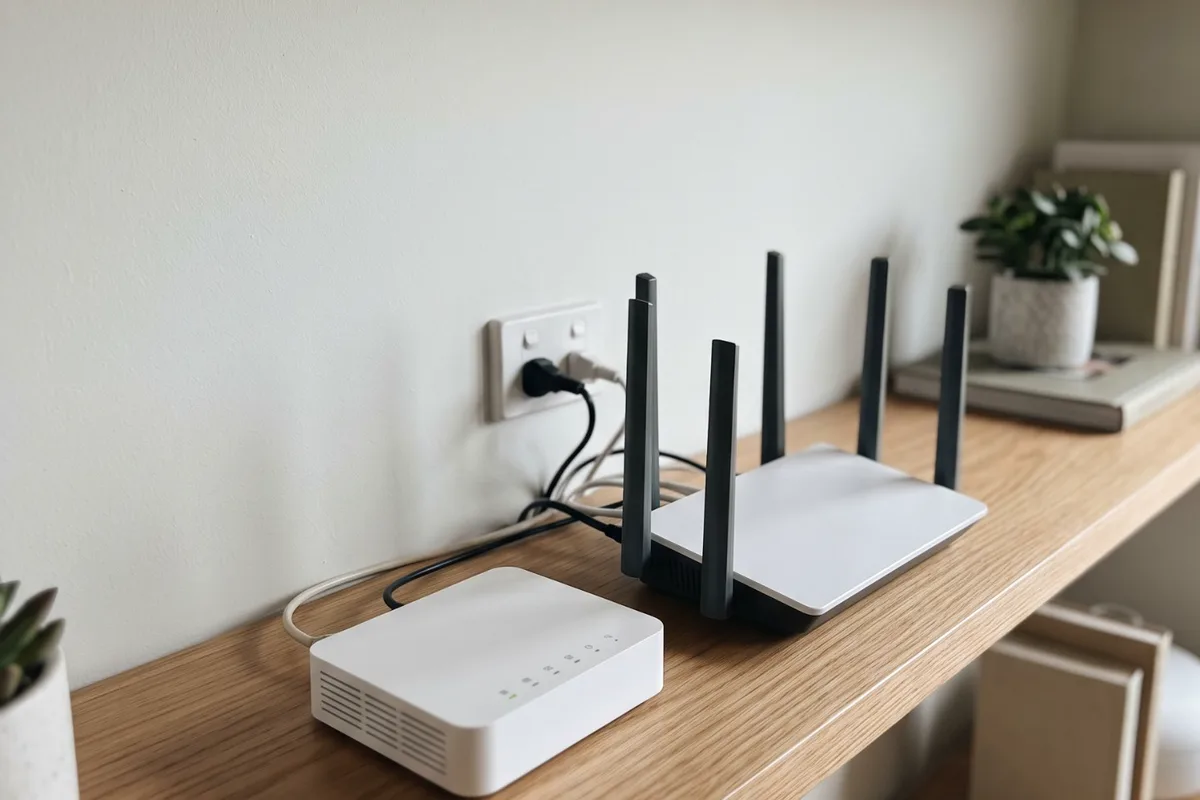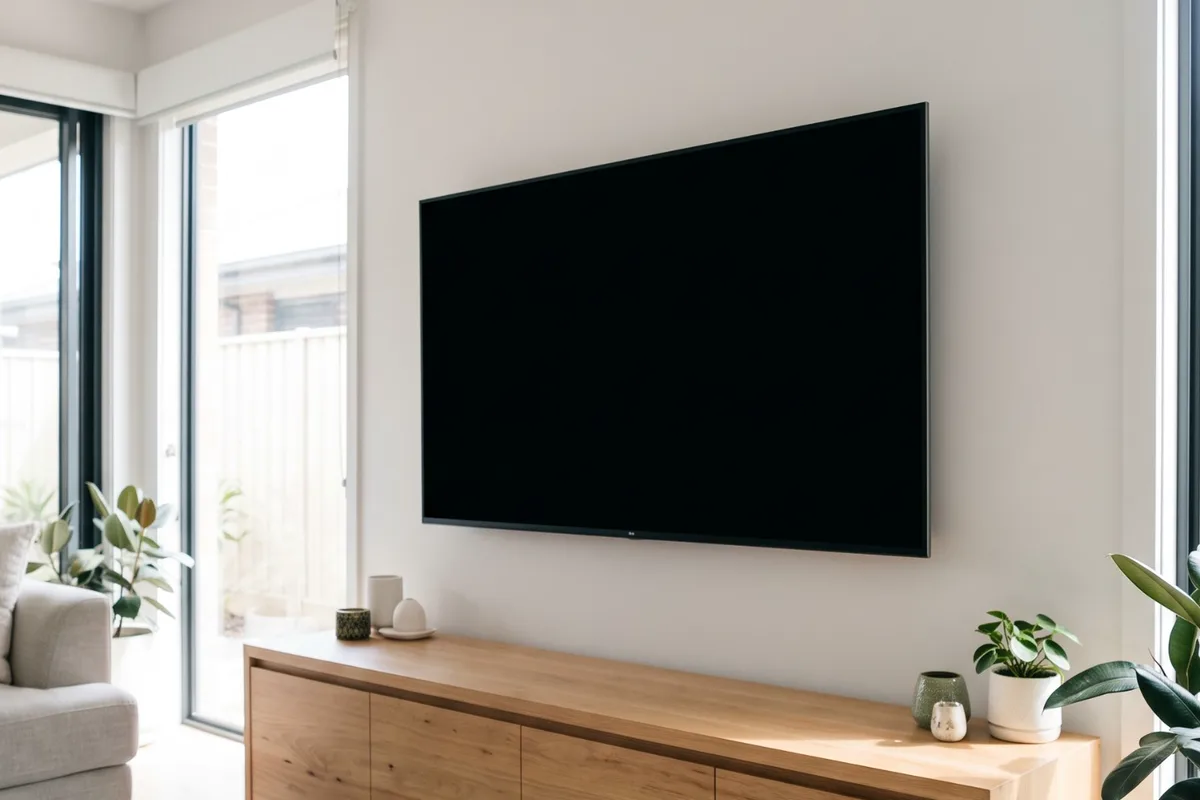
Most homes outgrow their cabling: one antenna point, a phone socket in the hall and Wi-Fi that won't reach the back rooms. We plan TV and data runs back to the antenna and NBN box, add power where each device sits, and test and label every point.
When to get it checked
Wi-Fi that won't reach
The home office, back bedroom or garage keeps dropping out, and extenders only half fix it.
A TV with nothing to plug into
The new TV spot has no antenna point, no data point and a lead snaking to the nearest power point.
The NBN box is in the wrong place
The internet comes in at the front of the house, so the router sits in a corner it can't cover the house from.
Cables taped along the skirting
Flat leads run under rugs and doorways because nothing was ever planned into the walls.
Building or renovating
The frame is open, which is the easiest time the house will ever have to take new cabling.
Why it happens
4 common causes
Homes wired for one TV and a phone
Older homes often have one antenna point in the lounge and a phone socket in the hall. Streaming, gaming and working from home weren't part of the plan.
Wi-Fi has limits
Brick walls, foil-backed insulation, distance and neighbouring networks all weaken Wi-Fi. A cable isn't bothered by any of them.
The internet came in where the old line did
The NBN connection often landed where the phone line or cable first entered the house, which is rarely the middle of the home.
Only the minimum in newer homes
Some newer homes come with a TV point or two and perhaps one data point, with the rest left for later.
What the job covers
What we usually do on this job. Your quote confirms it for your place.
- Walk-through of rooms, devices and router position
- TV and data runs planned back to the antenna and NBN box
- Cable run through the roof, walls or subfloor
- Data and power cables kept apart in the wall
- Neat wall plates at each point
- Recessed power and conduit behind wall-mounted TVs
- Power points added where devices need them
- Every point tested and labelled
- Certificate of Electrical Safety for new power points
Your options, explained
A single TV or data point
Low disruption- Best for
- One room that needs a connection
- How it works
- One cable runs from the antenna feed or router to a new wall plate, with a power point beside it if needed.
- Worth knowing
- Our TV point installation and data and ethernet cabling pages cover each in detail.
Several points in one visit
Medium disruption- Best for
- Adding a home office, a gaming setup or extra TVs
- How it works
- TV and data runs are planned together, often back to one spot near the NBN box or a central cupboard.
- Worth knowing
- Doing them together shares the roof and wall work, so each point costs less.
Whole-home cabling in a build or renovation
Medium disruption- Best for
- New homes, extensions and gut renovations
- How it works
- Data and TV runs go to every room that might need them, back to a central point, roughed in before plaster.
- Worth knowing
- Far simpler with open frames. Spare conduit leaves room for whatever comes next.
Moving where the internet comes in
Medium disruption- Best for
- NBN boxes or routers in the wrong part of the house
- How it works
- We run cabling so the router can sit centrally, or add power and cabling at a new spot once NBN Co has moved its equipment.
- Worth knowing
- Changes to NBN Co's own equipment go through NBN Co. Our NBN cabling and relocation page explains.
The people behind the work
One local team for electrical, heating and cooling, based in Altona Meadows, with 19 years in the industry.
Licensed electrical contractor (REC 38187)See more team photos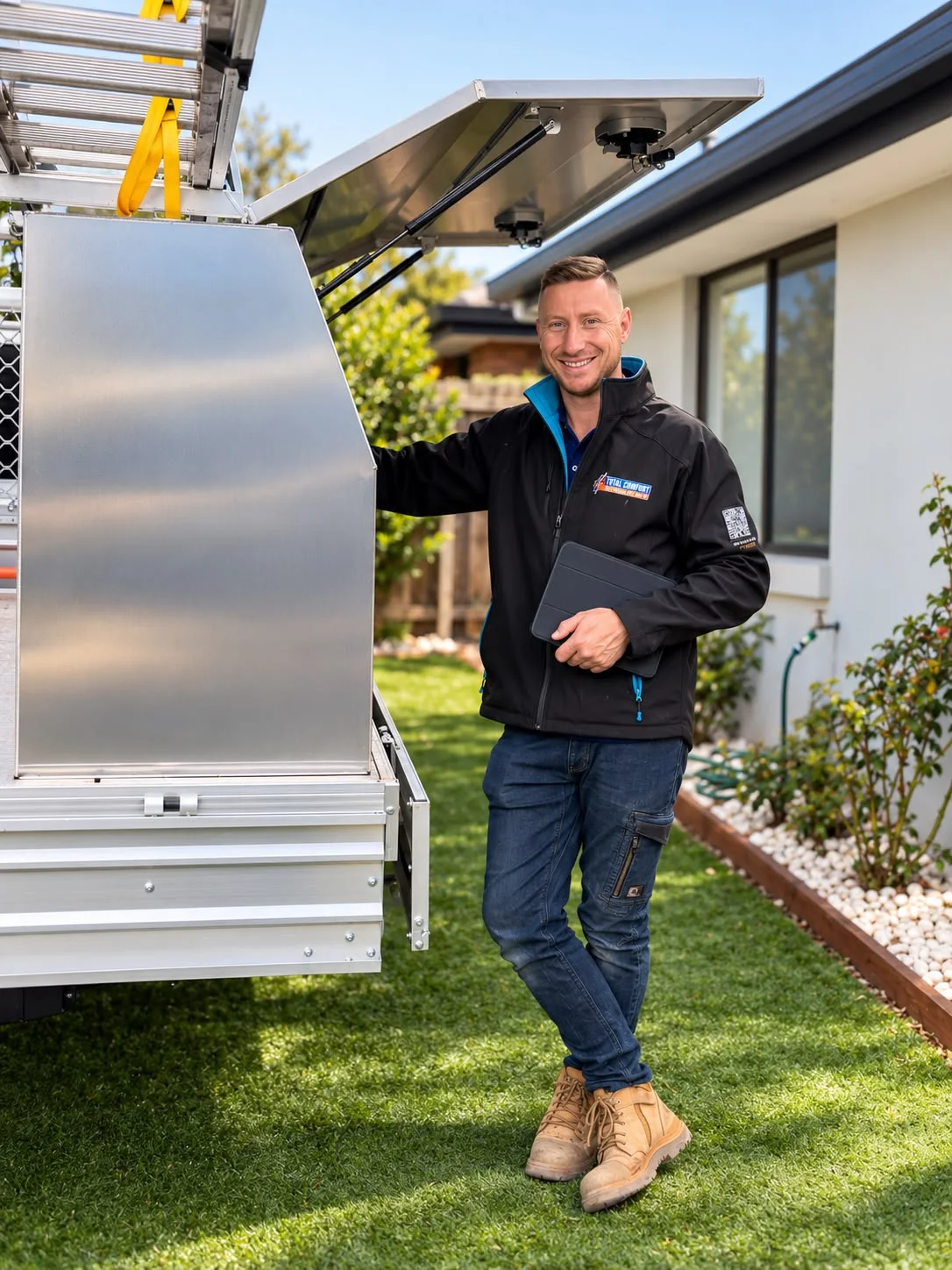
Worth knowing before you book
- Router in the middle
- A central router often beats any Wi-Fi extender.
- Settle the TV height first
- The points go behind the screen, so decide the height before we start.
- NBN Co owns its equipment
- Moving the NBN box itself goes through NBN Co, usually via your provider.
What affects the price?
The right scope depends on your installation. These are the details we check so your quote is useful, with any additional work explained before it proceeds.
Number of points
Several points in one visit cost less each than one at a time, because the access and set-up are shared.
Roof and subfloor access
A roomy roof or a house on stumps makes runs simple. Double-storey homes, slabs and raked ceilings take more time.
Wall types
Hollow plaster walls are quick to drop a cable down. Brick, stone and walls with noggins in the way take longer or need surface conduit.
Equipment at the central point
Splitters, an amplifier, a patch panel or a network switch add parts. We confirm what your setup actually needs.
Power points
A TV wall or a data cabinet usually needs new or extra power points, which are electrical work and certified.
Before the visit
- Mark where the TV, desks and modem will go, and send photos of each wall.
- Tell us whether the home is single or double storey and if there is roof access.
- Check with your NBN provider about any part of the connection they look after.
How it runs
- 1
Tell us the plan
Rooms, devices, and photos of the NBN box and antenna point.
- 2
Plan and price
Runs and points agreed, with the price before we start.
- 3
Run and test
Cables run, terminated, tested and labelled.
Step by step, in more detail
5 steps
Walk through how you use the house
Where the TVs go, who works from home, where the router lives now and which rooms struggle. Photos of the NBN box, the antenna point and the switchboard help.
Plan the runs
We map TV and data runs back to the antenna feed and the NBN box, check roof and subfloor access, and plan a power point next to each device.
Price before we start
You get the price for the agreed points, with locations and any patching written down.
Run, terminate and test
Cables are run through the roof, walls or subfloor and kept apart from power cables, then terminated at neat wall plates. Each point is tested and labelled.
Hand over
We show you what each point connects to. Any new power points come with a Certificate of Electrical Safety.
What is safe to do, and what to leave to us
Safe for you to do
- During a power failure, turn off and unplug the TV, modem and other electronics, as Energy Safe Victoria advises, to help protect them if there's a surge.
- Keep the NBN box and router somewhere ventilated, not shut in a cupboard with no airflow.
- Have a damaged power point behind a TV or desk looked at before plugging anything back in.
Leave these to us
- Running power boards behind the TV or desk off other power boards.
- Hiding power leads or extension leads inside walls or under carpet.
- Moving or opening NBN Co equipment yourself.
- Installing power points yourself. Energy Safe Victoria says electrical work isn't a DIY job, even small jobs like changing power points.
When to get us in
- Wi-Fi doesn't reach the rooms you use most
- You're mounting a TV where there's no antenna or data point
- The NBN box or router is in the wrong part of the house
- You work from home and need a reliable wired connection
- You're building, extending or renovating
More detail
Three jobs that often go together
TV points carry the antenna signal to each screen. Data points carry your internet over a cable instead of Wi-Fi. NBN cabling deals with where the internet comes into the house and how it gets to your router. A TV wall often wants all three, plus power, which is why we plan them together.
Each has its own page with more detail: TV point installation, data and ethernet cabling, and NBN cabling and relocation.
Start with where the router lives
Most home networks work best with the router near the middle of the house, not tucked beside the NBN box in a front room. A single data cable from the NBN box to a central spot often does more for Wi-Fi than any extender.
From there, data points can run to the rooms that need a solid connection: the home office, the TV, the gaming setup, or a ceiling spot for a Wi-Fi access point.
Power where the devices are
Every screen, router and access point needs power nearby, and a TV wall usually needs more than one outlet. Power points are electrical installation work, so they come with a Certificate of Electrical Safety, and Energy Safe Victoria notes the Wiring Rules call for additional safety switch protection when an existing installation is altered.
Surge protection is worth a thought for expensive electronics. Energy Safe Victoria explains that surge diverters capture voltage spikes, such as those from a lightning strike, though they don't protect people from electric shock.
Plan it before the plaster
In a new build or renovation, cables go in while the frame is open, before insulation and plaster. That's the time to run data and TV to every room you might use, plus spare conduit to the main spots so future cables can be pulled through.
Tell your builder early, so the cabling sits on the plan alongside the power and lighting.
Local rules and conditions
Victorian requirements and local conditions that shape this job, with the sources listed at the foot of the page.
New homes in Wyndham
Wyndham has new housing planned in its growth areas, including Wyndham Vale. If you're building, cabling goes in far more easily before plaster, so decide where the TVs, desks and router will go while the frame is still open.
Period homes in Newport and Yarraville
Newport's Estate precinct is mostly single-storey Victorian, Federation and Interwar weatherboards, and Yarraville's precinct is mostly small Victorian and Edwardian houses on narrow blocks. In timber-framed homes like these, cable can often be dropped from the roof or fed up from underneath, which keeps patching to a minimum.
Useful reading
Guides to read before you decide, with checklists and questions to bring to the quote.
- Planning the electrical in a new build or extensionMark up the power and lighting plan, decide the dedicated circuits, pre-wire air conditioning and EV charging, then walk the frame before plaster.
- The electrical decisions to make before your renovation walls closePlan appliances, lighting, outlets and future upgrades while access and options are still available.
- Surge protection explained: what it does and doesn't doHow a switchboard surge diverter differs from a surge power board, what each one protects, where both stop, and which homes in Melbourne's west gain most.
- Planning a wall-mounted TV: power, antenna and data behind the screenMounting height, recessed power, conduit for HDMI and soundbar cables, and where the antenna and data feeds come from, all planned before the bracket goes up.
Common questions
Sources for the rules and local facts on this page
9 sources, with the date each was checked
- 1.Victorian Electoral Commission (2023 electoral structure review fact sheet): New housing developments are planned in residential growth areas including Truganina, Tarneit, Wyndham Vale and Manor Lakes, as well as near activity centres and public transport. Accessed 30 September 2026.
- 2.Victorian Heritage Database (Heritage Council Victoria); entry maintained by Hobsons Bay City Council from the Hobsons Bay Heritage Study 2006: Aesthetically, it is significant for the groups of relatively intact examples of representative housing, from the Victorian, Federation and Interwar periods. They are notable for their consistent character, which is… Accessed 30 September 2026.
- 3.Victorian Heritage Database (Heritage Council Victoria); entry maintained by Maribyrnong City Council: The general character of the Yarraville Residential Precinct is that of small Victorian & Edwardian single-storey detached housing with mainly weatherboard and some brick wall cladding, corrugated iron roofing, front… Accessed 30 September 2026.
- 4.Energy Safe Victoria: Electrical work isn’t a DIY job, even for small jobs such as changing power points or light switches. Accessed 30 September 2026.
- 5.Energy Safe Victoria: Whenever a licensed electrician completes any electrical installation work, they must provide a Certificate of Electrical Safety (COES). Accessed 30 September 2026.
- 6.Energy Safe Victoria: For electrical installation work performed within your electrical installation including but not limited to lights, power points, air conditioning, hot water service etc. Accessed 30 September 2026.
- 7.Energy Safe Victoria: Clause 2.6.3.2.5 of the Wiring Rules states: Additional protection by RCDs shall be provided in existing electrical installations where alterations or a switchboard replacement is completed. Accessed 30 September 2026.
- 8.Energy Safe Victoria: Surge diverters protect the property from voltage surges such as those resulting from a lightning strike. The surge diverter captures the voltage spikes in the wiring that would otherwise be transferred into the… Accessed 30 September 2026.
- 9.Energy Safe Victoria: In the event of a power failure turn off and unplug all electrical appliances at the powerpoint. This will help to prevent equipment damage in the event of a power surge. Accessed 30 September 2026.