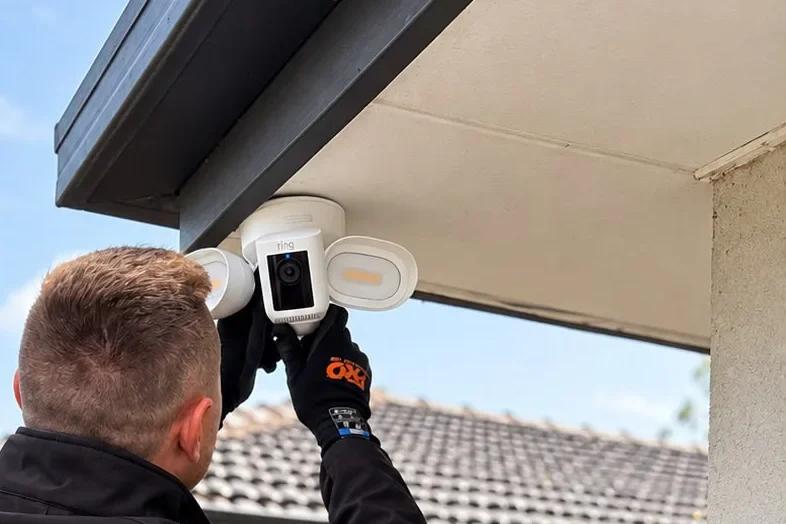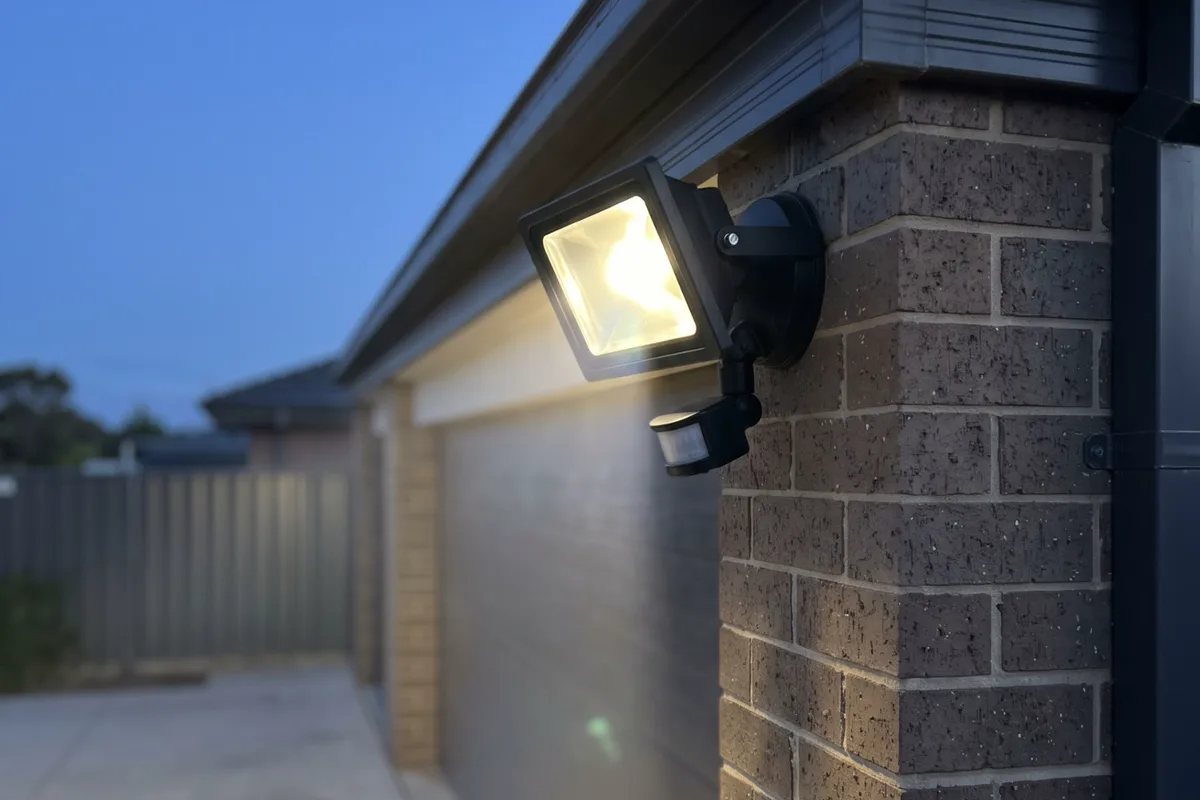
A good sensor light sees you coming up the path and ignores the street. We fit sensor fittings or add a sensor to lights you already have, then seal, walk-test and set them for the spot.
When to get it checked
Fumbling at a dark door
You find the lock by feel, or wait for someone inside to flick the porch light on.
A light left on all night
The carport or front light burns until someone notices it in the morning.
It triggers for everything but you
Passing cars and next door’s cat set it off, yet it misses you until you’re at the step. That’s usually aim, not a weak sensor.
It cycles, or stays on in daylight
It clicks on and off all evening, or never turns off. The daylight setting, an override or a failed sensor is usually why.
Water or a cloudy lens
Water in the diffuser or a sun-yellowed lens makes a sensor unreliable, and water near live parts is a fault.
Why it happens
5 common causes
Aimed straight down the path
Most sensors use passive infrared, which picks up warm bodies moving across its detection zones. Walk straight at one and it reacts late.
Heat and movement in its view
Plants in the wind, cars on the street and an air conditioner’s outdoor unit can all register as movement.
Light on the daylight cell
If the fitting’s own light or a streetlight reaches the daylight cell, the sensor decides it’s daytime and switches off, then on again.
Settings left as they came
Range, run time and daylight dials leave the factory at middle settings, and rarely suit the spot until someone adjusts them.
The wall switch is off
A sensor needs power to keep watch. Flick the indoor switch off out of habit and the light looks faulty.
What the job covers
What we usually do on this job. Your quote confirms it for your place.
- Door, path or drive assessed for how people approach
- Lighting circuit and safety switch protection checked
- Outdoor-rated sensor fitting or sensor head fitted
- New cable run where there’s no light point
- Cable entries sealed against rain
- Sensor aimed across the approach, away from the street
- Range, run time and daylight level set
- Override shown at handover
- Certificate of Electrical Safety issued
Your options, explained
Add a sensor to an existing light
Low disruption- Best for
- A sound fitting that just needs automatic control
- How it works
- A separate weatherproof sensor head is wired in to switch one or more existing lights.
- Worth knowing
- One sensor can light a porch, path and carport together.
Replace with a sensor fitting
Low disruption- Best for
- Tired porch, wall and carport lights
- How it works
- An outdoor-rated LED fitting with a built-in sensor goes on the same point.
- Worth knowing
- Integrated LED fittings are replaced whole when the LEDs fail.
New sensor light point
Medium disruption- Best for
- Side paths, bin areas and carports with no light
- How it works
- New cable runs from a suitable lighting circuit to a new outdoor point.
- Worth knowing
- Brick, double-storey walls and tight roof spaces make the route harder.
The people behind the work
One local team for electrical, heating and cooling. Family-run, based in Altona Meadows, with 19 years in the industry.
Licensed electrical contractor (REC 38187)See more team photos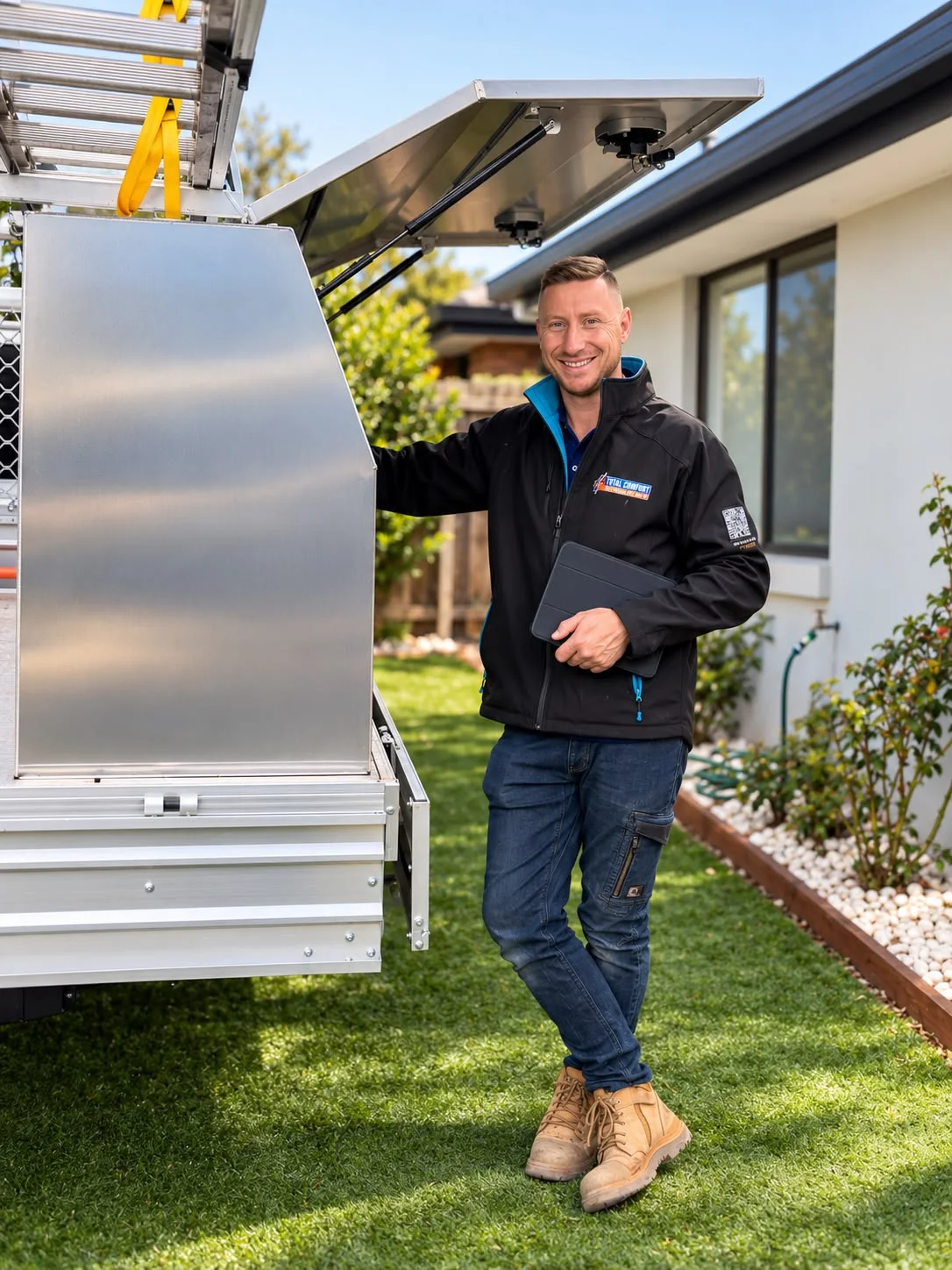
Worth knowing before you book
- Leave the switch on
- A sensor light needs its wall switch on to work. We can label the switch.
- Angle beats brightness
- Sensors react best to movement across their view, so position matters more than wattage.
- Already bought one?
- Send us the model first so we can check it suits the spot and the load.
What affects the price?
The right scope depends on your installation. These are the details we check so your quote is useful, with any additional work explained before it proceeds.
An existing point or a new one
Swapping a fitting on a sound point is simplest. A new point needs a cable route, and brick or second-storey walls add work.
Height and access
Ground-floor eaves are ladder work. A second-storey gable may need extra access equipment.
The fitting you choose
Integrated or globe type, weather rating, housing material and a low-glow mode all change what the fitting costs.
The circuit’s condition
Damaged cable or a lighting circuit without safety switch protection is priced before we go ahead. Energy Safe Victoria notes the Wiring Rules require additional safety switch protection when an existing installation is altered.
How it runs
- 1
Send photos
The door, path or drive, and what the light does now.
- 2
Check and quote
Circuit, mounting and cable route checked, with the price before we start.
- 3
Fit and seal
Fitting or sensor head up, cable entries sealed.
- 4
Walk-test and certify
Range, run time and daylight level set, and a certificate issued.
Step by step, in more detail
5 steps
Show us the spot
Send photos of the door, path or drive, and tell us what the current light gets wrong.
Check the circuit
We check the lighting circuit, its safety switch protection, the mounting surface and any new cable route.
Price before we start
You get a fixed price for the agreed scope, with fittings and positions written down.
Fit, seal and walk-test
The fitting goes up and cable entries are sealed. We walk the approach to set aim and range, then set the run time and daylight level.
Certificate
You get a Certificate of Electrical Safety. Energy Safe Victoria says a copy must reach you within 30 days.
What is safe to do, and what to leave to us
Safe for you to do
- Leave the indoor switch for a sensor light on, and label it.
- Trim shrubs that sway in front of the sensor.
- If the safety switch trips, reset it once. Energy Safe Victoria says to call a licensed electrician if it won’t reset.
Leave these to us
- Swapping a fitting or wiring a sensor yourself. Energy Safe Victoria says electrical work isn’t a DIY job, even changing light switches.
- Taping over or bridging the sensor to keep the light on.
- Running indoor extension leads outside to power a light.
- Touching a fitting with water inside, or one that’s cracked or scorched.
When to get us in
- It stays on in daylight or won’t turn off
- It won’t come on even with the wall switch on
- Water inside the fitting, or a cracked or scorched housing
- The safety switch trips when it rains or the light comes on
- You want a sensor light where there’s no light now
More detail
Motion, dusk-to-dawn or both
A motion sensor turns the light on when it detects movement and off after a set run time. A dusk-to-dawn cell reads daylight instead, so the light runs all night. Combined fittings glow low from dusk and brighten when someone walks up, which suits a front entry or shared drive.
Where the sensor goes matters most
Passive infrared sensors see best across their view, so we mount them where people walk past the fitting, not straight at it. Too high and the zone takes in the street; too low and the range shrinks. We angle the head until its zone stops at your boundary.
Light that doesn’t bother next door
A bright fitting on a side wall can shine straight into the house next door. We point heads down along the path, use shielded fittings where spill is a problem and suggest warm white, which is softer at night and tends to draw fewer insects.
Local rules and conditions
Victorian requirements and local conditions that shape this job, with the sources listed at the foot of the page.
Salt air along the bay
Hobsons Bay has more than 20 kilometres of bay frontage. Near the water, salt air works on metal housings, screws and seals, so we favour sealed, corrosion-resistant fittings.
Low front fences in Altona
Planning controls for Altona’s special character areas aim to keep post-war homes with established gardens, generous setbacks and low front fences. Over a low fence a porch sensor sees the footpath, so we narrow its view.
Sensor lights in rentals
Since 29 March 2023, every lighting circuit in a Victorian rental must connect to a switchboard-type circuit breaker and safety switch. Consumer Affairs Victoria says rental providers must organise and pay for repairs that aren’t the renter’s fault.
Useful reading
Guides to read before you decide, with checklists and questions to bring to the quote.
- A room-by-room lighting plan that goes beyond more downlightsPlan task lighting, comfortable evening light and outdoor coverage around how each space is used.
- What electrical work you can and can't do yourself in VictoriaWhere Victorian law draws the line on home electrical work, the short list of jobs that are yours, and what to do when a job goes past it.
- A safety switch keeps tripping: what to record and when to callUnderstand the difference between a protective device doing its job and a fault that needs investigation.
- Certificates of Electrical Safety explainedWhat a Victorian COES records, how prescribed and non-prescribed work differ, when your copy should arrive and why it belongs in your house file.
Common questions
Questions people ask about this
- Why does my sensor light stay on or keep turning on all night?A sensor light that stays on or keeps triggering all night is usually seeing something: swaying plants, pets, possums, insects drawn to the light, or warm air from an…
- Why do my lights turn on or off by themselves?Lights that switch on or off by themselves are usually following instructions you've forgotten: a smart switch schedule, a routine in an app, a motion or daylight…
- Why is there water inside my outdoor light?Water gets into outdoor lights through perished seals, cracked lenses, unsealed cable entries or a fitting that isn't rated for where it's mounted.
From the blog
- Going away? What to switch off and what to leave onA pre-holiday checklist for fridges, hot water, heaters, chargers and security lighting, plus why testing your safety switches before you leave is worth five minutes.
- Electrical upgrades that make a home safer for older parentsBetter lighting on paths and stairs, sensor lights, interconnected smoke alarms, easier switches and safer heating: practical upgrades that help with ageing in place.
Sources for the rules and local facts on this page
9 sources, with the date each was checked
- 1.Hobsons Bay City Council: Hobsons Bay has more than 20 kilometres of bay frontage, quality residential areas, a huge expanse of environmentally significant open space and a range of major industrial complexes, which contribute significantly to… Accessed 30 September 2026.
- 2.Victorian Government, Hobsons Bay Planning Scheme (PDF snapshot, last updated by VC292 on 11/09/2025): SPECIAL CHARACTER AREAS, ALTONA 1.0 24/02/2022 C131hbay Neighbourhood character objectives To preserve the characteristics of the neighbourhood, comprising intact post-war brick and weatherboard dwellings with… Accessed 30 September 2026.
- 3.Consumer Affairs Victoria: From 29 March 2023 all power outlets and lighting circuits in a rental premises must connect to both a switchboard-type circuit breaker that complies with AS/NZS 3000 and a switchboard-type residual current device that… Accessed 30 September 2026.
- 4.Consumer Affairs Victoria: The rental provider must organise and pay for all repairs if they are not the renter’s fault. Accessed 30 September 2026.
- 5.Energy Safe Victoria: Electrical work isn’t a DIY job, even for small jobs such as changing power points or light switches. Accessed 30 September 2026.
- 6.Energy Safe Victoria: Locate your electricity box outside your home and check whether the safety switch has tripped. If it has tripped, reset the switch. If the switch won’t reset, call a licensed electrician. Accessed 30 September 2026.
- 7.Energy Safe Victoria: Whenever a licensed electrician completes any electrical installation work, they must provide a Certificate of Electrical Safety (COES). Accessed 30 September 2026.
- 8.Energy Safe Victoria: For electrical installation work performed within your electrical installation including but not limited to lights, power points, air conditioning, hot water service etc. Accessed 30 September 2026.
- 9.Energy Safe Victoria: Clause 2.6.3.2.5 of the Wiring Rules states: Additional protection by RCDs shall be provided in existing electrical installations where alterations or a switchboard replacement is completed. Accessed 30 September 2026.