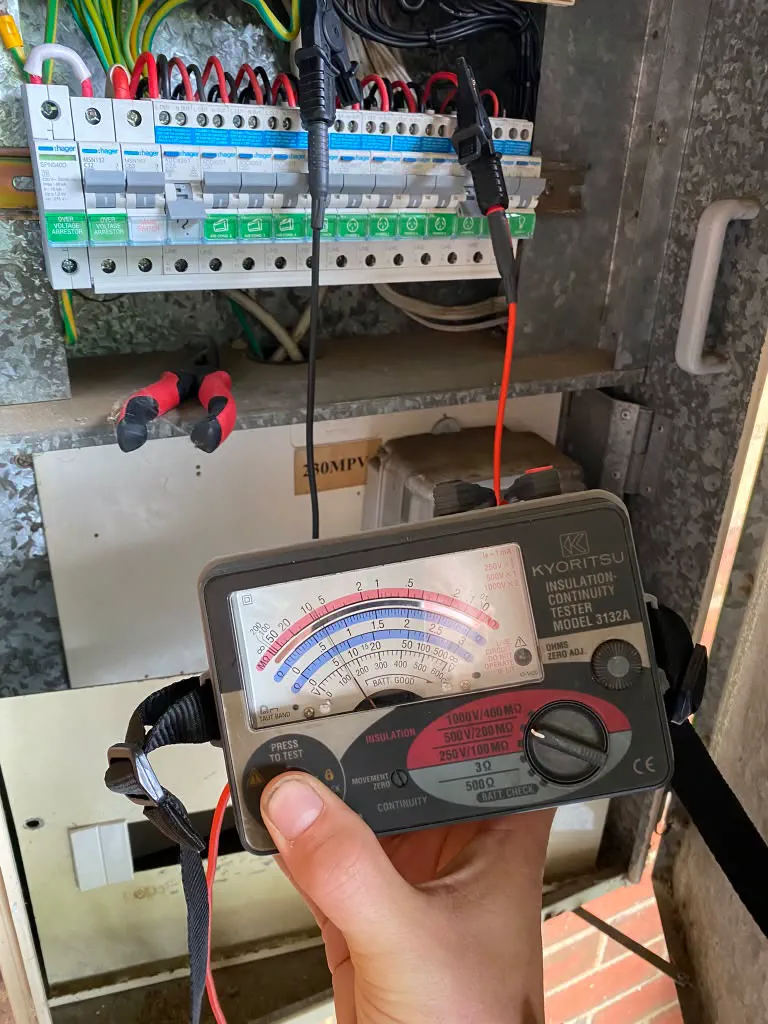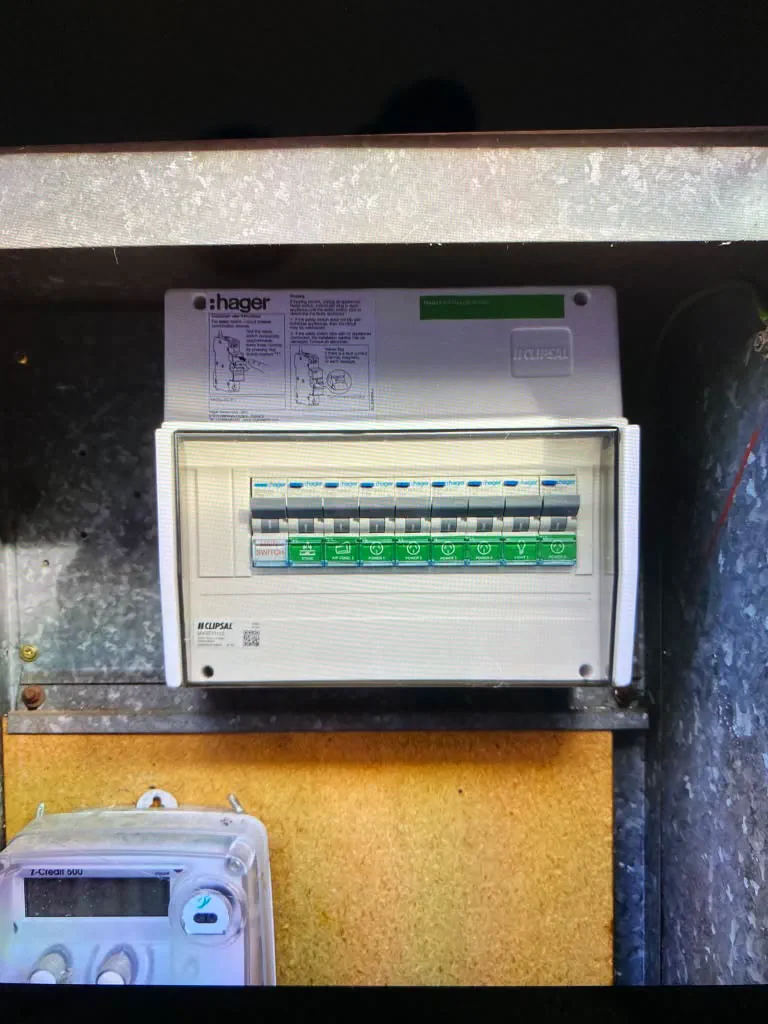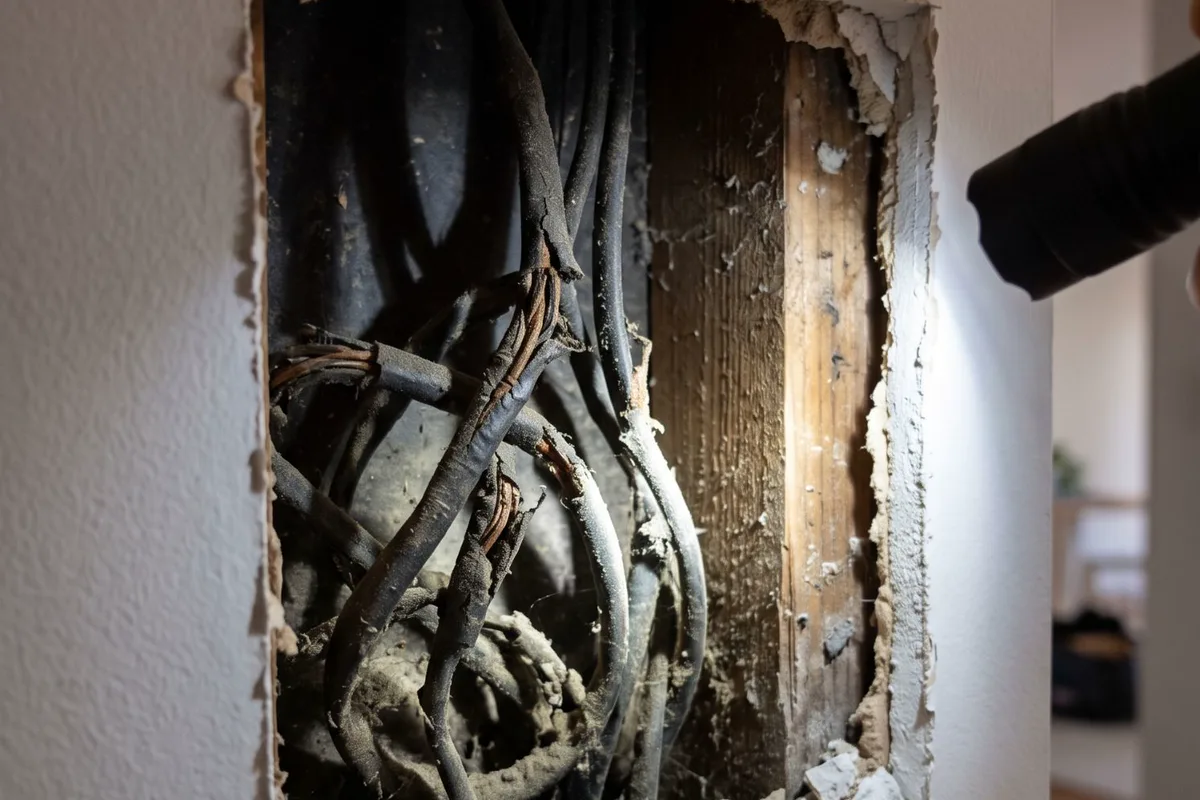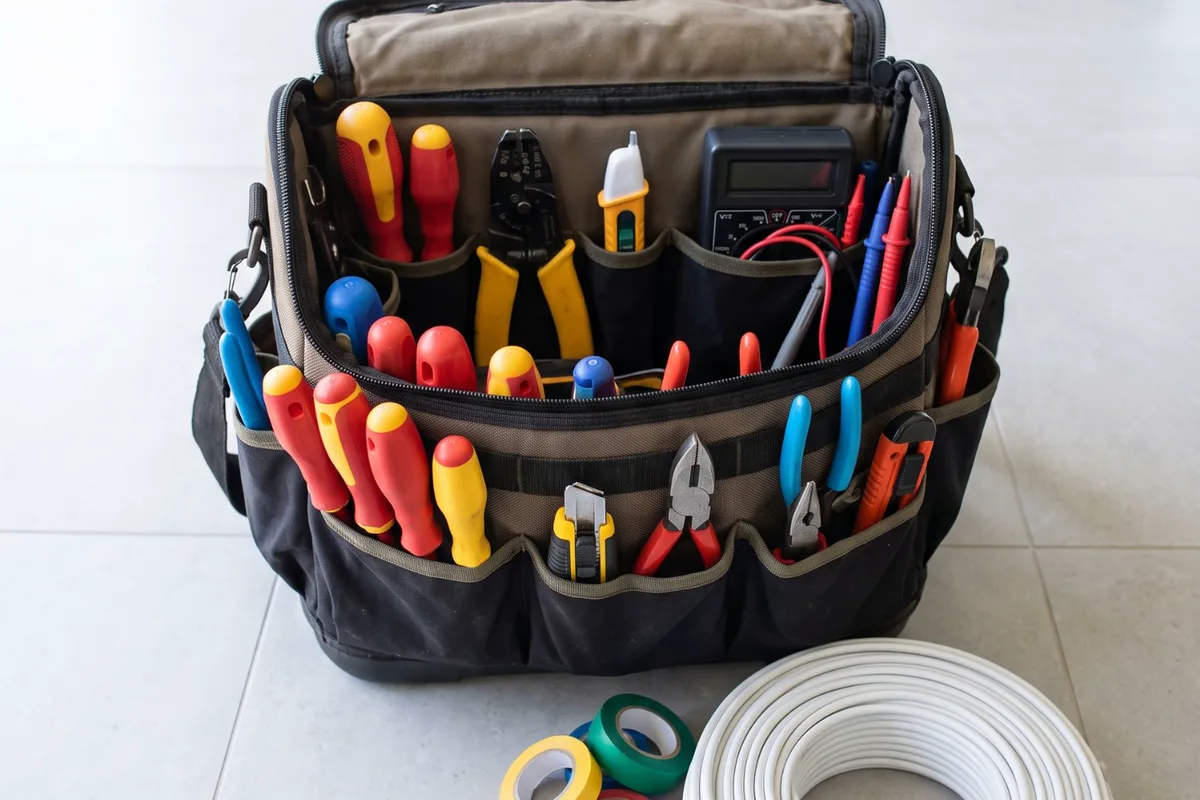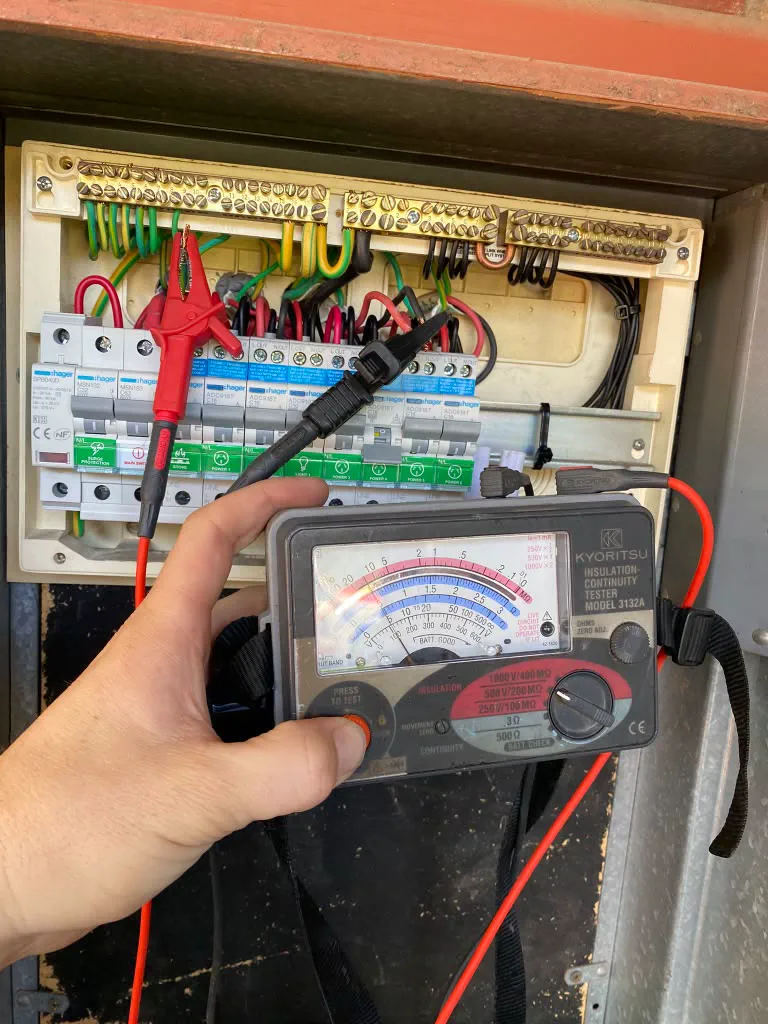
Before you commit to a house, one of our licensed electricians inspects what can be seen and safely tested, from the meter box to the back shed. The report ranks what we find, from old fuse boards to brittle cabling and handyman additions, by urgency.
When to get it checked
Ceramic fuses in the meter box
Pull-out ceramic carriers instead of switches mean a rewireable fuse board, and often no safety switch at all.
No test button on the board
A safety switch always has a test button and 30mA printed on it. If nobody can point to one, assume there is none.
Tired or damaged fittings
Cracked or loose points, scorched plates, or lights that flicker as you walk through. Energy Safe Victoria lists old or broken points and flickering lights among the warning signs of faulty wiring.
Home-handyman wiring
Flex stapled along a garage wall, or a shed fed by a lead through a window. Unlicensed electrical work is illegal in Victoria, and it is often where the real hazards sit.
Why it happens
4 common causes
The original cable is still there
Plenty of older houses still run on the wiring they were built with. Energy Safe Victoria says owners of houses over 30 years old should consider what could be behind the walls.
Decades of additions
Split systems, spas, sheds and extra points get added one at a time. Boards fill up and labels stop matching the rooms.
Renovating to sell
Pre-sale updates focus on what buyers notice. A new cover plate or pendant can sit on the same old cable.
Hidden wear
Connections loosen with use, and old insulation goes brittle in roof spaces that bake through summer. Neither shows from the hallway.
What the job covers
What we usually do on this job. Your quote confirms it for your place.
- Switchboard and safety switches assessed
- Meter box, backing panel and main earth checked
- Safety switches trip-tested where power can go off
- Accessible points, switches and lights checked
- Smoke alarm types and dates recorded
- Roof space cabling inspected where safe
- Sheds and sub-boards included
- Written report with limitations noted
Your options, explained
Visual inspection
Low disruption- Best for
- Newer homes, or a first look before auction
- How it works
- A non-invasive look at the board, fittings, alarms, roof space and sheds, with the power left on.
- Worth knowing
- Can't confirm how old cable is holding up or whether safety switches trip in time.
Inspection with testing
Medium disruption- Best for
- Older homes, and buyers moving straight in
- How it works
- Adds safety switch and circuit tests that need the power briefly off, with the occupant's agreement.
- Worth knowing
- Tests give a much firmer picture of old cabling.
Inspection plus upgrade planning
Low disruption- Best for
- Buyers adding air conditioning, induction or an EV charger
- How it works
- Adds a check of board space and supply size for what you plan to add.
- Worth knowing
- Older homes can have a small single-phase supply. If you plan to go all-electric, we note whether a larger supply or a single to three-phase upgrade would make sense.
The people behind the work
One local team for electrical, heating and cooling. Family-run, based in Altona Meadows, with 19 years in the industry.
Licensed electrical contractor (REC 38187)See more team photos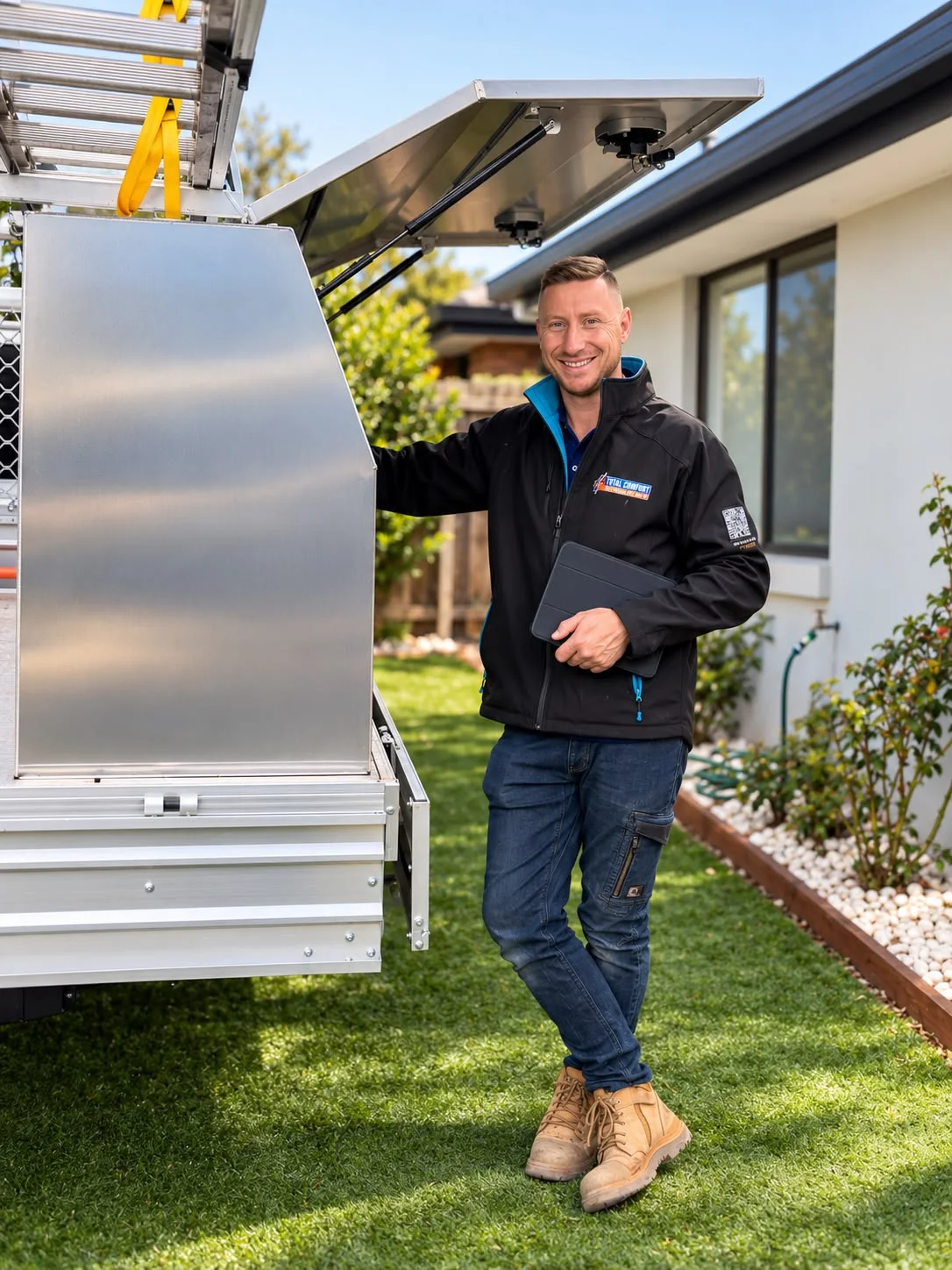
Worth knowing before you book
- Send the building report
- Send any electrical items it flagged so we look there first.
- The vendor controls access
- Tests that cut the power need the occupant’s agreement.
- A report, not a certificate
- A Certificate of Electrical Safety comes with electrical work, such as repairs, not with an inspection.
What affects the price?
The right scope depends on your installation. These are the details we check so your quote is useful, with any additional work explained before it proceeds.
Size and outbuildings
More rooms, circuits, sheds, granny flats and sub-boards mean more to check and record.
Access
A low roof, an awkward manhole or stored goods slow the inspection and limit what can be seen.
How much testing is allowed
Tests that need circuits switched off take longer than a visual walk-through.
Upgrade planning
Checking supply and board space for new appliances adds time on site and in the report.
How it runs
- 1
Book through the agent
Address, agent details and your key dates.
- 2
Inspect and test
Board, fittings, alarms, roof and sheds checked.
- 3
Report and walk-through
Findings ranked by urgency and explained.
Step by step, in more detail
4 steps
Book around your dates
Send the address, the agent’s details and your auction or contract dates. The agent arranges entry and asks whether the power can go off briefly.
Start at the board
Fuses or breakers, safety switches, heat marks and spare space, plus the meter box, backing panel and main earth. With the occupant’s okay, each safety switch is trip-tested.
Rooms, roof and sheds
Accessible points, switches and lights, plus smoke alarm types and dates. Where the manhole is safe, we check roof cabling, then sheds and sub-boards.
Findings in order of urgency
Each finding is marked dangerous now, needs repair or worth planning for, with a note on what the fix involves. Then we talk you through it.
What is safe to do, and what to leave to us
Safe for you to do
- Ask the agent whether the board has safety switches and when the wiring was last checked.
- Ask for any Certificates of Electrical Safety from past work.
- Once it's yours, press each safety switch's test button every three months, as Energy Safe Victoria advises.
Leave these to us
- Removing covers or opening the switchboard at an open for inspection.
- Disturbing an old switchboard backing panel, which may contain asbestos.
- Letting a handyman touch the wiring. Electrical work isn’t DIY, even changing a power point or light switch.
When to get us in
- You’re buying a home built before the 1980s
- The building report says to get an electrician
- You’ve seen ceramic fuses, no safety switch or handyman wiring
- A granny flat, studio or shed has its own power
- You plan air conditioning, induction or an EV charger
More detail
What stays hidden on inspection day
The inspection covers what can be seen and safely tested on the day. We don’t lift floor coverings, cut into walls or move the vendor’s belongings, so cable in the walls is judged from the board, the points and the roof space. The report lists every area we couldn’t reach or test.
Smoke alarms and the build date
Every home needs alarms on or near the ceiling of every storey, between each bedroom area and the rest of the house. Homes built after 1 August 1997 need them on mains power with a backup battery. Alarms are generally replaced after ten years, and newer units show an expiry date under the battery.
Using the findings before you sign
Each finding comes with a plain description of the fix, so you can weigh it against the price. Some buyers ask the vendor to repair an urgent item before settlement, and how that goes into the contract is for your conveyancer. If repairs are done, ask for the Certificate of Electrical Safety that must come with the work.
Local rules and conditions
Victorian requirements and local conditions that shape this job, with the sources listed at the foot of the page.
Old and new in Hobsons Bay
Hobsons Bay’s housing runs from historic Williamstown and Newport in the east to newer Altona Meadows and Seabrook in the west. In the older homes, most of our time goes on the board and roof cabling. In the newer ones, it’s what was added later: the shed, the pergola lights, the extra split system.
Newer estates in Wyndham
Truganina, Tarneit and Wyndham Vale are among Wyndham’s residential growth areas. Homes built, largely renovated or extended after 1 May 2014 need interconnected, hard-wired smoke alarms, so we check they’re all there and linked, and look closely at anything added since handover.
Meter box defects fall to the owner
From the point of supply, the property owner is responsible for maintaining and repairing the installation. Altona Terminal Station (West) supplies Powercor customers in areas including Laverton, Altona Meadows, Point Cook, Tarneit and Werribee, and Powercor lists a meter box with a missing door, broken hinges or no weatherproofing as the customer’s to fix.
Useful reading
Guides to read before you decide, with checklists and questions to bring to the quote.
- Ceramic fuses and old switchboards: what to look forA look-but-don't-touch guide to old switchboards: rewireable fuses, a missing safety switch, suspect backing panels, heat marks and what replacement involves.
- Certificates of Electrical Safety explainedWhat a Victorian COES records, how prescribed and non-prescribed work differ, when your copy should arrive and why it belongs in your house file.
- Smoke alarm rules for Victorian homesWhat Victoria expects of the alarms in the home you own: the type your build date calls for, where they go, interconnection and when to replace them.
- Planning a switchboard upgrade without surprisesWhat the electrician needs to check, how to compare the scope and what to organise before the power goes off.
Common questions
From the blog
Sources for the rules and local facts on this page
19 sources, with the date each was checked
- 1.Victorian Electoral Commission (2023 electoral structure review fact sheet): Its residential areas are diverse, ranging from historic Williamstown and Newport in the east to the newer Altona Meadows and Seabrook in the west. Accessed 30 September 2026.
- 2.Victorian Electoral Commission (2023 electoral structure review fact sheet): New housing developments are planned in residential growth areas including Truganina, Tarneit, Wyndham Vale and Manor Lakes, as well as near activity centres and public transport. Accessed 30 September 2026.
- 3.Fire Rescue Victoria: Residential home constructed, largely renovated, or extended after 1 May 2014 Interconnected, hard wired smoke alarms that are connected to 240 volt mains power and have a back-up battery. Accessed 30 September 2026.
- 4.Energy Safe Victoria: The point of supply is the changeover point from the electricity distribution network to the electrical installation, where the property owner becomes responsible for the maintenance and repair of the electrical… Accessed 30 September 2026.
- 5.CitiPower & Powercor: Customer installation defects fall under customer responsibility and require prompt rectifications to ensure either the safety of the electrical installation, unhindered access to our assets by our employees or that our… Accessed 30 September 2026.
- 6.Powercor Australia, Project Assessment Draft Report: Altona Terminal Station (West) (June 2025): It supplies part of Melbourne’s western growth corridor. This includes the areas of Laverton, Laverton North, Altona Meadows, Werribee, Wyndham Vale, Mount Cottrell, Eynesbury, Tarneit, Hoppers Crossing and Point Cook… Accessed 30 September 2026.
- 7.Energy Safe Victoria: When buying a home built before the 1980s it is imperative the wiring is checked by a licensed electrical inspector or registered electrical contractor prior to moving in. Accessed 30 September 2026.
- 8.Energy Safe Victoria: Old switchboards, particularly those without a safety switch Old power switches or power points, particularly broken ones Flickering lights Sparks from switchboards, switches or power points. If your house is over 30… Accessed 30 September 2026.
- 9.Energy Safe Victoria: Gas and electricity are inherently dangerous and it’s illegal and potentially fatal for unlicensed and unqualified people to undertake any electrical or gasfitting work. Homeowners and consumers must always use… Accessed 30 September 2026.
- 10.Energy Safe Victoria: Electrical work isn’t a DIY job, even for small jobs such as changing power points or light switches. Accessed 30 September 2026.
- 11.WorkSafe Victoria: A person who has management or control of a workplace, and employers or self-employed persons and employees should be aware of the typical uses and applications of ACMs, particularly in buildings constructed or… Accessed 30 September 2026.
- 12.Building and Plumbing Commission (formerly Victorian Building Authority): Homes constructed after 1st August 1997 must have smoke alarms connected to 240V mains power and have a backup battery. Homes constructed before 1st August 1997 may have smoke alarms powered by a battery. Accessed 30 September 2026.
- 13.Energy Safe Victoria: Whenever a licensed electrician completes any electrical installation work, they must provide a Certificate of Electrical Safety (COES). Accessed 30 September 2026.
- 14.Energy Safe Victoria: Only an A grade electrician is qualified to inspect and install household wiring. Accessed 30 September 2026.
- 15.Energy Safe Victoria: Type AC RCDs must not be installed in Australia. This includes like for like replacement. We recommend that electrical contractors advise customers of the new requirements. However, it is not mandatory to replace… Accessed 30 September 2026.
- 16.Energy Safe Victoria: If a switchboard is required to be replaced then as per clause 2.6.3.2.5 (Alterations to installations and replacement of switchboards) of AS/NZS 3000: RCD’s are required on all final sub-circuits. Accessed 30 September 2026.
- 17.Energy Safe Victoria: The electrician has eight business days after the work is completed to have that work inspected by a licensed electrical inspector (LEI). If an electrician replaces a main switchboard at a property, power cannot go back… Accessed 30 September 2026.
- 18.Consumer Affairs Victoria: The electrician should provide a record of the electrical safety check, which must include: the name of the licensed or registered electrician who conducted the check and their licence or registration number the date… Accessed 30 September 2026.
- 19.Consumer Affairs Victoria: From 25 November 2025, rental properties must meet the minimum standards before they’re advertised. Accessed 30 September 2026.