
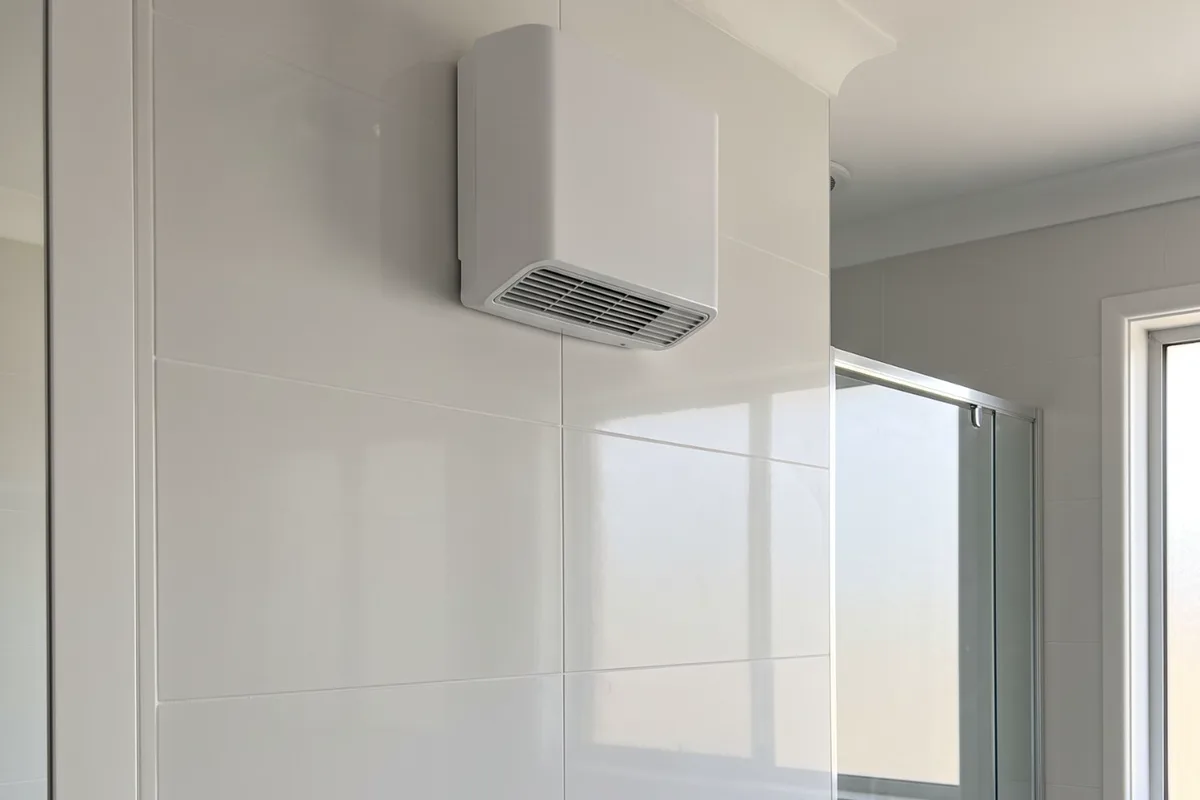
Wall-mounted fan heaters, heated towel rails, 3-in-1 ceiling units and radiant panels each suit different bathrooms. We help you choose, place the heater safely away from the shower and bath, wire it on its own circuit where it needs one, and add a timer so it isn't left running.
When to get it checked
Freezing winter mornings
Stepping out of the shower into a cold room, especially in older homes with tiled floors and no heating in the bathroom.
A portable heater on the vanity
A plug-in heater carried in and out of the bathroom, sitting near water on an extension lead.
Damp towels and mould
Towels that never dry and mould on the ceiling because the room stays cold and wet.
An old heat lamp on its way out
Heat lamp globes that keep failing, a noisy fan, or a unit that's yellowed and tired.
Renovating the bathroom
Walls are open, which is the easiest time to wire a heater, towel rail or timer exactly where you want them.
Why it happens
4 common causes
Heat that goes to the ceiling
A heat lamp high on a tall ceiling warms the top of your head, not the room. The type of heater has to suit the ceiling height and the size of the room.
Wired off the lighting
Older heaters were sometimes run off the lighting circuit, which overloads it and trips the lights along with the heater.
No timer
A heater left running all morning costs money and wears out early. A timer or run-on switch fixes that.
Moisture getting in
Heaters not made for bathrooms, or mounted too close to the shower, fail early and are a safety risk.
What the job covers
What we usually do on this job. Your quote confirms it for your place.
- Bathroom size and ceiling height assessed
- Heater type chosen with you
- Position set to suit the bathroom rules
- Dedicated circuit where the heater needs one
- Safety switch protection checked
- Switch, timer or run-on control fitted
- Old heater or heat lamp removed
- Heater tested before we leave
- Certificate of Electrical Safety issued
Your options, explained
Wall-mounted fan heater
Low disruption- Best for
- Fast warmth in most bathrooms
- How it works
- A fan heater fixed high on the wall, hardwired and controlled by a switch or timer.
- Worth knowing
- Warms the room quickly. Its position depends on the distance from the shower and bath.
Heated towel rail
Low disruption- Best for
- Dry towels and gentle background warmth
- How it works
- A hardwired electric rail on the wall, usually on a timer.
- Worth knowing
- Won't warm a cold room quickly on its own. Often paired with a fan heater or a 3-in-1 unit.
3-in-1 ceiling unit
Medium disruption- Best for
- Heat, light and exhaust in one fitting
- How it works
- Heat lamps or a fan heater, a light and an exhaust fan in one ceiling unit, each on its own switch.
- Worth knowing
- Our bathroom heat lamp and 3-in-1 page goes into these in detail.
Radiant ceiling or wall panel
Low disruption- Best for
- Quiet, even warmth
- How it works
- A slim panel that warms people and surfaces rather than blowing air around.
- Worth knowing
- Silent with no fan, but it takes a little longer to feel warm.
The people behind the work
One local team for electrical, heating and cooling, based in Altona Meadows, with 19 years in the industry.
Licensed electrical contractor (REC 38187)See more team photos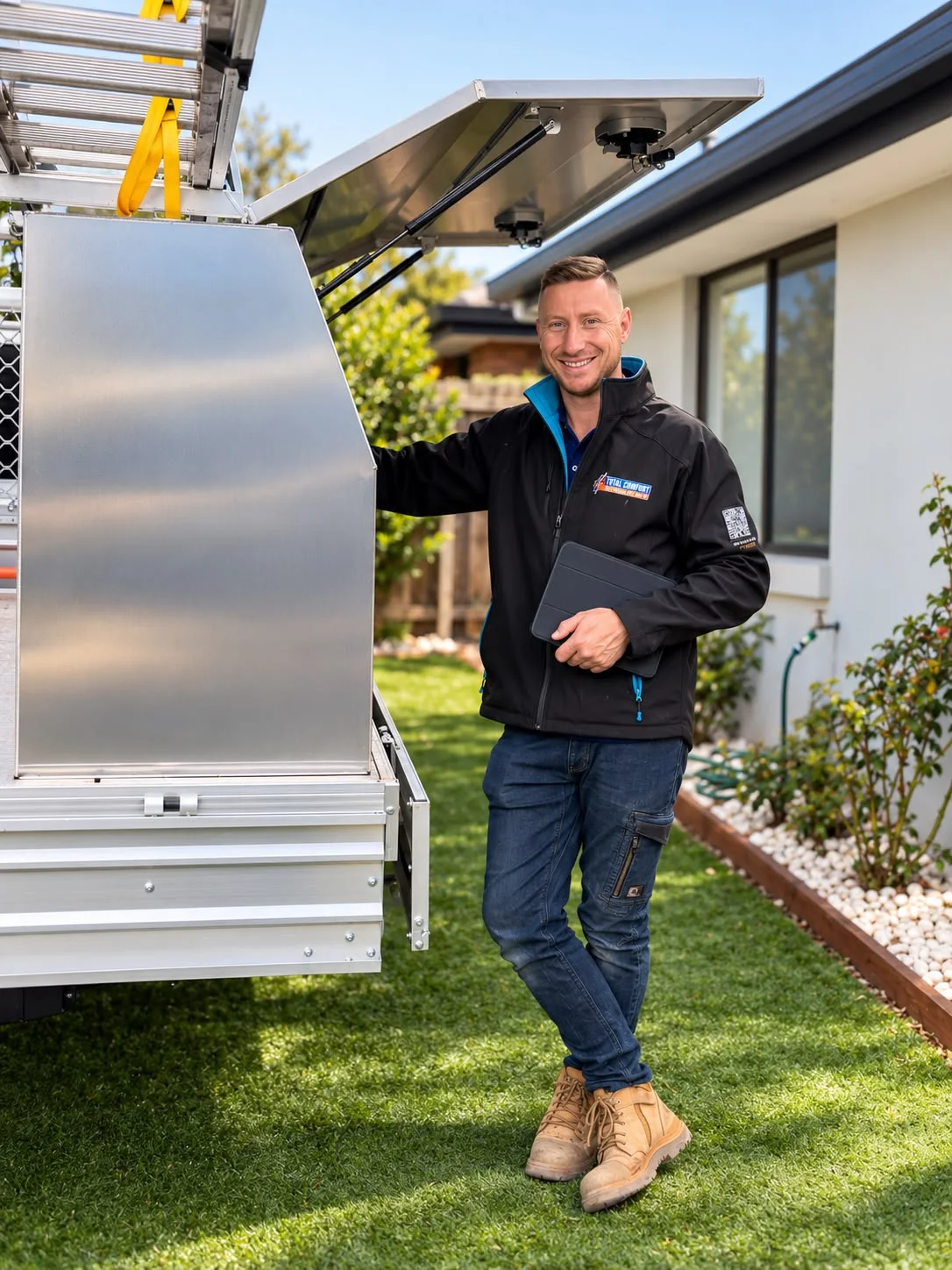
Worth knowing before you book
- Ceiling height matters
- Heat lamps on tall ceilings warm the ceiling, not you.
- Add a timer
- A timer stops the heater being left on all morning.
- Renovating?
- Open walls make it the easiest time to wire a heater.
What affects the price?
The right scope depends on your installation. These are the details we check so your quote is useful, with any additional work explained before it proceeds.
The heater you choose
Fan heaters, towel rails, 3-in-1 units and panels vary in size, power and price.
A new circuit
Larger heaters need their own circuit from the switchboard. A spare position on a modern board keeps it simple.
Ceiling and wall access
Roof space above makes cabling easy. A bathroom under another floor or with solid walls takes longer.
Switches and timers
A timer, a run-on switch or separate switches for each function add a little to the job.
Patching and tiles
Removing an old unit can leave holes to patch, and drilling tiles takes care. Who finishes what is agreed at quote time.
How it runs
- 1
Send photos
The bathroom, its size and what's there now.
- 2
Choose and quote
Heater and position agreed, priced before we start.
- 3
Install
Heater mounted, circuit run and switch or timer fitted.
- 4
Test
Heater, timer and safety switch tested, certificate issued.
Step by step, in more detail
5 steps
Tell us about the bathroom
Send a photo or two, the rough size and ceiling height, and what's there now: a heat lamp, an exhaust fan or nothing at all.
Choose the heater
We talk through the options for your room and where each one can go, given the bathroom's rules about distance from the shower and bath.
Price before we start
You get the price for the agreed scope, with the heater, circuit, switch or timer and any patching set out.
Install and wire
We mount the heater, run a circuit from the switchboard where it needs one, and fit the switch or timer where it's safe to reach.
Test and show you
We test the heater, the safety switch protection and the timer, and show you how it all works.
What is safe to do, and what to leave to us
Safe for you to do
- Use a heater made for bathrooms, installed where the manufacturer and the wiring rules allow.
- Keep towels and clothes clear of the face of fan heaters and heat lamps.
- Reset a tripped safety switch once. If it won't reset or trips again, leave it off and call a licensed electrician.
Leave these to us
- Using a portable heater on an extension lead in the bathroom.
- Leaving a heater on all day with no timer.
- Drying clothes over a heater that isn't a towel rail.
- Installing or rewiring a bathroom heater yourself. Energy Safe Victoria says unlicensed electrical work is illegal and potentially fatal.
When to get us in
- The bathroom is too cold to use comfortably in winter
- You're using a portable heater in the bathroom
- An old heat lamp or 3-in-1 unit is failing or tripping
- Towels won't dry and mould keeps coming back
- You're renovating the bathroom
More detail
Choosing the right heater
A wall-mounted fan heater warms a small to medium bathroom quickly and suits most homes. A heated towel rail keeps towels dry and takes the chill off, but on its own it won't warm a cold room fast. A 3-in-1 ceiling unit combines heat, light and exhaust, and a radiant panel gives quiet, even warmth without a fan.
Ceiling height matters: heat lamps on a tall or raked ceiling spend most of their heat up high. We'll suggest what suits your room and how you use it.
Where it can go
Bathrooms have rules about what can be installed near the shower and bath, and where switches can sit. Heaters usually go high on a wall or in the ceiling, away from where water splashes, with the switch or timer where it's safe to reach.
We place the heater to suit those rules and the manufacturer's instructions, and we'll tell you plainly if the spot you had in mind won't work.
Its own circuit and a timer
A bathroom heater draws a steady load for as long as it runs. Larger heaters go on their own circuit with safety switch protection, rather than hanging off the lighting where they can overload it.
A timer or run-on switch turns the heater off after a set time, so it isn't left running after everyone has gone to work.
Running costs
A bathroom heater runs in short bursts, which keeps the cost down, and a timer keeps it that way. For the main living areas it's a different story: a reverse cycle system moves 3 to 5 units of heat for every unit of electricity, while a standard electric heater produces about one.
That's why we suggest an electric bathroom heater for the bathroom and a heat pump for the living areas.
Local rules and conditions
Victorian requirements and local conditions that shape this job, with the sources listed at the foot of the page.
July mornings
Laverton RAAF's coldest month is July, with a mean minimum of 5.2 °C, and June and August aren't far behind. That's when a cold bathroom is felt most, so it's worth having the heater in before winter.
Safety switch on the circuit
Energy Safe Victoria guidance says the Wiring Rules require a safety switch on every final sub-circuit in a home. A new heater circuit gets that protection, and Type AC safety switches can't be installed any more, even like for like.
Useful reading
Guides to read before you decide, with checklists and questions to bring to the quote.
- Planning the electrical for a bathroom renovationBathroom electrical choices: exhaust, heat lamps or 3-in-1 units, heated towel rails, mirror and shaver points, lighting and how wet-area rules shape it all.
- Electric heating options compared: reverse-cycle, panel, oil and underfloorHow reverse-cycle compares with panel, oil-column, fan and underfloor electric heating on running cost, comfort and installation in a Melbourne home.
- Winter electrical safety: heaters, electric blankets and power boardsThe cold-weather risks from portable heaters, electric blankets, overloaded power boards and damp, plus safer ways to warm a room on cold July nights.
Common questions
Sources for the rules and local facts on this page
8 sources, with the date each was checked
- 1.Bureau of Meteorology: Mean minimum temperature (°C) 14.0 14.4 12.7 10.0 7.8 5.9 5.2 5.7 6.8 8.4 10.3 12.2 9.5 81 1943 2026 Accessed 30 September 2026.
- 2.Energy Safe Victoria: Clause 2.6.3.2.2 requires all final sub-circuits in a domestic installation be protected by a residual current device (RCD). A hot water service is included in this requirement Accessed 30 September 2026.
- 3.Energy Safe Victoria: Type AC RCDs must not be installed in Australia. This includes like for like replacement. We recommend that electrical contractors advise customers of the new requirements. However, it is not mandatory to replace… Accessed 30 September 2026.
- 4.Energy Safe Victoria: Gas and electricity are inherently dangerous and it’s illegal and potentially fatal for unlicensed and unqualified people to undertake any electrical or gasfitting work. Homeowners and consumers must always use… Accessed 30 September 2026.
- 5.Energy Safe Victoria: Locate your electricity box outside your home and check whether the safety switch has tripped. If it has tripped, reset the switch. If the switch won’t reset, call a licensed electrician. Accessed 30 September 2026.
- 6.Energy Safe Victoria: Whenever a licensed electrician completes any electrical installation work, they must provide a Certificate of Electrical Safety (COES). Accessed 30 September 2026.
- 7.Energy Safe Victoria: A Registered Electrical Contractor or Licensed Electrical Worker cannot refuse to issue a COES for any reason including payment issues or contract disputes. Accessed 30 September 2026.
- 8.Energy Rating (GEMS Regulator / DCCEEW): Reverse cycle air conditioners are much more efficient at heating than standard electric heaters (bar heaters, convection, or radiant heaters). ... During the normal operating range in Australia for every unit of… Accessed 30 September 2026.