
The key points
- Panel, oil-column, fan and underfloor heaters turn one unit of electricity into about one unit of heat. Reverse-cycle moves three to five.
- Plug-in heaters suit short bursts in small rooms. For a living area heated every winter evening, they cost far more to run.
- Underfloor heating gives even, silent warmth but responds slowly, and is best planned into a renovation or new build.
- Larger fixed heaters usually need their own circuit, and a portable heater doesn't count as a rental's main heater.
Two kinds of electric heat
Every electric heater falls into one of two groups. Resistive heaters push current through an element that gets hot: fan heaters, oil-column heaters, panel and convection heaters, radiant bar heaters, infrared panels and electric underfloor systems. One unit of electricity in gives about one unit of heat out, and clever design doesn't change that.
Reverse-cycle air conditioners are heat pumps. They collect warmth from the outside air and release it indoors, moving three to five units of heat for each unit of electricity they use. The Victorian Government reports CHOICE calculations showing a reverse-cycle air conditioner costs about a third as much to run as an electric heater in the same space.
So within the resistive group, the choice is mostly about comfort and installation. Between that group and reverse-cycle, it is about running cost.
Reverse-cycle air conditioning
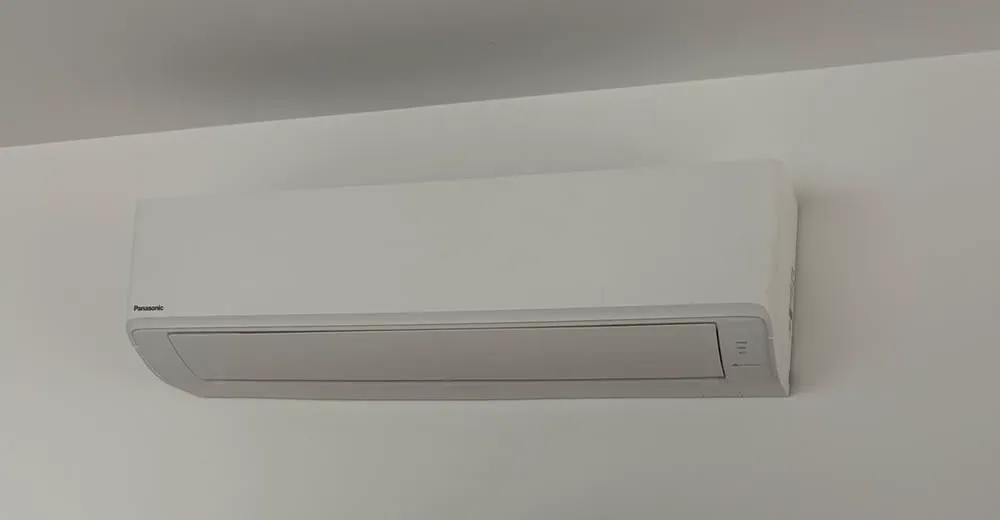
A wall split heats one room or open-plan area, a multi-head runs several indoor units from one outdoor unit, and ducted reaches the whole house through ceiling or floor outlets. All of them heat by moving warm air, so a room warms quickly once the unit is running, and the same system cools in summer.
Melbourne is in the Cold zone on the Zoned Energy Rating Label, where performance below 5.5 °C is critical, so compare the Cold zone heating figures. July's mean minimum at Laverton is 5.2 °C. On frosty mornings the outdoor unit pauses briefly to defrost, which is normal.
Installing a split system needs a refrigerant handling licence, and the electrical connection needs a licensed electrician. Air conditioners with a compressor need a lockable isolating switch beside the outdoor unit, and most need a dedicated circuit, so check the switchboard before choosing.
Panel and convection heaters
Wall-mounted panel heaters and freestanding convection heaters warm the air, which rises and circulates around the room. They are silent, have no outdoor unit and suit small rooms such as a study or bedroom where a split isn't practical.
Running cost is the catch. Being resistive, each unit of heat costs a full unit of electricity, so a panel heater running every winter evening in a living area costs far more than a reverse-cycle unit doing the same job. Hardwired panel heaters are electrical installation work, and larger ones may need their own circuit.
Oil-column, fan and radiant heaters
Oil-column heaters warm slowly and hold their heat, giving steady, quiet warmth in a closed bedroom. Fan heaters warm a small space quickly and suit a short burst in a cold bathroom or study. Radiant bar and infrared heaters warm the people and surfaces in front of them, which suits a spot rather than a whole room.
All of them are resistive and portable, so they suit occasional use. Plug them straight into a wall power point rather than a power board, keep them well clear of curtains, bedding and clothes, and switch them off when you leave the room. A heater that trips the safety switch should be unplugged and checked, not reset again and again.
In a rental, a portable heater doesn't meet the heating standard. Every rental needs a fixed heater in the main living area, and for agreements entered into from 29 March 2023 it must be energy efficient.
Underfloor electric heating
Electric underfloor heating uses heating cables or mats under tiles or timber, or set in a slab or screed. It warms the floor, which warms the room from the ground up. There is nothing on the walls, no air movement and no noise, and warm tiles in a bathroom on a July morning are hard to beat.
It is still resistive, so running costs are like other element heaters. Systems set in a thick slab take hours to warm up and cool down, which suits steady use on a timer. Thinner systems under tiles respond faster and are common in bathrooms.
It is best planned into a renovation or new build, because the floor has to come up. It needs its own circuit, a thermostat with a floor sensor and RCD protection; Energy Safe Victoria's guidance says the Wiring Rules require an RCD on every final sub-circuit in a home. Insulation underneath matters too, or much of the heat goes down instead of up.
How they compare
For a living area heated most winter evenings, reverse-cycle is usually the clear choice on running cost. For a small room used occasionally, a resistive heater can be the sensible answer: a low upfront cost and no installation.
Many homes end up with a mix: reverse-cycle in the living areas, a heated floor or heat lamp in the bathroom, and an oil-column heater for the coldest bedroom on the worst nights.
- Reverse-cycle split or ducted: lowest running cost per unit of heat, quick warm-up, cools in summer; needs an outdoor unit, a circuit and licensed installation
- Panel or convection: quiet and simple for small rooms; costly over long hours
- Oil-column: steady, quiet warmth for a bedroom; slow to heat up
- Fan heater: fast for a short burst in a small space; noisy
- Radiant or infrared: warms whoever is in front of it, not the whole room
- Underfloor: even and silent, ideal for bathrooms; slow in slabs, best installed during a renovation
Circuits and switchboards
A plug-in heater draws a lot of current for a household appliance. Two on the same circuit, or a heater sharing a circuit with the kettle and toaster, can trip the breaker. A heater that regularly trips a circuit is a sign the load needs spreading out or a dedicated circuit, not a bigger breaker.
Fixed heating, whether a reverse-cycle system, panel heaters or underfloor cables, usually needs its own circuit from the switchboard. An old board with no spare positions or no safety switches may need work first. Whenever a licensed electrician completes electrical installation work, they must give you a Certificate of Electrical Safety.
Common questions
Quick answers
- Is it safe to leave the heating on overnight?It depends on the heater.
- Why does my reverse-cycle heat the ceiling and leave my feet cold?Warm air rises, so a high-wall unit blowing gently forward can leave a warm layer at the ceiling and cool air at floor level.
- My rental has no fixed heater in the living area. Is that allowed?No.
- What happens if the heater in my rental breaks after March 2027?If it can be repaired, it's repaired as an urgent repair, as it is now.
Sources for this guide
10 sources, with the date each was checked
- 1.Energy Rating (GEMS Regulator / DCCEEW): Reverse cycle air conditioners are much more efficient at heating than standard electric heaters (bar heaters, convection, or radiant heaters). ... During the normal operating range in Australia for every unit of… Accessed 30 September 2026.
- 2.Solar Victoria (updated 28 August 2026): Calculations from Choice found that a reverse-cycle air conditioner is about a third of the cost of an electric heater to run in the same space. Accessed 30 September 2026.
- 3.YourHome (Australian Government): A reverse cycle air-conditioner is a type of heat pump that uses electricity to warm your home in winter and cool it in summer (refer to Heat pumps below). In heating mode, the system absorbs heat from the outside air… Accessed 30 September 2026.
- 4.Commonwealth of Australia (2019), 'The new zoned energy rating label for air conditioners—What installers and retailers need to know', hosted on energyrating.gov.au: Melbourne is in a black ‘COLD’ area—read the black Cold ratings. Accessed 30 September 2026.
- 5.Bureau of Meteorology: Mean minimum temperature (°C) 14.0 14.4 12.7 10.0 7.8 5.9 5.2 5.7 6.8 8.4 10.3 12.2 9.5 81 1943 2026 Accessed 30 September 2026.
- 6.Australian Refrigeration Council (ARC): NO. If the refrigerant is contained in equipment, such as a split system air conditioner, a Refrigerant Trading Authorisation is not required. However a refrigerant handling licence is required to install this type of… Accessed 30 September 2026.
- 7.Access Canberra Electrical Inspections (ACT Government), Electrical Fact Sheet, updated September 2019: Air-conditioning and heat pump systems incorporating a compressor shall be provided with an isolating switch (lockable) in accordance with Clause 2.3.2.2, installed adjacent to but not on the unit, which isolates all… Accessed 30 September 2026.
- 8.Consumer Affairs Victoria: All rental properties must have a fixed heater (not portable) in good working order in the main living area. For rental agreements entered into from 29 March 2023, this must be an energy efficient fixed heater in the… Accessed 30 September 2026.
- 9.Energy Safe Victoria: Clause 2.6.3.2.2 requires all final sub-circuits in a domestic installation be protected by a residual current device (RCD). A hot water service is included in this requirement Accessed 30 September 2026.
- 10.Energy Safe Victoria: Whenever a licensed electrician completes any electrical installation work, they must provide a Certificate of Electrical Safety (COES). Accessed 30 September 2026.
Planning advice for homeowners. Installation requirements depend on the property and equipment. Where this guide refers to Victorian safety or rental rules, use the linked official guidance for the current requirements.