
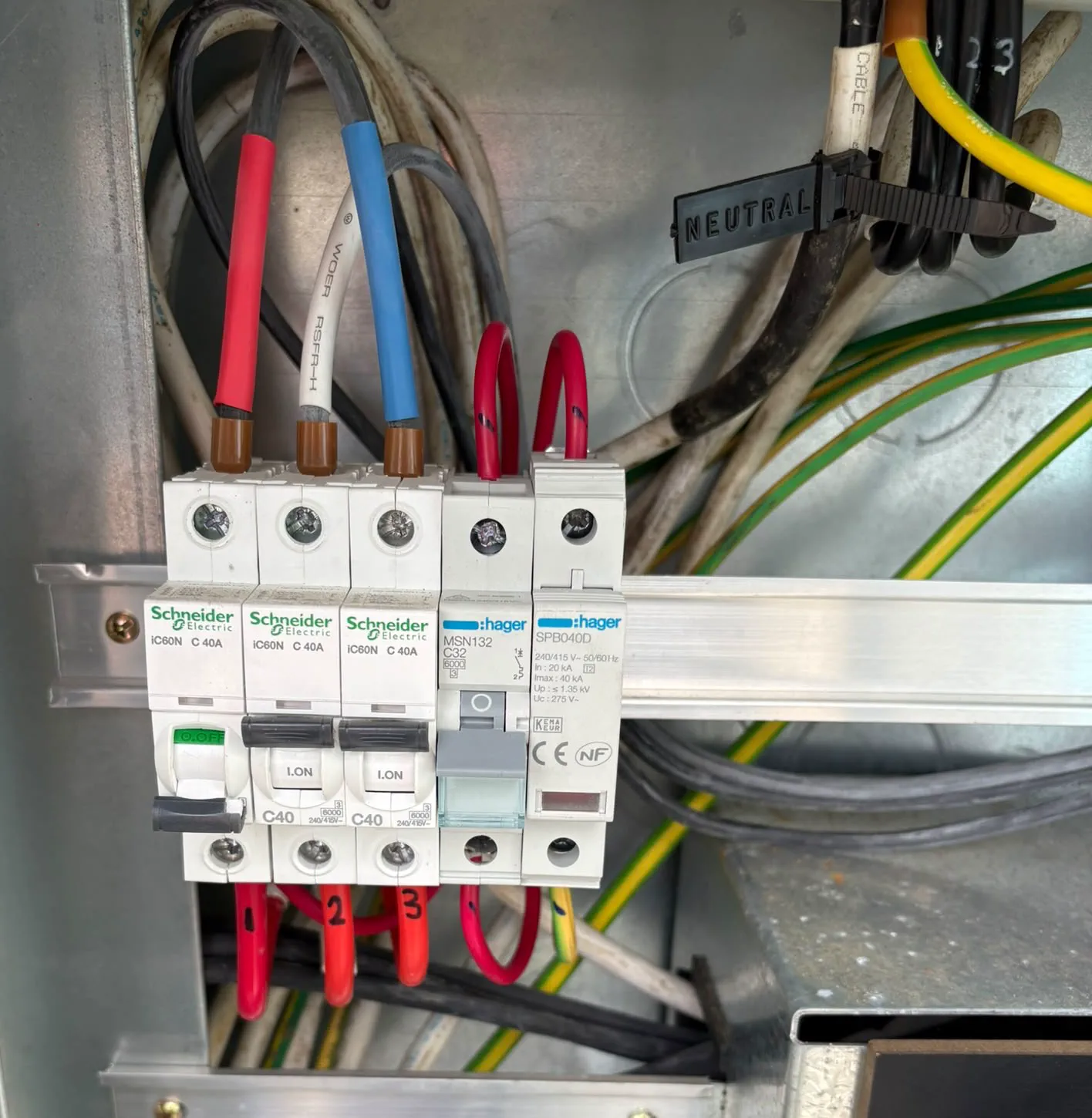
Voltage spikes come from storms, from the network switching, and sometimes from large equipment starting nearby. Most are small, but a bigger one can take out the electronics in an appliance, and most homes now have plenty of those, from inverter air conditioners and solar inverters to TVs, modems and fridges with control boards. We fit a surge protection device in the switchboard to cover the whole house. Plug-in protection for sensitive gear adds a second layer if you want it.
When to get it checked
Gear that died after a storm or blackout
The modem, TV or garage door opener stopped working after a night of thunder or a power cut, while everything else carried on. Electronics with control boards usually go first.
Several things failing at once
The microwave clock, the gate controller and the air conditioner's indoor unit all play up together, on different circuits. When unrelated items fail at once, a spike through the wiring is one of the first things we look at.
An existing device showing a fault
If your board already has surge protection and its status window has changed colour or its light has gone out, it has probably absorbed a large surge and may not be protecting anything now.
Board work or new equipment on the way
A switchboard upgrade, solar, a battery, an EV charger or a new air conditioner is planned. The board will be worked on anyway, so it's the simplest time to add protection.
A house full of control boards
Inverter air conditioners, an induction cooktop, a home office and a pool pump controller all run on electronics. The more of them a home has, the more a single spike can take out.
Why it happens
5 common causes
Lightning near the lines
A strike doesn't have to hit your roof. Lightning on or near the overhead network can push a spike along the cables and into homes connected to them.
Network switching
The distributor switches lines in and out to manage load, do maintenance and isolate faults, and each operation can send a short spike down the supply. Most are small. Now and then one isn't.
Faults on the poles and wires
A branch blown onto a line, a car hitting a pole or network equipment failing can all put a disturbance through the supply. In a bad storm several can happen in quick succession.
Power coming back on
When supply returns after an outage, everything left switched on is hit at the same moment. The power can also come and go a few times before it settles, and every restart is another jolt.
Big equipment starting nearby
Large motors and compressors, in your home or a neighbouring workshop, can cause spikes as they start and stop. These are usually smaller than a storm surge, but they're part of the picture.
What the job covers
What we usually do on this job. Your quote confirms it for your place.
- Switchboard checked for space and a suitable connection point
- Surge protection device fitted in the switchboard
- Connected near the main switch with short cable runs
- Earthing checked, since surge protection depends on it
- Status indicator explained so you can see if it's still working
- Advice on plug-in protection for TVs, computers and modems
- Switchboard labelling updated
- Power restored and circuits checked
Your options, explained
Plug-in surge protection only
Low disruption- Best for
- Renters, or a single TV or computer setup
- How it works
- A surge-protected power board sits between the power point and the equipment and clamps spikes on that outlet.
- Worth knowing
- Covers only what's plugged into it. The air conditioner, oven and hot water controls get nothing.
Switchboard surge protection device
Low disruption- Best for
- Most houses wanting whole-home cover
- How it works
- One device beside the main switch captures spikes on the incoming supply before they spread to every circuit.
- Worth knowing
- Takes the bulk of a surge and covers hardwired appliances too. Needs a sound board, a spare space and a good earth.
Board device plus protection at the equipment
Low disruption- Best for
- Home offices, entertainment setups and anything with a data or antenna cable
- How it works
- The board device handles the big spikes, and plug-in units at sensitive gear catch what's left, including spikes on network or antenna leads.
- Worth knowing
- Worth it where one bad spike could take out a lot of expensive gear.
Added during a switchboard upgrade
Medium disruption- Best for
- Fuse boards, full boards, or homes already planning board work
- How it works
- The surge device is built into the new board layout with proper space and short connections from the start.
- Worth knowing
- The power is off for longer, but it avoids a second visit and a device squeezed in later.
The people behind the work
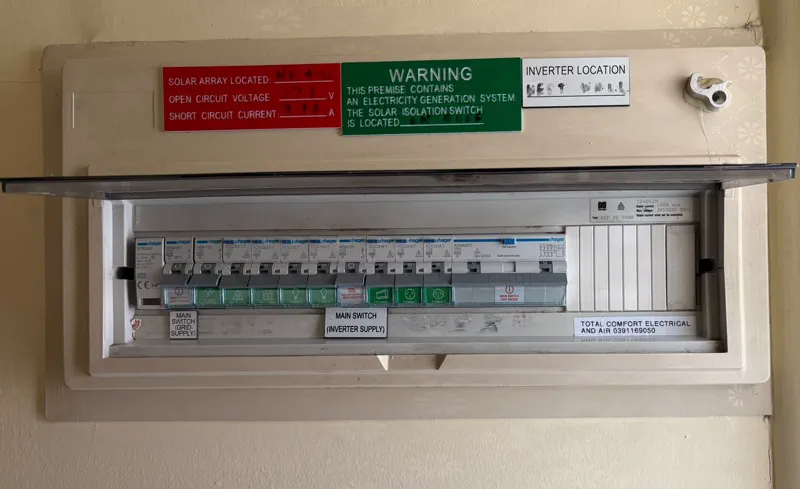
Our own photos from jobs like this one. Family-run, based in Altona Meadows, with 19 years in the industry.
Licensed electrical contractor (REC 38187)See more team photos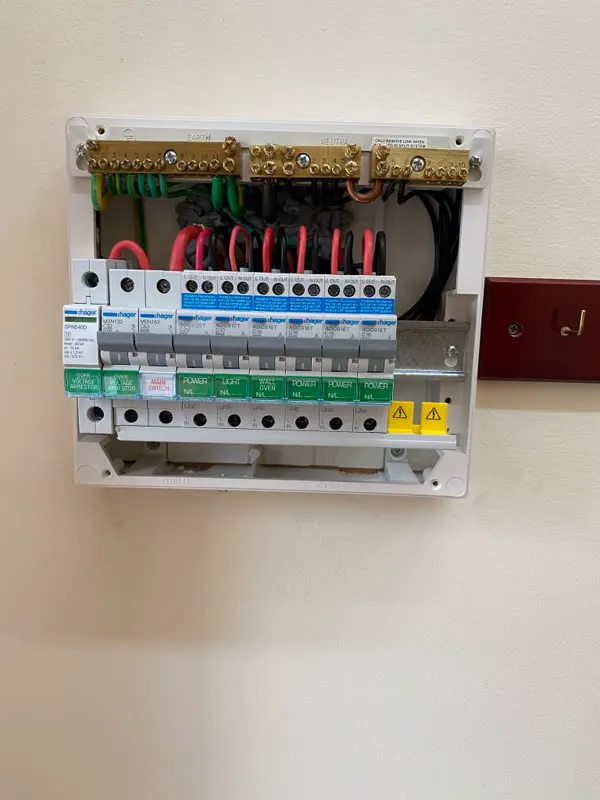
Worth knowing before you book
- It won't stop a direct strike
- No surge device will save equipment from a direct lightning strike. It's built for the far more common spikes that travel in through the power lines.
- Check the indicator after a storm
- Most switchboard surge devices have a window or light that shows their status. Once a device has absorbed a large surge it may need replacing, so have a look after a big storm.
- Easy to add during other board work
- If you're already having a switchboard upgrade or solar work done, adding surge protection at the same time is usually straightforward.
What affects the price?
The right scope depends on your installation. These are the details we check so your quote is useful, with any additional work explained before it proceeds.
Space on the board
A spare space next to the main switch keeps it simple. A full board may need devices rearranged, or an extra enclosure, first.
Age and type of board
Old fuse boards and badly crowded panels aren't a good home for a surge device. There, the sensible route is often a switchboard upgrade, quoted as its own job.
Condition of the earth
A corroded, loose or undersized main earth has to be put right before a surge device is worth fitting. We show you what we found and agree the repair with you first.
The device itself
Devices differ in how much energy they can absorb, whether the cartridge can be replaced on its own, and whether they suit a single-phase or three-phase supply.
Other work at the same visit
Adding protection while we're already upgrading the board, fitting an EV charger or running a new air conditioning circuit saves a separate job.
Protection beyond the main board
A sub-board in a garage, shed or granny flat, or plug-in units for particular equipment, add to the scope.
Before the visit
- List sensitive equipment and any previous damage history.
- Share a safe photo of the switchboard front.
- Ask how to read the installed device’s condition indicator at handover.
How it runs
- 1
Check the board
We look at the space available and the condition of the switchboard and earthing.
- 2
Fit the device
Power goes off briefly while the surge protection device is installed and connected.
- 3
Test and explain
Power is restored and we show you where the status indicator is and what it means.
Step by step, in more detail
6 steps
Tell us what you want protected
Let us know about solar, a battery, air conditioning, a home office or pool equipment, and anything that has failed before. A photo of the switchboard with the door open and covers left on helps us plan.
Check the board and the earth
On site we look at the space on the board, its age and condition. Then we test the main earth connection the device will rely on.
Price before we start
You get the options and a fixed price for the agreed scope before any work begins. If the board is full or still on fuses, we say so and explain how protection fits into an upgrade instead.
Fit and connect the device
The power goes off while the device goes in beside the main switch, on short, direct leads and with the breaker or fuse its maker specifies. Every extra bit of lead lets more of a spike past.
Restore, test and label
Power goes back on, the circuits are checked, and the board labels are updated so the new device is clearly marked.
Show you the indicator
We point out the status window or light and what a fault looks like, suggest plug-in protection where it's worth having, and hand over your Certificate of Electrical Safety.
What is safe to do, and what to leave to us
Safe for you to do
- In a power failure, Energy Safe Victoria says to turn off and unplug appliances at the power point, to help prevent damage if there's a surge.
- If the lights go dull or flicker, or only part of the house has power, leave the switchboard and anything metal alone, switch off and unplug what's easy to reach, and contact your electricity distributor.
- After a storm, if the board is dry and the power is normal, look at the surge device's indicator through the open switchboard door. Leave every cover in place.
- Stay well clear of fallen powerlines and anything they are touching, and treat them as live.
- Write down what failed and when. It helps us trace the cause.
Leave these to us
- Fitting a surge device, swapping its cartridge or working behind the switchboard covers yourself. Energy Safe Victoria says unlicensed electrical work is illegal and potentially fatal.
- Plugging storm-damaged equipment back in if it smells burnt or got wet.
- Plugging one power board into another.
- Keeping a surge power board that's scorched, cracked or warm to the touch.
When to get us in
- Several appliances or electronics failed after a storm or blackout
- The indicator on your surge device shows a fault
- You're adding solar, a battery, an EV charger or a new air conditioner
- A switchboard upgrade is being planned or quoted
- Heat, a burning smell or scorch marks at the board after a storm
- You're not sure whether your board already has surge protection
More detail
What a spike does to electronics
Most spikes are over in a tiny fraction of a second, usually too fast to notice in the lights. A big one can kill a control board outright. Smaller ones, repeated over months, can wear electronics down until a modem or an air conditioner's board gives out on a calm day, and nobody connects it to the storm.
Earthing comes first
The device works by giving a spike an easy path to earth. If that path is poor, the spike finds another way through, and your appliances are often it. In older homes the main earth may have been disturbed over the years by plumbing, paving or garden work, so we test it before anything else.
Spikes that skip the switchboard
The switchboard device only sees the power wiring. A spike can also come in along a TV antenna cable or the NBN connection and go straight into whatever it's plugged into. Plug-in protection with matching data or antenna ports covers those paths.
Surge devices wear out
Each spike a device absorbs uses up some of its capacity, and one big surge can use the lot. When that happens the power normally stays on, so the indicator is the only clue that the protection has gone. A worn-out device has done its job. It gets replaced, not repaired.
Units and apartments
In an apartment block the main switchboard usually sits in a shared meter room, and work there is arranged through whoever manages the building. The practical place for a surge device is often your own unit's board, which covers the circuits it feeds. Older blocks can have small, full unit boards, so it's worth a look before you plan around one.
Local rules and conditions
Victorian requirements and local conditions that shape this job, with the sources listed at the foot of the page.
What Energy Safe Victoria says they do
Energy Safe Victoria describes surge diverters as protecting a property from voltage surges, such as those from a lightning strike, by capturing spikes in the wiring that would otherwise pass into equipment. It also points out that surge diverters and circuit breakers don't act as safety switches for protection against electric shock.
Where the network hands over
Energy Safe Victoria describes the point of supply as the changeover from the electricity distribution network to your electrical installation, where the property owner becomes responsible for its maintenance and repair. Powercor's Altona Terminal Station (West) supplies areas including Laverton, Altona Meadows, Point Cook, Hoppers Crossing, Tarneit and Werribee. Jemena's supply area reaches Williamstown and Footscray, and CitiPower's Fishermans Bend zone substation supplies parts of Port Melbourne.
A registered contractor and a certificate
In Victoria, anyone planning electrical installation work must engage a registered electrical contractor, who sends a licensed electrician to do it. The Electricity Safety Act defines that work as the installation, alteration, repair or maintenance of an electrical installation, which covers adding a surge device to your board. When the electrician finishes, they must give you a Certificate of Electrical Safety recording the work.
Useful reading
Guides to read before you decide, with checklists and questions to bring to the quote.
- Surge protection explained: what it does and doesn't doHow a switchboard surge diverter differs from a surge power board, what each one protects, where both stop, and which homes in Melbourne's west gain most.
- Planning a switchboard upgrade without surprisesWhat the electrician needs to check, how to compare the scope and what to organise before the power goes off.
- Power out? How to tell if it's the network or your houseDark street or just your place? A few checks from the front window to the meter box tell you who to contact first, without opening anything.
- The electrical decisions to make before your renovation walls closePlan appliances, lighting, outlets and future upgrades while access and options are still available.
Common questions
Questions people ask about this
- An appliance stopped working after a storm. Was it a surge?It may have been.
- Should I unplug appliances during a thunderstorm?For sensitive and expensive electronics, yes, ideally before the storm arrives.
- Why didn't everything come back on after a power outage?When the power comes back, some things need help to restart.
- My air conditioner won't restart after a power outage. What now?Give it a few minutes first.
From the blog
Sources for the rules and local facts on this page
10 sources, with the date each was checked
- 1.Energy Safe Victoria: Surge diverters protect the property from voltage surges such as those resulting from a lightning strike. The surge diverter captures the voltage spikes in the wiring that would otherwise be transferred into the… Accessed 30 September 2026.
- 2.Energy Safe Victoria: The point of supply is the changeover point from the electricity distribution network to the electrical installation, where the property owner becomes responsible for the maintenance and repair of the electrical… Accessed 30 September 2026.
- 3.Powercor Australia, Project Assessment Draft Report: Altona Terminal Station (West) (June 2025): It supplies part of Melbourne’s western growth corridor. This includes the areas of Laverton, Laverton North, Altona Meadows, Werribee, Wyndham Vale, Mount Cottrell, Eynesbury, Tarneit, Hoppers Crossing and Point Cook… Accessed 30 September 2026.
- 4.Jemena Electricity Networks (Vic) Ltd, 2025 Distribution Annual Planning Report (2 December 2025): Figure 1-1 shows the JEN supply area, which ranges from Gisborne South, Clarkefield and Mickleham in the north to Williamstown and Footscray in the south, and from Hillside, Sydenham and Brooklyn in the west to… Accessed 30 September 2026.
- 5.CitiPower, Distribution Annual Planning Report December 2024 (hosted by the Australian Energy Regulator): The zone substation in Fisherman’s Bend (E) is served by two sub-transmission lines from Fisherman Bend Terminal station (FBTS). The zone substation supplies areas of Fisherman’s Bend and Port Melbourne. Accessed 30 September 2026.
- 6.Energy Safe Victoria: If you are planning to have electrical installation work done, you must engage a registered electrical contractor (REC). They will send a licensed and qualified electrician to do the work to the required standards. Accessed 30 September 2026.
- 7.Victorian Legislation (legislation.vic.gov.au) - Electricity Safety Act 1998, authorised version 089 (effective 8 Sep 2026): electrical installation work means installation, alteration, repair or maintenance of an electrical installation; Accessed 30 September 2026.
- 8.Energy Safe Victoria: A Certificate of Electrical Safety (COES) – is a legal document issued by a Registered Electrical Contractor or licensed electrician to record the details of the electrical work they have performed. Accessed 30 September 2026.
- 9.Energy Safe Victoria: In the event of a power failure turn off and unplug all electrical appliances at the powerpoint. This will help to prevent equipment damage in the event of a power surge. Accessed 30 September 2026.
- 10.Energy Safe Victoria: Gas and electricity are inherently dangerous and it’s illegal and potentially fatal for unlicensed and unqualified people to undertake any electrical or gasfitting work. Homeowners and consumers must always use… Accessed 30 September 2026.