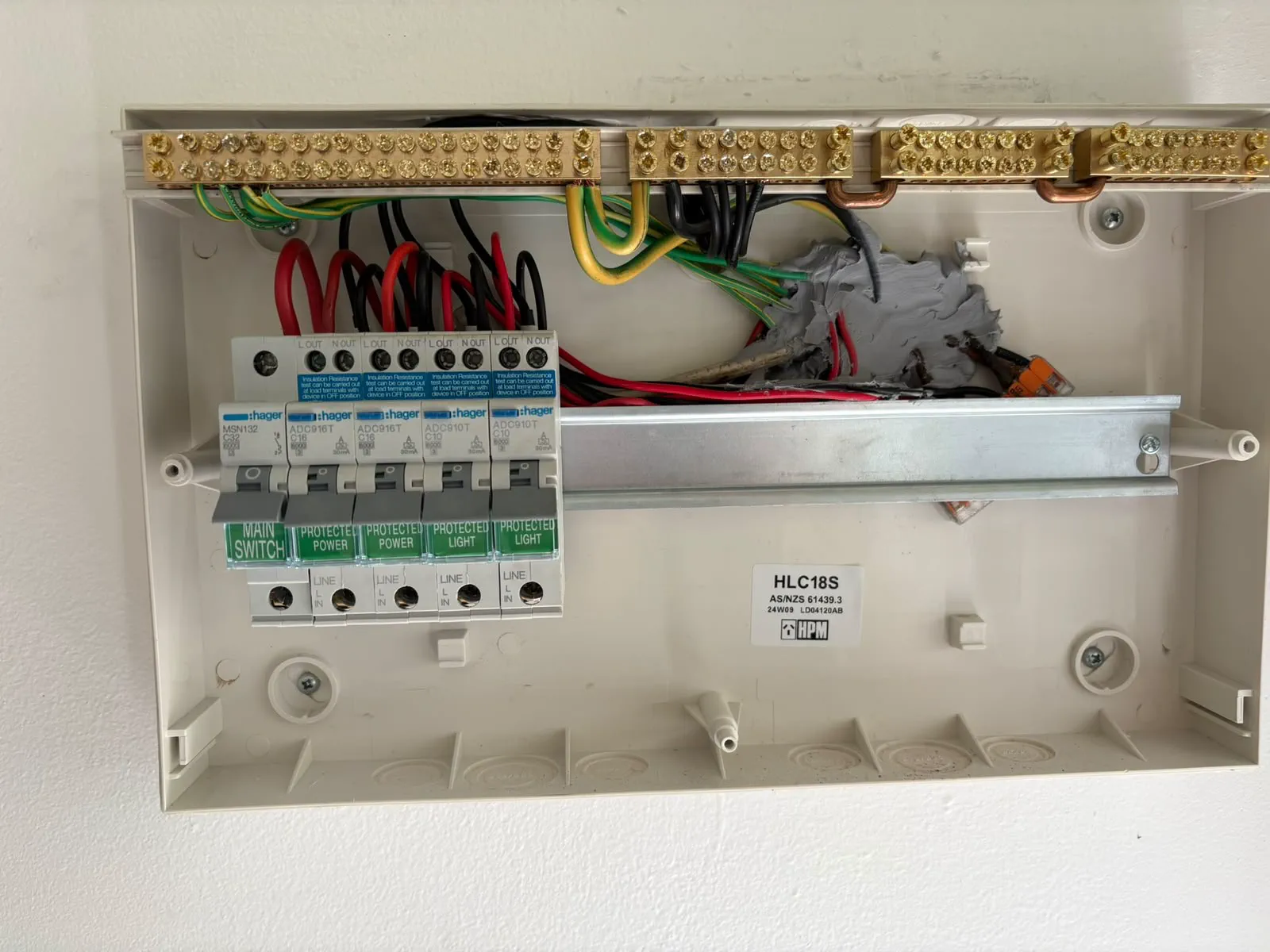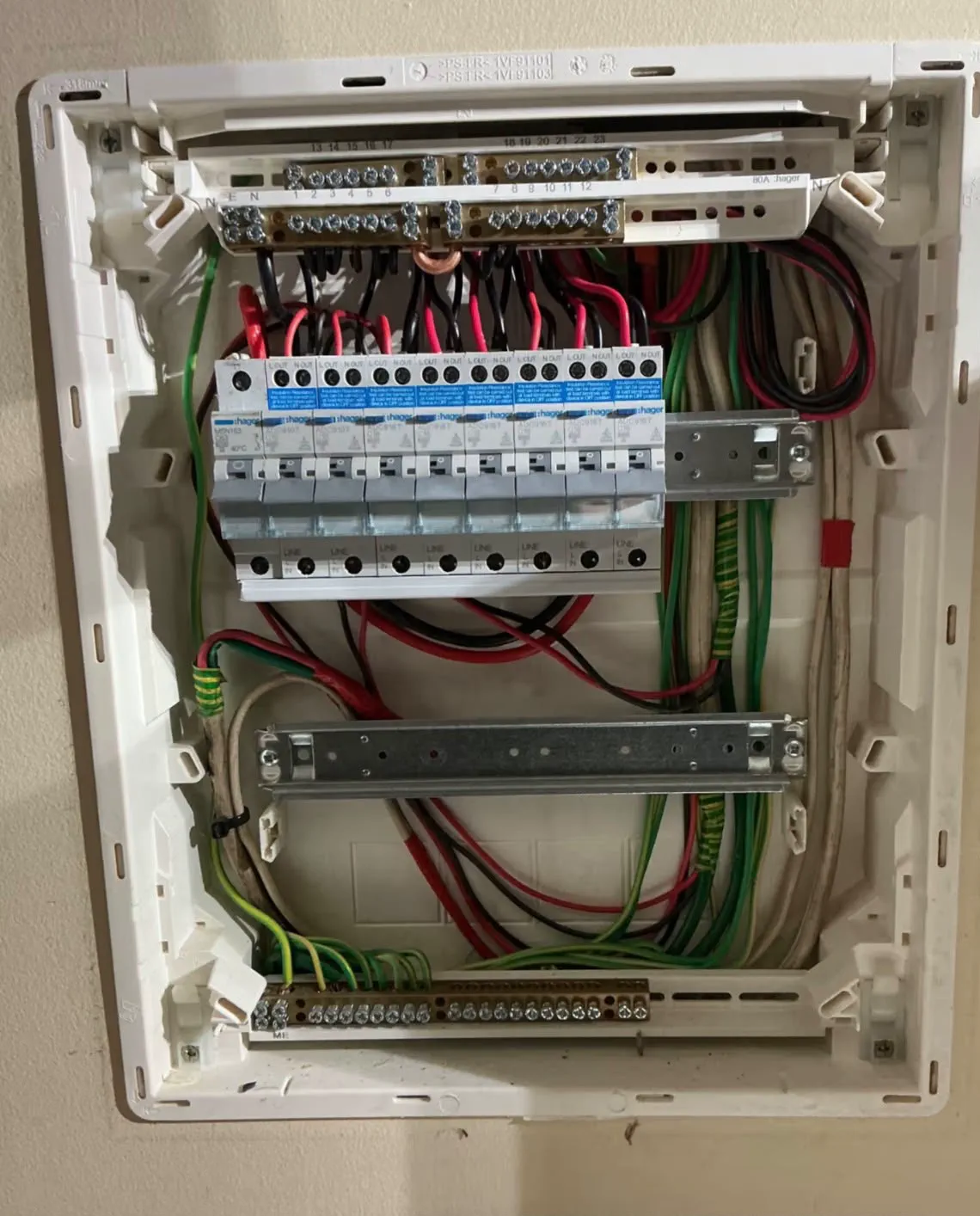
Not every outage has the same cause. If the whole street is dark, it's a network problem and your electricity distributor will fix it. If it's only your place, or only part of it, the usual suspects are a tripped safety switch, an overloaded circuit, a faulty appliance, damaged wiring or a failed part in the switchboard. Finding out why matters, because resetting a switch without knowing why it tripped can leave a dangerous fault in the house.
When to get it checked
The whole street is dark
Neighbours, streetlights and traffic lights are out too. That's the network, not your wiring, and only your distributor can restore it.
Only your home is out
The houses either side have lights and you have none. The fault is usually at your end: a tripped switch, a failed main switch or a burnt connection. Now and then it's the supply feeding the house, and testing shows which.
Everything on, still no power
Every switch at the board is up and nothing works. Power isn't reaching the circuits, which points to the main switch, the meter, the consumer mains or the supply coming in. That needs testing, not more switching.
Lights dim instead of off
Lights glow dull or flicker, or some things run while others stop, and nothing at the board has tripped. That isn't a normal outage, and resetting switches won't clear it.
A bang, flash or smell first
A pop from the meter box or a smell of hot plastic just before the power went points to a burnt connection. Keep away from the board, and if there's smoke or fire, get everyone out.
Why it happens
5 common causes
A network outage
Storms, trees on lines, equipment faults and planned work cut supply to whole streets. None of it is in your wiring, and the fix belongs to the distributor.
A tripped safety switch
A safety switch cuts the power when it senses current leaking where it shouldn't, usually from a worn appliance, a damaged cable or water in an outdoor fitting. On older boards one safety switch may cover most of the house.
A worn main switch
Main switches wear out like any other switch. An old one can fail with its contacts open, so the lever says on while nothing gets through.
Loose or burnt connections
A loose connection at the main switch, meter or consumer mains heats up every time the house draws heavy load. Over months it discolours, then burns through. It often shows on a hot afternoon with the air conditioning flat out.
Damage to the line or mains
A branch across the overhead line, a service hook pulled off the fascia in a storm, or an underground cable hit while digging cuts supply at the source. Some of that is the distributor's to fix and some is yours.
What the job covers
What we usually do on this job. Your quote confirms it for your place.
- Advice over the phone on whether it's a network outage or your property
- Main switch, safety switches and circuit breakers checked
- Tripped circuits traced to the circuit or appliance that caused them
- Faulty appliances identified and left unplugged, with an explanation
- Loose connections and failed breakers found and repaired
- Storm and water damage to outdoor fittings repaired
- Consumer mains checked where the fault points that way
- Power restored and circuits tested before we leave
- Advice on a switchboard upgrade if the board is old and failing
Your options, explained
Distributor restores supply
Low disruption- Best for
- Street-wide outages, fallen lines and damaged poles
- How it works
- The distributor repairs its own network. Energy Safe Victoria says to contact it about fallen or unsafe powerlines and damaged or leaning poles.
- Worth knowing
- Nothing in your home needs repairing. If something misbehaves once the power is back, get in touch.
Isolate the fault, restore the rest
Low disruption- Best for
- A safety switch tripped by one circuit or appliance
- How it works
- We find the circuit or appliance causing the trip, leave it off or unplugged, and put the rest of the house back on.
- Worth knowing
- The faulty circuit is then repaired, or quoted separately if it needs more work.
Repair at the board or mains
Medium disruption- Best for
- A failed main switch, burnt connection or damaged consumer mains
- How it works
- We replace the failed part or remake the connection, check the board for heat damage and test before power goes back on.
- Worth knowing
- Some work on the consumer mains, main switchboard or meter box is prescribed, so a Licensed Electrical Inspector must inspect it. Repairing or replacing a single component can be excluded. A replaced main switchboard stays off until that inspection is done.
The people behind the work
One local team for electrical, heating and cooling. Family-run, based in Altona Meadows, with 19 years in the industry.
Licensed electrical contractor (REC 38187)See more team photos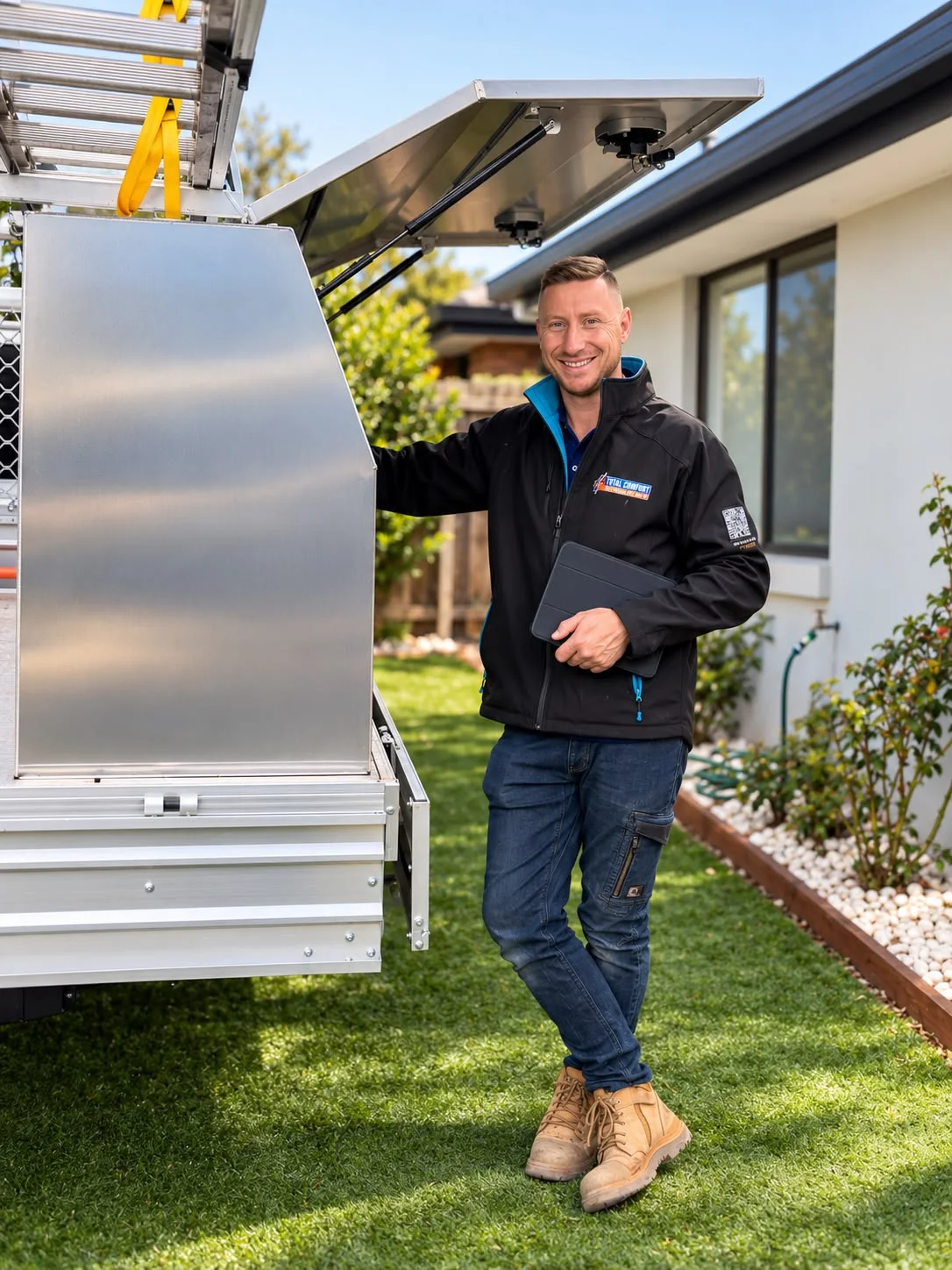
Worth knowing before you book
- The whole house has no power
- See if the neighbours have power. If they don't, call your distributor, whose faults number is on your bill. If they do, check your main switch is on and whether a safety switch or breaker has tripped. Look and listen for burning smells or buzzing, and don't try any repairs yourself.
- Only half the house has power
- This is one of the most common faults we attend. One breaker has tripped, a safety switch has cut off part of the house, or a connection or breaker has failed. It can seem minor, but power that comes and goes often means a connection is getting worse.
- The safety switch keeps tripping
- A safety switch trips when it detects current leaking somewhere. Faulty appliances, water in outdoor equipment, damaged wiring and bad light fittings are the usual causes. If it keeps tripping, leave the affected circuit off and contact our team. Do not keep resetting it.
What affects the price?
The right scope depends on your installation. These are the details we check so your quote is useful, with any additional work explained before it proceeds.
Where the fault sits
A safety switch tripped by a worn kettle is a short job. A burnt connection at the main switch or damaged mains means more testing and more parts.
Inspection and certificates
When the repair counts as prescribed work, a Licensed Electrical Inspector has to inspect it. That adds a step, and you'll know about it when we give you the price.
Damage found along the way
Heat-marked breakers, scorched terminals or water in fittings add parts and time. We price it before any extra work goes ahead.
Faults that come and go
A switch that trips once a week overnight can't always be caught on one visit. Notes on when it happens and what was running help us narrow it down.
Access
Boards in tight cupboards, meter boxes behind locked gates and underground cable runs take longer to test and repair.
Before the visit
- Check the distributor’s outage information using the contact on your electricity bill.
- Tell us whether neighbours and different rooms are affected.
- Tell us about essential powered equipment so a safe contingency can be arranged.
How it runs
- 1
Check the basics
See whether the neighbours are affected, look at the switchboard for anything tripped, and unplug whatever was running when the power went.
- 2
Reset once only
Try the tripped switch one time. If it trips again immediately, stop there. Never remove switchboard covers or attempt repairs.
- 3
Contact our team
Tell us what happened from a safe place. Availability is confirmed when you contact the team; do not wait for an online reply if there is immediate danger.
- 4
Find and fix
We test the circuits, find the cause, repair it and get the power back on safely.
Step by step, in more detail
5 steps
Talk it through
We ask what the neighbours have, what the board shows and what happened just before. That often tells us whose job it is before anyone drives out.
Make it safe
On site we check for heat, scorching, water and damaged cable first. Anything unsafe stays isolated until it's repaired.
Find where the power stops
We test from the incoming supply through the main switch to each circuit. Where the voltage stops shows whether the fault is on the supply side, at the board or out on a circuit.
Repair and restore
You get the price before we start. We remake the connection, replace the failed part or unplug the faulty appliance, and safe circuits go back on while a faulty one waits.
Test and explain
Circuits are tested before we leave, and we tell you what failed, why, and anything worth keeping an eye on.
What is safe to do, and what to leave to us
Safe for you to do
- Check whether the neighbours and streetlights have power.
- If the board is dry and safe to reach, look for a tripped safety switch and reset it once. It's the one with a test button and '30mA' printed on it.
- Turn off and unplug appliances at the power point. Energy Safe Victoria says this helps prevent damage if there's a surge.
- Keep the fridge and freezer shut, and leave one light switched on so you know when the power is back.
Leave these to us
- Resetting a switch again and again. If it trips a second time, leave it off.
- Opening the switchboard, or touching the meter, the service fuse or the line to the house. Electrical work isn't a DIY job, even a small one.
- Going near a fallen powerline or anything it's touching. Treat it as live, even if it's broken.
- Touching the switchboard or anything metal when lights are dim or supply is only partly working.
- Plugging a generator into a power point or connecting it to the switchboard.
When to get us in
- Your home is dark but the neighbours have power.
- A safety switch won't reset, or trips again straight away.
- You heard a bang or smelt burning at the meter box or switchboard.
- The power drops out and comes back on its own, and the neighbours don't notice it.
More detail
Where the network ends and your wiring starts
The point of supply is where the distribution network hands over to your installation. From there in, the property owner is responsible for maintenance and repair, including private electric lines on the property. Powercor counts a loose or missing service hook and a defective meter box as the customer's to fix.
Some properties have their own poles and overhead lines. Their owners must keep trees on the property clear of them, and the distributor will only reconnect power to a private line once a licensed electrician or REC has issued a Certificate of Electrical Safety.
When the lights dim instead of going out
A normal outage is clean: the power is on or it's off. A supply fault is messier. Lights glow dull or flicker through the house, motors hum and struggle, and nothing at the board has tripped.
If that happens, leave the switchboard and anything metal alone, switch off and unplug what's easy to reach, and contact your distributor. A tingle or shock from an appliance or a tap needs care too: stop using it and have a licensed electrician check the wiring.
Why we say reset once
When the power goes, Energy Safe Victoria's advice is to check whether the safety switch has tripped, reset it, and call a licensed electrician if it won't reset. We add one rule: try it once. A switch that drops straight back out has caught something real, such as a leaking appliance, water in an outdoor fitting or damaged cable. Every extra reset sends power back into that fault.
While it's off, and when it comes back
Homes built after 1 August 1997 must have smoke alarms connected to 240V mains power with a backup battery. If one starts chirping during an outage, that battery is probably low, and anyone can change a smoke alarm battery.
When supply returns, plug things back in one at a time. If an appliance that worked before now won't start, trips the safety switch or smells hot, leave it unplugged and have it checked. If anyone at home relies on powered medical equipment, tell us when you get in touch.
Local rules and conditions
Victorian requirements and local conditions that shape this job, with the sources listed at the foot of the page.
Which network supplies you
Powercor's Altona Terminal Station (West) supplies areas including Laverton, Altona Meadows, Point Cook, Hoppers Crossing, Werribee and Tarneit. Jemena's supply area reaches Williamstown and Footscray, and CitiPower supplies parts of Port Melbourne.
Fallen lines after a storm
Treat a fallen powerline as live, even when it's broken, and keep well clear of it and anything it touches. Energy Safe Victoria says to contact your local electricity distribution company about fallen or unsafe powerlines, or a damaged or leaning pole. Its faults number is on your bill.
Renting with no power
Consumer Affairs Victoria lists the electricity supply not working as an urgent repair, and rental providers must make urgent repairs immediately. If only your rental is out, tell your agent or rental provider straight away. They pay for repairs unless the renter caused the problem.
Useful reading
Guides to read before you decide, with checklists and questions to bring to the quote.
- Power out? How to tell if it's the network or your houseDark street or just your place? A few checks from the front window to the meter box tell you who to contact first, without opening anything.
- How and when to test your safety switchesHow to run the push-button test at home, what an electrician’s trip-time test measures that the button can’t, and what to do when a switch fails.
- A safety switch keeps tripping: what to record and when to callUnderstand the difference between a protective device doing its job and a fault that needs investigation.
- Renting and the power or heating has failed: what to doNo power or a dead heater in a Victorian rental? What to check safely, what counts as urgent, how to report it, and what to do if nobody responds.
Common questions
Questions people ask about this
- Why didn't everything come back on after a power outage?When the power comes back, some things need help to restart.
- An appliance stopped working after a storm. Was it a surge?It may have been.
- Why does my safety switch trip when the power comes back on?When the power comes back, everything restarts at once.
- A power line to my house is down or sagging. What should I do?Stay well away and keep everyone else clear.
- Should I unplug appliances during a thunderstorm?For sensitive and expensive electronics, yes, ideally before the storm arrives.
Sources for the rules and local facts on this page
17 sources, with the date each was checked
- 1.Powercor Australia, Project Assessment Draft Report: Altona Terminal Station (West) (June 2025): It supplies part of Melbourne’s western growth corridor. This includes the areas of Laverton, Laverton North, Altona Meadows, Werribee, Wyndham Vale, Mount Cottrell, Eynesbury, Tarneit, Hoppers Crossing and Point Cook… Accessed 30 September 2026.
- 2.Jemena Electricity Networks (Vic) Ltd, 2025 Distribution Annual Planning Report (2 December 2025): Figure 1-1 shows the JEN supply area, which ranges from Gisborne South, Clarkefield and Mickleham in the north to Williamstown and Footscray in the south, and from Hillside, Sydenham and Brooklyn in the west to… Accessed 30 September 2026.
- 3.CitiPower, Distribution Annual Planning Report December 2024 (hosted by the Australian Energy Regulator): The zone substation in Fisherman’s Bend (E) is served by two sub-transmission lines from Fisherman Bend Terminal station (FBTS). The zone substation supplies areas of Fisherman’s Bend and Port Melbourne. Accessed 30 September 2026.
- 4.Energy Safe Victoria: Who do I contact to fix fallen or unsafe powerlines, a rotting or damaged power pole, or a leaning pole? Contact your local power company, also known as the electricity distribution company Accessed 30 September 2026.
- 5.Consumer Affairs Victoria: Anything on this list is legally defined as an urgent repair: burst water service blocked or broken toilet system serious roof leak gas leak dangerous electrical fault flooding or serious flood damage serious… Accessed 30 September 2026.
- 6.Energy Safe Victoria: Locate your electricity box outside your home and check whether the safety switch has tripped. If it has tripped, reset the switch. If the switch won’t reset, call a licensed electrician. Accessed 30 September 2026.
- 7.Energy Safe Victoria: monitors the flow of electricity through a circuit detects a problem that may pose a risk to personal safety turns the power off within 0.03 of a second always has a test button and '30ma' printed on them. Accessed 30 September 2026.
- 8.Energy Safe Victoria: In the event of a power failure turn off and unplug all electrical appliances at the powerpoint. This will help to prevent equipment damage in the event of a power surge. Accessed 30 September 2026.
- 9.Energy Safe Victoria: Electrical work isn’t a DIY job, even for small jobs such as changing power points or light switches. Accessed 30 September 2026.
- 10.Energy Safe Victoria: Gas and electricity are inherently dangerous and it’s illegal and potentially fatal for unlicensed and unqualified people to undertake any electrical or gasfitting work. Homeowners and consumers must always use… Accessed 30 September 2026.
- 11.Energy Safe Victoria: The point of supply is the changeover point from the electricity distribution network to the electrical installation, where the property owner becomes responsible for the maintenance and repair of the electrical… Accessed 30 September 2026.
- 12.CitiPower & Powercor: Customer installation defects fall under customer responsibility and require prompt rectifications to ensure either the safety of the electrical installation, unhindered access to our assets by our employees or that our… Accessed 30 September 2026.
- 13.Energy Safe Victoria: 'Prescribed' certificates are for electrical installation work that requires inspection by a Licensed Electrical inspector. This includes (but is not limited to): Consumer mains cables, main switchboard, meter box and… Accessed 30 September 2026.
- 14.Energy Safe Victoria: In effect, Regulation 249(4) allows the repair or maintenance (including replacement) of a single component part of an electrical installation that is classified as prescribed electrical installation work to be excluded… Accessed 30 September 2026.
- 15.Energy Safe Victoria: The electrician has eight business days after the work is completed to have that work inspected by a licensed electrical inspector (LEI). If an electrician replaces a main switchboard at a property, power cannot go back… Accessed 30 September 2026.
- 16.Building and Plumbing Commission (formerly Victorian Building Authority): Homes constructed after 1st August 1997 must have smoke alarms connected to 240V mains power and have a backup battery. Homes constructed before 1st August 1997 may have smoke alarms powered by a battery. Accessed 30 September 2026.
- 17.Consumer Affairs Victoria: A hard-wired smoke alarm must be installed by a qualified electrician, but anyone can change a smoke alarm battery. Accessed 30 September 2026.