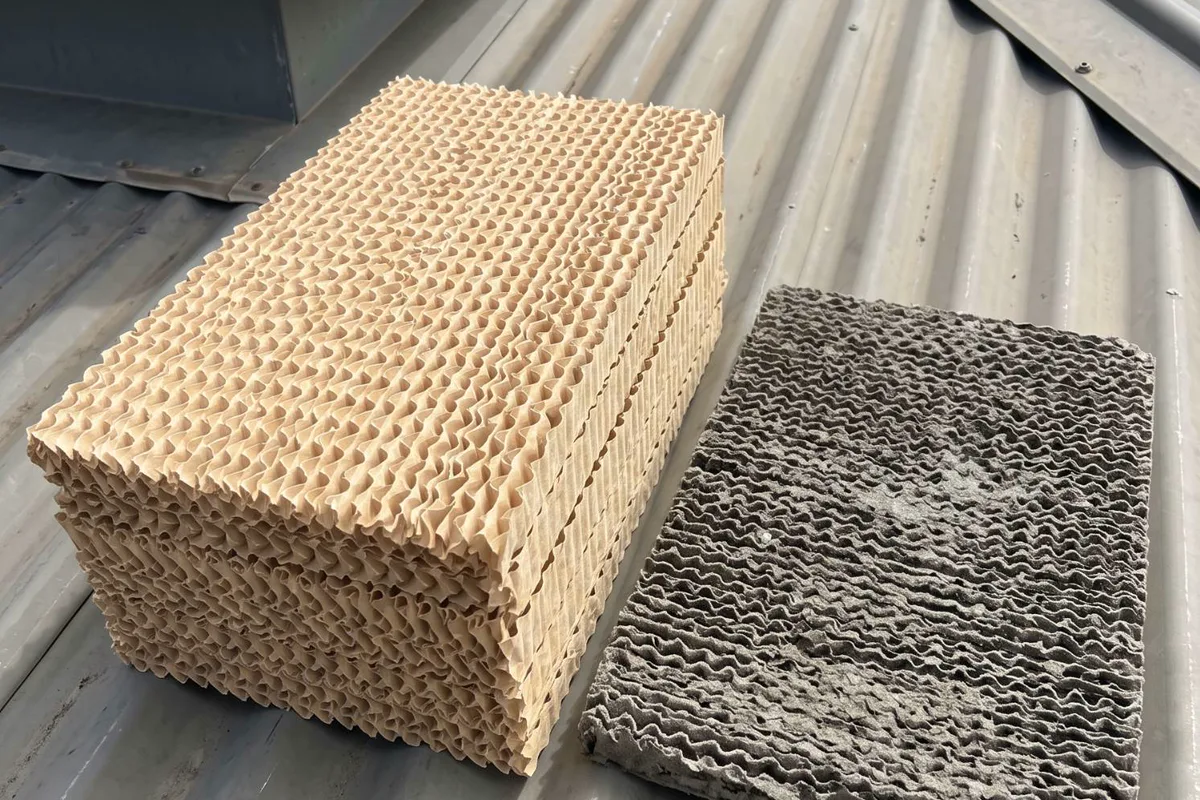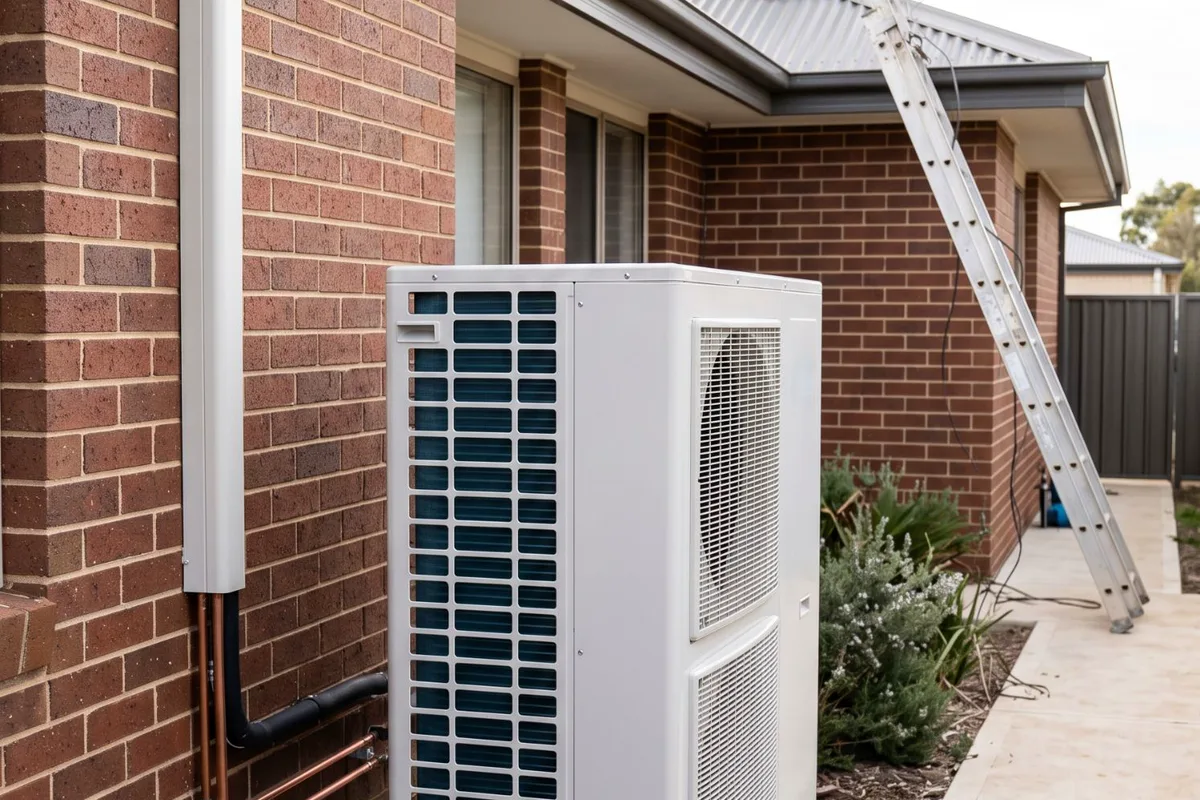
An evaporative cooler only cools, needs windows open and struggles on humid days. A conversion replaces it with reverse-cycle ducted that heats and cools. We check every duct run and quote the full scope, including the roof and the switchboard.
When to get it checked
It gives up on sticky days
On a humid afternoon the cooler runs flat out and the house still feels clammy. Evaporative cooling needs dry air to do its job.
Windows have to stay open
The cooler pushes outside air in, so some windows or doors must be open to let it out. That's awkward overnight, when nobody's home, or on a smoky day.
Cold draughts in winter
Without automatic seals, warm air escapes up through the roof unit. The fix is closing off ducts and covering the unit, one more job every autumn.
Two ageing systems
Evaporative in summer, gas ducted in winter, each with its own ducts and ceiling outlets. When both are getting old, one system could do both jobs.
Why it happens
4 common causes
How evaporative cooling works
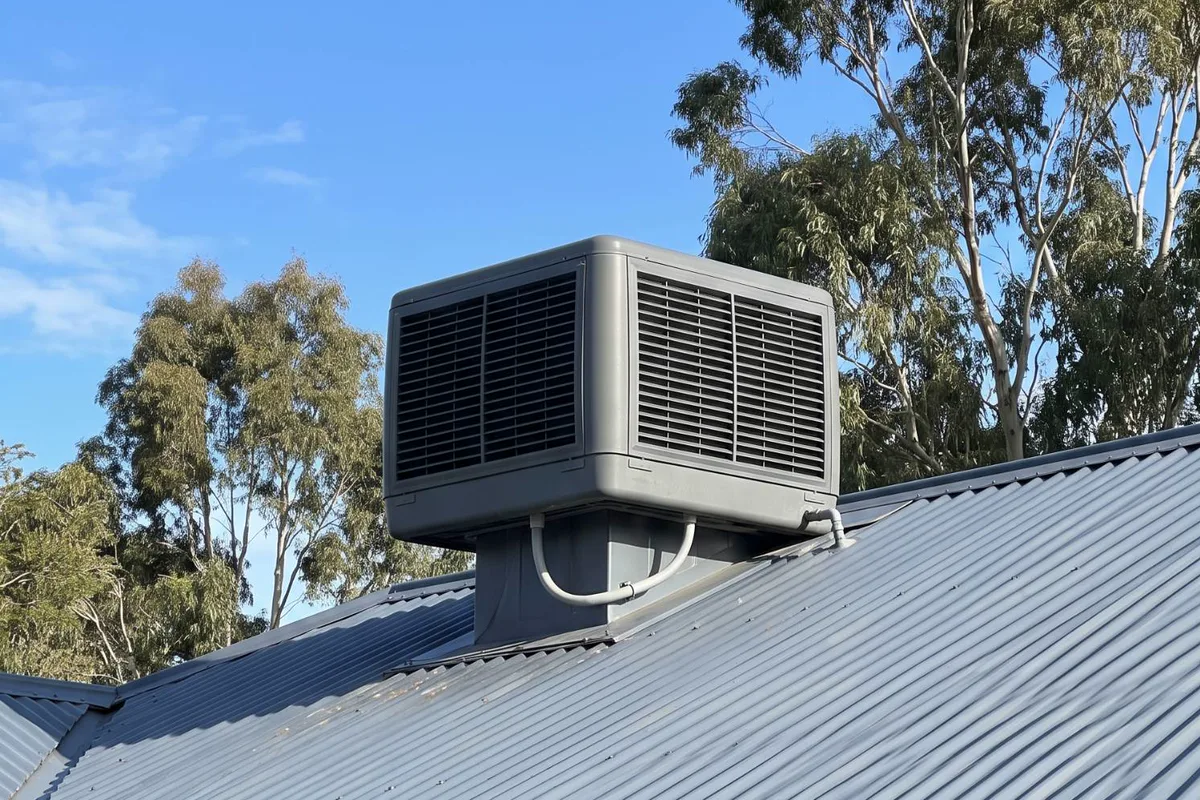
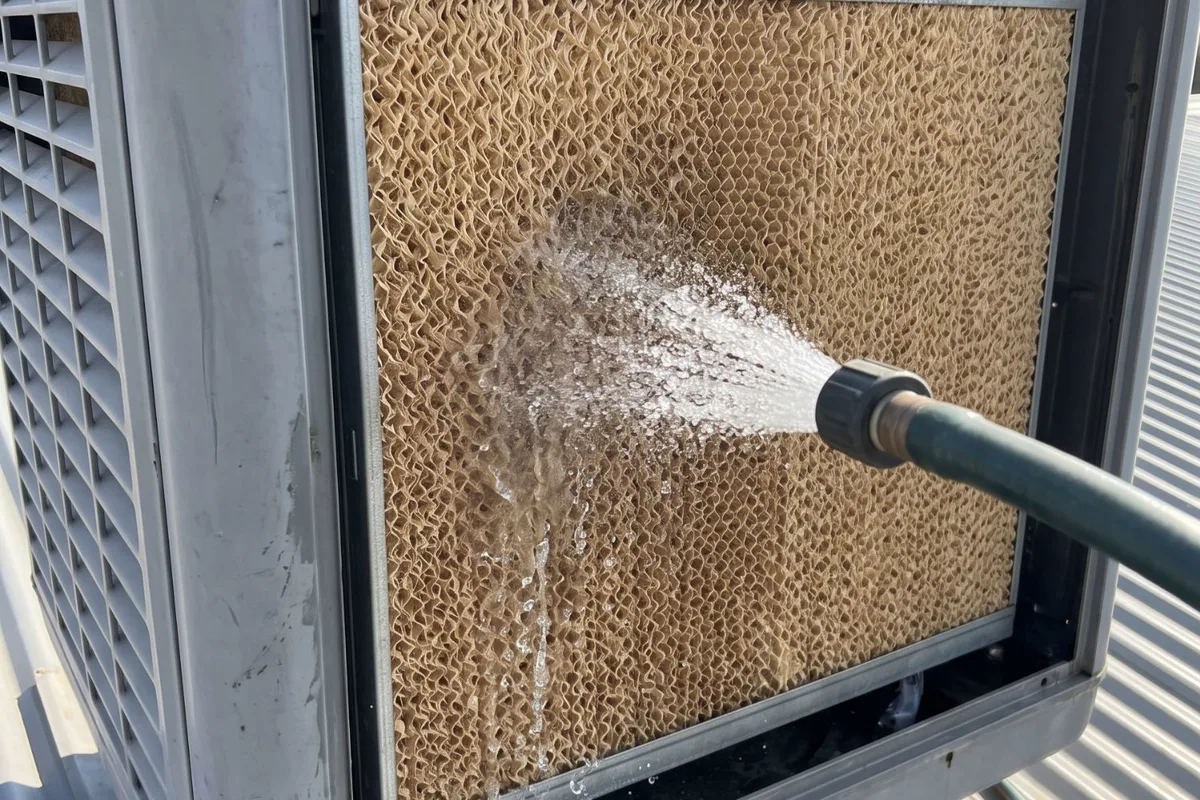
Outside air is drawn through wet pads on the roof, cooled by evaporation, pushed through the house and out through open windows and doors.
Humidity sets the limit
Federal energy advice says evaporative coolers work well in low-humidity inland regions and don't suit every area. Moist air takes up less water, so it cools less.
No heating mode
A reverse-cycle system is a heat pump: it moves heat out of the house in summer and into it in winter. An evaporative cooler only cools.
Water and upkeep
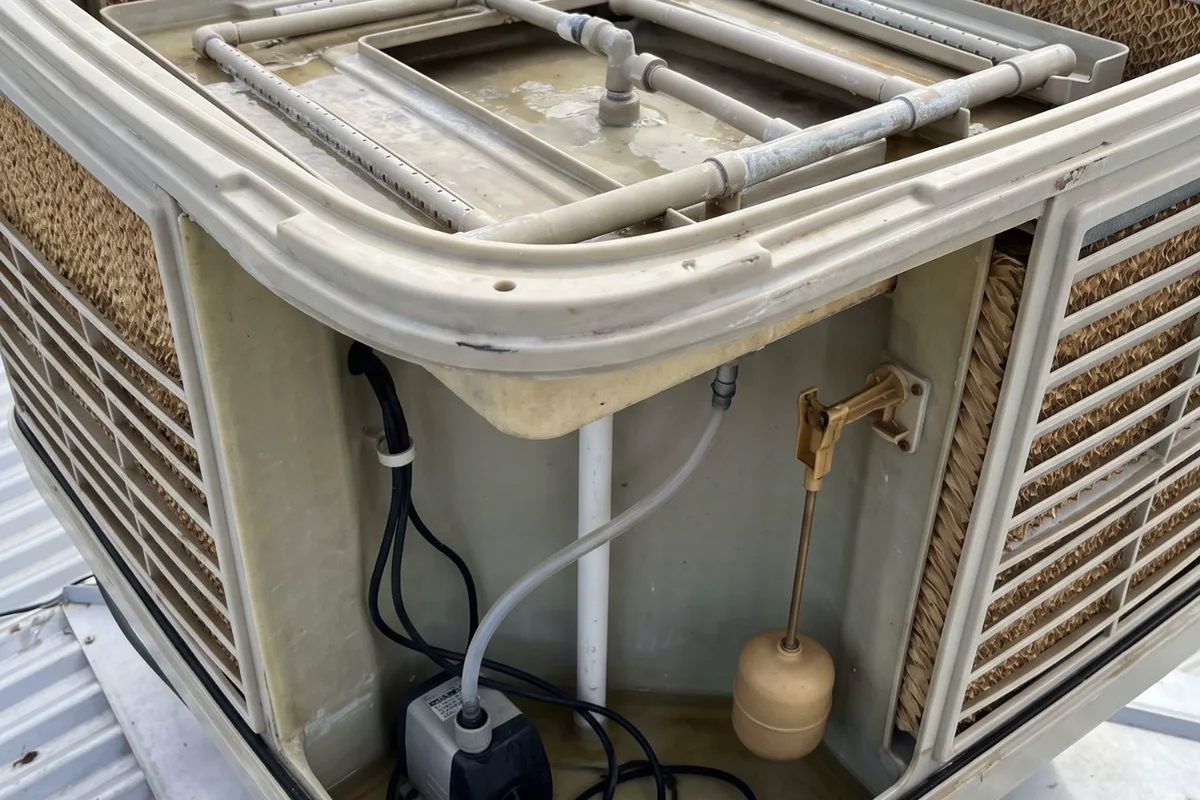
Central systems can use 25 litres or more of water an hour on hot, dry days. Pads, pumps and tanks also need regular attention to stay fresh.
What the job covers
What we usually do on this job. Your quote confirms it for your place.
- Roof unit, ducts, outlets and switchboard inspected
- Heating load worked out room by room
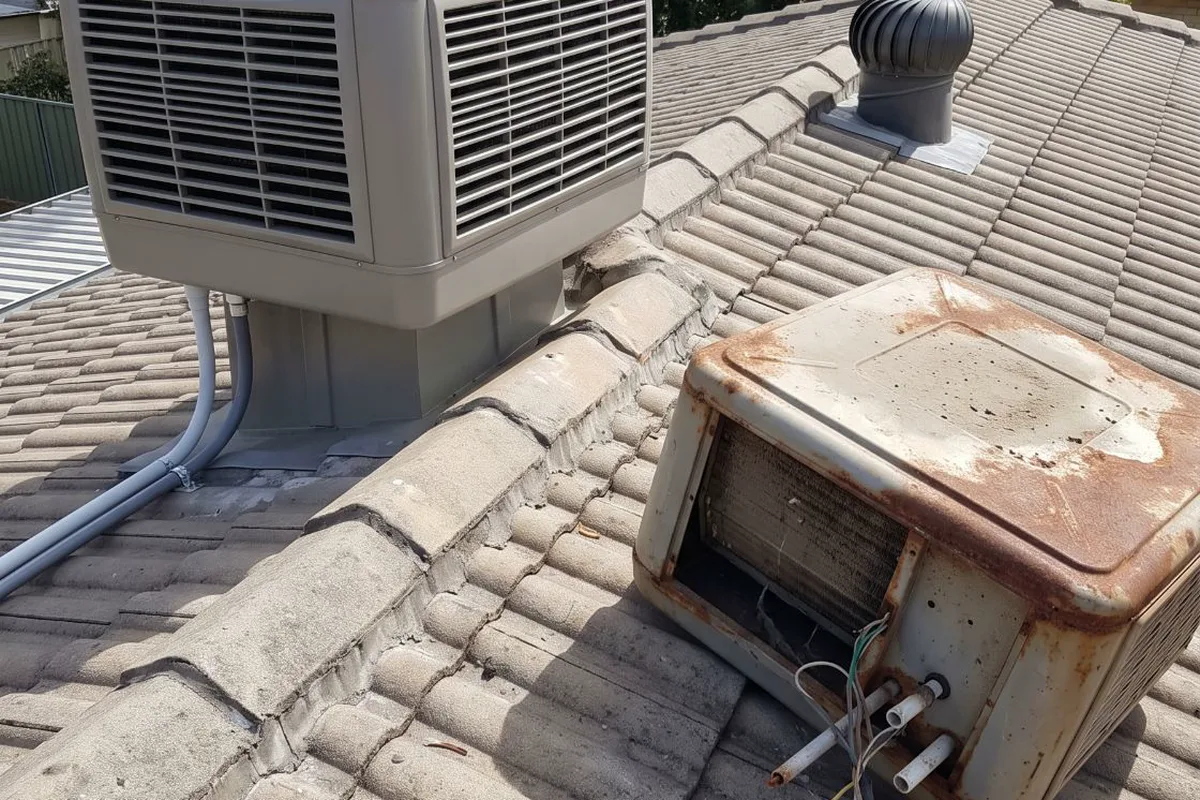
- Cooler disconnected, water capped and unit removed
- Roof opening closed and made weathertight
- Indoor unit, insulated ducts and return air grille fitted
- Outdoor unit, dedicated circuit and controller installed
- Airflow checked at every outlet
- Certificate of Electrical Safety issued
Your options, explained
Convert, keep the gas heater
High disruption- Best for
- Homes with a newer gas ducted heater
- How it works
- Reverse-cycle ducted replaces the cooler and can heat as well, leaving gas as a backup.
- Worth knowing
- Two duct systems stay in the roof until the heater is retired.
Convert and retire the gas heater
High disruption- Best for
- Homes where both systems are ageing
- How it works
- One reverse-cycle ducted system replaces both, with zones and one set of outlets.
- Worth knowing
- The biggest job, but one controller. A licensed gasfitter caps the gas.
Keep the cooler, add split systems
Low disruption- Best for
- A cooler with years left in it
- How it works
- Wall splits in bedrooms or the living area cover humid nights and winter.
- Worth knowing
- Two systems to maintain, and open windows on dry days.
The people behind the work
One local team for electrical, heating and cooling. Family-run, based in Altona Meadows, with 19 years in the industry.
Licensed electrical contractor (REC 38187)See more team photos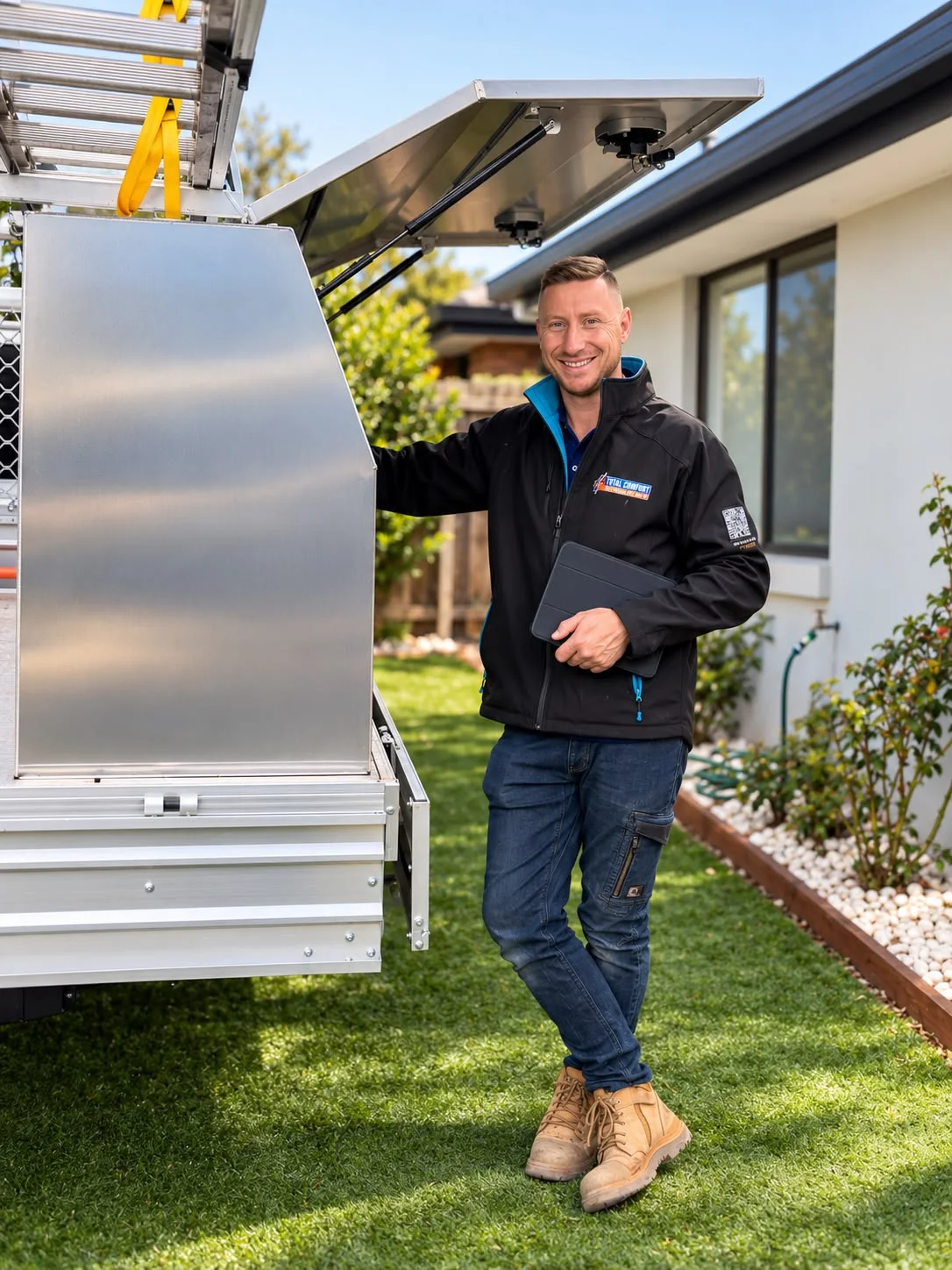
Worth knowing before you book
- Book it outside summer
- The cooler is off from the day work starts, so autumn to spring is the easy time.
- Think about the gas heater
- Retiring an ageing one at the same time leaves one set of ducts and one controller.
- Expect new ducts
- Evaporative ducts are built for a different job. We tell you which runs, if any, can stay.
What affects the price?
The right scope depends on your installation. These are the details we check so your quote is useful, with any additional work explained before it proceeds.
How much ductwork changes
New ducts to every room is the biggest variable. Sound, insulated runs that fit the new layout can stay.
Roof type and access
Tiles or metal, pitch, height and a second storey change how the cooler comes off and how the opening is closed.
Size, zones and the switchboard
Capacity and zones add up. If the board is full or the supply is small, an upgrade may be needed, and main switchboard work needs an independent inspection.
The gas heater
Retiring one adds a gasfitter to cap the gas, plus removing the heater, flue and ducts.
How it runs
- 1
Site visit
Roof unit, roof space, any gas heater and the switchboard checked.
- 2
Design and quote
Unit size, zones and outlets, at a fixed price for the agreed scope.
- 3
Remove, install and commission
Cooler out, roof closed, new system in, tested and explained.
Step by step, in more detail
4 steps
Site visit and sizing
We check the roof unit, ducts, outlets, any gas heater and the switchboard, then size room by room. The Victorian Government's guide is 1.1 to 1.4 kW of heating output per 10 m² a ducted system covers.
Design and fixed price
We plan zones, outlets, the return air grille and the outdoor unit's spot. You get a fixed price for the agreed scope, spelling out what stays and what goes.
Take the cooler out
Power to the cooler is isolated, the water supply and drain are capped, and the unit comes off the roof. The opening is closed and made weathertight.
Install, test and certify
The indoor unit, insulated ducts, condensate drain, outdoor unit, circuit and controller go in. We test heating and cooling, check airflow at each outlet and issue your Certificate of Electrical Safety.
What is safe to do, and what to leave to us
Safe for you to do
- Turn the cooler off at its controller if it's leaking or smells hot, and at the switchboard if that's safe.
- Reset a tripped safety switch once. If it trips again, leave it off and call us.
- Photograph the controller, and the roof unit from the ground, to send with your enquiry.
Leave these to us
- Climbing onto the roof to drain, inspect or disconnect the cooler.
- Any electrical or gas work yourself. Energy Safe Victoria says unlicensed electrical or gasfitting work is illegal and potentially fatal.
- Letting anyone without a refrigerant handling licence install or commission the new system.
When to get us in
- Before replacing a failing cooler like for like
- When the cooler and a gas ducted heater are both ageing
- If you let the property and need to meet the rental cooling standard
More detail
Why evaporative ducts rarely carry over
Evaporative ducts move a lot of outside air one way, so they tend to be large, lightly insulated and fed from one central drop. Refrigerated air recirculates. It needs a return path to the unit, and ducts insulated to at least R1.5 with sealed joints to stop condensation and leakage.
What happens on the roof
The cooler sits on a base over an opening into the roof space. Once it's lifted off, the opening is closed to suit the tiles or sheeting. The new indoor unit lives inside the roof, so nothing is left on the roofline and there's no winter cover to fit.
Running costs, honestly
Ducted evaporative coolers use less than half the electricity of an air conditioner of similar capacity, so summer cooling usually costs more after a conversion. The gain comes in winter if gas heating goes: ducted reverse-cycle is more cost-efficient than gas heating, and zones trim the bill further.
Local rules and conditions
Victorian requirements and local conditions that shape this job, with the sources listed at the foot of the page.
Hot days, cold July nights
The Bureau of Meteorology's Laverton station averages 27.0 days a year at or above 30 °C, and July's mean minimum is 5.2 °C. Victorians typically use more energy for heating than cooling, so the heating side of a conversion matters as much as the cooling.
Rentals and the cooling standard
From 1 March 2027, a new lease needs energy-efficient cooling in the living area, and existing evaporative cooling meets that standard. By 1 July 2030, every rental needs efficient electric cooling in the living area. One reverse-cycle system can meet both the heating and cooling standards.
Useful reading
Guides to read before you decide, with checklists and questions to bring to the quote.
- Evaporative or refrigerated cooling for Melbourne's west?How evaporative and refrigerated cooling handle dry northerly days, muggy nights and winter, and what switching from one to the other really involves.
- Ducted zoning explainedZones, dampers, controllers and room sensors in plain terms, plus the airflow limits that decide whether zoning will fix your comfort problem.
- Reverse-cycle air conditioning or gas heating?How each one makes heat, how it feels on a cold night in Melbourne's west, what Victoria's gas rules mean for you and what switching really involves.
- Split system or ducted: choose around the rooms you useCompare layouts, zoning, installation work and quote details before choosing equipment for your home.
Common questions
From the blog
- Keep the evaporative cooler in a rental, or replace it?An existing evaporative cooler meets the 2027 cooling standard. Whether to keep it comes down to the heater, renter comfort on muggy nights and upkeep.
- Should you run the evaporative cooler when there's smoke outside?Evaporative coolers pull outside air through the house, so on smoky days they bring the smoke in. What to do instead, and how refrigerated systems differ.
Sources for the rules and local facts on this page
12 sources, with the date each was checked
- 1.Bureau of Meteorology: Mean number of days ≥ 30 °C 6.9 6.0 4.5 0.7 0.0 0.0 0.0 0.0 0.1 0.9 2.8 5.1 27.0 82 1943 2026 Mean number of days ≥ 35 °C 3.6 2.4 0.9 0.0 0.0 0.0 0.0 0.0 0.0 0.1 0.5 1.9 9.4 Accessed 30 September 2026.
- 2.Department of Energy, Environment and Climate Action (energy.vic.gov.au), page last updated 14/04/25: Victorians typically use more energy for heating than cooling, so look for a unit with a higher heating efficiency. Accessed 30 September 2026.
- 3.Department of Energy, Environment and Climate Action (energy.vic.gov.au), page last updated 05/08/26: From 1 March 2027, at the start of a new lease, rental homes must include: energy-efficient cooling in the living area (noting that if evaporative cooling is already installed, it meets the standard) ... By 1 July 2030… Accessed 30 September 2026.
- 4.Consumer Affairs Victoria: Tip: A reverse-cycle air conditioner can satisfy both the heating and cooling standards. Accessed 30 September 2026.
- 5.energy.gov.au (Australian Government, DCCEEW): Evaporative coolers work by blowing air over a film of water on a filter or sponge, cooling the sponge and the air through the process of evaporation. Outside air is drawn through the evaporative unit (generally on the… Accessed 30 September 2026.
- 6.YourHome (Australian Government): Evaporative coolers cool outside air and blow it into the house; some windows or doors will need to be left open when the cooler is in use to allow indoor air to exit. ... For central systems, water use can be 25 L or… Accessed 30 September 2026.
- 7.Energy Safe Victoria: 'Prescribed' certificates are for electrical installation work that requires inspection by a Licensed Electrical inspector. This includes (but is not limited to): Consumer mains cables, main switchboard, meter box and… Accessed 30 September 2026.
- 8.Energy Safe Victoria: Whenever a licensed electrician completes any electrical installation work, they must provide a Certificate of Electrical Safety (COES). Accessed 30 September 2026.
- 9.Australian Refrigeration Council (ARC): A Refrigerant Handling Licence must be held by any person who carries out work in relation to refrigeration and air conditioning (RAC) equipment. Carrying out work in relation to RAC equipment means to do anything with… Accessed 30 September 2026.
- 10.Building and Plumbing Commission (Victorian Building Authority, trading as the Building and Plumbing Commission): Under Part 4 of the Plumbing Regulations 2018, Refrigerated Air-conditioning work is: The construction, installation, replacement, repair, alteration, maintenance, testing or commissioning of refrigerated… Accessed 30 September 2026.
- 11.Energy Safe Victoria: Gas and electricity are inherently dangerous and it’s illegal and potentially fatal for unlicensed and unqualified people to undertake any electrical or gasfitting work. Homeowners and consumers must always use… Accessed 30 September 2026.
- 12.Energy Safe Victoria: Locate your electricity box outside your home and check whether the safety switch has tripped. If it has tripped, reset the switch. If the switch won’t reset, call a licensed electrician. Accessed 30 September 2026.