When a heat pump water heater runs cold or trips the power, the fault is usually in the electrical side, the heat pump or the tank. We test the electrical side first, find the part that has failed and tell you whether repair or replacement makes more sense.
When to get it checked
No hot water at all
The tank is cold and the unit is silent. Start with the circuit breaker and safety switch, then the timer.
Lukewarm water or slow recovery
The water warms, but not enough, or runs out quickly. The heat pump may have stopped and left the backup element doing all the work, or the timer window is too short.
The safety switch keeps tripping
The hot water circuit drops out when the unit starts or the element comes on. A failed element, moisture or a wiring fault needs testing.
New noises
Rattling, buzzing or a louder hum than usual from the fan or compressor.
Water around the unit
Some condensate is normal. Water from the tank or fittings, or a relief valve that never stops dripping, isn't.
An error code on the display
Many units show a code when something's wrong. Write it down with the model number before you call.
Why it happens
6 common causes
Power and timer faults
A tripped circuit, an off-peak supply that isn't switching on, a timer reset by a power cut, or a damaged isolator.
A failed element or thermostat
The backup element boosts the water on cold days. When it or its thermostat fails, the water can stay lukewarm or the circuit can trip.
Starved of air
Leaves, dust or stored gear around the unit, or a dirty coil, cut the airflow the heat pump depends on.
Fan, compressor and controls
Fan motors, compressors, sensors and control boards wear out or fail, like those in any heat pump.
A refrigerant leak
The refrigerant runs in a sealed circuit. If it leaks, the heat pump loses capacity and the element takes over.
Valves and the cylinder
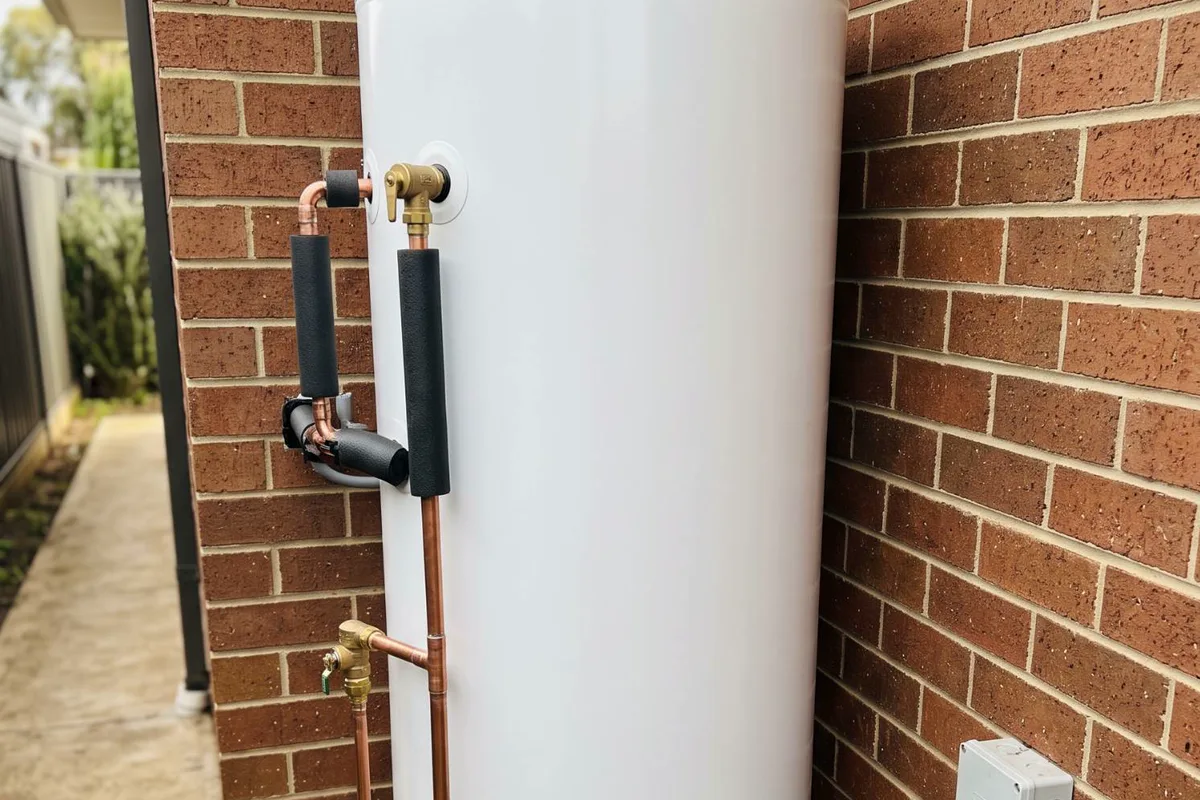
Relief valves, tempering valves and the cylinder itself can leak or fail with age.
What the job covers
What we usually do on this job. Your quote confirms it for your place.
- Circuit, safety switch and isolator tested
- Off-peak supply and timer checked
- Backup element and thermostat tested
- Fan, coil and compressor operation checked
- Error codes read and recorded
- Signs of a refrigerant leak checked
- Price agreed before any repair
- Timer reset and system run after the repair
- Certificate of Electrical Safety for electrical work
Your options, explained
Electrical repair
Low disruption- Best for
- Tripping, no power, timer or element faults
- How it works
- The faulty element, thermostat, isolator, wiring or timer is repaired or replaced and the circuit tested.
- Worth knowing
- The most common outcome when a unit trips or won't heat at all.
Heat pump repair
Medium disruption- Best for
- The element runs but the heat pump doesn't
- How it works
- Fan, sensor, board or compressor faults are diagnosed, and any refrigerant leak is repaired before a recharge.
- Worth knowing
- Parts for some models take time to arrive. Warranty work may need the manufacturer's agent.
Replace the unit
Medium disruption- Best for
- A leaking cylinder or a major fault on an older unit
- How it works
- The old unit comes out and a new heat pump or electric tank goes in.
- Worth knowing
- A leaking cylinder can't be repaired. See our heat pump hot water replacement page.
The people behind the work
One local team for electrical, heating and cooling, based in Altona Meadows, with 19 years in the industry.
Licensed electrical contractor (REC 38187)See more team photos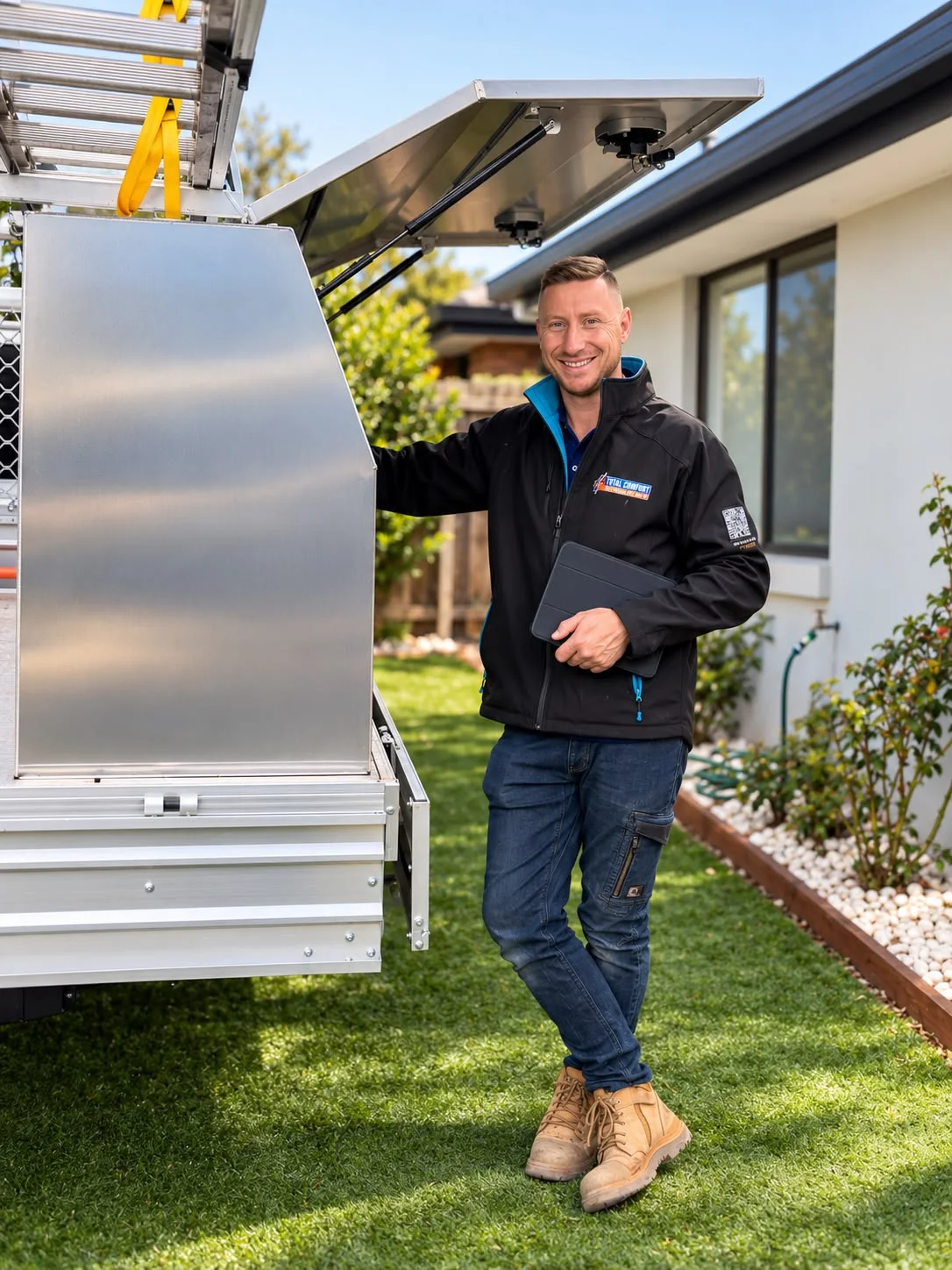
Worth knowing before you book
- Note the code
- Write down any error code and the model number.
- Check the warranty
- Newer units may need the manufacturer's agent.
- Reset once only
- If the safety switch trips again, leave it off.
What affects the price?
The right scope depends on your installation. These are the details we check so your quote is useful, with any additional work explained before it proceeds.
Where the fault is
A timer or breaker fault is quicker to fix than a compressor fault or a refrigerant leak.
Parts for your model
Elements and thermostats are common parts. Boards and compressors for some models have to be ordered.
Warranty
If the unit is under the manufacturer's warranty, the repair may need to go through their agent. Check before booking.
Access
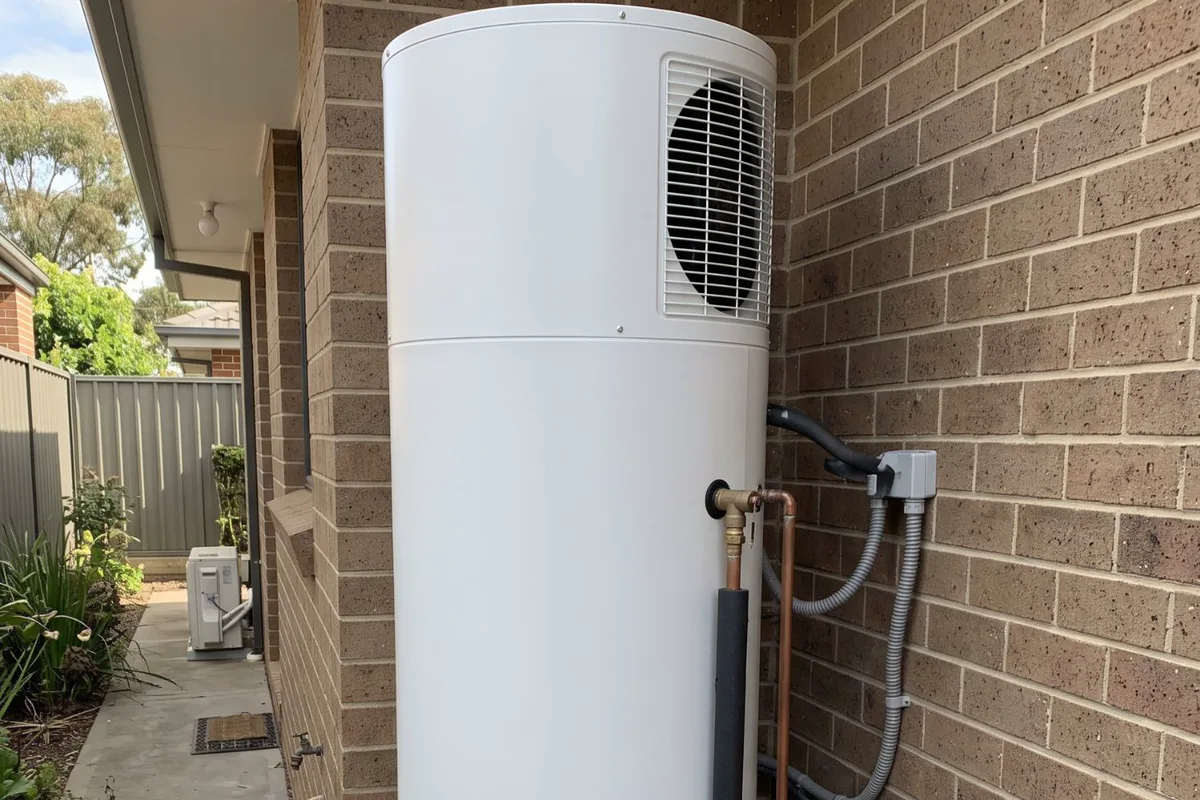
Units in tight side paths, on raised stands or in garages can take longer to work on.
Refrigerant work
Finding and repairing a leak, then pressure testing and recharging, takes longer than an electrical repair.
How it runs
- 1
Tell us the symptoms
Cold, lukewarm, tripping or noisy, and since when.
- 2
Test and trace
Electrical side first, then the heat pump.
- 3
Price and repair
The price agreed before the repair starts.
- 4
Run and reset
Heating confirmed and the timer set.
Step by step, in more detail
5 steps
Hear what's happening
The model and age, any error codes, when it started, and whether the power went out recently.
Test the electrical side
The circuit, safety switch, isolator, off-peak supply, timer, element and controls are tested first.
Check the heat pump
Airflow, the fan, the coil and compressor operation, and any signs of a refrigerant leak.
Price and repair
You get the fault and the price before we start. Leaking valves or cylinders are plumbing work, so your quote names who does each part.
Test and reset
We run the system, confirm it heats, reset the timer and issue a Certificate of Electrical Safety for any electrical work.
What is safe to do, and what to leave to us
Safe for you to do
- If the hot water safety switch trips, reset it once. If it trips again or won't reset, leave it off and call a licensed electrician.
- Write down any error code and the model number from the label on the unit.
- Check the timer after a power cut, as some units lose their settings.
- If water is leaking near electrical parts, keep clear and switch the circuit off at the switchboard only if it's safe to reach.
Leave these to us
- Opening the unit's covers, the isolator or the switchboard. Electrical work isn't a DIY job, even small ones.
- Running the unit with its covers off or water pooling around the electrics.
- Touching the refrigerant circuit, or letting anyone top it up before a leak is found and repaired.
When to get us in
- No hot water, and the breaker or safety switch keeps tripping
- Water is lukewarm or runs out much sooner than it used to
- An error code keeps coming back
- New rattling, buzzing or a louder hum
- Water leaking from the tank, fittings or valves
More detail
Element or heat pump: which side is working?
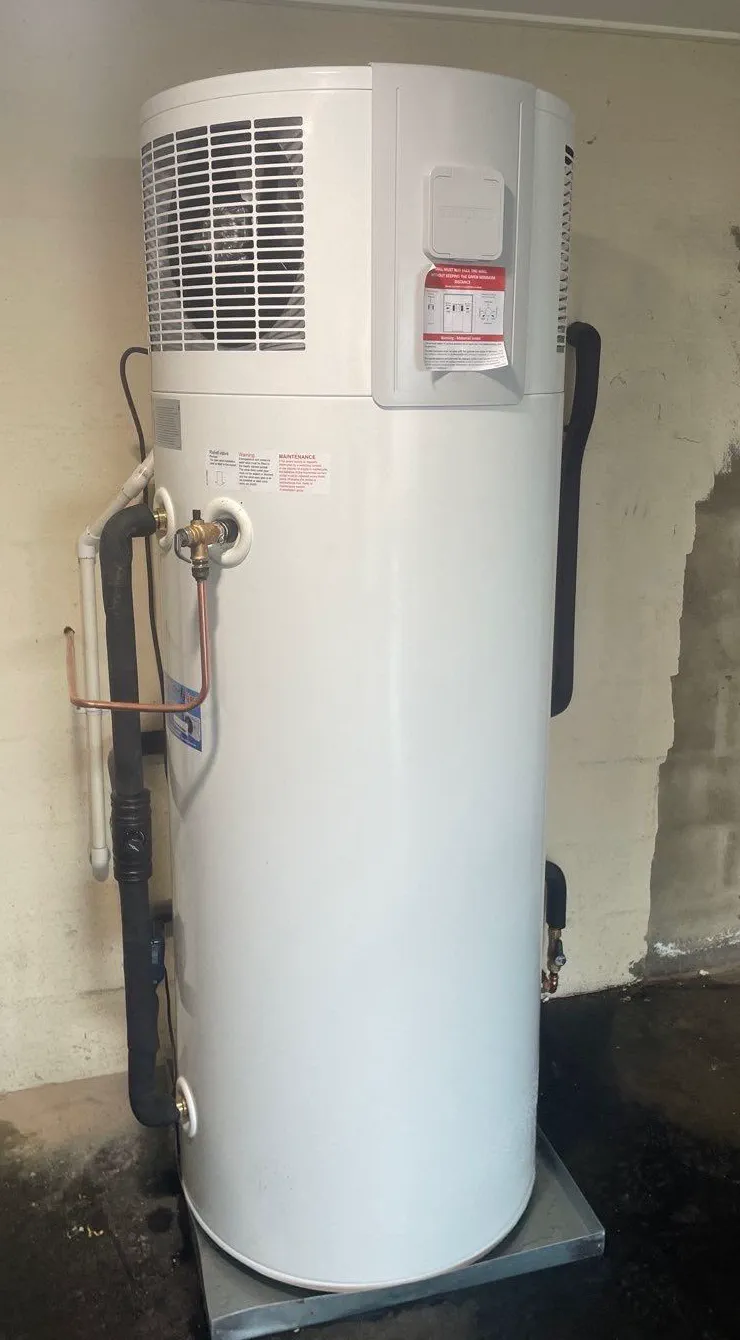
Most heat pump water heaters have a backup electric element for cold mornings or heavy use. When the heat pump side stops, the element can keep the water warm, so the first sign may be lukewarm showers, slow recovery or a higher bill rather than cold water.
We check whether the fan and compressor run when they should, whether the element is carrying the load, and what the controller reports. That tells us which side has failed.
Common electrical faults
A tripped circuit or safety switch, an off-peak supply that isn't switching on, a timer that lost its settings in a power cut, water inside the isolator, a failed element or thermostat, and loose or burnt terminals. Energy Safe Victoria's guidance on the Wiring Rules says the hot water circuit, like every final sub-circuit, needs RCD protection, so a fault that leaks current to earth will trip it.
Hot water services are non-prescribed electrical work. When we repair the electrical side, you receive a Certificate of Electrical Safety for that work.
Refrigerant faults are repaired, not topped up
The heat pump's refrigerant runs in a sealed circuit and doesn't get used up. If it's low, there's a leak. Nobody is allowed to top up a system until it has been fully tested and every identified leak repaired, and releasing refrigerant into the air is illegal. Only licensed technicians can handle it.
Repair or replace
Electrical faults, fans and sensors are usually worth repairing. A leaking cylinder can't be repaired, and a failed compressor on an older unit is a closer call. When replacement makes more sense, we price it alongside the repair so you can compare.
Local rules and conditions
Victorian requirements and local conditions that shape this job, with the sources listed at the foot of the page.
Cold mornings and the backup element
July at Laverton averages a minimum of 5.2 °C, with June and August close behind. A heat pump gathers less heat from cold air, and if its compressor has stopped, the backup element quietly takes over, so you may notice the bill before the water.
Renters without hot water
A failed hot water service is on Victoria's legal list of urgent rental repairs, which must be done immediately. The rental provider pays unless the renter caused the problem. Tell the rental provider or agent in writing.
When a rental unit can't be repaired
From 1 March 2027, when a rental hot water system permanently fails and can't be repaired, the rental provider must replace it with an energy-efficient electric hot water system.
Useful reading
Guides to read before you decide, with checklists and questions to bring to the quote.
- A safety switch keeps tripping: what to record and when to callUnderstand the difference between a protective device doing its job and a fault that needs investigation.
- Renting and the power or heating has failed: what to doNo power or a dead heater in a Victorian rental? What to check safely, what counts as urgent, how to report it, and what to do if nobody responds.
- How and when to test your safety switchesHow to run the push-button test at home, what an electrician’s trip-time test measures that the button can’t, and what to do when a switch fails.
- Certificates of Electrical Safety explainedWhat a Victorian COES records, how prescribed and non-prescribed work differ, when your copy should arrive and why it belongs in your house file.
Common questions
Questions people ask about this
- Is ice on my heat pump hot water unit normal?A light frost on the heat pump's fins on a cold morning is normal.
- Is it normal for my hot water system to drip from the valve?A little water from the relief valve drain while the tank is heating is normal, because water expands as it heats and the valve lets the extra out.
- Why does my hot water run out faster than it used to?Usually something has changed in the tank or in how it's heated.
From the blog
Sources for the rules and local facts on this page
10 sources, with the date each was checked
- 1.Bureau of Meteorology: Mean minimum temperature (°C) 14.0 14.4 12.7 10.0 7.8 5.9 5.2 5.7 6.8 8.4 10.3 12.2 9.5 81 1943 2026 Accessed 30 September 2026.
- 2.Consumer Affairs Victoria: Anything on this list is legally defined as an urgent repair: burst water service blocked or broken toilet system serious roof leak gas leak dangerous electrical fault flooding or serious flood damage serious… Accessed 30 September 2026.
- 3.Consumer Affairs Victoria: From 1 March 2027, when an existing hot water system permanently fails and can't be repaired, rental providers must replace it with an energy-efficient electric hot water system. Accessed 30 September 2026.
- 4.Energy Safe Victoria: Clause 2.6.3.2.2 requires all final sub-circuits in a domestic installation be protected by a residual current device (RCD). A hot water service is included in this requirement Accessed 30 September 2026.
- 5.Energy Safe Victoria: For electrical installation work performed within your electrical installation including but not limited to lights, power points, air conditioning, hot water service etc. Accessed 30 September 2026.
- 6.Energy Safe Victoria: Whenever a licensed electrician completes any electrical installation work, they must provide a Certificate of Electrical Safety (COES). Accessed 30 September 2026.
- 7.Australian Refrigeration Council (ARC), Fact Sheet 13 (ARC5225, 11/22): ‘Topping-up’ a system before the system has been fully tested and all identified leaks repaired by any individual is illegal. Accessed 30 September 2026.
- 8.Department of Climate Change, Energy, the Environment and Water (DCCEEW): It's illegal to release regulated refrigerants into the air. This is because some refrigerants can stay in the atmosphere for decades or more and can be thousands of times worse for climate change than carbon dioxide… Accessed 30 September 2026.
- 9.Energy Safe Victoria: Locate your electricity box outside your home and check whether the safety switch has tripped. If it has tripped, reset the switch. If the switch won’t reset, call a licensed electrician. Accessed 30 September 2026.
- 10.Energy Safe Victoria: Electrical work isn’t a DIY job, even for small jobs such as changing power points or light switches. Accessed 30 September 2026.