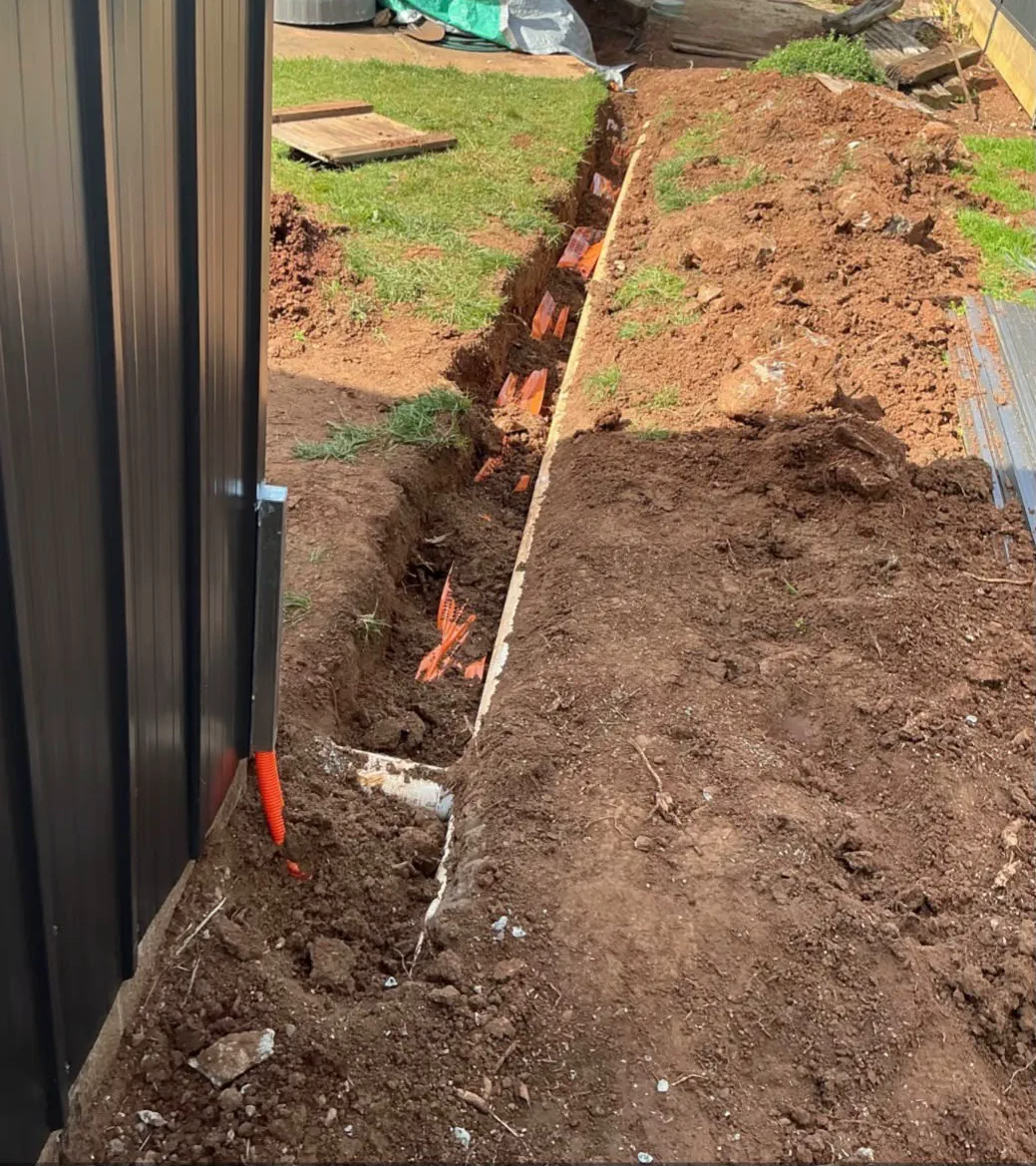
Garages and sheds tend to outgrow their wiring: one light, one point and a lead from the laundry. We plan circuits around what you'll run, get the cable there safely, underground or along a structure, and fit out power points and lighting where you work. Every new circuit is protected, tested and certified.
When to get it checked
Leads run out from the house
A lead through the laundry door or under the roller door is a trip hazard and a weak point, especially once it's left out in the weather.
Tools that trip the power
A saw, compressor or welder starts and the lights in the house go out. The circuit it shares is at its limit, or the tool needs its own.
Not enough light to work
One old fluoro over the car leaves the bench in shadow, which makes measuring, cutting and finding dropped screws harder than it should be.
One power point for everything
The freezer, the battery charger and the radio all share a double point, with a power board hanging off it.
A shed with no power at all
The workshop, home gym or studio is built, but the power stops at the house.
Why it happens
4 common causes
Garages were wired for a light and a door
Many garages got one light, one power point and perhaps the roller door motor. Power tools, a second fridge and battery chargers came later.
Detached buildings need their own supply
A shed across the yard can't safely run off an extension lead. It needs a properly sized cable from the house, protected along its route and where it enters the shed.
Motors draw hard when they start
Compressors, saws and welders pull a surge of current at start-up, so a circuit that copes with lights and a radio can trip as soon as they kick in.
Weather, dust and vermin
Sheds aren't sealed like a house. Dust, damp and rodents work on exposed cable and cheap fittings over time.
What the job covers
What we usually do on this job. Your quote confirms it for your place.
- Equipment and use of the space discussed
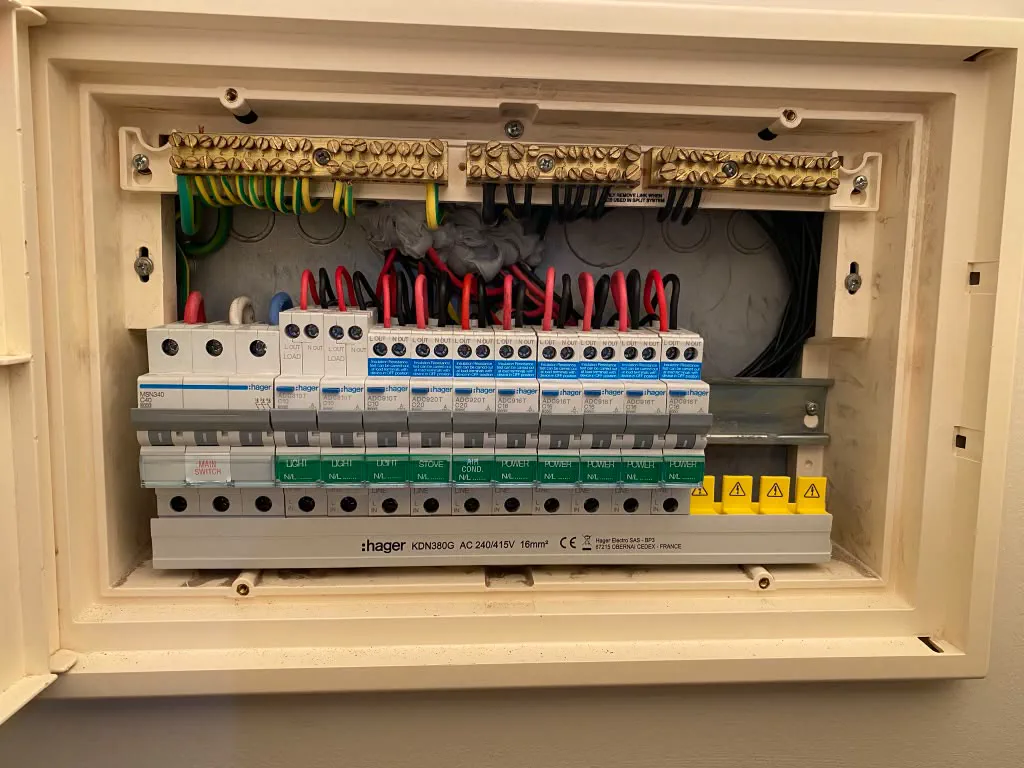
- Switchboard space and supply checked
- Cable route planned, services located before digging
- Cable run underground in conduit or along a structure
- Sub-board in the shed where the job needs one
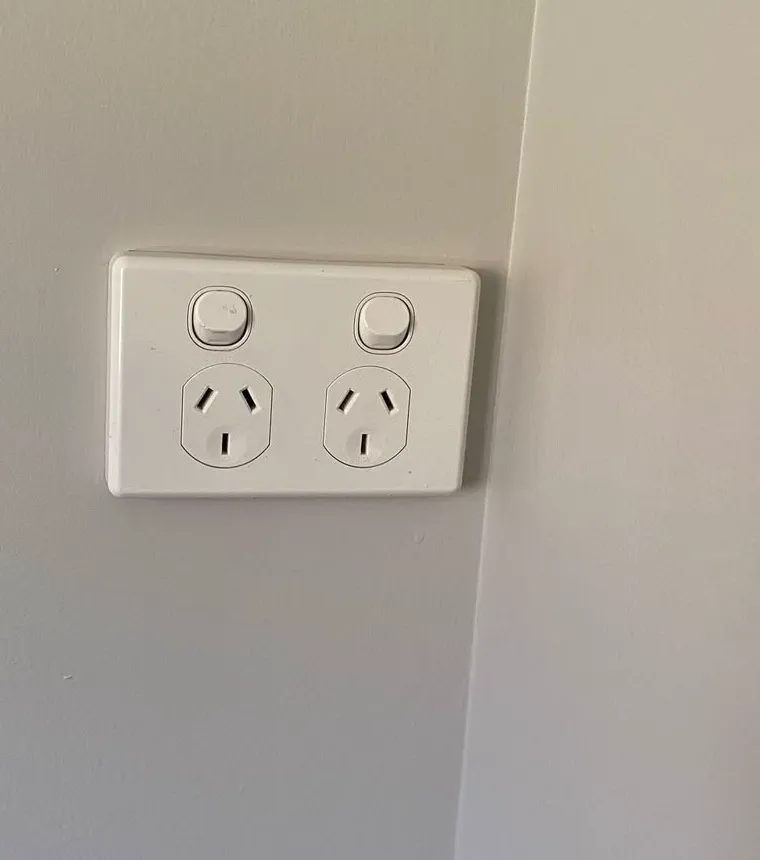
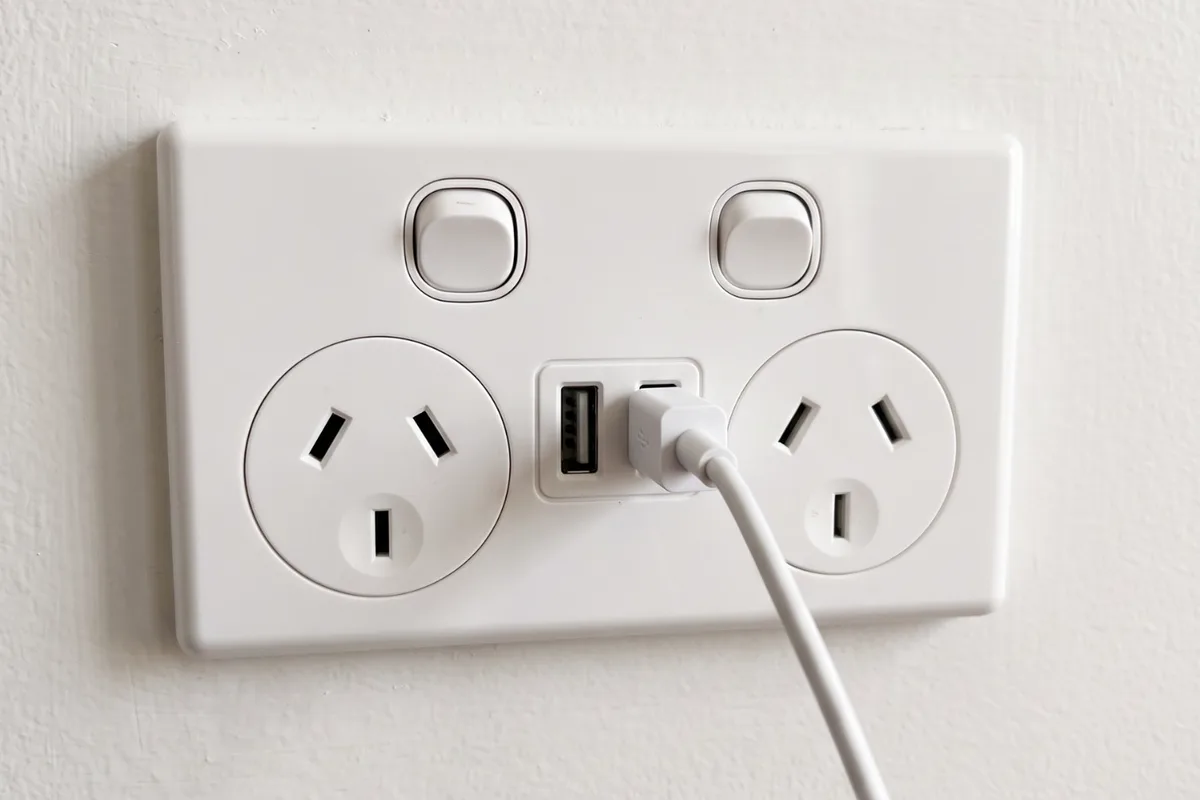
- Power points placed along benches and walls
- LED lighting for even light over the work area
- Safety switch protection on every new circuit
- Every circuit tested, labelled and certified
Your options, explained
More points and lights in an attached garage
Low disruption- Best for
- Garages under the main roof
- How it works
- New power points and LED lighting come off existing or new circuits from the house switchboard.
- Worth knowing
- Usually the simplest job. A new circuit may need a spare position or work at the board.
One circuit to a detached shed
Medium disruption- Best for
- Garden sheds that need a light and a few power points
- How it works
- A single protected circuit runs from the house board to the shed, underground in conduit or along a structure.
- Worth knowing
- Suits light use. Big tools or several circuits point to a sub-board instead.
Sub-board in the shed or workshop
Medium disruption- Best for
- Workshops, studios and garages with tools, heating or air conditioning
- How it works
- A submain cable feeds a small board in the shed, which has its own circuits and safety switches.
- Worth knowing
- More flexible and easy to add to later. The cable size depends on the load and the distance.
Three-phase to the workshop
High disruption- Best for
- Workshops running three-phase machinery or very large loads
- How it works
- Where the property has three-phase power, or is upgraded to it, three-phase can be run to the workshop board.
- Worth knowing
- Makes sense for genuine three-phase equipment. Our single phase to three phase upgrade page covers the supply side.
The people behind the work
One local team for electrical, heating and cooling, based in Altona Meadows, with 19 years in the industry.
Licensed electrical contractor (REC 38187)See more team photos
Worth knowing before you book
- Bring the nameplates
- The current your tools draw decides the circuits.
- Mark what's underground
- Tell us about irrigation, gas or drainage lines in the yard.
- Think ahead
- A charger, heater or air conditioner later? Plan the supply for it now.
What affects the price?
The right scope depends on your installation. These are the details we check so your quote is useful, with any additional work explained before it proceeds.
Distance from the house
The further the shed, the longer the cable, and long runs need heavier cable so tools still get the voltage they need.
Trenching and surfaces
Digging through lawn is simpler than cutting concrete or lifting pavers. Who reinstates the surface is agreed at quote time.
What you'll run
Lights and a few points need far less than a welder, compressor, air conditioner or EV charger. Dedicated circuits and a sub-board add parts and time.
The house switchboard
A board with spare space and modern protection takes a new circuit easily. A full or dated board, or a tight supply, adds work, priced as its own line.
The building itself
Lined walls are tidier to wire behind. An unlined metal shed needs cable fixed and protected along the frame and away from sharp edges.
How it runs
- 1
Send photos
The shed, the route from the house and the switchboard.
- 2
Plan and price
Circuits and route agreed, with the price before we start.
- 3
Run and fit out
Cable, board, points and lights installed.
- 4
Test and certify
Every circuit tested and a certificate issued.
Step by step, in more detail
5 steps
Tell us what the space is for
A car and a freezer, a woodworking shop, a home gym or a studio: the equipment decides the circuits. Send photos of the shed, the path from the house and the switchboard.
Check the board and the route
We check spare positions and supply headroom at the switchboard, then plan the cable route: along a structure, through the roof or underground in conduit. Underground services are located before anyone digs.
Price before we start
You get the price for the agreed scope, including any trenching and who reinstates paving or garden beds.
Run the supply and fit out
The cable goes in, then a sub-board in the shed if the job needs one, followed by power points, lighting and any dedicated outlets, all fixed so they can't be knocked or chafed.
Test and certify
Every circuit is tested, safety switches are checked and the board is labelled. You get a Certificate of Electrical Safety for the work.
What is safe to do, and what to leave to us
Safe for you to do
- Unplug and coil leads after use instead of leaving them out in the weather.
- Press each safety switch's test button every three months, as Energy Safe Victoria advises. If the power doesn't cut, call a licensed electrician.
- If a safety switch trips when a tool starts, reset it once. If it trips again, leave it off and call us.
Leave these to us
- Running a shed off an extension lead or a chain of power boards.
- Burying an extension lead or garden cable to get power to a shed.
- Digging where a cable might run without checking first.
- Wiring a shed or garage yourself. Energy Safe Victoria says unlicensed electrical work is illegal and potentially fatal.
When to get us in
- You're powering a shed, garage, studio or gym for the first time
- Tools trip the power, or the lights dim when they start
- Leads run out from the house to the shed or garage
- You're adding a welder, compressor, air conditioner or EV charger
- Cable in the shed is exposed, damaged or chewed
More detail
A circuit from the house, or a sub-board?
A single circuit from the house switchboard suits a garden shed with a light and a couple of power points. Once you're running power tools, heating or cooling, or more than one circuit, a sub-board in the shed makes more sense. A submain cable feeds it, and each shed circuit gets its own protection close to where you work.
A sub-board also means a tripped circuit can be reset without walking back to the house, and adding a circuit later doesn't mean another cable across the yard.
Getting the cable there
Underground cable goes in conduit at the depth and with the protection the Wiring Rules set, and we locate existing services before digging. Where a fence line, carport or roof gives a protected route instead, we'll use it.
Distance matters as much as load. A long run needs heavier cable so tools get the voltage they need, which is why we ask where the shed sits before we price it.
Fitting out a workshop
Plan power points along the bench at working height, with enough doubles that you're not reaching for a power board. Heavy tools such as a welder or compressor may need their own circuit or a higher-rated outlet, so bring the nameplate details.
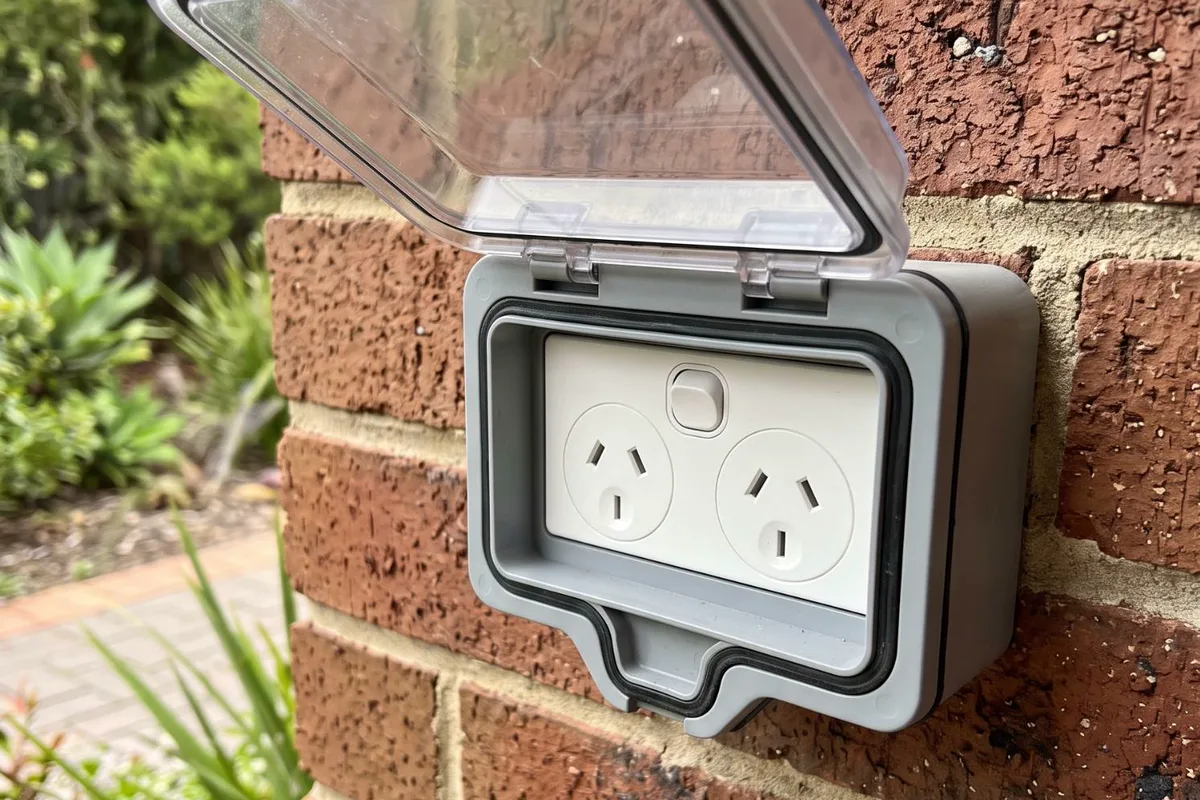
LED battens give even light over the bench and the car, and a sensor light outside the door helps when you're carrying things in after dark. An outdoor power point by the shed is handy for the mower charger or pressure washer.
Safety switches on every circuit
Energy Safe Victoria guidance says the Wiring Rules require safety switch protection on every final sub-circuit in a home, and additional protection when an existing installation is altered. Sheds and garages are where that protection earns its keep: damp floors, metal tools and leads that take a beating.
Test each safety switch every three months with its test button, and call us if one won't trip or won't reset.
Local rules and conditions
Victorian requirements and local conditions that shape this job, with the sources listed at the foot of the page.
Hot sheds in summer
The Laverton weather station averages 27.0 days a year at or above 30 °C and 9.4 at or above 35 °C, mostly from December to February. An uninsulated shed gets hotter than that inside, so if a fan or air conditioner is on the wish list, we plan its circuit with the rest.
Salt air near the bay
Hobsons Bay has more than 20 kilometres of bay frontage. In sheds and garages near the water, salt air works on metal enclosures, screws and outlet lids, so we favour sealed, corrosion-resistant fittings.
Garages in new homes
Wyndham has new housing planned in growth areas including Wyndham Vale. If your new garage has one light and one point, it's easiest to add more before the shelving, cabinets and workbench go in.
Useful reading
Guides to read before you decide, with checklists and questions to bring to the quote.
- The electrical decisions to make before your renovation walls closePlan appliances, lighting, outlets and future upgrades while access and options are still available.
- Planning a switchboard upgrade without surprisesWhat the electrician needs to check, how to compare the scope and what to organise before the power goes off.
- A safety switch keeps tripping: what to record and when to callUnderstand the difference between a protective device doing its job and a fault that needs investigation.
- What electrical work you can and can't do yourself in VictoriaWhere Victorian law draws the line on home electrical work, the short list of jobs that are yours, and what to do when a job goes past it.
Common questions
Questions people ask about this
- Why is there no power to my shed or garage?Start at the switchboards.
- What is a sub-board, and do I have one?A sub-board is a smaller switchboard fed by its own cable from a circuit breaker on your main switchboard.
Sources for the rules and local facts on this page
10 sources, with the date each was checked
- 1.Bureau of Meteorology: Mean number of days ≥ 30 °C 6.9 6.0 4.5 0.7 0.0 0.0 0.0 0.0 0.1 0.9 2.8 5.1 27.0 82 1943 2026 Mean number of days ≥ 35 °C 3.6 2.4 0.9 0.0 0.0 0.0 0.0 0.0 0.0 0.1 0.5 1.9 9.4 Accessed 30 September 2026.
- 2.Hobsons Bay City Council: Hobsons Bay has more than 20 kilometres of bay frontage, quality residential areas, a huge expanse of environmentally significant open space and a range of major industrial complexes, which contribute significantly to… Accessed 30 September 2026.
- 3.Victorian Electoral Commission (2023 electoral structure review fact sheet): New housing developments are planned in residential growth areas including Truganina, Tarneit, Wyndham Vale and Manor Lakes, as well as near activity centres and public transport. Accessed 30 September 2026.
- 4.Energy Safe Victoria: Gas and electricity are inherently dangerous and it’s illegal and potentially fatal for unlicensed and unqualified people to undertake any electrical or gasfitting work. Homeowners and consumers must always use… Accessed 30 September 2026.
- 5.Energy Safe Victoria: Whenever a licensed electrician completes any electrical installation work, they must provide a Certificate of Electrical Safety (COES). Accessed 30 September 2026.
- 6.Energy Safe Victoria: For electrical installation work performed within your electrical installation including but not limited to lights, power points, air conditioning, hot water service etc. Accessed 30 September 2026.
- 7.Energy Safe Victoria: Locate your electricity box outside your home and check whether the safety switch has tripped. If it has tripped, reset the switch. If the switch won’t reset, call a licensed electrician. Accessed 30 September 2026.
- 8.Energy Safe Victoria: Follow these steps to check your safety switch every three months: Press in the test buttons on each safety switch which will cut the power and trip the switch into the off position. You may hear a clunking sound. If… Accessed 30 September 2026.
- 9.Energy Safe Victoria: Clause 2.6.3.2.2 requires all final sub-circuits in a domestic installation be protected by a residual current device (RCD). A hot water service is included in this requirement Accessed 30 September 2026.
- 10.Energy Safe Victoria: Clause 2.6.3.2.5 of the Wiring Rules states: Additional protection by RCDs shall be provided in existing electrical installations where alterations or a switchboard replacement is completed. Accessed 30 September 2026.