
The key points
- Winter had the highest number of preventable residential fire deaths in Victoria in 2025. Heaters, overloaded boards and electric blankets are common electrical risks.
- Plug portable heaters straight into a wall point, keep them well clear of anything that burns, and switch them off when you leave the room or go to bed.
- Check electric blankets before the first cold night. Scorch marks, worn cords or bunched wires mean replace, not repair.
- A room that needs a heater on a power board every night needs a better heating option or a power point of its own.
- Reverse cycle air conditioning moves three to five units of heat for each unit of electricity, where a standard electric heater produces about one.
Why winter brings more electrical risk
Cold weather changes how a house uses power. Heaters run for hours, often in rooms with only one or two power points. Electric blankets come out after months folded in a cupboard. Washing dries inside on racks near heaters, and windows stay shut. Laverton's July mean minimum is 5.2 °C, so across much of Melbourne's west that pattern runs for months.
Figures compiled by CFA and Fire Rescue Victoria show 21 preventable residential fire deaths across Victoria in 2025, with the highest number in winter. In June 2024, CFA's Chief Officer said more than 140 of the 780 residential structure fires CFA attended the previous year were caused by electrical equipment, including appliances and air conditioning.
Portable heaters
Portable electric heaters draw a lot of current for a long time, which is hard on power boards, double adaptors, extension leads and worn power points. Plug a heater straight into a wall point, on its own. If the plug or point feels hot, or the cover is discoloured, stop using that point and have it checked.
Keep heaters well clear of curtains, bedding, couches and clothes, and never dry washing on or over one. Stand them on a flat, stable surface where they can't be knocked over, and choose models with tip-over and overheat cut-outs. Turn them off when you leave the room or go to sleep, and never leave one running with nobody home.
Old heaters deserve a hard look. A bar heater with a bent or broken guard, a fan heater that smells of burning dust every time, or any heater with a damaged cord should be replaced. Follow the clearances in the instructions for the model you have.
Electric blankets
Many electric blanket problems start with damage done while the blanket was stored folded or squashed under other bedding. Before the first cold night, lay it out flat and check for scorch marks, discoloured patches, frayed fabric, wires inside that have bunched or kinked, and a worn cord or controller. If you find any of these, replace it rather than repairing it.
Use it flat, not folded or tucked in tightly, and keep heavy items off the bed while it's on. Warm the bed, then switch it off before you get in, unless the blanket is designed to run on a low setting all night. Don't use it with a hot water bottle, and don't use one for babies, young children or anyone who can't switch it off themselves.
At the end of winter, roll it loosely or store it flat on top of other bedding. Our help page on electric blanket safety has a fuller checklist.
Power boards, leads and double adaptors
Winter is when power boards get overloaded. A heater, electric blanket, lamp and phone charger on one board in a bedroom, or a heater added to the board behind the TV, can push the board, its plug and the wall point past what they're made for. Plug one board into another and the risk grows.
A board that's working too hard feels warm, has a plug that's hot when you pull it out, smells of burning, or keeps tripping its overload switch. Spread the load across separate wall points and keep heaters off boards altogether. If a room never has enough points, it needs more of them.
Leads run across the floor to reach a heater are a trip hazard as well as a heat one. Don't run them under rugs, where they can't cool and get walked on, or through doors that pinch them.
Damp, condensation and drying clothes
Closed-up houses get damp. Condensation runs down windows onto power points below them, bathrooms fill with steam, and clothes drying inside add moisture to the air. Moisture also gets into outdoor points, garden lights and older fittings, and a safety switch that trips on cold, wet mornings is often reacting to it.
Run bathroom exhaust fans while showering and for a while after, and dry clothes away from heaters and power points. If you have a gas heater, Energy Safe Victoria advises against running rangehoods or exhaust fans while it's on, because the negative pressure can draw carbon monoxide into living spaces. If a safety switch keeps tripping in wet weather, reset it once, note the time and weather, and have the circuit tested.
Safer ways to warm a room
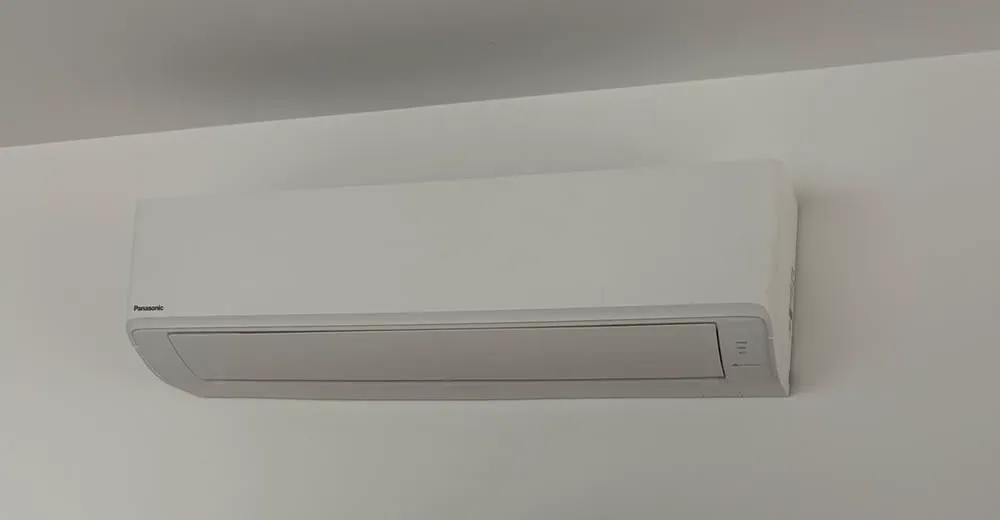
Fixed heating takes the cords, boards and tip-over risk out of the room. Reverse cycle air conditioners move three to five units of heat into a room for each unit of electricity, where a standard electric heater produces about one. The Victorian Government reports CHOICE calculations showing a reverse cycle system costs about a third as much to run as an electric heater in the same space.
If a portable heater has to stay, give it a wall point of its own, or a dedicated circuit in a room where heating runs for long stretches. In bathrooms, a ceiling heat lamp or 3-in-1 unit replaces a portable heater. Gas heaters are serviced by a licensed gasfitter, and Energy Safe Victoria recommends servicing every gas heater at least every two years.
Closing doors to rooms you aren't using and stopping draughts helps any heater do less work. Our guide comparing reverse cycle and gas heating covers the bigger choices.
A quick before-winter check
Run through this in the first cold week of the year, before the heaters go on for the season.
If any of it turns up scorching, a burning smell or a safety switch that won't hold, stop using that item or circuit and have it checked before the cold sets in. If there is smoke, fire or immediate danger, get everyone out.
- Press the test button on each safety switch, as Energy Safe Victoria advises every three months.
- Test smoke alarms, especially in hallways outside bedrooms.
- Check heater cords, plugs, guards and tip-over switches.
- Lay out electric blankets and check them for damage.
- Move heaters off power boards and onto wall points.
- Clean split system filters before the first heating run.
Common questions
Quick answers
- Is it safe to leave the heating on overnight?It depends on the heater.
- Why does my electric heater trip the safety switch?A safety switch trips when it detects electricity leaking to earth, and portable heaters are a common cause.
- Is it safe if my power board or extension lead gets warm?A power board or extension lead should stay at about room temperature.
- Is my old electric blanket safe to use?Possibly, but check it before each winter.
Sources for this guide
8 sources, with the date each was checked
- 1.Bureau of Meteorology: Mean minimum temperature (°C) 14.0 14.4 12.7 10.0 7.8 5.9 5.2 5.7 6.8 8.4 10.3 12.2 9.5 81 1943 2026 Accessed 30 September 2026.
- 2.Fire Rescue Victoria: Across Victoria, in figures compiled by CFA and FRV, there were a total of 21 preventable residential fire fatalities in 2025. This compares to 18 equivalent fatalities in 2024, with the highest number of deaths… Accessed 30 September 2026.
- 3.Country Fire Authority (CFA): “No one thinks a house fire is going to happen to them, but last year CFA responded to 780 residential structure fires. More than 140 of those were caused by electrical equipment including appliances and air… Accessed 30 September 2026.
- 4.Energy Safe Victoria: Don’t use kitchen rangehoods or bathroom exhaust fans at the same time as your heater. It can create a negative pressure environment, drawing carbon monoxide into living spaces. Accessed 30 September 2026.
- 5.Energy Rating (GEMS Regulator / DCCEEW): Reverse cycle air conditioners are much more efficient at heating than standard electric heaters (bar heaters, convection, or radiant heaters). ... During the normal operating range in Australia for every unit of… Accessed 30 September 2026.
- 6.Solar Victoria (updated 28 August 2026): Calculations from Choice found that a reverse-cycle air conditioner is about a third of the cost of an electric heater to run in the same space. Accessed 30 September 2026.
- 7.Energy Safe Victoria: Follow these steps to check your safety switch every three months: Press in the test buttons on each safety switch which will cut the power and trip the switch into the off position. You may hear a clunking sound. If… Accessed 30 September 2026.
- 8.Solar Victoria (updated 20 November 2025): Check the manufacturer’s instructions or manual and have the air conditioner serviced regularly at the recommended frequency to ensure it continues to operate efficiently. Cleaning the filters regularly helps the system… Accessed 30 September 2026.
Planning advice for homeowners. Installation requirements depend on the property and equipment. Where this guide refers to Victorian safety or rental rules, use the linked official guidance for the current requirements.