
Should I put data cabling in a new home if the Wi-Fi is good?
- Yes, cable a new build for data, but target it: the home office, TVs, gaming setups and one or two ceiling access points.
- Mesh Wi-Fi works best when its units are cabled back to the router, so cabling and Wi-Fi work together.
- Before plaster is by far the easiest time to run cable, and spare conduit keeps future options open.
- Plan one central point near where the internet connection enters the house, with power and some airflow.
If the Wi-Fi is good, why cable?
Wi-Fi shares the air with every other device in the house and next door, and it weakens with each wall and floor it passes through. For a phone or laptop that moves around, it is perfect. For a device that never moves and matters, like the work computer or the main TV, a cable gives it a steady connection of its own.
Timing is the real argument. Running cable through an open frame is quick and tidy. After handover, getting cable down the walls of a single-storey home means working in from the roof, and reaching the ground floor of a double-storey home is harder again.
Where cable pays off
Those points cover most of the benefit. Ceiling access points are the quiet achievers: cabled back to the router, they give strong Wi-Fi across the house, and with Power over Ethernet they need no power point on the ceiling.
Mesh units that aren't cabled pass the signal from one unit to the next, which costs speed with each hop. Cabling them back to the router, often called wired backhaul, removes that weak link. Even if you plan to rely on Wi-Fi, a couple of well-placed cables make it noticeably better.
- The home office desk, for video calls that don't drop out.
- Behind the main TV, and any other TV that streams.
- Gaming setups.
- One or two central ceiling spots for Wi-Fi access points or mesh units.
- The garage or meter box wall, if a solar inverter, battery or EV charger may want a network link.
Where it usually isn't worth it
A data point in every bedroom, or two per room, is more than most households use. Kids' rooms and guest rooms tend to run on Wi-Fi, and cable nobody plugs into is money spent for nothing. A spare point or a conduit to a likely future office is a better hedge.
Read the builder's inclusions closely. Where a listed data point actually runs matters as much as where its wall plate sits. Every cable should end at the central point, not at a loose plate in the garage that connects to nothing.
Plan the central point
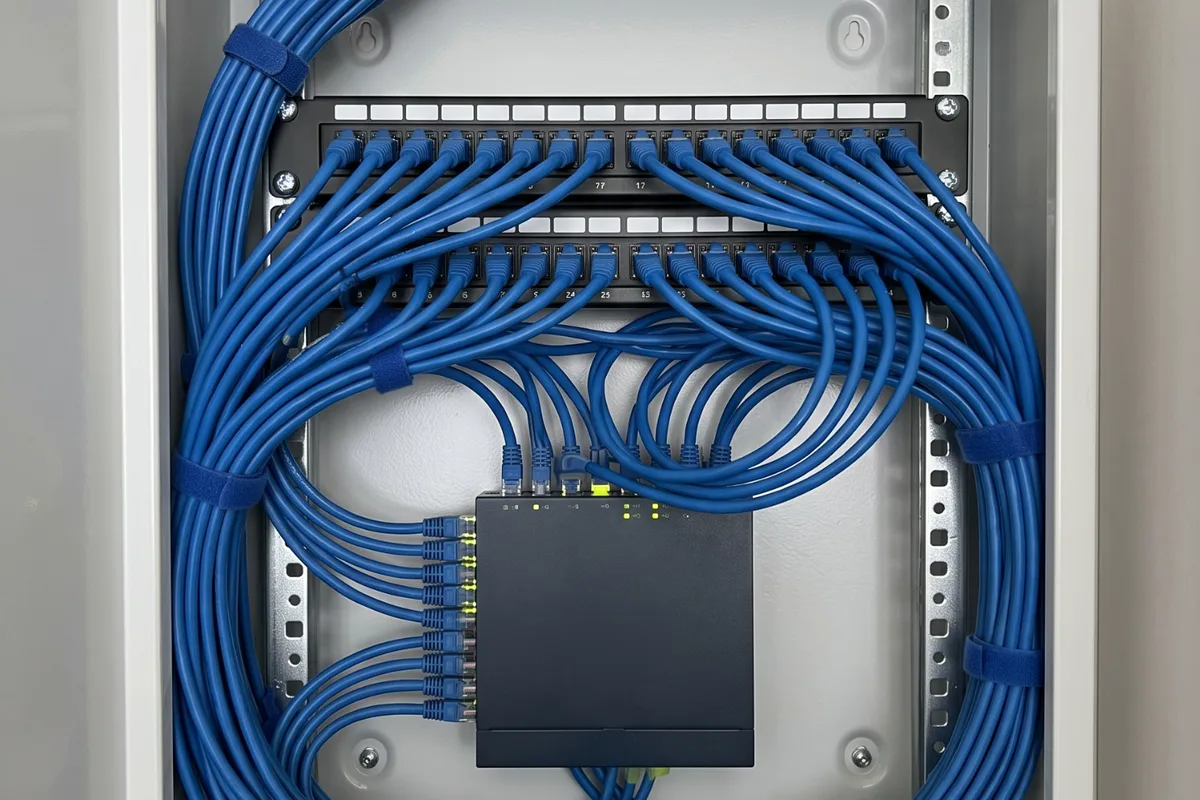
Every cable should run back to one place: a patch panel and network switch near where the internet connection enters the house, often in a cupboard, on a garage wall or in a small cabinet. It needs a power point and some airflow, because the equipment runs warm.
Confirm where the internet connection will come in before the frame goes up, and keep the central point close to it. Cat6 suits nearly every home. Run spare conduit from the central point into the roof so cable can be added later without opening walls.
Data and power cables have to be kept apart inside the wall, and fixed cabling isn't a DIY job. Walk the frame before plaster and photograph every wall, so you know where each cable runs.
New estates in the west, and our view
Wyndham's growth areas, including Tarneit, Truganina and Wyndham Vale, are where much of the west's new housing is planned, so plenty of buyers are signing off electrical plans right now. Builder packages vary, and data is easy to overlook at selections when the focus is on benchtops and flooring.
Our view: for a new build, run cable to the office, the TVs and one or two ceiling access points, add spare conduit, and leave the rest to Wi-Fi. It is a small part of the electrical plan that is hard to add later and easy to get right now.
Questions that come next
Sources for this article
1 source, with the date each was checked
- 1.Victorian Electoral Commission (2023 electoral structure review fact sheet): New housing developments are planned in residential growth areas including Truganina, Tarneit, Wyndham Vale and Manor Lakes, as well as near activity centres and public transport. Accessed 30 September 2026.