
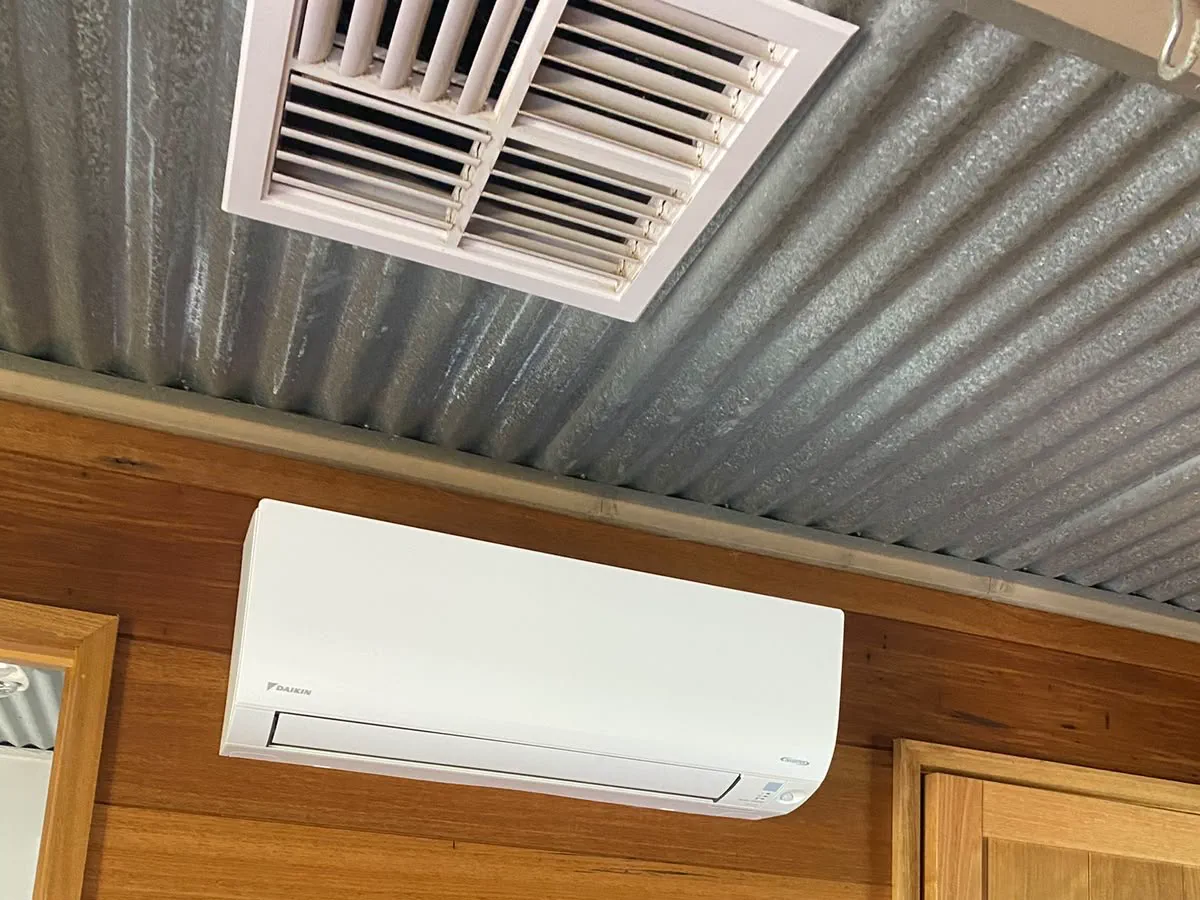
Which type of air conditioning makes most sense in a rental property?
- A reverse-cycle split in the main living area is the simplest way to meet both the heating and cooling standards.
- Separate splits spread the risk: one failure affects one room, not the whole house.
- Ducted suits larger family homes where renters expect whole-house comfort, but a breakdown takes out everything at once.
- Whatever you choose, keep a servicing schedule. A cooling appliance you supplied that stops working is an urgent repair.
Start with what the standards ask for
From 1 March 2027, a rental needs energy-efficient fixed cooling with an outlet in the main living area when a new agreement starts, and from 1 July 2030 every rental needs it. For a non-ducted air conditioner, that means a GEMS cooling rating of 3 stars or more. For a ducted electric system, it means a Total Cooling Seasonal Performance Factor of 3.8 or more, both for the property's climate area.
Heating has a matching definition for replacements after a failure from 1 March 2027: 2 stars or more for non-ducted, or a Heating Seasonal Performance Factor of 3.2 or more for ducted. One reverse-cycle air conditioner can meet both standards. Any of the three system types can comply; the question is which suits the property and the way it's let.
Single splits: simple and contained
A wall split in the living area is the usual answer for a rental with no cooling. It's one indoor head, one outdoor unit and one circuit. If it fails, the living area loses heating and cooling, but the rest of the house carries on, and parts or a replacement are straightforward.
Renters find splits easy to use: one remote, one room. Filters are easy to reach, and the Victorian Government suggests cleaning them about twice a year, which renters can do and agents can check at routine inspections. Adding bedroom splits later is a separate, independent job each time.
Multi-head: one outdoor unit, several rooms
A multi-head system runs several indoor heads from one outdoor unit, which saves space outside on narrow blocks and in townhouses. The trade-off for a rental is concentrated risk. If the outdoor unit fails, every head stops, and one urgent repair now affects the whole house.
Replacing a multi-head system at the end of its life usually means a new outdoor unit and checking every head, so the job is larger than swapping one split. For most rentals, separate splits are easier to live with over the long run.
Ducted: whole-house comfort, bigger stakes
Families looking at four-bedroom homes in Point Cook, Tarneit or Werribee often expect ducted heating and cooling. A zoned ducted reverse-cycle system heats and cools the whole house quietly from one controller, with no heads on the walls.
The stakes are higher. A ducted breakdown takes out the whole house, and replacing the unit is a bigger job. Renters need to know how the zones and controller work, and someone has to clean the return air filter. Ducts in the roof are out of sight, so damage from pests or past trades can go unnoticed until performance drops.
Servicing, repairs and records
A cooling appliance supplied by the rental provider that isn't working is on Consumer Affairs Victoria's urgent repairs list, and the rental provider organises and pays for repairs unless the renter caused the problem. A service booked each spring is the simplest way to avoid a January breakdown.
Keep a simple record for each property: system type, model numbers, install date, service dates and who cleans the filters. It speeds up servicing, helps your agent brief a technician and gives you a basis for deciding repair or replace when the time comes.
- Small house or unit with no cooling: one reverse-cycle split in the living area
- Bedrooms hot on summer nights: add separate bedroom splits over time
- Narrow block with little wall or ground space: multi-head, accepting the shared risk
- Larger family home where whole-house comfort is expected: zoned ducted reverse-cycle
Questions that come next
Sources for this article
7 sources, with the date each was checked
- 1.Consumer Affairs Victoria: From 1 March 2027, rental providers must install an energy-efficient, fixed cooling system with an outlet in the main living area. This applies at the start of a new rental agreement. All rental properties must have… Accessed 30 September 2026.
- 2.Consumer Affairs Victoria: Definition: From 1 March 2027, energy efficient fixed cooling means: (a) a non-portable, non-ducted electric air conditioner or heat pump capable of cooling, with a GEMS 3-star or above cooling rating (for the climate… Accessed 30 September 2026.
- 3.Consumer Affairs Victoria: Definition: From 1 March 2027, ‘energy efficient fixed heater’ means: (a) an electric, non-portable, non-ducted air conditioner or heat pump capable of heating with a 2 star or above Greenhouse and Energy Minimum… Accessed 30 September 2026.
- 4.Consumer Affairs Victoria: Tip: A reverse-cycle air conditioner can satisfy both the heating and cooling standards. Accessed 30 September 2026.
- 5.Department of Energy, Environment and Climate Action (energy.vic.gov.au), page last updated 05/08/26: From 1 March 2027, at the start of a new lease, rental homes must include: energy-efficient cooling in the living area (noting that if evaporative cooling is already installed, it meets the standard) ... By 1 July 2030… Accessed 30 September 2026.
- 6.Solar Victoria (updated 20 November 2025): Check the manufacturer’s instructions or manual and have the air conditioner serviced regularly at the recommended frequency to ensure it continues to operate efficiently. Cleaning the filters regularly helps the system… Accessed 30 September 2026.
- 7.Consumer Affairs Victoria: a cooling appliance or service provided by the rental provider is not working the property does not meet minimum standards a safety-related device, such as a smoke alarm or pool fence, is not working Accessed 30 September 2026.