
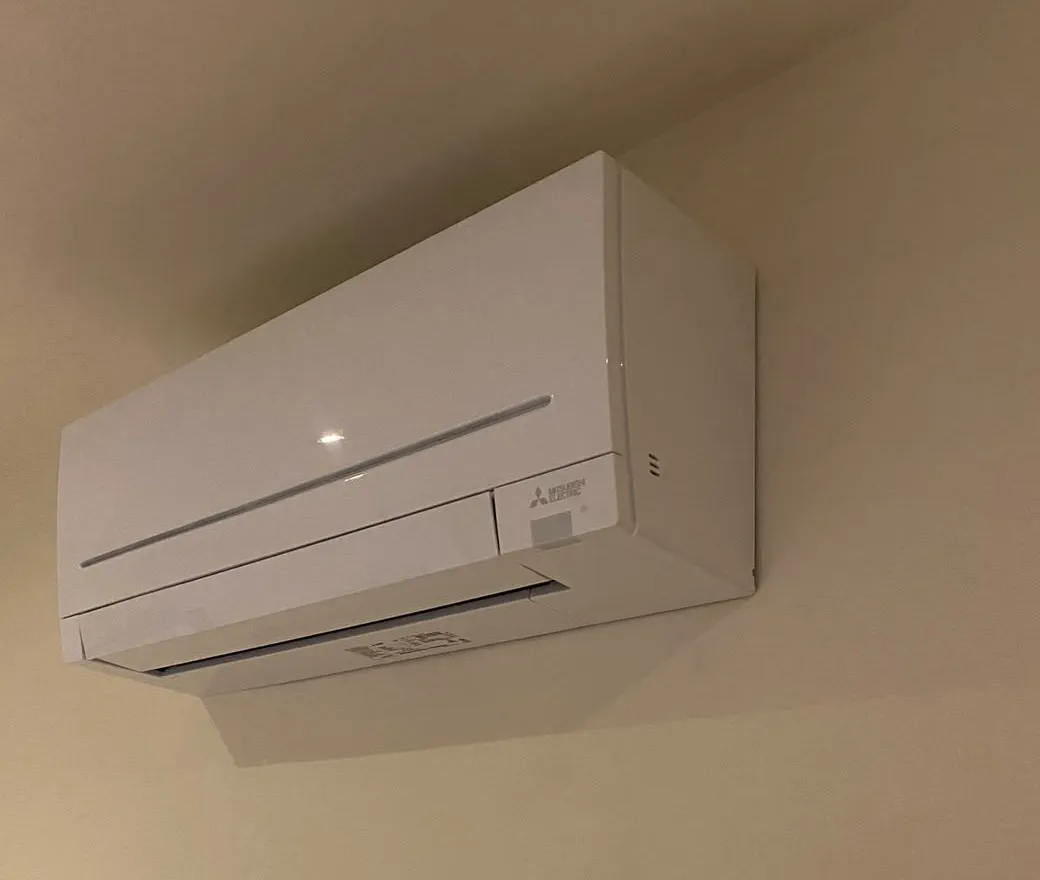
What affects the cost of repairing an air conditioner?
- Finding the fault can take longer than fixing it, especially when it comes and goes.
- Refrigerant work is the biggest variable: the leak has to be found and repaired before any recharge, and topping up first is illegal.
- Parts availability for your model, and how easy the equipment is to reach, can change a repair more than the fault itself.
- Weigh a repair against the system's age, condition and how well it still suits the rooms.
Diagnosis: finding it before fixing it
Every repair starts with working out what's wrong, and that's often the larger part of the time. A unit that shows an error code and fails every time is quicker to diagnose than one that cuts out once a week on hot afternoons. A code tells the technician which protection tripped, not always which part failed, so the circuit, sensors, fans and refrigerant side may all need testing.
You can shorten it. Note the model numbers, any error code or flashing light pattern, when the problem happens and what the weather was doing. Check the filters are clean and the outdoor unit isn't blocked before you book. A clear history means less time spent recreating the fault.
Parts and availability
A sensor or fan motor for a common model is usually easy to get. A control board for an older or less common unit may have to be ordered from the manufacturer, or may no longer be made, which affects both the price and how long the system is out of action. Ask whether the part is confirmed before approving the repair.
Some symptoms have more than one possible cause. A good quote says what the repair will fix, which parts are confirmed and what happens if testing after the repair turns up something else.
Refrigerant work
Refrigerant runs in a sealed circuit and isn't used up, so a system that's low has a leak. No-one is allowed to top up a system until it has been fully tested and every identified leak repaired. A proper repair means finding the leak, recovering what's left, fixing it, pressure testing, vacuuming and recharging to specification, which is far more work than a top-up.
The type of gas matters too. It's an offence to charge a system with a refrigerant of higher global warming potential than the one it was designed for, so the refrigerant has to suit the system. Australia's HFC phase-down doesn't require anyone to replace existing equipment, but it's worth asking about when an older unit needs major refrigerant work.
Anyone working on the refrigerant side needs a Refrigerant Handling Licence, and a refrigeration mechanic's restricted electrical licence only covers like-for-like disconnection and reconnection. Any new wiring needs a licensed electrician, so a repair that needs both trades on separate visits takes longer to complete.
Access, system type and age
Where the equipment sits changes the job. A wall split at head height with the outdoor unit on the ground is the simple case. An outdoor unit on a second-storey wall or roof, an indoor unit above a staircase, or a ducted unit in a tight roof space means extra time, ladders or access gear.
System type matters as well. A ducted system has a wall controller, zone motors, a long refrigerant run and an indoor unit in the roof. A multi-head shares one outdoor unit between several rooms, so a fault there affects every head. Both usually take longer to diagnose than a single wall split.
Weighing repair against replacement
A modest repair on an otherwise sound system is usually worth doing. A compressor or coil failure on an ageing unit is a closer call. The Victorian Government says a reverse-cycle system more than 15 years old will typically use more than three times the energy of a modern one, so running costs belong in the comparison alongside the repair price.
Leaving faults alone costs money too: federal bench tests found common faults in air conditioning equipment caused average energy losses of 14% to 20% in most tests. Put the repair, the system's condition, parts availability and any comfort problems it never solved beside a replacement scope. Ask for the repair price before any work starts, and ask plainly whether replacement looks like the better spend.
Questions that come next
Sources for this article
8 sources, with the date each was checked
- 1.Australian Refrigeration Council (ARC), Fact Sheet 13 (ARC5225, 11/22): ‘Topping-up’ a system before the system has been fully tested and all identified leaks repaired by any individual is illegal. Accessed 30 September 2026.
- 2.Department of Climate Change, Energy, the Environment and Water (DCCEEW): You cannot charge refrigeration and air conditioning equipment with a higher global warming potential (GWP) refrigerant than the equipment was designed to use (the design refrigerant). To do so is an offence under the… Accessed 30 September 2026.
- 3.Department of Climate Change, Energy, the Environment and Water (DCCEEW): Australia’s HFC phase-down started on 1 January 2018. The HFC phase-down is a gradual reduction in the total amount of HFCs allowed into Australia. The amount will be reduced to 15% of baseline level by 1 January 2036… Accessed 30 September 2026.
- 4.Australian Refrigeration Council (ARC): A Refrigerant Handling Licence must be held by any person who carries out work in relation to refrigeration and air conditioning (RAC) equipment. Carrying out work in relation to RAC equipment means to do anything with… Accessed 30 September 2026.
- 5.Energy Safe Victoria: This licence type only allows the disconnection and reconnection of ‘like for like’ equipment, for the purposes of repair, replacement or maintenance. The Restricted Electrical Worker’s licence does not allow a person… Accessed 30 September 2026.
- 6.Solar Victoria (updated 2 October 2025): A system that is more than 15 years old for example will typically use more than three times the amount of energy than a modern reverse-cycle air conditioner. Accessed 30 September 2026.
- 7.energy.gov.au (Australian Government, DCCEEW): The findings indicated that on average there were energy losses between 14% and 20% across most tests. When several faults co-existed, energy use increased substantially, with a high likelihood of system failure if… Accessed 30 September 2026.
- 8.Consumer Affairs Victoria: The rental provider must organise and pay for all repairs if they are not the renter’s fault. Accessed 30 September 2026.