
The key points
- Load management doesn't add capacity. It shares the supply you already have by slowing or pausing a flexible load while the rest of the house is busy.
- It suits loads that can wait, such as EV charging, not the oven or the heating you want right now.
- A sensor on the incoming supply is the heart of it. Ask what the device does if that sensor or its connection drops out.
- If the main switch trips with nothing flexible running, the supply itself is the problem, and load management won't fix it.
- Check the setup against the loads you'll add over the next few years, especially if the home is going all-electric.
What load management actually does
Every home has a limit on how much current it can draw at once, set by the consumer mains, the main switch and the network connection. Most of the day the house uses a fraction of it. The pinch comes when several big loads overlap: oven on, heating running, hot water heating, dryer going and the car plugged in.
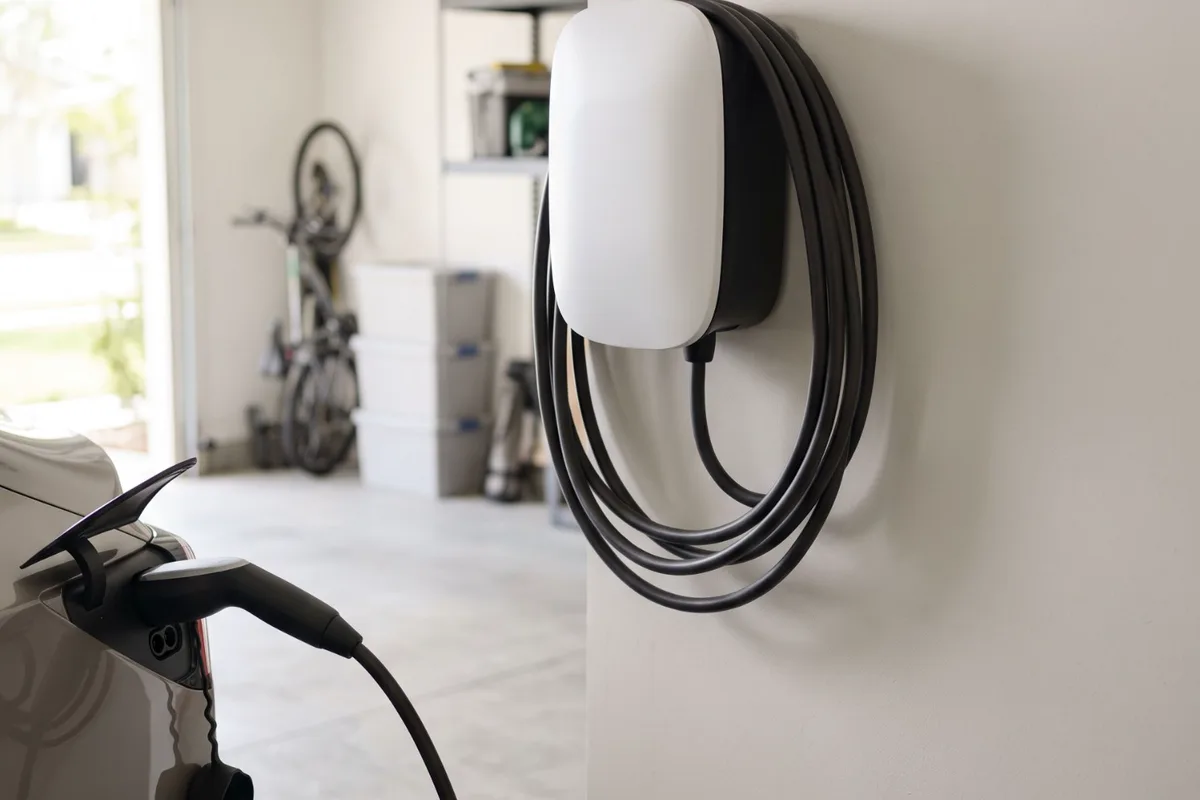
Load management is a way of sharing that limit. A current sensor measures what the whole house is drawing at the incoming supply. When the total approaches a set ceiling, a controlled device, most often an EV charger, turns its own demand down or pauses. As other loads drop away, it ramps back up.
The car still charges fully overnight. It just doesn't charge at full rate during the hour you're cooking dinner. On a modest supply, that can be what makes a wall charger workable without touching the connection.
The sensor, the ceiling and the controlled load
The sensor is usually a clamp around the incoming cable at the switchboard or meter box, linked by cable or wirelessly to the charger or controller. Because it sits beside the main conductors, fitting it is part of the licensed electrical work.
The ceiling is a setting, chosen from the main switch rating, the mains and how the house runs. Set it too high and the main switch can still trip on a busy evening. Set it too low and the car charges slowly for no reason. Getting it right is part of commissioning, not a factory default left in place.
Ask what happens when the sensor reading is lost, such as a Wi-Fi dropout or a failed link. A well-designed setup falls back to a low rate or pauses, rather than charging at full power with no idea what the house is doing.
Which loads can be managed, and which can't
The best candidates are loads that store energy or can wait. EV charging is the obvious one. Hot water that heats a tank can often be moved to a timer or off-peak period, and pool or spa equipment can usually run later. Some chargers can also follow your solar, using power the house isn't.
Loads that need to run when you switch them on make poor candidates. Nobody wants the cooktop throttled mid-stir-fry or the heating cut on a still July night. Those loads stay as they are, and the managed loads fit around them.
- Good fit: EV chargers that accept a supply sensor
- Often workable by timer or controller: hot water storage tanks, pool and spa equipment
- Usually left alone: ovens, cooktops, heating and cooling, kettles and dryers
- Worth checking: whether your devices can share a limit, or need a separate controller
Load management, bigger mains or three-phase
Load management, a heavier single-phase supply and three-phase all solve the same problem from different ends. Load management changes when power is used. A consumer mains upgrade raises the limit on one phase. Three-phase spreads the house across three phases and suits large loads that run together.
If one flexible load, usually the car, is what tips the house over, load management is often the neatest answer. If the main switch trips with nothing flexible running, or you're adding several big loads at once, the supply is the issue. Three-phase makes sense for a large ducted system, two EV chargers or a higher-rate charger, a workshop with three-phase machines, or an all-electric home where heating, cooking and hot water overlap in the evening.
Consumer mains, meter box and main switchboard work is prescribed in Victoria, so a Licensed Electrical Inspector checks it before it can be switched on, and any change to the connection goes through your distributor. Load management avoids that process, which is part of its appeal, but only when it genuinely covers the shortfall.
Why it matters more in an all-electric home
Under Victoria's Building and Plumbing Amendment Regulations 2025, all new homes must be built all-electric from 1 January 2027, and from 1 March 2027 gas hot water in existing homes must be replaced with an electric alternative when it reaches the end of its life. Each change moves another load onto the switchboard.
The tightest hour in most homes in Melbourne's west is a winter weeknight. July is the coldest month at Laverton, with a mean minimum of 5.2 °C, and that's when heating, cooking, hot water and a car plugged in after work all pull at once. Load management is built for exactly that overlap: the car waits an hour, and the house carries on.
Older post-war homes can have small mains and an original board, so the limit arrives sooner. Newer homes in growth estates tend to have more headroom, but a second EV or a larger ducted system can still use it up.
Setting it up so it actually works
Start with the numbers: the main switch rating, the mains size and a picture of what runs together on your busiest evening. Interval data from your smart meter, if your retailer or distributor provides it, can show the peaks. From there we set the ceiling, place the sensor and test it with real loads running, not just the car.
Revisit the settings after any change to the house. A new split system, induction cooktop or hot water unit shifts the evening peak, and a ceiling set two years ago may no longer fit.
- Main switch rating and a photo of the switchboard
- Charger make and model, and whether it supports a supply sensor
- What runs on a busy evening: heating, oven, hot water, dryer
- Big loads planned over the next few years
- Whether you have solar, and whether you want the car to follow it
Common questions
Quick answers
- What photos help with an electrical enquiry?Three or four clear photos usually do it: the switchboard with its door open and every cover left in place, a wider shot of where the job is, and any appliance or…
- Why do my lights dim when the air conditioner or fridge starts?A brief dip as a motor starts is common.
- What do the numbers and letters on my circuit breakers mean?The number is the breaker's rating in amps: the current it can carry continuously without tripping.
- Why does my main switch trip?Many main switches are only isolators and can't trip on their own.
Sources for this guide
5 sources, with the date each was checked
- 1.Department of Transport and Planning (Victoria): Victoria’s new Building and Plumbing Amendment Regulations 2025 have been finalised, advancing Victoria’s shift toward all-electric buildings. From 1 January 2027, all new homes and most new commercial buildings will be… Accessed 30 September 2026.
- 2.Bureau of Meteorology: Mean minimum temperature (°C) 14.0 14.4 12.7 10.0 7.8 5.9 5.2 5.7 6.8 8.4 10.3 12.2 9.5 81 1943 2026 Accessed 30 September 2026.
- 3.Energy Safe Victoria: 'Prescribed' certificates are for electrical installation work that requires inspection by a Licensed Electrical inspector. This includes (but is not limited to): Consumer mains cables, main switchboard, meter box and… Accessed 30 September 2026.
- 4.Energy Safe Victoria: Gas and electricity are inherently dangerous and it’s illegal and potentially fatal for unlicensed and unqualified people to undertake any electrical or gasfitting work. Homeowners and consumers must always use… Accessed 30 September 2026.
- 5.Energy Safe Victoria: Whenever a licensed electrician completes any electrical installation work, they must provide a Certificate of Electrical Safety (COES). Accessed 30 September 2026.
Planning advice for homeowners. Installation requirements depend on the property and equipment. Where this guide refers to Victorian safety or rental rules, use the linked official guidance for the current requirements.