
The key points
- Most homes run on single-phase power. Three-phase makes sense when several big loads run at the same time.
- Large ducted systems, two EVs or a 22 kW charger, workshops with three-phase machines and heavy all-electric renovations are the usual triggers.
- A heavier single-phase supply or load management can sometimes do the job with less disruption.
- Changing to three-phase is prescribed work: new mains, a three-phase meter from the distributor and a new board, inspected before switch-on.
- Your distributor decides whether three-phase is available at your property, so confirm it before buying three-phase equipment.
What the difference actually is
Single-phase power arrives on one active conductor and a neutral. Three-phase arrives on three actives and a neutral, giving the house three supplies to share the load across. Most household appliances run on single phase either way; in a three-phase home each circuit connects to one of the three phases, and only equipment built for three-phase uses all three.
The benefit is capacity. A single-phase supply limits how much current the house can draw at once, set by the connection, the consumer mains and the main switch. Three phases spread big loads so they aren't all on one conductor, which is why three-phase suits homes where several heavy appliances run together.
Three-phase doesn't make an appliance use more or less energy. Your bill depends on what you use and your plan, though supply charges can differ for a three-phase connection, so check with your retailer.
When three-phase makes sense
Three-phase earns its place when large loads overlap. A big ducted reverse cycle system running on a cold July evening, alongside an induction cooktop, a heat pump water heater and an EV charger, is the classic example. So is a household with two EVs charging overnight, or one wanting a 22 kW charger, which needs three-phase.
Workshops are another. Some welders, compressors and machines are made for three-phase, and once the house has it, a three-phase submain can run to a shed sub-board. A major renovation or rebuild going all-electric is also a natural point to decide, because the board and mains may be changing anyway.
On newer estates in Tarneit, Truganina and Point Cook, plenty of homes now combine ducted air, induction and an EV. In older brick veneers around Altona and Laverton, the original supply may already be stretched by what the house runs today. Both are worth a load check before another big appliance goes in.
- A large ducted reverse cycle system.
- Two EVs, or a 22 kW charger.
- Workshop machines built for three-phase.
- An all-electric renovation with heavy evening loads.
The alternatives worth checking first
Three-phase isn't the only answer to a stretched supply. A heavier single-phase supply, with larger consumer mains and a bigger main switch on the existing connection, can carry a home adding a split system or two and an induction cooktop. It needs distributor approval, but it's a smaller job than changing phases.
Load management is the other tool. A sensor on the incoming supply measures what the house is drawing, and a compatible EV charger backs off when the oven, heating and hot water are all on, then picks up as the load drops. On a modest supply it's often what makes a wall charger workable without touching the connection.
It has limits. It can only control equipment built to respond, it slows charging on busy evenings, and it's worth asking what happens if the sensor or Wi-Fi drops out. If the planned loads can't be managed down far enough, three-phase gives the headroom instead.
How to decide: a load assessment
The decision should come from numbers, not a hunch. An electrician looks at the existing supply, mains and switchboard, then lists the big appliances you have and plan to add, their size and which ones run together. Evening is usually the peak, with heating or cooling, cooking, hot water and car charging overlapping.
Bring the details. Air conditioner capacities, cooktop and oven models, the hot water system, the EV's onboard charger rating and any workshop equipment all change the answer. An EV only charges faster on three-phase if its onboard charger can accept the extra power, and plenty of cars can't take a three-phase charger's full output.
Look a few years ahead. If a ducted system and a second EV are likely soon, changing the supply once is less disruptive than doing it twice.
- Recent electricity bills or usage data.
- Model numbers for air conditioning, cooking and hot water.
- The EV's onboard AC charging limit.
- Planned additions over the next few years.
What changing to three-phase involves
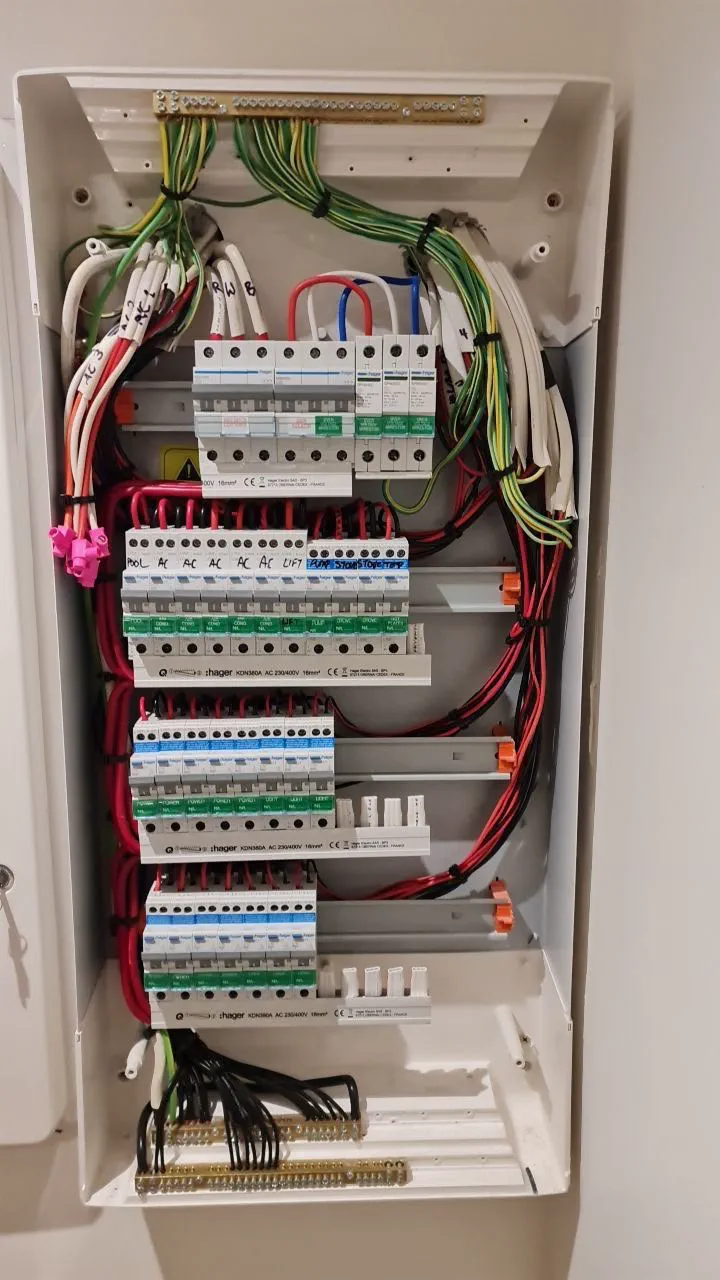
Your distributor decides whether three-phase is available at your property and on what terms, so availability is confirmed before you commit. On your side, four-core consumer mains replace the single-phase cable, the meter box is set up for a three-phase meter, and the switchboard gets a three-phase main switch, with existing circuits spread across the phases to balance the load.
Energy Safe Victoria counts consumer mains, the main switchboard, the meter box and the main earthing system as prescribed work. It's inspected by a Licensed Electrical Inspector and can't be switched on or left on until then, so changeover day means a planned outage.
In Powercor's area, a request to change from single to three-phase can only be submitted by a registered electrical contractor, and Powercor says all such works need a Certificate of Electrical Safety. The distributor fits the new meter on its own booking, so part of the timeline sits with them.
Three-phase and EV charging
Most homes charge on single phase, and a 7 kW class wall charger on its own circuit suits a single-phase home where the supply and board have room. Three-phase opens up higher-capacity chargers, which only help if the car can accept the extra power.
For two EVs, the choice is usually three-phase with two chargers, or single phase with load management sharing capacity between the cars and the house. Overnight charging gives plenty of hours to work with, so a managed single-phase setup suits many two-EV households. Heavy daily driving plus a large ducted system pushes the decision towards three-phase.
Timing it with other work
The best time to change supply is when the switchboard or mains are changing anyway: replacing an old fuse board, a renovation or extension, or a ducted installation. That means one shutdown and one inspection, with the phases balanced for the new loads from the start.
Don't buy three-phase equipment before the supply is confirmed. Get the load assessment, confirm availability with the distributor, then order the ducted unit or charger to suit.
Common questions
Quick answers
- A power line to my house is down or sagging. What should I do?Stay well away and keep everyone else clear.
- Who trims trees near the power line to my house?It depends whose tree and whose line.
- Why do my lights flicker on windy days?If your lights flicker when the wind blows, the overhead line to your house is the first suspect.
- Is my meter box the same as my switchboard?Not quite, though they are often in the same place.
Sources for this guide
3 sources, with the date each was checked
- 1.Energy Safe Victoria: 'Prescribed' certificates are for electrical installation work that requires inspection by a Licensed Electrical inspector. This includes (but is not limited to): Consumer mains cables, main switchboard, meter box and… Accessed 30 September 2026.
- 2.Energy Safe Victoria: A prescribed certificate is for all major electrical wiring work in all types of premises. In a domestic property this covers all work done on wiring and equipment where the electricity cannot be switched off. This… Accessed 30 September 2026.
- 3.Bureau of Meteorology: Mean minimum temperature (°C) 14.0 14.4 12.7 10.0 7.8 5.9 5.2 5.7 6.8 8.4 10.3 12.2 9.5 81 1943 2026 Accessed 30 September 2026.
Planning advice for homeowners. Installation requirements depend on the property and equipment. Where this guide refers to Victorian safety or rental rules, use the linked official guidance for the current requirements.