
The key points
- Start with the vehicle and your normal charging window.
- The cable route and switchboard can affect cost more than expected.
- Check compatibility before assuming solar or smart features will work.
Write down your real charging needs
List the vehicle, typical daily distance and the hours it is parked at home. A car that sits overnight has a different charging window from a vehicle returning between shifts. Include whether a second EV is likely in the next few years.
Ask how the proposed charger works with the vehicle’s AC charging capability and your available supply. The number printed on the charger does not guarantee that the car and installation can use all of it. A useful proposal explains the limiting factors clearly.
Choose the mounting position with the car present
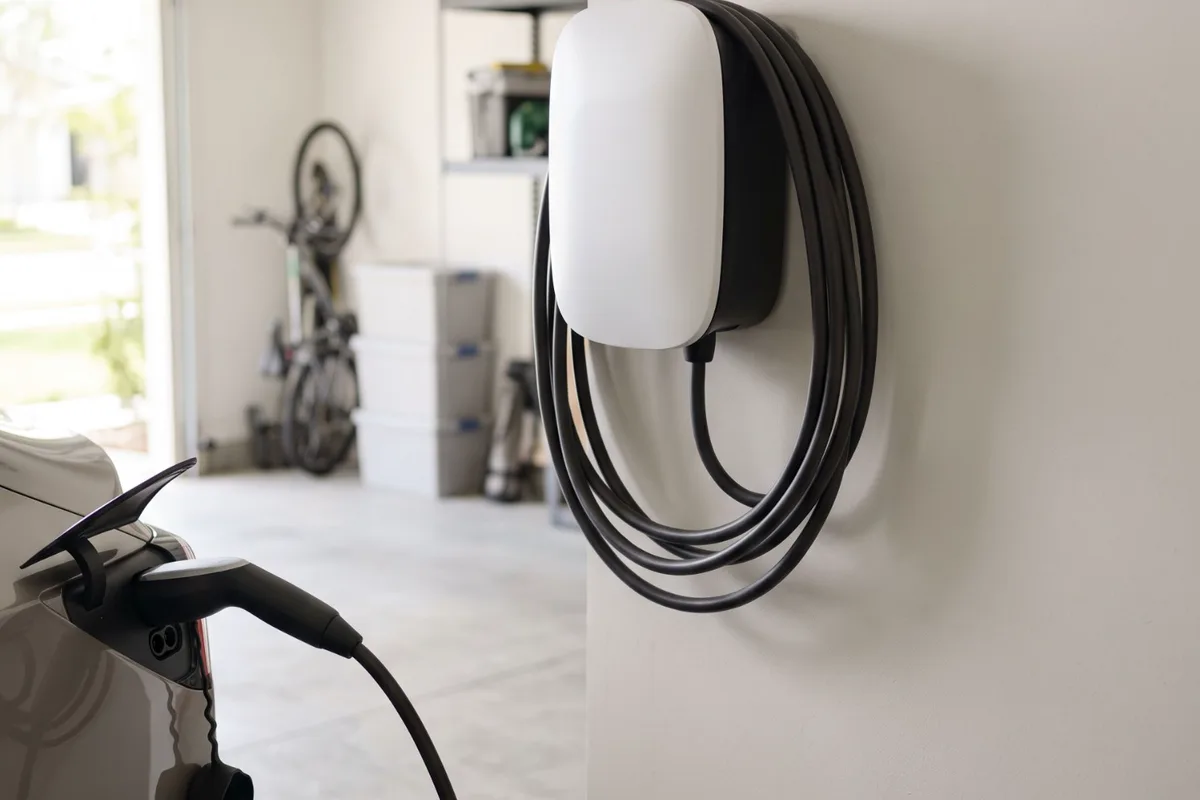
Mark the usual parking position and note where the vehicle’s charge port sits. Think about opening doors, pedestrian routes, garage storage and the length of cable needed without creating a trip hazard. An outdoor location also needs a product and mounting arrangement suitable for exposure.
If the board is at the opposite end of the house or the garage is detached, discuss the cable route early. Trenching, concrete paths, finished walls and shared property can change the scope well before the charger is mounted.
- Vehicle model and charge-port location.
- Photos of the parking area and switchboard front.
- Approximate distance and obstacles between them.
- Any owner, landlord or owners-corporation approvals needed.
Assess the supply alongside other appliances
Give the electrician a list of major equipment, including electric cooking, air conditioning, hot water and other planned upgrades. A capacity assessment should consider the installation as a whole, not just whether another protective device will fit.
Load management may be relevant where compatible equipment can adjust charging alongside household demand. Ask exactly what is being measured and controlled, what extra hardware is included and what happens if communications fail. The design needs to suit the actual charger and installation.
Separate useful features from assumptions
Scheduling, solar-aware charging, remote monitoring and access controls are not identical across products. Check whether your preferred feature needs an app, internet connection, additional metering or an ongoing subscription. Ask which functions continue to work if the internet is unavailable.
If you already have solar or a battery, share the model and monitoring information. Do not assume that two products advertised as smart will communicate with one another. Keep a written record of the promised integration and who configures it.
Compare the installed price and handover
A complete quote identifies the charger, cable route, protection, mounting, any load management and electrical testing. It should make exclusions such as trench reinstatement or painting visible. Agree the power interruption and access arrangements before installation.
Keep the installation paperwork with the charger model and warranty. Ask for a practical demonstration with the vehicle, plus an explanation of schedules, isolation and fault notifications.
Quick answers
- What photos help with an electrical enquiry?Three or four clear photos usually do it: the switchboard with its door open and every cover left in place, a wider shot of where the job is, and any appliance or…
- What is the switch next to my outdoor unit for?It's an isolating switch that cuts all power to the air conditioner, so a technician can work on the system safely without relying on the switchboard.
- Why does my electric heater trip the safety switch?A safety switch trips when it detects electricity leaking to earth, and portable heaters are a common cause.
- How many appliances can I plug into one power board?It's the total load that counts, not the number of sockets.
Planning advice for homeowners. Installation requirements depend on the property and equipment. Where this guide refers to Victorian safety or rental rules, use the linked official guidance for the current requirements.