
Is my old gas wall or space heater safe to keep using?
- Energy Safe Victoria says open-flued gas heaters can spill carbon monoxide more easily than other types, which makes them more dangerous.
- Since 1 August 2022, old open-flued space heaters without safety shutdown features can't be sold in Victoria, including second-hand.
- Energy Safe Victoria recommends servicing gas heaters at least every two years by a qualified gasfitter, including a carbon monoxide test.
- A changed flame, new draught sealing or exhaust fans near the heater are reasons to have it checked.
- If the heater is old, unserviced or needs major repairs, reverse-cycle is often the better long-term choice.
What makes an older heater riskier
Gas space heaters come in a few types. Room-sealed heaters take combustion air from outside and send the products back out through a sealed flue. Open-flued heaters take the air they burn from the room and rely on a flue and natural draught to carry the products away. Many older wall furnaces and inbuilt heaters in Melbourne homes are open-flued.
Energy Safe Victoria says open-flued gas heaters can spill carbon monoxide more easily than other types, which makes them more dangerous. If the flue is blocked, the heater is poorly maintained or the room is under negative pressure, combustion products can come back into the room. Its 'Be Sure' campaign warns that all gas heaters can spill carbon monoxide, a gas you can't see or smell.
Victoria's Department of Health lists possible symptoms of carbon monoxide exposure including tiredness, headaches, dizziness, nausea, shortness of breath and confusion. If people feel unwell when the heater is on and better away from it, turn it off, get everyone into fresh air and get medical advice.
Why some heaters can no longer be sold
From 1 August 2022, Energy Safe Victoria banned the sale of old, unsafe open-flued gas space heaters, meaning those without safety shutdown features. The ban includes second-hand heaters. If you're not sure whether your heater has safety shutdown features, a gasfitter can tell you at the next service.
If you're buying a house or moving into one with an older wall heater, find out its service history. A heater nobody has serviced for years should be checked before the first cold night. In rentals, providers who entered a new agreement after 29 March 2021 must have a licensed or registered gasfitter carry out a gas safety check every two years.
What a proper service covers
Energy Safe Victoria recommends that all gas heaters be serviced at least every two years by a qualified gasfitter, including testing for carbon monoxide leakage. It says a service should include a visual inspection of the appliance and flue, a negative pressure and combustion spillage test, internal cleaning, repair or replacement of parts, and running the appliance to confirm it works safely.
Gas heater servicing is done by a gasfitter licensed for Type A appliance servicing, not by an electrician. Ask the gasfitter to explain the results, including how the negative pressure test was done with exhaust fans and the rangehood running, and keep the report with the heater's details. Energy Safe Victoria says a carbon monoxide alarm helps but should never replace regular servicing.
Signs your heater needs checking now
Energy Safe Victoria advises watching for changes in how a gas heater runs, such as a change in flame colour. If anything changes, a qualified gasfitter should inspect it and check for carbon monoxide leakage, and Energy Safe Victoria suggests considering replacement if a heater is old or hasn't been serviced for several years. Until it's checked, leave it off.
Changes to the house matter too. Energy Safe Victoria advises against running kitchen rangehoods or bathroom exhaust fans while a gas heater is on, because the negative pressure can draw carbon monoxide into living spaces. It also warns that renovating or draught-sealing a home with an open-flued heater may change the ventilation the heater needs.
- The flame has changed colour or shape
- Soot or staining on the heater, the wall above it or the flue
- A smell or stuffy air when the heater runs
- The pilot keeps going out, or the heater shuts down by itself
- No service record, or no service for several years
When reverse-cycle makes more sense
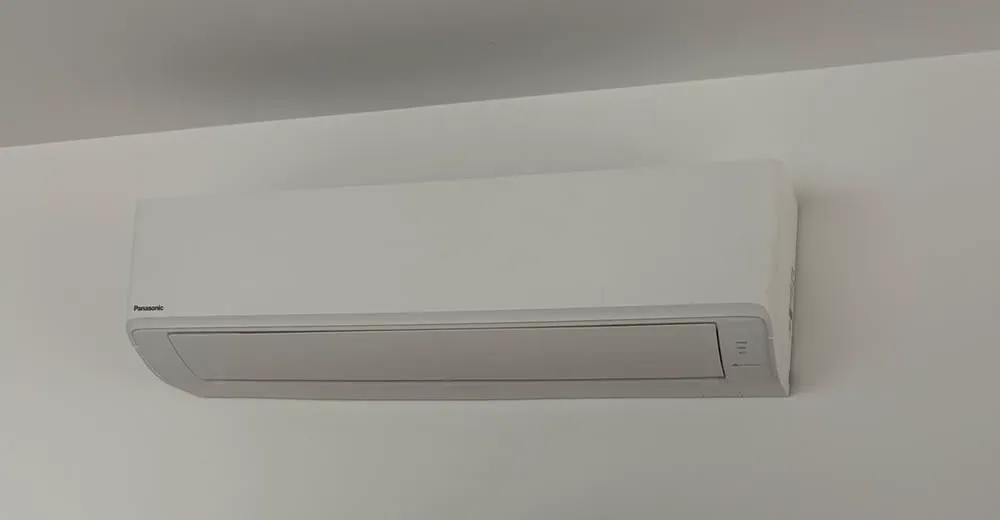
If the heater is old, unserviced, has failed a service or needs major parts, replacing it is often the better call. A reverse-cycle air conditioner is a heat pump: it moves heat from the outside air into the room, delivering three to five units of heat for each unit of electricity, with no flue and no combustion inside the house. It cools in summer as well.
Switching involves more than one appliance swap. A licensed gasfitter disconnects and caps the old heater, the split system is sized for the room, and an electrician runs a circuit from the switchboard with a lockable isolator beside the outdoor unit. Owner-occupiers aren't required to switch gas space heating to electric, but in rentals, from 1 March 2027 a heater that breaks and can't be repaired must be replaced with an efficient electric reverse-cycle air conditioner in the main living area.
Questions that come next
Sources for this article
10 sources, with the date each was checked
- 1.Energy Safe Victoria: Open-flued heaters can spill carbon monoxide more easily than other types of heaters, making them more dangerous. Accessed 30 September 2026.
- 2.Energy Safe Victoria: All gas heaters can spill carbon monoxide (CO) – a gas you can’t see or smell that can make you seriously unwell or kill you. Accessed 30 September 2026.
- 3.Department of Health (Victoria): When carbon monoxide is inhaled, it replaces oxygen in the blood, which may cause symptoms including tiredness, shortness of breath, headaches, dizziness, nausea, weakness, confusion or chest pain. Accessed 30 September 2026.
- 4.Consumer Affairs Victoria: Rental providers who enter into a new agreement after 29 March 2021, must have gas safety checks conducted every 2 years by a licensed or registered gasfitter. Accessed 30 September 2026.
- 5.Energy Safe Victoria: A service should include: carrying out a visual inspection of the appliance and flue system, conducting a negative pressure and combustion spillage test (CO test), internal cleaning, the repair or replacement of parts… Accessed 30 September 2026.
- 6.Building and Plumbing Commission: The gasfitter doing the servicing work must be registered or licensed in the specialised class of Type A appliance servicing. Accessed 30 September 2026.
- 7.YourHome (Australian Government): A reverse cycle air-conditioner is a type of heat pump that uses electricity to warm your home in winter and cool it in summer (refer to Heat pumps below). In heating mode, the system absorbs heat from the outside air… Accessed 30 September 2026.
- 8.Energy Rating (GEMS Regulator / DCCEEW): Reverse cycle air conditioners are much more efficient at heating than standard electric heaters (bar heaters, convection, or radiant heaters). ... During the normal operating range in Australia for every unit of… Accessed 30 September 2026.
- 9.Access Canberra Electrical Inspections (ACT Government), Electrical Fact Sheet, updated September 2019: Air-conditioning and heat pump systems incorporating a compressor shall be provided with an isolating switch (lockable) in accordance with Clause 2.3.2.2, installed adjacent to but not on the unit, which isolates all… Accessed 30 September 2026.
- 10.Department of Energy, Environment and Climate Action (Victoria): From 1 March 2027, if a gas hot water appliance breaks and cannot be repaired, it must be replaced with an electric alternative. No requirement to upgrade gas space heating or stovetop gas cooking to electric, however… Accessed 30 September 2026.