
The key points
- Carbon monoxide has no colour or smell, and any gas heater can spill it if it's faulty, blocked or starved of air.
- Headaches, dizziness, nausea and tiredness that ease when you leave the house are a warning sign, especially if several people feel them.
- Running exhaust fans or a rangehood while a gas heater is on can draw carbon monoxide into living areas.
- Draught sealing or renovating around an open-flued heater can trap carbon monoxide inside, so get a gasfitter's advice first.
- A CO alarm is a backstop. It doesn't replace a service at least every two years by a qualified gasfitter.
What carbon monoxide is and where it comes from
Carbon monoxide (CO) is a gas produced when fuel burns without enough oxygen. A well-adjusted gas heater with a sound flue sends its combustion products outside. A heater that's dirty, damaged, poorly adjusted or short of air can produce more CO, and a blocked or damaged flue or a cracked heat exchanger can let it into the house.
Energy Safe Victoria's 'Be Sure' campaign warns that all gas heaters can spill carbon monoxide. You can't see it or smell it, and it can make you seriously unwell or kill you. Nothing about the flame or the smell of the room tells you it's there.
Never bring outdoor gas heaters, barbecues or generators inside, or run a car in a garage attached to the house. They produce CO too.
Which heaters carry the most risk
Gas space heaters come in three broad kinds. Room-sealed heaters draw combustion air from outside and send exhaust straight back out, so the room's air isn't part of the burning. Open-flued heaters take combustion air from the room and rely on a flue to carry the exhaust up and away. Flueless heaters release their exhaust into the room.
Energy Safe Victoria says open-flued gas heaters can spill carbon monoxide more easily than other types, which makes them more dangerous. Since 1 August 2022 it has banned the sale of old, unsafe open-flued gas space heaters without safety shutdown features, second-hand ones included.
Gas ducted heaters have their own risk point: the heat exchanger. If it cracks, combustion gases can enter the air blown to every room, which is why a ducted heater service includes a CO test at the outlets.
Symptoms to know
Victoria's Department of Health says inhaled carbon monoxide replaces oxygen in the blood. Possible symptoms include tiredness, shortness of breath, headaches, dizziness, nausea, weakness, confusion and chest pain.
They're easy to mistake for a winter virus. Clues that point to CO: symptoms that start when the heater is on and ease when you go outside or leave the house, several people or pets affected at once, and symptoms worst in the room with the heater.
If you suspect carbon monoxide, switch the heater off if it's safe to do so, open doors and windows, get everyone outside into fresh air and get medical advice for anyone who feels unwell. If there is smoke, fire or immediate danger, get everyone out. Don't use the heater again until a licensed gasfitter has checked it.
Why exhaust fans can make it worse
An open-flued heater relies on its flue drawing exhaust up and out. Rangehoods, bathroom and laundry exhaust fans and vented clothes dryers all push air out of the house. If more air leaves than can get in, the house is under negative pressure, and the easiest path for replacement air can be straight down the heater's flue, bringing the exhaust with it.
Energy Safe Victoria advises against running kitchen rangehoods or bathroom exhaust fans while a gas heater is on, because doing so can create negative pressure that draws carbon monoxide into living spaces.
Powerful new rangehoods are a common renovation upgrade. If you have an open-flued gas heater, tell your gasfitter about any new extraction and get their advice before running the two together.
Draught sealing and renovations
Older homes in suburbs like Altona, Laverton and Hoppers Crossing often have permanent wall vents and draughty windows, and some of those vents are there to give gas appliances air. Sealing them helps comfort, but not before the heating has been checked.
Energy Safe Victoria warns that renovating or weather-sealing a home that still has an open-flued gas heater may change the ventilation needed to clear carbon monoxide from the heater, which could trap dangerous CO inside. Have a licensed gasfitter assess the heater and its ventilation before draught-proofing, replacing windows or closing up vents.
Victoria's coming rental draughtproofing standard, due to apply from 1 July 2027, builds in the same caution: a rental with gas appliances will need a gas safety check before draughtproofing starts, and if the check finds unflued or open-flued appliances, the draughtproofing must not go ahead.
What a proper service does
Energy Safe Victoria recommends that all gas heaters be serviced at least every two years by a qualified gasfitter, including a test for carbon monoxide leakage. It says a service should include a visual inspection of the appliance and flue, a negative pressure and combustion spillage test, internal cleaning, repair or replacement of parts, and running the appliance to confirm it works correctly and safely.
In a comprehensive service the gasfitter must use a carbon monoxide analyser to test for spillage, and Energy Safe Victoria advises using a registered or licensed gasfitter who has completed the industry CO training course. For ducted heaters, the CO test should be done at the outlets in every room.
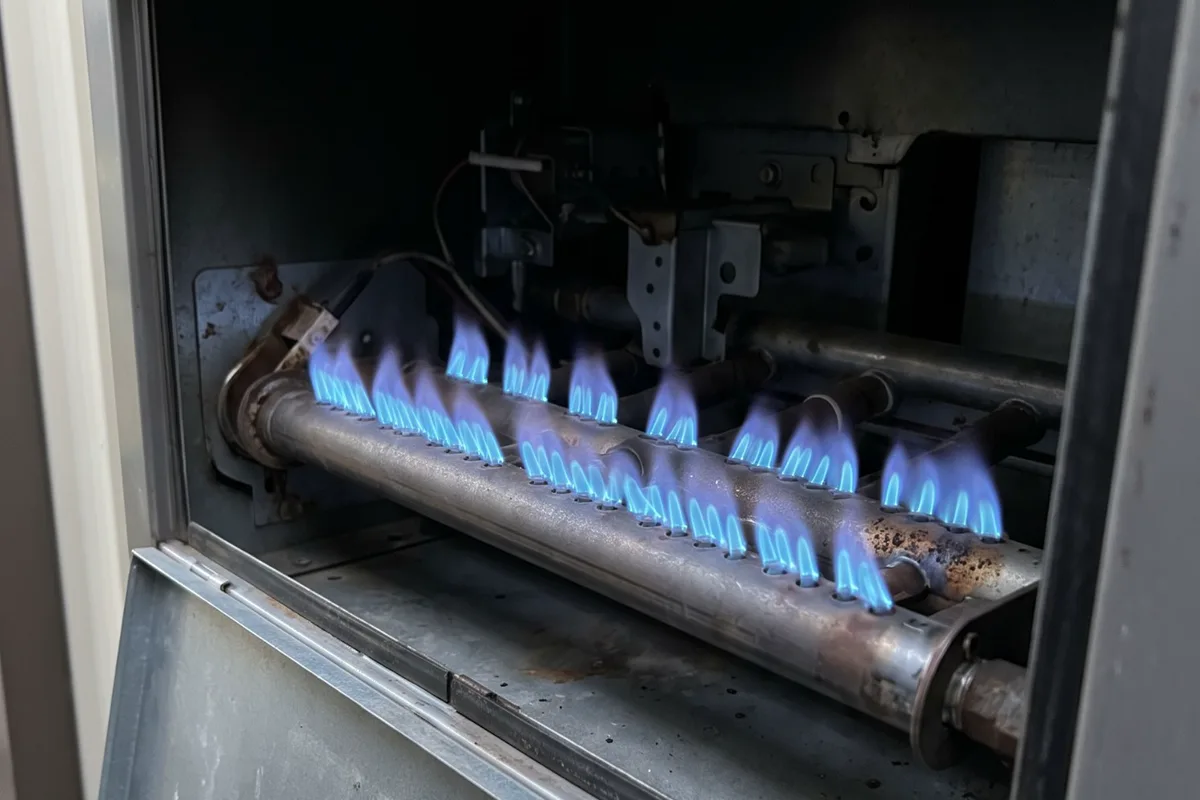
Watch for changes between services too. If anything changes, such as the flame colour, Energy Safe Victoria says a qualified gasfitter should inspect the heater, and it suggests considering replacement if a heater is old or hasn't been serviced for several years.
Carbon monoxide alarms
A CO alarm sounds when carbon monoxide builds up in the air around it. It's a useful backstop in homes with gas heating, but Energy Safe Victoria says an alarm helps and should never replace regular gas heater servicing.
Smoke alarms don't detect carbon monoxide, and CO alarms don't detect smoke; combined units are available. Follow the maker's instructions on placement, test the alarm regularly and replace it by its expiry date. You can fit a plug-in or battery alarm yourself, but Energy Safe Victoria's guidance says hard-wired alarms must be installed by a licensed electrician.
If an alarm sounds, treat it as real: switch off gas appliances if it's safe, open up, get everyone into fresh air, and have the heater checked before it's used again.
Common questions
Quick answers
- Is it safe to leave the heating on overnight?It depends on the heater.
- My gas heater flame looks different. Is that a problem?Yes, treat it as one.
- What should I do if my carbon monoxide alarm goes off?Treat it as real.
- Does my gas ducted heater have a filter I can clean?Many do.
Sources for this guide
6 sources, with the date each was checked
- 1.Energy Safe Victoria: All gas heaters can spill carbon monoxide (CO) – a gas you can’t see or smell that can make you seriously unwell or kill you. Accessed 30 September 2026.
- 2.Energy Safe Victoria: Open-flued heaters can spill carbon monoxide more easily than other types of heaters, making them more dangerous. Accessed 30 September 2026.
- 3.Energy Safe Victoria: It is recommended that ducted heaters are serviced every two years and during this service a CO test should be conducted at the heating vent outlets in all rooms. Accessed 30 September 2026.
- 4.Department of Health (Victoria): When carbon monoxide is inhaled, it replaces oxygen in the blood, which may cause symptoms including tiredness, shortness of breath, headaches, dizziness, nausea, weakness, confusion or chest pain. Accessed 30 September 2026.
- 5.Consumer Affairs Victoria: Definition: From 1 July 2027, draughtproofing means fitting sealing or weather-stripping products to all external doors and external windows to restrict airflow around the entire perimeter of the door or window, without… Accessed 30 September 2026.
- 6.Energy Safe Victoria: As part of a comprehensive service, a gasfitter must use a Carbon Monoxide (CO) analyser to test for carbon monoxide spillage. Only use a registered or licensed gas fitter who has completed the BPC / Master Plumbers CO… Accessed 30 September 2026.
Planning advice for homeowners. Installation requirements depend on the property and equipment. Where this guide refers to Victorian safety or rental rules, use the linked official guidance for the current requirements.