
How do I run outdoor Christmas lights safely?
- Use lights and leads made for outdoor use. Energy Safe Victoria says outdoor equipment must be rated at least IP23, and some sets need the transformer indoors.
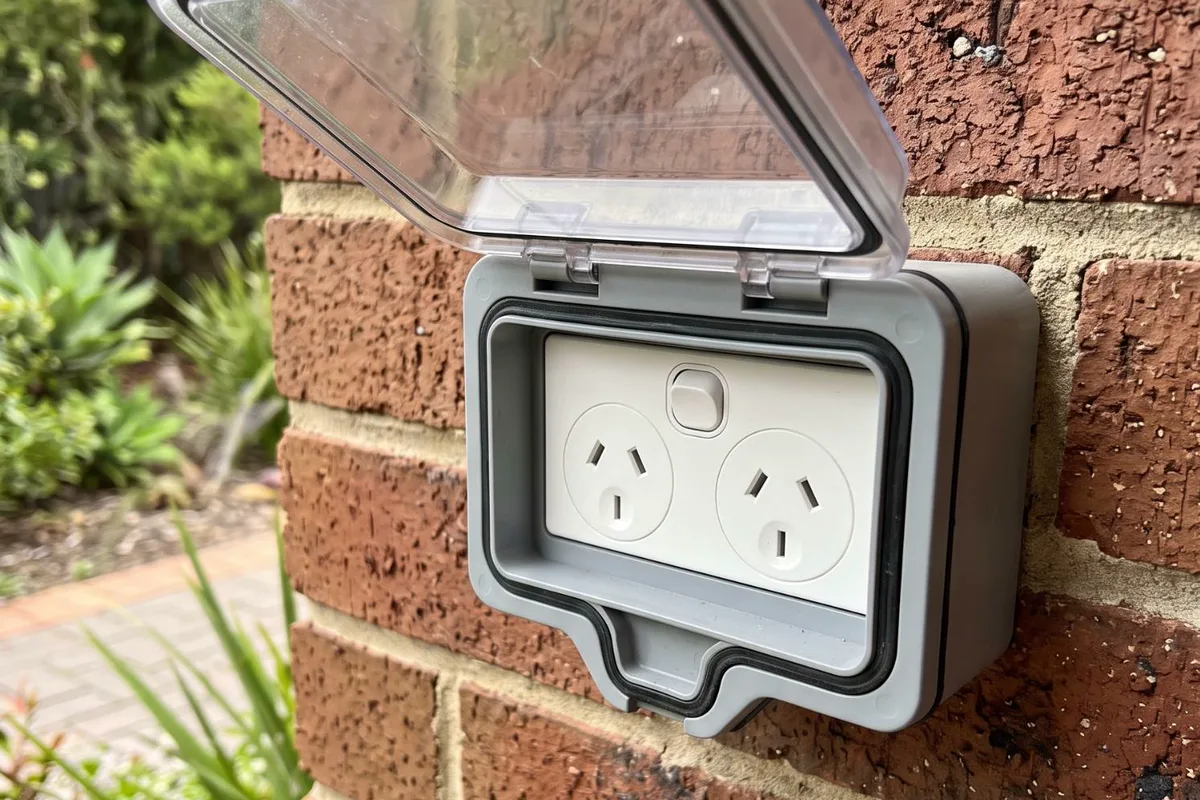
- Plug into a weatherproof outdoor point on a safety switch, not a lead run under the door from an indoor point.
- A timer switches lights off overnight, as Energy Safe Victoria recommends when you go to bed or leave the house.
- If the lights trip the safety switch, don't force them back on. Find the wet or damaged section first.
- Check last year's lights and leads before they go up, and buy RCM-marked sets.
Outdoor lights need an outdoor rating
Christmas lights range from indoor-only strings to sets built for weeks on a roofline. Energy Safe Victoria says to use indoor and outdoor lights and decorations only as recommended, and that outdoor equipment must have a rating of at least IP23. The IP rating is on the box or label, and higher numbers mean better protection against dust and water.
Watch the transformer or plug pack. Energy Safe Victoria notes that some outdoor Christmas lights need the transformer located indoors and away from the weather, and others are only suitable for temporary outdoor use. A plug pack meant for indoors, left in a garden bed for six weeks, is a weak point waiting for rain.
Energy Safe Victoria lists solar-powered lights and LED or extra-low-voltage lights as safer outdoor options. Whatever you buy, check for the RCM, the mark showing a product is suitable for use in Australia, and be wary of cheap sets from overseas sellers that may not meet Australian standards.
Where to plug in
The safest source outdoors is a weatherproof power point with a lid that closes over the plug, on a circuit protected by a safety switch. A lead from an indoor point run under the front door or through a window gets crushed, leaves a join sitting in the weather and becomes a trip hazard.
Energy Safe Victoria suggests power boards with overload protection, unwinding extension leads fully so they don't overheat, and using factory-made leads. Keep joins off the ground and out of gutters and garden beds, keep leads off driveways and paths, and keep lights away from pools and spas. If you decorate every year and end up with a web of leads, an extra outdoor point under the eaves is a neater long-term answer.
- Weatherproof outdoor point with a lid that closes over the plug
- Circuit protected by a safety switch
- Outdoor-rated leads, fully unwound
- Joins raised off the ground and away from water
The safety switch is your backstop
Outdoor lights get wet, chewed, stepped on and pinched in gutters, and any of those can let current leak where it shouldn't. Energy Safe Victoria says a safety switch detects a problem that may put people at risk and turns the power off within 0.03 of a second. It also says safety switches are an extra layer of protection that may not protect all wiring and appliances or prevent every shock.
Energy Safe Victoria suggests testing your safety switch and smoke alarms before decorating. Press the test button: the switch should trip and the power go off. If it doesn't, have an electrician check it before anything goes outside. Some older homes have no safety switch on the circuit feeding the outdoor point at all.
Lights that trip the safety switch
If the safety switch trips when the lights come on, after rain or overnight, it's doing its job. Something on that circuit is leaking current, and the lights are the obvious suspect. Don't keep resetting it, move the lights to a circuit without a safety switch, or tape up a join and try again.
Unplug the lights, reset the safety switch once and see if it holds. If it does, the problem is in the lights or leads: look for water in plug packs and joins, cracked insulation and damage from birds or possums. Energy Safe Victoria says not to alter or modify lights, so replace a faulty set rather than repairing it. If the switch trips with the lights unplugged, the outdoor point or circuit needs an electrician.
Timers and good habits
Energy Safe Victoria recommends always turning off decorative or Christmas lights before going to bed or leaving the house. A timer makes that automatic, bringing the lights on at dusk and off at bedtime. If the timer sits outdoors, use one rated for outdoor use and keep it out of the weather.
Test the lights before they go up, and check old lights and leads before re-using them. Make sure the power is off while you put them up or change globes, use a sturdy ladder with someone holding it, and stay well clear of the overhead power line to the house. At the end of the season, pack them away dry and loosely coiled.
Questions that come next
Sources for this article
3 sources, with the date each was checked
- 1.Energy Safe Victoria: monitors the flow of electricity through a circuit detects a problem that may pose a risk to personal safety turns the power off within 0.03 of a second always has a test button and '30ma' printed on them. Accessed 30 September 2026.
- 2.Energy Safe Victoria: Locate your electricity box outside your home and check whether the safety switch has tripped. If it has tripped, reset the switch. If the switch won’t reset, call a licensed electrician. Accessed 30 September 2026.
- 3.Energy Safe Victoria: Whenever a licensed electrician completes any electrical installation work, they must provide a Certificate of Electrical Safety (COES). Accessed 30 September 2026.