
The key points
- Use outdoor equipment only on circuits with a working safety switch, and press each test button every three months.
- Use heavy-duty outdoor leads, unroll reels fully, keep joins off wet ground, and replace any lead that's cut, crushed or taped.
- Before digging, check Before You Dig Australia for network cables and pipes. It won't show private cables a previous owner ran to a shed or garden lights.
- Pack leads and tools away before rain, and keep patio appliances under cover and plugged into weatherproof outdoor points.
- Anything that needs power outside every day needs fixed wiring installed by a licensed electrician, not a lead through a window.
Start with protection at the board
Outdoors is where people are most likely to be wet, standing on damp ground and holding a tool, which is the situation safety switches are built for. Energy Safe Victoria describes a safety switch as monitoring the flow of electricity through a circuit, detecting a problem that may put people at risk and turning the power off within 0.03 of a second.
Check that the circuits feeding your outdoor points, garage and shed actually pass through one. Some older boards protect the indoor power points but leave an outdoor circuit or a shed sub-board on a plain breaker, and Energy Safe Victoria notes that safety switches may not protect all wiring and appliances. If you're unsure, have it checked, and in the meantime plug a portable safety switch in between the power point and the lead.
Press the test button on each safety switch every three months, as Energy Safe Victoria advises. The start of the mowing season is a handy reminder.
Extension leads
Choose leads made for the job: heavy-duty, rated for outdoor use and long enough that you don't need to join two. A join lying on wet grass is the weak point in any setup. If you must join leads, keep the connection off the ground and away from puddles, ideally inside a weatherproof connector cover.
Unroll reel leads fully before running a mower, saw or pressure washer. A lead left coiled on its drum can't shed heat under a heavy load and can overheat. Check leads before each use for cuts, flattened sections, exposed wire and damaged plugs. Tape isn't a repair, so replace the lead.
Leads are for temporary use. One running permanently to the shed, the pond pump or the garden lights is doing the job of fixed wiring, usually without the protection fixed wiring would have.
Mowers, trimmers and power tools
Electric mowers and hedge trimmers cut their own leads more often than people admit. Keep the lead behind you or over your shoulder, away from the cutting path, and work away from the power point. If you cut a lead, switch off and unplug it at the power point before you touch the damaged part.
Check tools before use. A cracked casing, a damaged cord or a loose or scorched plug means the tool needs repair or replacement. Don't use mains-powered tools in rain or on wet grass, and keep them away from pools, ponds and sprinklers. Battery tools remove the lead altogether, which suits most garden jobs.
Digging near buried cables
Cables run underground more often than people realise: the supply from a pit in the street, cables to a shed, garage or granny flat, garden lighting, pool equipment and gate motors. A spade or post-hole auger through a live cable is a serious shock risk.
Before digging, check Before You Dig Australia for network cables, gas and water mains around your property. Its information comes from the networks and utilities, so private cables aren't on it. Wiring a previous owner ran to a shed or garden lights won't appear, and nobody may know exactly where it goes.
Look for clues before you dig near the house, a shed or a garden light: outdoor lights and points in the garden, a cable leaving the wall near ground level, or a shed with power but no overhead line. If you suspect a cable, an electrician can trace it. Dig by hand near the likely route, and stop if you find conduit, cable or marker tape.
Wet weather, puddles and storms
Leave outdoor electrical jobs for dry days. Pack leads and tools away before rain, not after, and don't leave power boards or leads lying on the patio or lawn overnight. A lead that has been rained on should dry out fully before it's used again.
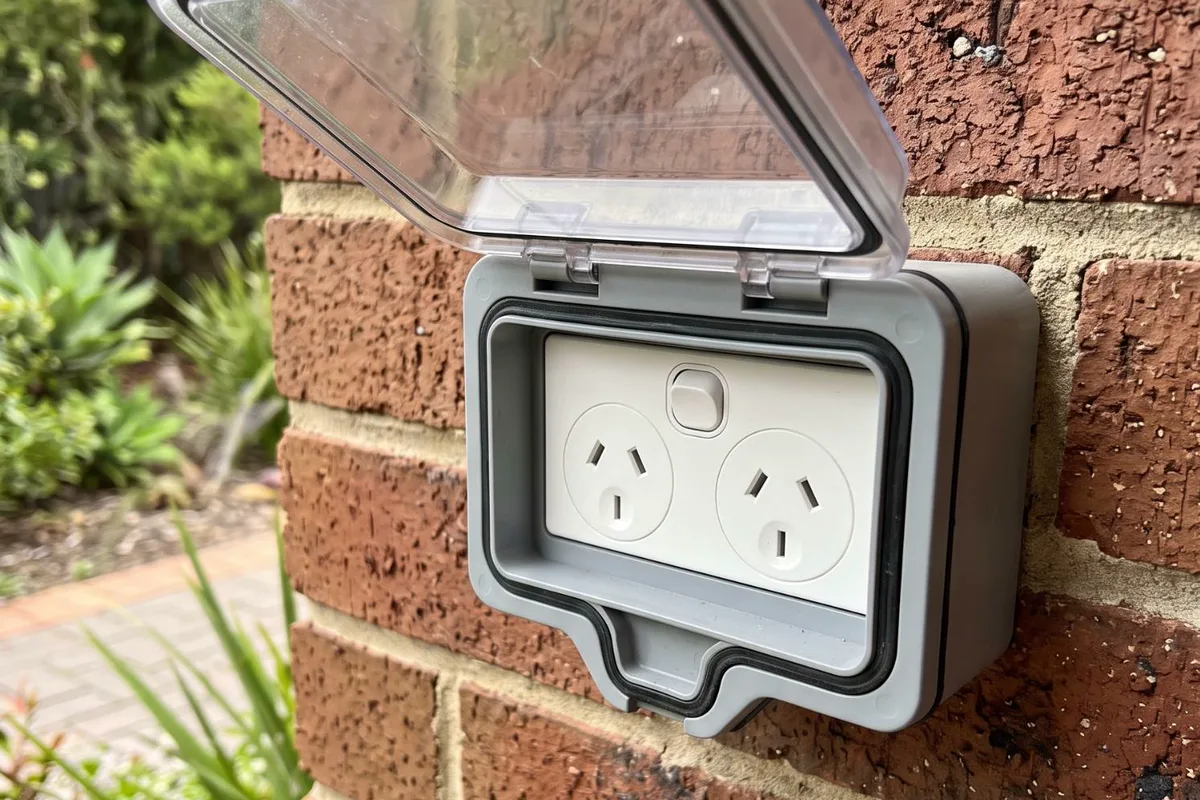
Weatherproof outdoor points have covers that close over the plug, and they should be kept shut. A cracked cover, or water in a light lens, means the fitting is letting water in. If a safety switch trips after rain, reset it once, then note the weather and have the outdoor circuits checked.
In storms, stay well away from fallen powerlines and anything touching them, and treat them as live. Report them to your electricity distributor, whose faults number is on your bill.
Patio appliances and pool gear
Patios bring indoor appliances outside: a fridge, a TV, a heater, festoon lights. Indoor appliances aren't made for wind-blown rain. Keep them fully under cover, plug them into weatherproof outdoor points rather than a lead through the window, and bring portable ones inside after use.
Electric patio heaters need clearance from ceilings, umbrellas and furniture, and a point that can carry their load. Festoon and string lights should be rated for outdoor use, with plugs and transformers kept off the ground and under cover.
Pool and spa pumps, heaters, chlorinators and lights sit right beside water. They should be fixed in place, on protected circuits and installed by a licensed electrician, with timers and switches in a dry, covered spot. If a pump trips the safety switch, leave it off and have it checked.
When it's time for fixed outdoor power
Leads and adaptors are a sign that the outdoor area has outgrown its wiring. An outdoor power point where the leads usually run from, garden lighting on a proper circuit and a correctly wired shed take the temporary risks away. Outdoor fittings carry an IP rating for dust and water, and the right rating depends on how exposed the spot is.
Outdoor wiring is electrical installation work. Energy Safe Victoria says it's illegal, and potentially fatal, for unlicensed people to do electrical work, and that it isn't a DIY job even for small jobs like changing a power point. Close to the bay in Williamstown, Altona and Seabrook, salt air is harder on outdoor fittings, so corrosion-resistant hardware and a yearly look are worth it.
Common questions
Quick answers
- Why is there water inside my outdoor light?Water gets into outdoor lights through perished seals, cracked lenses, unsealed cable entries or a fitting that isn't rated for where it's mounted.
- Why is there no power to my shed or garage?Start at the switchboards.
- Is a safety switch power point the same as a safety switch on the board?No.
- What should I do if a power point or appliance gets wet?Don't touch it.
Sources for this guide
4 sources, with the date each was checked
- 1.Energy Safe Victoria: monitors the flow of electricity through a circuit detects a problem that may pose a risk to personal safety turns the power off within 0.03 of a second always has a test button and '30ma' printed on them. Accessed 30 September 2026.
- 2.Energy Safe Victoria: Follow these steps to check your safety switch every three months: Press in the test buttons on each safety switch which will cut the power and trip the switch into the off position. You may hear a clunking sound. If… Accessed 30 September 2026.
- 3.Energy Safe Victoria: Gas and electricity are inherently dangerous and it’s illegal and potentially fatal for unlicensed and unqualified people to undertake any electrical or gasfitting work. Homeowners and consumers must always use… Accessed 30 September 2026.
- 4.Energy Safe Victoria: Electrical work isn’t a DIY job, even for small jobs such as changing power points or light switches. Accessed 30 September 2026.
Planning advice for homeowners. Installation requirements depend on the property and equipment. Where this guide refers to Victorian safety or rental rules, use the linked official guidance for the current requirements.