
Should I rewire my house before or during a renovation?
- Have the wiring tested before you plan around it. Test results, not age alone, decide how urgent a rewire is.
- Circuits that fail testing should be fixed now, not held over for a renovation that may slip.
- For everything else, the best time is during the renovation, after framing and before insulation and plaster.
- If you can, rewire an empty house before moving in. It is faster, cleaner and easier to live with.
Test first, then decide on timing
Two houses built the same year can have very different wiring, depending on the heat, damp and alterations they have seen. Before you plan a rewire around a renovation, have the circuits tested. The results tell you whether you are looking at a few failed circuits, a partial rewire or the whole house.
Energy Safe Victoria says that when buying a home built before the 1980s, it is imperative to have the wiring checked by a licensed electrical inspector or registered electrical contractor before moving in. It also lists old switchboards, flickering lights and old or broken switches and power points among the signs of faulty wiring.
When it can't wait for the renovation
Renovations slip. Finance, plans, permits and builders all move dates, and a kitchen planned for spring can become next winter's job. If testing finds failing insulation, missing earths or scorched joints, those circuits are fixed now, and the rest of the plan follows at the renovation's pace.
The same goes for a switchboard with no safety switches. Sorting the protection now gives the household a layer of safety while you wait, and the board can still be planned to suit the finished house.
Why during the renovation is usually best
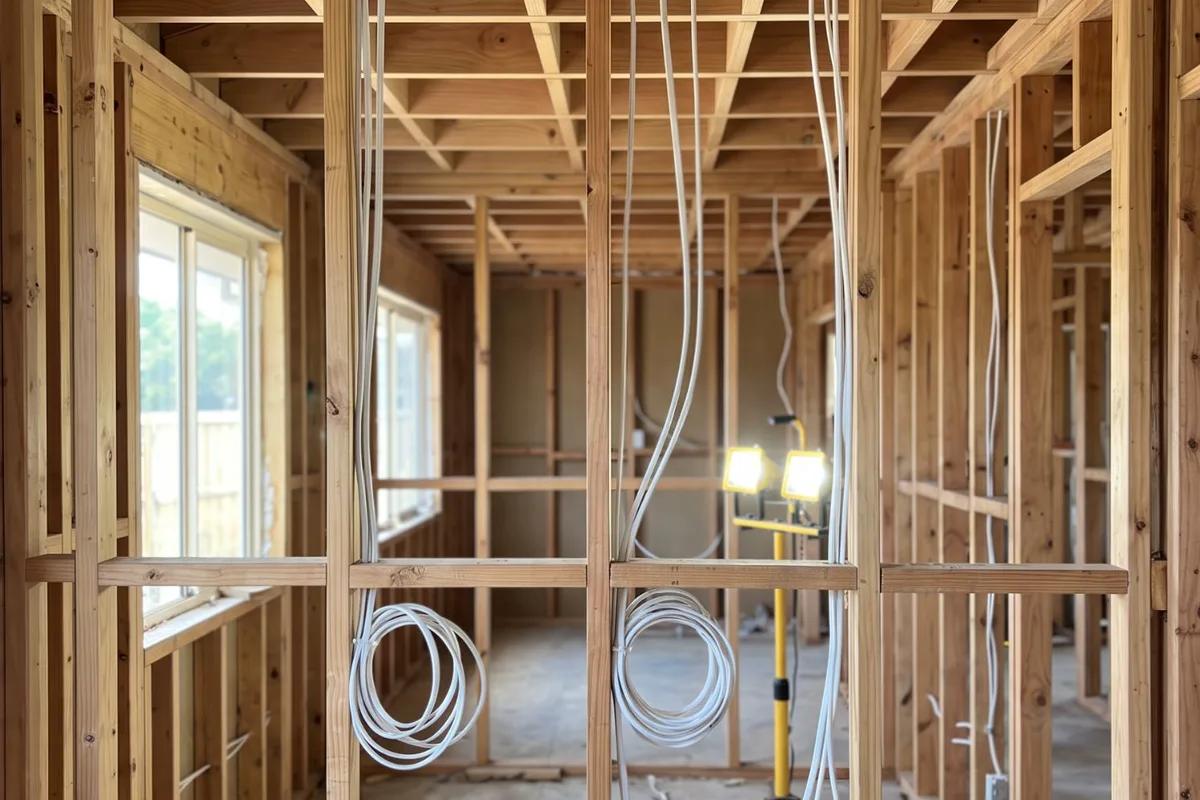
For circuits that test well enough to wait, the renovation is the ideal moment. The right window is after framing and plumbing, and before insulation and plasterboard. Cable runs straight through open frames, and nothing new has to be cut or patched.
Rewiring after new plaster is the mistake to avoid. Chasing cable into fresh walls, cutting into new ceilings and patching painted surfaces adds cost and mess to rooms you have just paid to finish. If the rest of the house will need rewiring within a few years, bring it into the same window while the trades are on site.
Homes extended or largely renovated after 1 May 2014 need interconnected, hard-wired smoke alarms with battery back-up, so put them on the plan at rough-in rather than adding them at the end.
Living in the house, or not
If you are buying an older house and can delay moving in, rewire it while it is empty. Clear floors and walls make the work faster, there is no furniture to shift, and nobody has to live with the power off in sections. It is the easiest rewire there is.
If you are living in the house, a rewire still works in stages. Work starts in the roof and subfloor, and power goes back on in finished areas each evening. If the renovation is moving you out for a few weeks anyway, schedule the most disruptive parts of a whole-house rewire for then.
One plan for the finished house
Whatever the timing, wire for the house you will end up with. Induction cooking, reverse-cycle heating and cooling, a heat pump water heater and an EV charger each usually want their own circuit. A switchboard sized for the finished house avoids a second upgrade a year later.
When an existing installation is altered, the Wiring Rules call for additional safety switch protection, which affects how a staged plan comes together at the board. A rewire spread over a year or two works well when each stage follows the same plan and finishes with its own Certificate of Electrical Safety.
If new ceiling insulation is part of the renovation, have old cable in the roof checked and dealt with first. It is much harder to inspect once the batts are down.
Questions that come next
Sources for this article
5 sources, with the date each was checked
- 1.Energy Safe Victoria: When buying a home built before the 1980s it is imperative the wiring is checked by a licensed electrical inspector or registered electrical contractor prior to moving in. Accessed 30 September 2026.
- 2.Energy Safe Victoria: Old switchboards, particularly those without a safety switch Old power switches or power points, particularly broken ones Flickering lights Sparks from switchboards, switches or power points. If your house is over 30… Accessed 30 September 2026.
- 3.Fire Rescue Victoria: Residential home constructed, largely renovated, or extended after 1 May 2014 Interconnected, hard wired smoke alarms that are connected to 240 volt mains power and have a back-up battery. Accessed 30 September 2026.
- 4.Energy Safe Victoria: Clause 2.6.3.2.5 of the Wiring Rules states: Additional protection by RCDs shall be provided in existing electrical installations where alterations or a switchboard replacement is completed. Accessed 30 September 2026.
- 5.Energy Safe Victoria: Only an A grade electrician is qualified to inspect and install household wiring. Accessed 30 September 2026.