
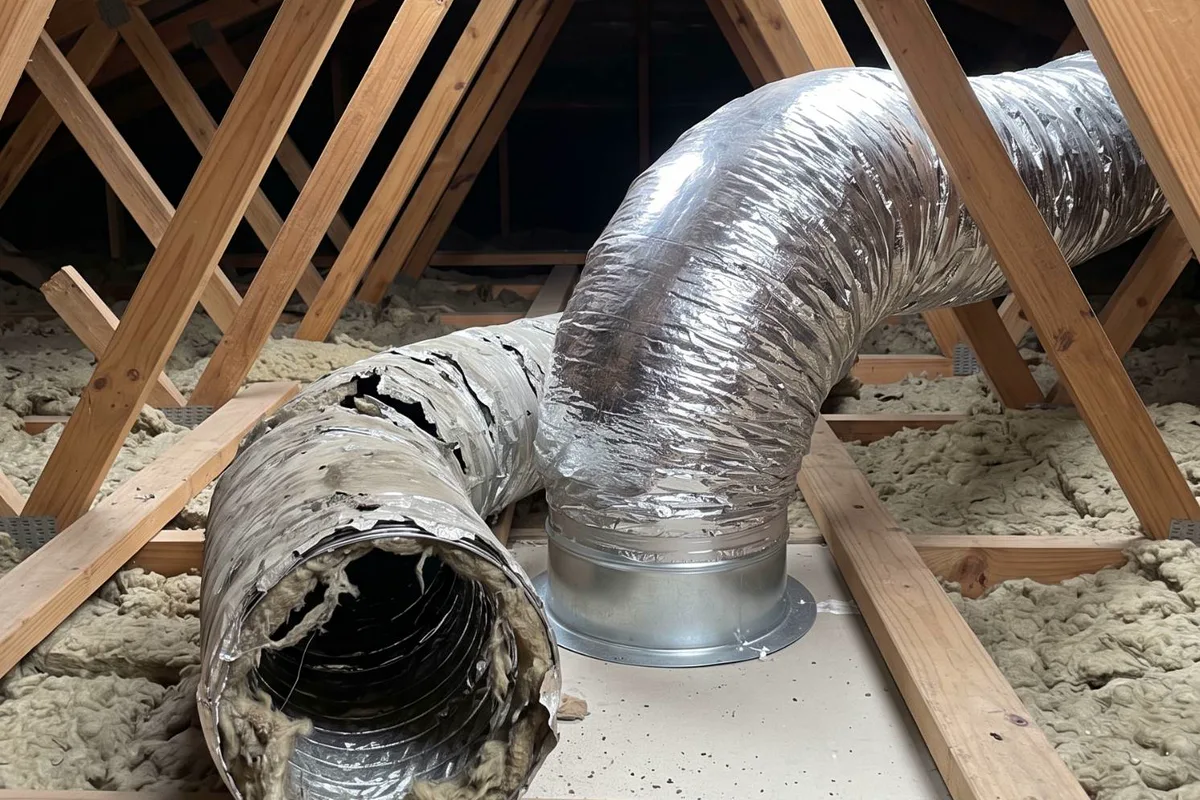
Can rats and possums in the roof damage electrical wiring and air conditioning ducts?
- Rats gnaw constantly, and cable sheathing and flexible duct are soft enough to chew. Exposed conductors in a dry roof space are a fire and shock risk.
- Flickering lights, a circuit that starts tripping or a room losing airflow after noises in the roof are worth linking together.
- Have the electrics and ducts checked after pest control, once the animals are gone and the damage can be found and fixed.
- Don't go poking around the roof space yourself. Damaged cable can be live, and nesting material is best left to someone with the right gear.
What rats and possums actually damage
Rats and mice gnaw to keep their teeth worn down, and the plastic sheathing on electrical cable is an easy target. Once the sheath and insulation are chewed through, live conductors can be exposed in a roof full of dry timber, dust and insulation. Energy Safe Victoria says fire brigades respond to more than 300 domestic electrical fires each year, many caused by wiring that has degraded.
Flexible air conditioning duct is soft too. Rats chew through the outer sleeve and insulation to nest, and a torn duct dumps heated or cooled air into the roof. Possums are heavier: they flatten insulation, pull ducts loose from their joints and like the warmth around downlights and the indoor unit.
Warning signs to link together
Scratching and scurrying across the ceiling at night is the obvious clue. The electrical and duct signs are easier to miss, because they show up separately and sometimes weeks later. If you've had animals in the roof, treat any of these as connected until proven otherwise.
Energy Safe Victoria lists flickering lights and sparks from switches or power points among the tell-tale signs of faulty wiring. A burning smell, smoke or sparking is the one to act on straight away: if there is smoke, fire or immediate danger, get everyone out, and switch off at the switchboard if it is safe to reach.
- Lights that flicker, or a downlight that has stopped working
- A circuit breaker or safety switch that starts tripping for no clear reason
- A burning or fishy smell near a light fitting or switch
- One room getting less heating or cooling than it used to
- Dust, droppings or a musty smell coming from ceiling outlets
Nests near downlights and the indoor unit
Animals like warm, sheltered spots, and in a roof space that often means around downlights and their transformers, the ducted indoor unit or the heater. Nesting material piled against a hot fitting is a fire risk on its own, before any chewing. Older halogen downlights run especially hot, which makes them a particular concern.
The indoor unit of a ducted system has control wiring, a fan and a condensate tray. A nest inside the casing, or droppings in the return air path, ends up spread through every outlet. That's why a smell from the vents after a rodent problem should be checked rather than masked.
Why the check comes after pest control
Deal with the animals first. Until the entry points are sealed and the rats are gone, any repair can be chewed again. Possums need a different approach from rats, so ask a pest or wildlife controller what's appropriate before anything is trapped or blocked in.
Then have the roof space checked. An electrician looks along accessible cable runs, at junctions and fittings near the nesting area, and at any circuit that has misbehaved, and tests them. Insulation resistance testing can show damage on a circuit even where the chewed section is out of sight.
For the ducts, a technician follows each run and checks the sleeve, insulation and joints, then looks inside the unit and return. Ducts should be insulated to at least R1.5 with sealed joints, so a chewed run that has lost its insulation is worth replacing rather than patching with tape.
Repairs, and keeping it from happening again
Damaged cable is repaired or replaced back to sound sections, with proper junctions rather than tape, and the circuit is retested. Damaged duct runs are replaced, the joints sealed and the system rebalanced. Electrical repairs are installation work for a licensed electrician, who must provide a Certificate of Electrical Safety for the work.
Prevention is mostly about keeping animals out: sealed gaps at the eaves and roofline, branches trimmed back from the roof, and a quick look in the roof space after a noisy spell. Older homes with timber eaves and old roof vents can have more ways in, so they're worth checking more often.
Questions that come next
Sources for this article
5 sources, with the date each was checked
- 1.Energy Safe Victoria: Fire brigades respond to more than 300 domestic electrical fires each year. Many of these fires are caused by old wiring that has degraded or is unable to cope with the demands of modern electrical equipment. Accessed 30 September 2026.
- 2.Energy Safe Victoria: Old switchboards, particularly those without a safety switch Old power switches or power points, particularly broken ones Flickering lights Sparks from switchboards, switches or power points. If your house is over 30… Accessed 30 September 2026.
- 3.YourHome (Australian Government): Ducts must be well insulated, to at least R1.5, and joints sealed to prevent condensation and leakage. The roof should have reflective foil insulation installed and be vented to dispel hot air. Zoned systems cool only… Accessed 30 September 2026.
- 4.Energy Safe Victoria: Whenever a licensed electrician completes any electrical installation work, they must provide a Certificate of Electrical Safety (COES). Accessed 30 September 2026.
- 5.Energy Safe Victoria: Electrical work isn’t a DIY job, even for small jobs such as changing power points or light switches. Accessed 30 September 2026.