
The key points
- If water has reached the switchboard, power points or light fittings, don't touch them, and keep people out of rooms where water and fittings meet.
- Turn off the main switch only if you can reach it with dry hands, standing somewhere dry. If you can't, leave it and keep clear.
- Don't switch circuits back on just because the water has stopped. Water left in fittings, joints and the board can cause faults days later.
- An electrician tests each affected circuit before it's reconnected. Appliances that sat in water should be checked or replaced, not just dried out.
- Fallen powerlines are the distributor's job. Treat them as live and keep well clear.
The first few minutes
Start by keeping people away from the water. A ceiling bulging under the weight of a roof leak can come down without warning, and if there's a light fitting in it, the water around that fitting may be live. Keep children and pets out of the room, and don't stand under a sagging section.
If you can reach the switchboard without walking through water, with dry hands and dry footing, switch off the main switch. If the board is wet, the meter box is in water, or you'd have to stand in water to reach it, don't. Leave it and keep clear. If there is smoke, fire or immediate danger, get everyone out.
Use a torch rather than the light switches in a wet room. A switch can become the path between your hand and a wet fitting.
Roof leaks and water through the ceiling
Most water damage comes from above: a box gutter overflowing in a downpour, cracked tiles, or flashing lifted in a storm. Water runs along the top of the ceiling and finds the easiest way down, which is often a downlight, a ceiling rose or an exhaust fan. Water dripping from a light means the fitting, its cable joint and probably the cable above it are wet.
Leave that lighting circuit off at the switchboard once you've identified it, even after the drips stop. Water sits inside fittings and junctions and can take days to dry in an enclosed ceiling, and soaked insulation holds it against cable for longer. Photograph the ceiling and fittings before anything is pulled down, because your insurer may ask. Our help page on water dripping from a light fitting covers the first steps in more detail.
Floodwater and storm damage
Floodwater is harder on an installation than a roof leak. It carries silt, salt and sewage into power points, appliances, cables under the floor and the meter box, and those deposits can keep conducting after the water drains away. Anything floodwater reached needs testing, even if it looks dry.
Storms bring other hazards. Treat fallen powerlines as live, even when broken, and keep well clear of them and anything they touch, including fences and puddles. Report them to your electricity distributor, whose faults number is on your bill. A branch resting on the line to your house goes to the distributor too.
If you've been told to leave, or water is still rising, go. Electrical checks can wait until it's safe to return.
Wet power points, appliances and leads
A power point that was splashed, sat under a leak or went under floodwater needs checking before use, even if it looks dry. Water tracks inside the outlet and along the cable, and corrosion can start on the terminals. Only unplug things from it once the circuit is off and the plug and point are dry.
Don't plug in an appliance that was submerged, or that sat in a pool of water, to see whether it still works. Motors, control boards and heating elements can hold water for days and may trip the safety switch, or leave the case live. Fridges, washing machines, heaters and anything with a power supply should be checked by a qualified repairer or replaced.
Outdoor equipment caught in a storm needs the same care. An air conditioner's outdoor unit, a pool pump or garden lights that went under water should be checked before they're run again.
When the switchboard or meter box got wet
Water in the switchboard is the most serious case. It can bridge live parts, corrode terminals and get into breakers and safety switches, which may then fail to trip when they need to. Don't try to dry it with a towel or hair dryer, don't reset anything, and keep people away.
If the meter box got wet, the cables and equipment feeding your main switch may be affected. Energy Safe Victoria describes the wiring up to the switchboard, which can include the line from the street and the meter, as equipment where the electricity can't be switched off. Your main switch doesn't make that part safe, so it's work for your distributor and a licensed electrician.
Older outside meter boxes with cracked covers and tired seals are the most likely to let in driving rain. Damp marks, rust, dirt or insects inside after a storm mean the seals have gone. Powercor lists a defective meter box among customer installation defects, which are the customer's to fix.
What an electrician checks before power goes back on
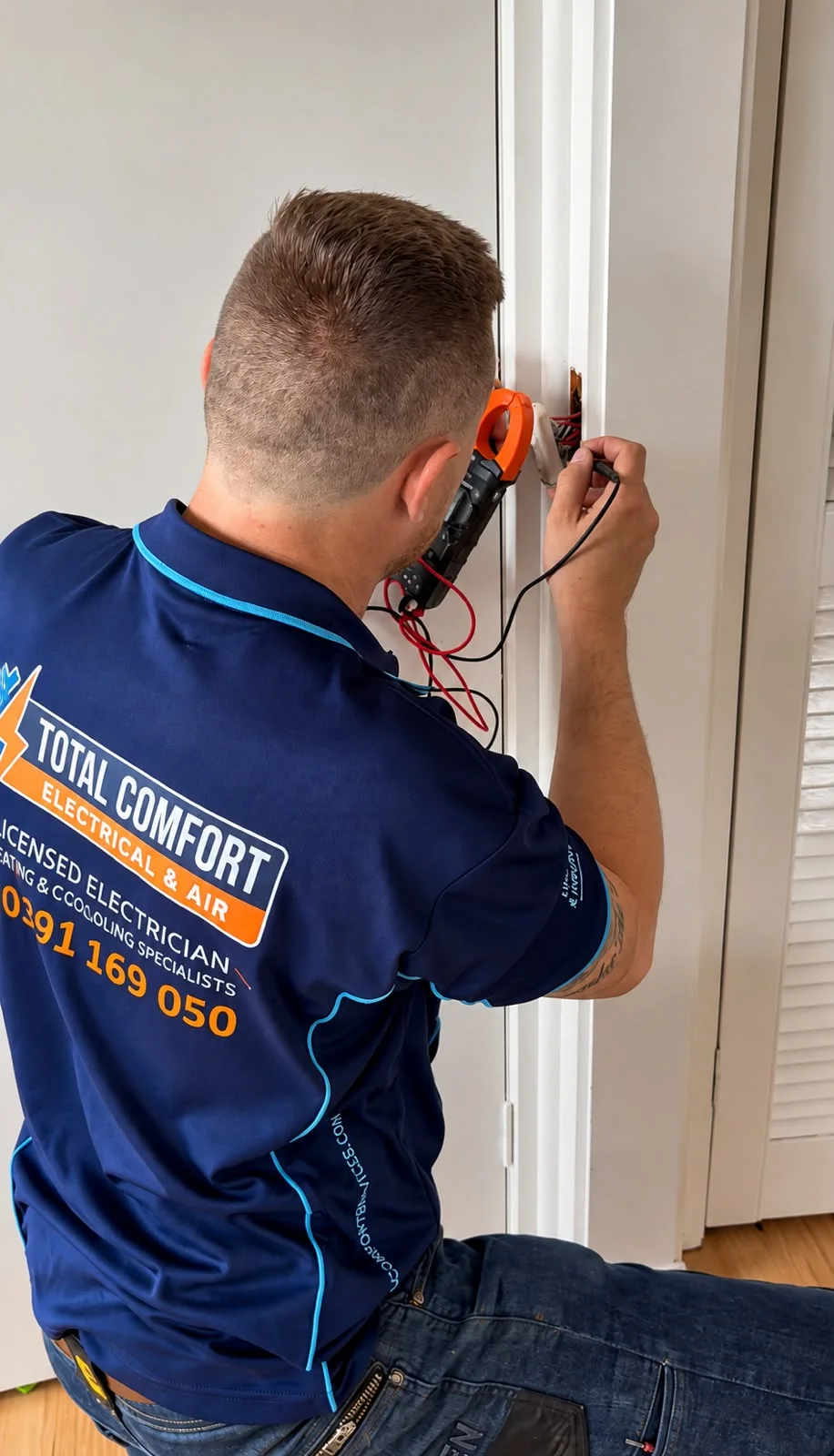
The aim is to find every circuit the water reached and prove each one is safe before it's reconnected. That starts with a look at the board, the affected fittings and any cable that can be reached, followed by testing. An insulation resistance test shows whether water or silt is letting current leak between conductors or to earth, and safety switches are tested to confirm they still trip.
Circuits that pass can go back on. Circuits that fail stay isolated until the cause is found and fixed, which may mean drying out and retesting, replacing fittings, or replacing cable that sat in floodwater. Water-damaged power points, breakers and safety switches are generally replaced rather than reused.
When repairs are done, a licensed electrician must give you a Certificate of Electrical Safety. Keep it with your photos of the damage, as your insurer is likely to want both.
- Which rooms and fittings the water reached, and roughly when.
- Whether the switchboard or meter box got wet.
- What tripped, and whether anything won't reset.
- Appliances that were under water or standing in it.
- Photos taken before anything was moved or pulled down.
If you rent, or rent a property out
Renters should tell their rental provider or agent in writing straight away. Consumer Affairs Victoria lists a dangerous electrical fault, and a loss of electricity supply, among urgent repairs, and rental providers must do urgent repairs immediately.
Rental providers should treat water in fittings or the board as a dangerous fault until an electrician says otherwise, and keep the electrician's findings and the certificate for any repairs with the property records.
Common questions
Quick answers
- Water is dripping from a light fitting. What should I do?Don't touch the light switch, on or off.
- What should I do if a power point or appliance gets wet?Don't touch it.
- Why can I hear crackling in my walls or ceiling?Most creaks and ticks in walls and ceilings come from timber, roofing and pipes expanding and contracting, or from animals.
- I felt a tingle from a tap or appliance. What should I do?Treat it as a warning.
Sources for this guide
5 sources, with the date each was checked
- 1.Energy Safe Victoria: A prescribed certificate is for all major electrical wiring work in all types of premises. In a domestic property this covers all work done on wiring and equipment where the electricity cannot be switched off. This… Accessed 30 September 2026.
- 2.CitiPower & Powercor: Customer installation defects fall under customer responsibility and require prompt rectifications to ensure either the safety of the electrical installation, unhindered access to our assets by our employees or that our… Accessed 30 September 2026.
- 3.Consumer Affairs Victoria: Anything on this list is legally defined as an urgent repair: burst water service blocked or broken toilet system serious roof leak gas leak dangerous electrical fault flooding or serious flood damage serious… Accessed 30 September 2026.
- 4.Energy Safe Victoria: Locate your electricity box outside your home and check whether the safety switch has tripped. If it has tripped, reset the switch. If the switch won’t reset, call a licensed electrician. Accessed 30 September 2026.
- 5.Energy Safe Victoria: The point of supply is the changeover point from the electricity distribution network to the electrical installation, where the property owner becomes responsible for the maintenance and repair of the electrical… Accessed 30 September 2026.
Planning advice for homeowners. Installation requirements depend on the property and equipment. Where this guide refers to Victorian safety or rental rules, use the linked official guidance for the current requirements.