
The key points
- Battery lighting, not candles. Energy Safe Victoria recommends battery-operated lighting during an outage.
- If anyone relies on powered medical equipment, register the address as a life support address and keep a backup plan, because unplanned outages still happen.
- Learn to open the garage door by hand, and know where the switchboard is, before you need to.
- When the power goes, switch off and unplug appliances. When it returns, bring things back one at a time.
Light, phones and information
Outages often arrive with wild weather, and Melbourne's hot northerly days that end in a sharp cold change are a familiar example. Keep a torch or two where you can find them in the dark, with spare batteries, and a rechargeable lamp for the living room. Energy Safe Victoria recommends battery-operated lighting rather than candles.
Charge phones and a power bank when storms are forecast. The NBN equipment and your modem need mains power, so home internet and many home phones stop with the outage, leaving your mobile as the link.
Note your distributor's name and faults line, which are on your electricity bill, and save its outage page on your phone. Around Altona Meadows, Laverton, Point Cook, Werribee and Tarneit that's Powercor. Yarraville, Kingsville and West Footscray are on Jemena's network, which reaches Williamstown and Footscray.
- Torches and spare batteries in a known spot.
- A rechargeable lamp for the main room.
- Phones and a power bank charged when storms are forecast.
- Your distributor's outage page saved on your phone.
Medical equipment and people who need power
If anyone at home relies on powered medical equipment, this is the most important part of the plan. Register the address as a life support address. Powercor says you can do that through your energy retailer, the company that sends the bill, or with the distributor directly, and that registered customers are notified at least four business days before a planned outage.
Registration doesn't stop unplanned outages. Powercor says they can happen to life support customers too, through events like severe weather or traffic accidents. The plan needs a backup: equipment kept charged, spare batteries where the device takes them, and somewhere to go if an outage runs long. The equipment supplier or treating team is the right source for what the device itself needs.
Think too about older relatives living alone, anyone who needs heating or cooling to stay well, and medication that has to stay refrigerated, especially on a hot northerly afternoon or a cold July night.
Fridges and freezers
The best thing you can do for food during an outage is keep the doors shut. Every opening lets cold air out. A full freezer holds its temperature much longer than a half-empty one, so a few frozen water bottles in spare freezer space help it ride out an outage, and double as ice for an esky.
A fridge thermometer takes the guesswork out of deciding what to keep afterwards. If food has warmed up and you don't know for how long, throw it out rather than take a chance.
If there's a second fridge or chest freezer in the garage, check which circuit it's on. A freezer on the same safety switch as outdoor points or garden lights can be tripped off by a wet fitting while you're away, which looks like an outage but isn't. A circuit of its own is a small job that protects what's inside.
Garage doors, gates and alarms
A motorised garage door stops when the power does. Find the manual release, usually a cord or lever on the motor's carriage, and practise it once in daylight following the maker's instructions. If the car is the only way out, or the driveway gate is motorised too, that matters.
Some doors and gates have battery backup, so check whether yours does and when the battery was last replaced. Alarm systems run on a backup battery for a while and may beep as it runs down.
Smoke alarms are the other beeper. Homes built after 1 August 1997 must have smoke alarms connected to mains power with a backup battery, so they keep working through an outage. If one chirps, the backup battery is probably low, and anyone can change a smoke alarm battery.
Protecting appliances and electronics
When the power fails, Energy Safe Victoria says to switch appliances off, because they could start a fire when the power returns, and to unplug them at the power point to help prevent damage from a surge. Leave one light switched on so you know when supply is back.
That's easier if you've thought about it beforehand. Know which things matter most: the TV and entertainment unit, computers and the modem, and anything that heats, such as a heater, iron, oven or cooktop, that could come back on unattended. A surge power board with an indicator protects plugged-in electronics day to day.
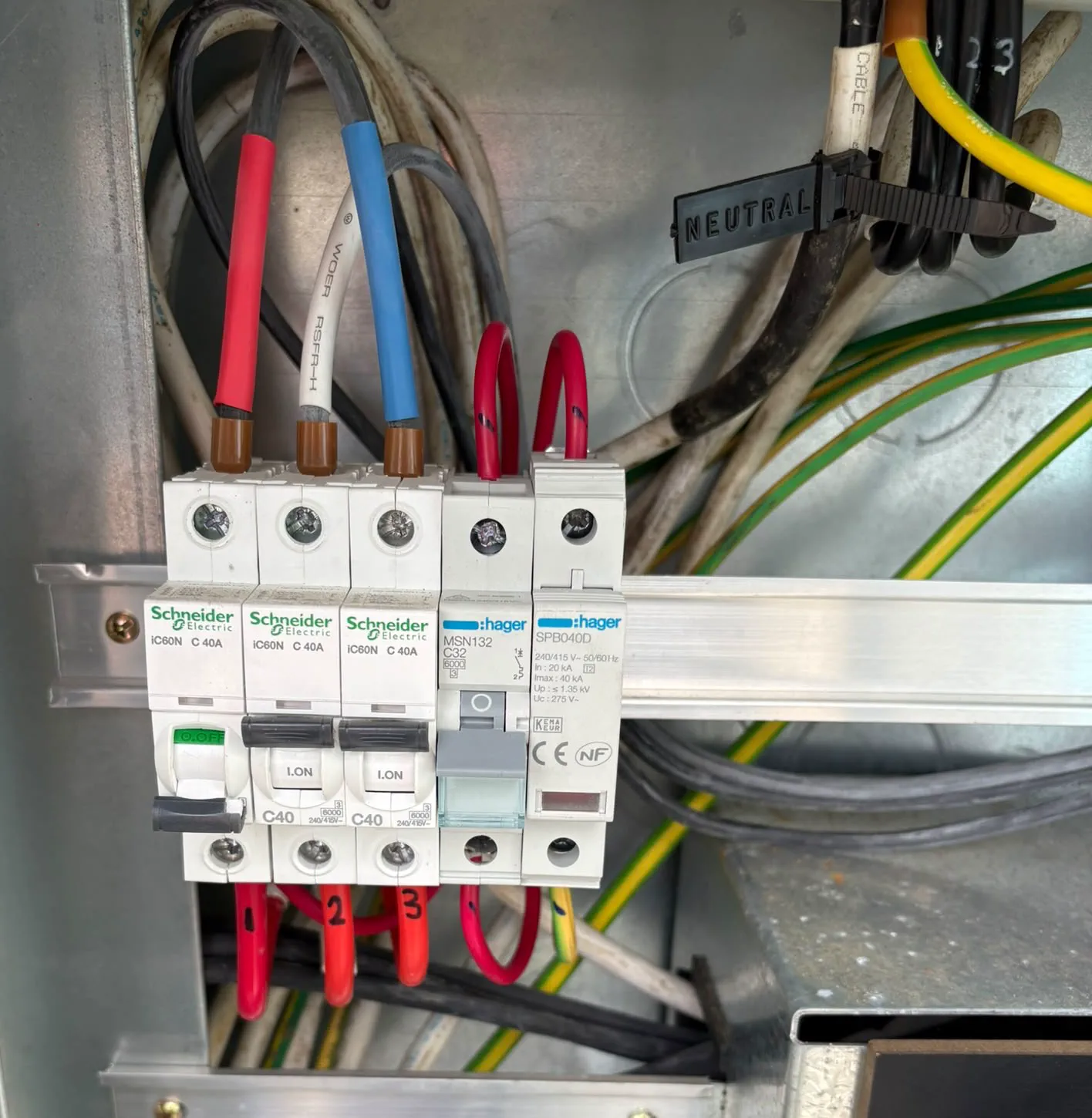
Hard-wired equipment can't be unplugged: split system outdoor units, ducted systems, the oven and the hot water unit. A surge diverter at the switchboard covers every circuit; Energy Safe Victoria describes it as capturing voltage spikes in the wiring before they pass into equipment. It doesn't protect people from shock.
- Heaters, irons, ovens and cooktops switched off.
- TV, computers and modem unplugged.
- Air conditioning switched off at the controller.
- One light left on to show when power returns.
Solar, batteries and generators
Most grid-connected solar systems shut down when the grid does, so panels alone won't keep the lights on. Staying powered needs a system designed for it, usually a battery set up for backup, and it may cover only some circuits. Energy Safe Victoria's outage advice includes shutting a solar system down using safe procedures, so keep the instructions for yours somewhere easy to find.
Portable generators need care. Energy Safe Victoria says never to run one indoors, in a garage or another enclosed space because of carbon monoxide, to use only outdoor-rated heavy-duty extension cords in good condition, and never to plug a generator into a wall socket or connect it to the switchboard. Connecting one to the house is a job for a licensed electrician.
When the power comes back
Energy Safe Victoria's advice for restoring power is to unplug appliances first, turn on the main switch, then switch circuit breakers back on one at a time, and test the safety switches afterwards. Plugging things back in gradually avoids a rush of load and shows quickly if one appliance is the problem.
If a safety switch won't reset or keeps tripping, leave it off and call a licensed electrician. Dull or flickering lights, a shock from an appliance or tap, or damaged cables are signs to stop and get help, not to keep resetting.
Make testing a habit before storm season arrives. Energy Safe Victoria asks householders to press the test button on each safety switch every three months, and a switch that doesn't cut the power needs a licensed electrician.
Common questions
Quick answers
- Why didn't everything come back on after a power outage?When the power comes back, some things need help to restart.
- Will my fridge and freezer be OK during a switchboard upgrade?Usually, with some planning.
- Should I unplug appliances during a thunderstorm?For sensitive and expensive electronics, yes, ideally before the storm arrives.
- An appliance stopped working after a storm. Was it a surge?It may have been.
Sources for this guide
10 sources, with the date each was checked
- 1.Energy Safe Victoria: Locate your electricity box outside your home and check whether the safety switch has tripped. If it has tripped, reset the switch. If the switch won’t reset, call a licensed electrician. Accessed 30 September 2026.
- 2.Bureau of Meteorology (article issued 3 August 2026): To the north lies Australia's hot, dry interior, while to the south stretches the cold Southern Ocean. ... Warm northerly winds arrive first, bringing higher temperatures and clear skies. Then, as a cold front moves in… Accessed 30 September 2026.
- 3.Powercor Australia, Project Assessment Draft Report: Altona Terminal Station (West) (June 2025): It supplies part of Melbourne’s western growth corridor. This includes the areas of Laverton, Laverton North, Altona Meadows, Werribee, Wyndham Vale, Mount Cottrell, Eynesbury, Tarneit, Hoppers Crossing and Point Cook… Accessed 30 September 2026.
- 4.Jemena Electricity Networks (Vic) Ltd, 2025 Distribution Annual Planning Report (2 December 2025): Figure 1-1 shows the JEN supply area, which ranges from Gisborne South, Clarkefield and Mickleham in the north to Williamstown and Footscray in the south, and from Hillside, Sydenham and Brooklyn in the west to… Accessed 30 September 2026.
- 5.Jemena Electricity Networks (Vic) Ltd, RIT-D Final Project Assessment Report (10 May 2023): FW is a 66/22kV zone substation owned and operated by Jemena, providing power to approximately 14,385 customers in the suburbs of Yarraville, Kingsville and West Footscray, in Melbourne’s inner west. Accessed 30 September 2026.
- 6.Building and Plumbing Commission (formerly Victorian Building Authority): Homes constructed after 1st August 1997 must have smoke alarms connected to 240V mains power and have a backup battery. Homes constructed before 1st August 1997 may have smoke alarms powered by a battery. Accessed 30 September 2026.
- 7.Consumer Affairs Victoria: A hard-wired smoke alarm must be installed by a qualified electrician, but anyone can change a smoke alarm battery. Accessed 30 September 2026.
- 8.Energy Safe Victoria: In the event of a power failure turn off and unplug all electrical appliances at the powerpoint. This will help to prevent equipment damage in the event of a power surge. Accessed 30 September 2026.
- 9.Energy Safe Victoria: Surge diverters protect the property from voltage surges such as those resulting from a lightning strike. The surge diverter captures the voltage spikes in the wiring that would otherwise be transferred into the… Accessed 30 September 2026.
- 10.Energy Safe Victoria: Follow these steps to check your safety switch every three months: Press in the test buttons on each safety switch which will cut the power and trip the switch into the off position. You may hear a clunking sound. If… Accessed 30 September 2026.
Planning advice for homeowners. Installation requirements depend on the property and equipment. Where this guide refers to Victorian safety or rental rules, use the linked official guidance for the current requirements.