
The key points
- The licensed electrician does the work, the registered electrical contractor (REC) takes it on for you, and for major wiring a Licensed Electrical Inspector checks it before it goes live.
- Energy Safe Victoria says anyone planning electrical installation work must engage an REC, and an REC has to show its REC number on its advertising.
- You can look up an REC, a licensed electrical worker or a licensed inspector on Energy Safe Victoria's public registers before anyone starts.
- Air conditioning, gas and plumbing bring their own licences, so one job can involve more than one trade and more than one certificate.
Three roles, often one visit
Most electrical jobs in a home involve more than one name, even when only one person turns up. The person doing the work holds an electrical licence, the business they work for is registered as an electrical contractor, and some work is checked afterwards by a separate inspector. Knowing which is which makes a quote, a licence card and a certificate much easier to read.
The rule that ties them together is simple. Energy Safe Victoria says an electrician must work for a Registered Electrical Contractor (REC) to do work for a customer, and that anyone planning electrical installation work must engage an REC, which then sends a licensed, qualified electrician to do it.
- Licensed electrician: does the work, tests it and completes the certificate.
- Registered electrical contractor: the business you engage, registered with Energy Safe Victoria.
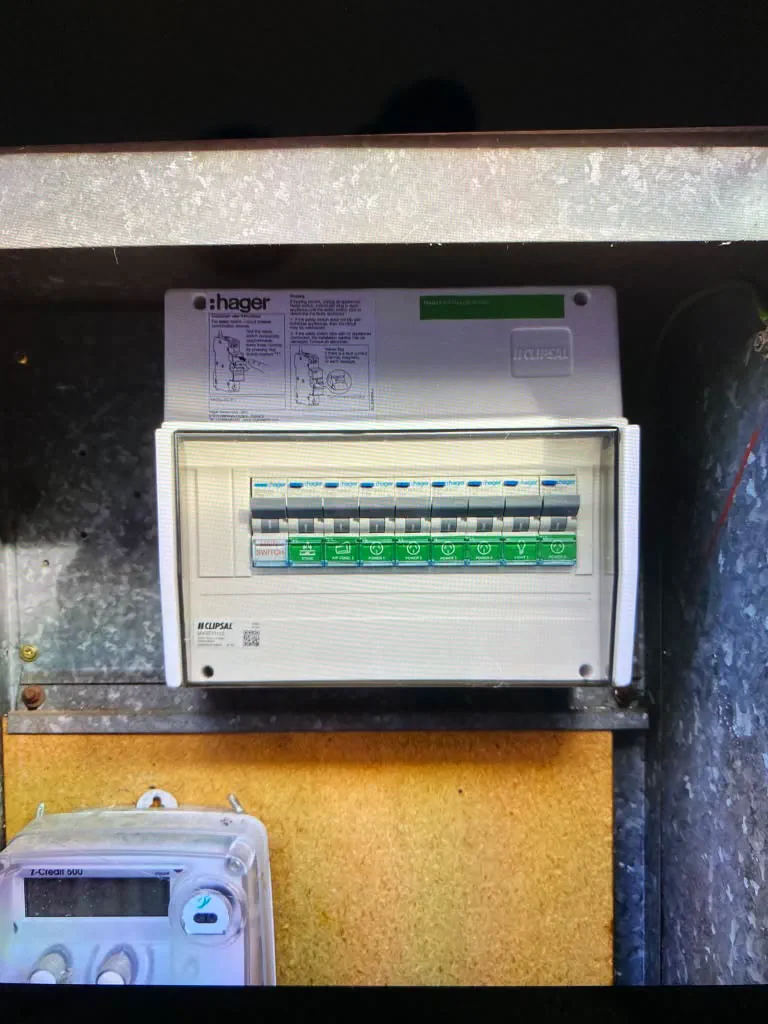
- Licensed electrical inspector: inspects prescribed work, such as a main switchboard, before it's switched on.
The licensed electrician: the hands on the job
Electrical work needs a licence because of what it is, not how long it takes. Victoria's Electricity Safety Act 1998 defines electrical installation work as the installation, alteration, repair or maintenance of an electrical installation, and section 38 says nobody may carry out, or offer to carry out, a prescribed class of electrical work without the relevant licence.
For household wiring, the licence that matters is the A grade electrician's licence. Energy Safe Victoria says only an A grade electrician is qualified to inspect and install household wiring. Some other trades hold narrower licences: refrigeration and air-conditioning mechanics can apply for a Restricted Electrical Worker's licence, but it only allows like-for-like disconnection and reconnection for repair, replacement or maintenance, not new wiring.
When the electrician finishes, they must provide a Certificate of Electrical Safety. It is the legal record of the work they did and the tests they carried out, so it names the electrician, the contractor and the job.
The registered contractor: who you engage
The REC is the business side. It's registered with Energy Safe Victoria, it's who you engage and pay, and it's responsible for sending a licensed electrician to do the work.
Some REC obligations are visible from the outside. An REC must show its REC number on any advertisement, notice or statement offering electrical contracting work, so the number should be on the website, the vehicle and the quote, and you can check it against Energy Safe Victoria's register.
The REC also carries the paperwork. A certificate can't be withheld for any reason, including payment issues or contract disputes. If an REC or electrician refuses to provide one, or won't arrange an inspection of prescribed work, the customer can report it to Energy Safe.
The licensed inspector: a second set of eyes
Some work is checked by someone who didn't do it. Energy Safe Victoria calls this prescribed work, and its examples include consumer mains cables, the main switchboard, the meter box and main earthing system, and solar PV or battery systems. In a home it generally means wiring and equipment that can't be switched off, usually the wires up to the switchboard.
Prescribed work can't be switched on, or left on, until it has been inspected, and Energy Safe Victoria says the inspection should be completed within 8 business days of the work being finished. On a switchboard replacement, power doesn't go back onto the new board until a Licensed Electrical Inspector has inspected it.
The inspector checks that work, not the whole house, and issues a certificate of inspection; the Act then gives 4 business days for your Certificate of Electrical Safety. The contractor normally books the inspector, so ask how it fits the day your power is off.
How to check a licence or registration
Energy Safe Victoria recommends always asking to see a tradesperson's licence, because it shows they're qualified and gives you avenues for recourse if something goes wrong. Asking before work starts is normal.
You can also check online. Energy Safe Victoria publishes public registers drawn from its live licensing data, including a Registered Electrical Contractor register, a Licensed Electrical Worker search and a Licensed Electrical Inspector register.
Then match the details. The REC number on the quote should belong to the business named on the quote, and the electrician should be licensed and working for that contractor. If the numbers don't line up, ask before anything is opened up.
- The REC number from the quote or website.
- The electrician's name and licence.
- Whether the job is prescribed, and who is arranging the inspection.
- How the Certificate of Electrical Safety will reach you.
When the job needs more than an electrician
Plenty of home jobs cross trades. A split system has an electrical side and a refrigerant side. In Victoria, refrigerated air-conditioning work, including any part of a single-head split system, is a class of plumbing work regulated by the Building and Plumbing Commission, and the Australian Refrigeration Council says anyone who installs or services air conditioning equipment needs a refrigerant handling licence. The circuit and isolator are electrical work.
Gas is separate again. The Building and Plumbing Commission registers and licenses plumbers and gasfitters, and Energy Safe Victoria says it's illegal for unlicensed people to do any gasfitting work. Swapping a gas cooktop for induction, for example, takes a licensed gasfitter to disconnect and cap the gas and an electrician for the new circuit.
A clear quote says which licences the job needs and who holds each one, so each certificate comes from the person who did that part of the work.
Checks, reports and certificates are different things
A certificate records new work. Inspecting an existing installation is a different job with a different document. Landlords see this most: rental electrical safety checks by a licensed electrician are due every 2 years, and from 13 October 2026 Consumer Affairs Victoria says that applies to all rental agreements, whatever date they started. Energy Safe Victoria says a certificate isn't the right document for that check, but one must be issued for any repairs done.
Buyers have a similar question. Energy Safe Victoria says that when buying a home built before the 1980s, it's imperative to have the wiring checked by a licensed electrical inspector or registered electrical contractor before moving in. The result is a report on condition, not a certificate for work.
If something goes wrong
Start with the contractor. A missing certificate or a question about the work is usually sorted by asking. If the issue is safety or technical compliance, Energy Safe investigates reports about electrical installation work. Billing, quality-of-work and contract disputes are better taken to Consumer Affairs Victoria or VCAT.
Unlicensed work is a different matter. Energy Safe Victoria says it's illegal, and potentially fatal, for unlicensed and unqualified people to do any electrical work, and its campaign is clear that even small jobs like changing power points or light switches aren't DIY. If you find work you think wasn't done by a licensed person, leave it alone and have it inspected.
Common questions
Quick answers
- Why does a Licensed Electrical Inspector need to check my new switchboard?Because replacing a main switchboard is prescribed work in Victoria.
- How can I check an electrician is licensed and registered?Ask to see the electrician's licence, and check the business's Registered Electrical Contractor (REC) number.
- What happens during an electrical or air conditioning visit?We arrive at the time we confirmed, look at the job with you, explain what we've found and your options, and give you the price before work starts.
- What records should a landlord keep after a rental electrical check?Keep the electrician's written record of the check.
Sources for this guide
18 sources, with the date each was checked
- 1.Energy Safe Victoria: Registered Electrical Contractor (REC) – in Victoria an electrician must work for a Registered Electrical Contractor to perform work for a customer. A Registered Electrical Contractor must be registered with Energy Safe… Accessed 30 September 2026.
- 2.Energy Safe Victoria: If you are planning to have electrical installation work done, you must engage a registered electrical contractor (REC). They will send a licensed and qualified electrician to do the work to the required standards. Accessed 30 September 2026.
- 3.Victorian Legislation (legislation.vic.gov.au) - Electricity Safety Act 1998, authorised version 089 (effective 8 Sep 2026): electrical installation work means installation, alteration, repair or maintenance of an electrical installation; Accessed 30 September 2026.
- 4.Energy Safe Victoria: Only an A grade electrician is qualified to inspect and install household wiring. Accessed 30 September 2026.
- 5.Energy Safe Victoria: This licence type only allows the disconnection and reconnection of ‘like for like’ equipment, for the purposes of repair, replacement or maintenance. The Restricted Electrical Worker’s licence does not allow a person… Accessed 30 September 2026.
- 6.Energy Safe Victoria: An REC must display their REC number on any advertisements, notices or statements which indicate that the REC is conducting, or willing to conduct, electrical contracting work. Accessed 30 September 2026.
- 7.Energy Safe Victoria: The electrician has eight business days after the work is completed to have that work inspected by a licensed electrical inspector (LEI). If an electrician replaces a main switchboard at a property, power cannot go back… Accessed 30 September 2026.
- 8.Building and Plumbing Commission (Victorian Building Authority, trading as the Building and Plumbing Commission): Under Part 4 of the Plumbing Regulations 2018, Refrigerated Air-conditioning work is: The construction, installation, replacement, repair, alteration, maintenance, testing or commissioning of refrigerated… Accessed 30 September 2026.
- 9.Australian Refrigeration Council (ARC): A Refrigerant Handling Licence must be held by any person who carries out work in relation to refrigeration and air conditioning (RAC) equipment. Carrying out work in relation to RAC equipment means to do anything with… Accessed 30 September 2026.
- 10.Energy Safe Victoria: The Building and Plumbing Commission (BPC) is responsible for registering, licensing and disciplining plumbers and gasfitters in Victoria. Accessed 30 September 2026.
- 11.Energy Safe Victoria: Gas and electricity are inherently dangerous and it’s illegal and potentially fatal for unlicensed and unqualified people to undertake any gasfitting or electrical work. Accessed 30 September 2026.
- 12.Consumer Affairs Victoria: Rental providers who enter into a new agreement after 29 March 2021, must have all electrical installations and fittings checked by a licensed electrician at least once every 2 years. This also applies to rental… Accessed 30 September 2026.
- 13.Consumer Affairs Victoria: Mandatory gas and electrical safety checks every 2 years for all rental properties Rental providers and their agents must arrange gas and electrical safety checks by a qualified tradesperson every 2 years for all… Accessed 30 September 2026.
- 14.Energy Safe Victoria: An Energy Safe COES is not the correct form to be used as a record of the electrical safety check. However, a COES must be issued if any electrical repair or maintenance work is carried out. Accessed 30 September 2026.
- 15.Energy Safe Victoria: When buying a home built before the 1980s it is imperative the wiring is checked by a licensed electrical inspector or registered electrical contractor prior to moving in. Accessed 30 September 2026.
- 16.Energy Safe Victoria: Energy Safe investigates reports about electrical installation work, electrical and gas appliances, electricity and gas infrastructure issues (and some gas installation matters), which are safety or technical compliance… Accessed 30 September 2026.
- 17.Energy Safe Victoria: Gas and electricity are inherently dangerous and it’s illegal and potentially fatal for unlicensed and unqualified people to undertake any electrical or gasfitting work. Homeowners and consumers must always use… Accessed 30 September 2026.
- 18.Energy Safe Victoria: Electrical work isn’t a DIY job, even for small jobs such as changing power points or light switches. Accessed 30 September 2026.
Planning advice for homeowners. Installation requirements depend on the property and equipment. Where this guide refers to Victorian safety or rental rules, use the linked official guidance for the current requirements.