
The key points
- Treat a covered alfresco as outdoors. Wind drives rain under most patio roofs, so points and fittings need outdoor ratings.
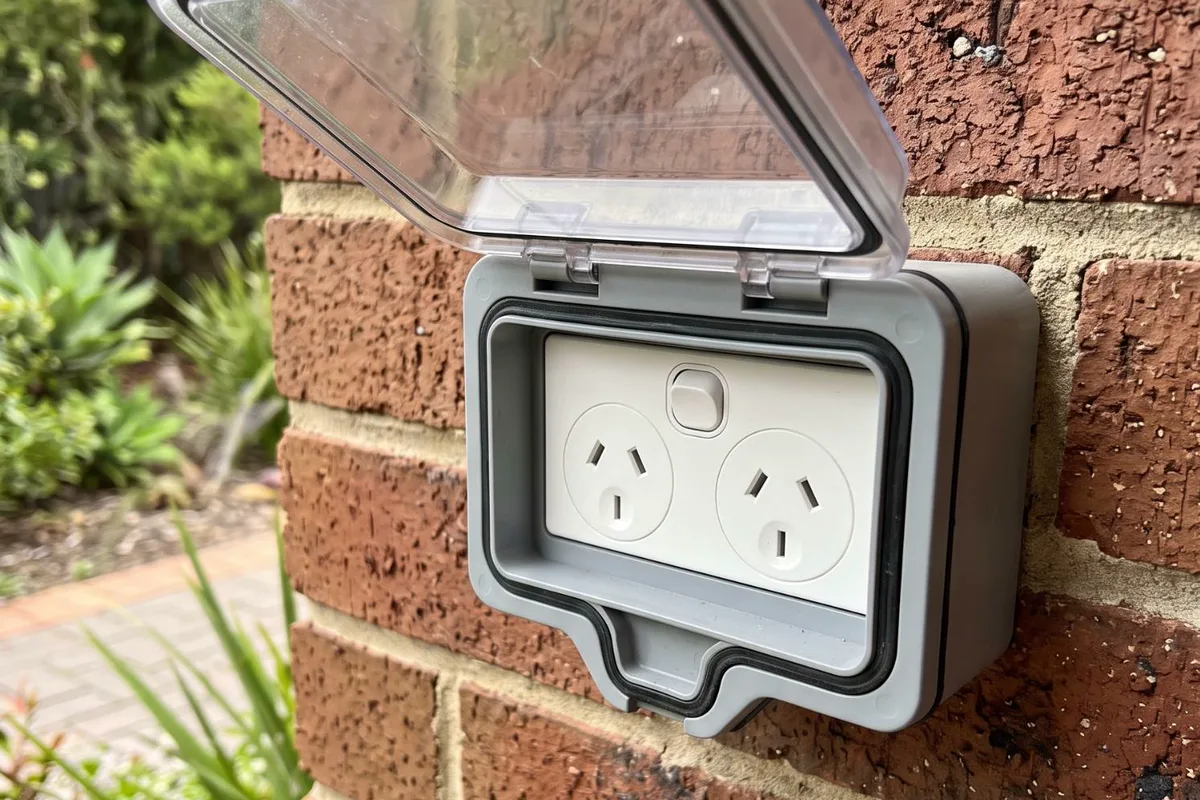
- Plan power around the barbecue, outdoor fridge, heater, TV and phone charging, with in-use covers on the points.
- Choose a fan rated for outdoor or damp locations, fixed to solid framing, and plan its control before the ceiling is lined.
- Layer the lighting, with general light, a task light at the barbecue and soft light for evenings, each on its own switch.
- Electric patio heaters are a heavy load and often need their own circuit. Gas connections are work for a licensed gasfitter.
Treat it as outdoors, even under a roof
A roof over the alfresco keeps off the worst of the rain, but not all of it. Wind drives rain sideways, hoses and pressure washers reach the walls, and dew, dust and insects get into everything. Plan every point and fitting as if it's outside, because electrically it is.
That means weatherproof enclosures, rated with an IP number. The first digit is protection against dust and the second against water, and higher is better. A point under a deep roof on a sheltered wall has an easier life than one on an open pergola post, so the exposure sets the rating.
Near the bay, salt adds wear. BlueScope's marine-environment guide, which it describes as a guide only, classes Port Phillip Bay from Altona to Portsea as exposed marine and Williamstown as calm marine. Close to the water in Altona or Williamstown, choose corrosion-resistant finishes and check fittings more often.
Power where you'll use it
Walk through a summer evening and a winter Sunday. The barbecue or outdoor kitchen may need power for a rotisserie or lights. A bar fridge needs its own outlet. The heater, TV, speakers, phone chargers and any pool or spa equipment all want points in different places.
Use weatherproof points with in-use covers, which close over the plug so the outlet stays protected while something runs. Mount them high enough that splashback, mulch and cleaning water don't reach, and away from the barbecue's heat. On a wall facing a street or lane, a lockable cover or a point switched from inside stops anyone else using it.
An outdoor fridge running all day on the same safety switch as the garden lights can be tripped off by a wet fitting while you're away. A circuit of its own, or at least one separate from the garden circuits, avoids losing a fridge full of food and drinks.
- Barbecue or outdoor kitchen.
- Bar fridge on a sensible circuit.
- Heater, TV and speakers.
- Phone charging and a spare for cleaning gear.
- Pool, spa or water feature equipment.
Ceiling fans for outdoor spaces
An alfresco fan has to be rated for outdoor or damp locations. Indoor fans corrode, their motors and electronics don't like moisture, and their blades can warp. Check the rating and the maker's installation conditions before you buy.
Fixing matters more outside, where wind loads the fan. It has to mount to solid framing, not the lining, and a raked patio roof needs a fan and mounting kit made for the angle. If the ceiling isn't lined yet, have a timber brace put in where the fan will hang.
DC motor fans are usually quieter, with more speeds and a remote or matched wall controller. On cool nights, reverse on low helps push a heater's warmth back down. Keep the fan clear of the heater's required clearances and away from downlights, so the blades don't make the light flicker.
Patio heaters
Electric radiant heaters mounted on the wall or ceiling suit a covered alfresco. They warm people and surfaces directly, so they still work with a breeze. They're also a heavy load, and a large heater, or two, often needs its own circuit and a switch you can reach from the table.
Mount them at the height and clearances the manual sets from ceilings, walls, fans and anything that could scorch, and choose a model rated for outdoor use. A timer stops a heater being left on all night after guests go home.
Gas patio heaters and built-in gas barbecues are a different trade. Connecting to the house gas supply is work for a licensed gasfitter, and Energy Safe Victoria says it's illegal for unlicensed people to do any gasfitting work. Portable gas heaters are made for open, well-ventilated spaces, so check the maker's rules before using one under a roof with the blinds down.
Lighting in layers
One bright floodlight over the alfresco is where most homes start, and it's usually too much and too harsh. A better plan layers light. General light from outdoor-rated downlights or a ceiling fitting is for cleaning up. Task light at the barbecue shows whether the food is cooked. Soft light, such as strip under a bench, wall lights or uplights onto a feature wall, makes the space pleasant to sit in.
Give each layer its own switch, with dimming where fittings and controls suit each other. Warm white suits evenings outdoors and tends to draw fewer insects than cool white. LED strip outdoors needs sealed strip in a channel, with the driver in a dry, reachable spot and joins kept out of the rain.
Think about the view from inside too. Lighting a tree or garden wall beyond the alfresco stops glass doors turning into black mirrors at night and links the alfresco to the garden.
- General light for cleaning up.
- Task light over the barbecue.
- Soft light for sitting: strip, wall lights or uplights.
- Separate switches for each layer.
Outdoor TV and audio
An outdoor TV needs a spot out of direct sun and rain, ideally under the deepest part of the roof and facing away from the western sun. Some people use an outdoor-rated TV; others put an ordinary one in a weatherproof enclosure. Either way, plan the power, antenna or data feed and HDMI route before the walls are lined.
A weatherproof point behind the screen, an antenna point run from the existing feed, and a data point or a nearby Wi-Fi access point for streaming cover most setups. Outdoor speakers need their cable routes planned at the same time.
When to plan it
The best time is before the alfresco is built or its ceiling lined. Cable for fans, lights and heaters can run inside the framing, conduit can go under paving before it's laid, and the switchboard can be checked for space and safety switch protection. Energy Safe Victoria notes the Wiring Rules call for additional safety switch protection when an existing installation is altered.
Bring the builder's or landscaper's plan, the fan, heater and light models, and a sketch of where the table, barbecue and lounge will sit. When the work is done, it comes with a Certificate of Electrical Safety.
- The builder's or landscaper's plan.
- Fan, heater and light models.
- Furniture and barbecue layout.
- Any TV and audio plans.
Common questions
Quick answers
- Why is there no power to my shed or garage?Start at the switchboards.
- Is a safety switch power point the same as a safety switch on the board?No.
- What should I do if a power point or appliance gets wet?Don't touch it.
- Why does my ceiling fan work but the light doesn't?If the fan runs but its light doesn't, the fault is on the light side: a failed globe or LED module, a light setting on the remote or wall control, or a loose connection…
Sources for this guide
4 sources, with the date each was checked
- 1.BlueScope, Technical Bulletin TB-35 Australian salt marine classifications (March 2026, Revision 9): Exposed Port Phillip Bay (Altona to Portsea Beaches) Calm Port Phillip Bay (Williamstown), Yarra River (Docklands and Melbourne CBD), Maribyrnong River Accessed 30 September 2026.
- 2.Energy Safe Victoria: Gas and electricity are inherently dangerous and it’s illegal and potentially fatal for unlicensed and unqualified people to undertake any gasfitting or electrical work. Accessed 30 September 2026.
- 3.Energy Safe Victoria: Clause 2.6.3.2.5 of the Wiring Rules states: Additional protection by RCDs shall be provided in existing electrical installations where alterations or a switchboard replacement is completed. Accessed 30 September 2026.
- 4.Energy Safe Victoria: Whenever a licensed electrician completes any electrical installation work, they must provide a Certificate of Electrical Safety (COES). Accessed 30 September 2026.
Planning advice for homeowners. Installation requirements depend on the property and equipment. Where this guide refers to Victorian safety or rental rules, use the linked official guidance for the current requirements.