
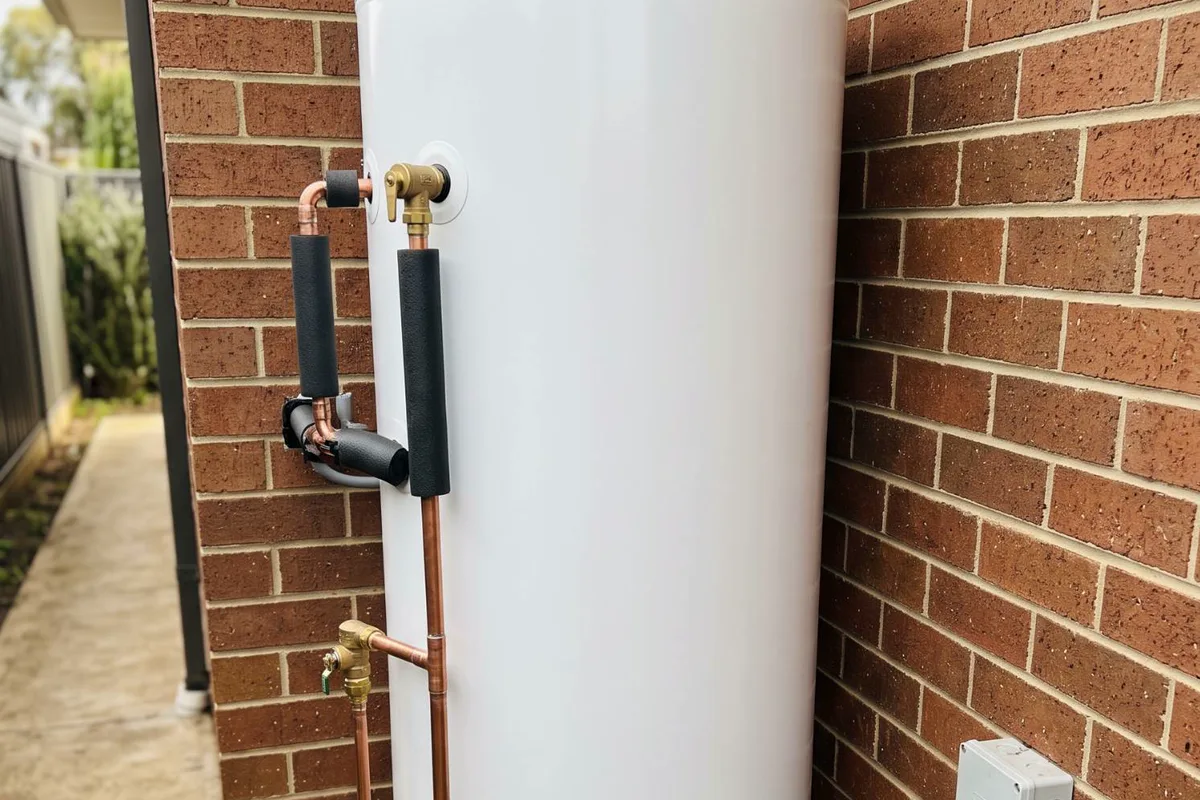
The key points
- On a controlled load, the hot water tank has its own circuit that only gets power during set hours, usually overnight, often billed at a lower rate.
- With a smart meter, the switching is often done by the meter itself. Older set-ups use a time clock or relay on the meter panel.
- A tank that never heats may have a switching or circuit fault rather than a dead element, so test the supply before replacing anything.
- A heat pump does better heating in the warmer part of the day, so moving to one usually means changing how the circuit is switched.
- Check the bill before and after any change. The tariff and the circuit need to match.
What a controlled load is
Most electric storage hot water in older Melbourne homes was set up to heat overnight. The tank sits on its own circuit, separate from the rest of the house, and that circuit only receives power during a window set for the network. In return, the electricity it uses is usually billed at a lower rate and shows as its own line on the bill.
The tank stores enough hot water to get through the next day, then reheats the following night. It is an arrangement built around large, well-insulated tanks and cheaper overnight power.
You will hear it called off-peak hot water, a dedicated circuit or a controlled load. For a household they mean much the same thing: the meter or the network decides when the tank heats, not you.
How the switching works
On older installations a time clock or relay on the meter panel did the switching. With smart meters, the switching is often done inside the meter itself. Either way, the hot water circuit at your switchboard is separate from the general power circuits and has no power outside its window.
Some tanks also have a boost option: a switch or second element that heats on general power when the tank runs out. Boosting is charged at the normal rate, so it is worth knowing whether yours has one, whether it is switched on, and when it runs.
You can't change the controlled load window yourself, and nobody should rewire around it. Altering the circuit is electrical installation work, and tariff changes go through your retailer.
Finding it on the switchboard and the bill
Open the switchboard door and look for a circuit breaker labelled hot water, HWS or off-peak. Older meter panels may also have a separate timer with a dial. If the labels are missing or unreadable, ask for them to be fixed at the next electrical visit, because a clearly labelled board saves time when something goes wrong.
On the bill, a controlled load appears as its own usage line with its own rate. If you are charged for a controlled load but have no electric hot water, or have electric hot water but no controlled load line, ask your retailer what the arrangement is.
Your smart meter data shows the pattern too. A block of usage starting at the same time most nights and tapering off is usually the tank reheating.
When the tank doesn't heat
Cold water in the morning isn't always a dead tank. The circuit may not have switched on: a failed relay or clock, a tripped circuit breaker or safety switch, or a switching fault at the meter. A failing element often leaks current to earth as it heats, which trips the safety switch and leaves the circuit off.
Check the switchboard first. Energy Safe Victoria advises householders who lose power to check whether the safety switch has tripped and reset it, and to call a licensed electrician if it won't reset. If it resets and trips again when the hot water comes on, leave it off and have the tank and circuit tested.
Energy Safe Victoria's guidance says the Wiring Rules require RCD protection on every final sub-circuit in a home, the hot water service included. In some older homes the hot water circuit has none, so a fault there may not trip anything at all. Leaking cylinders and dripping relief valves are plumbing faults for a licensed plumber.
What changes with a heat pump
A heat pump water heater does its best work in the warmer part of the day. An overnight-only window falls in the coldest hours, so leaving a heat pump on the old switching can mean slower heating and more time on the backup element.
There are a few ways to set it up: keep the controlled load if its window suits the unit and your tariff, move the heat pump to general power with its own timer set for late morning and afternoon, or, with solar, set the timer to the hours your panels produce. The right answer depends on your tariff, your solar and when your household uses hot water.
Each option means checking how the circuit is switched and labelling it clearly. When an existing installation is altered, Energy Safe Victoria notes the Wiring Rules require additional RCD protection. Talk to your retailer about the tariff at the same time, so the bill matches the new set-up.
Replacing an element tank like for like
If a tank fails and you need hot water back quickly, a like-for-like element tank on the existing controlled load is usually the simplest swap. A licensed plumber fits the tank, the circuit is tested, it goes back on the same switching, and the bill structure stays as it was.
Size is still worth a thought. Colder water coming into the tank in winter takes longer to heat, and July at Laverton averages a minimum of 5.2 °C, so a tank that just copes in summer can run short in July. If you regularly run out, a slightly larger tank or a heat pump may suit better.
In a rental, check the rules first. From 1 March 2027, a rental hot water system that permanently fails must be replaced with an energy-efficient electric hot water system, so confirm the replacement qualifies before choosing.
Common questions
Quick answers
- What is the off-peak or timer switch on my switchboard?It controls an off-peak circuit, usually for electric storage hot water and sometimes for slab heating or a pool pump.
- My electric hot water has gone cold. What can I check?Start at the switchboard: look for a tripped hot water circuit breaker or safety switch and reset it once.
- Why does my hot water run out faster than it used to?Usually something has changed in the tank or in how it's heated.
- Is it normal for my hot water system to drip from the valve?A little water from the relief valve drain while the tank is heating is normal, because water expands as it heats and the valve lets the extra out.
Sources for this guide
5 sources, with the date each was checked
- 1.Energy Safe Victoria: Locate your electricity box outside your home and check whether the safety switch has tripped. If it has tripped, reset the switch. If the switch won’t reset, call a licensed electrician. Accessed 30 September 2026.
- 2.Energy Safe Victoria: Clause 2.6.3.2.2 requires all final sub-circuits in a domestic installation be protected by a residual current device (RCD). A hot water service is included in this requirement Accessed 30 September 2026.
- 3.Energy Safe Victoria: Clause 2.6.3.2.5 of the Wiring Rules states: Additional protection by RCDs shall be provided in existing electrical installations where alterations or a switchboard replacement is completed. Accessed 30 September 2026.
- 4.Bureau of Meteorology: Mean minimum temperature (°C) 14.0 14.4 12.7 10.0 7.8 5.9 5.2 5.7 6.8 8.4 10.3 12.2 9.5 81 1943 2026 Accessed 30 September 2026.
- 5.Consumer Affairs Victoria: From 1 March 2027, when an existing hot water system permanently fails and can't be repaired, rental providers must replace it with an energy-efficient electric hot water system. Accessed 30 September 2026.
Planning advice for homeowners. Installation requirements depend on the property and equipment. Where this guide refers to Victorian safety or rental rules, use the linked official guidance for the current requirements.