
The key points
- Fix anything a buyer's inspector will flag as unsafe: damaged power points, exposed wiring, scorched fittings and loose switches.
- Check smoke alarm dates and types. An expired or missing alarm is an easy fix that looks bad in a report.
- Replacing tired switch plates and fittings and getting every light working lifts photos and inspections without a renovation.
- Label the switchboard and gather your Certificates of Electrical Safety and appliance manuals in one place.
- Not every older switchboard has to be replaced before sale, but know its condition so you can answer buyers' questions.
What buyers and their inspectors look at
Buyers of older homes are told to get the wiring checked. Energy Safe Victoria says that when buying a home built before the 1980s, it's imperative to have the wiring checked by a licensed electrical inspector or registered electrical contractor before moving in. Many buyers also commission a general building inspection that notes visible electrical issues.
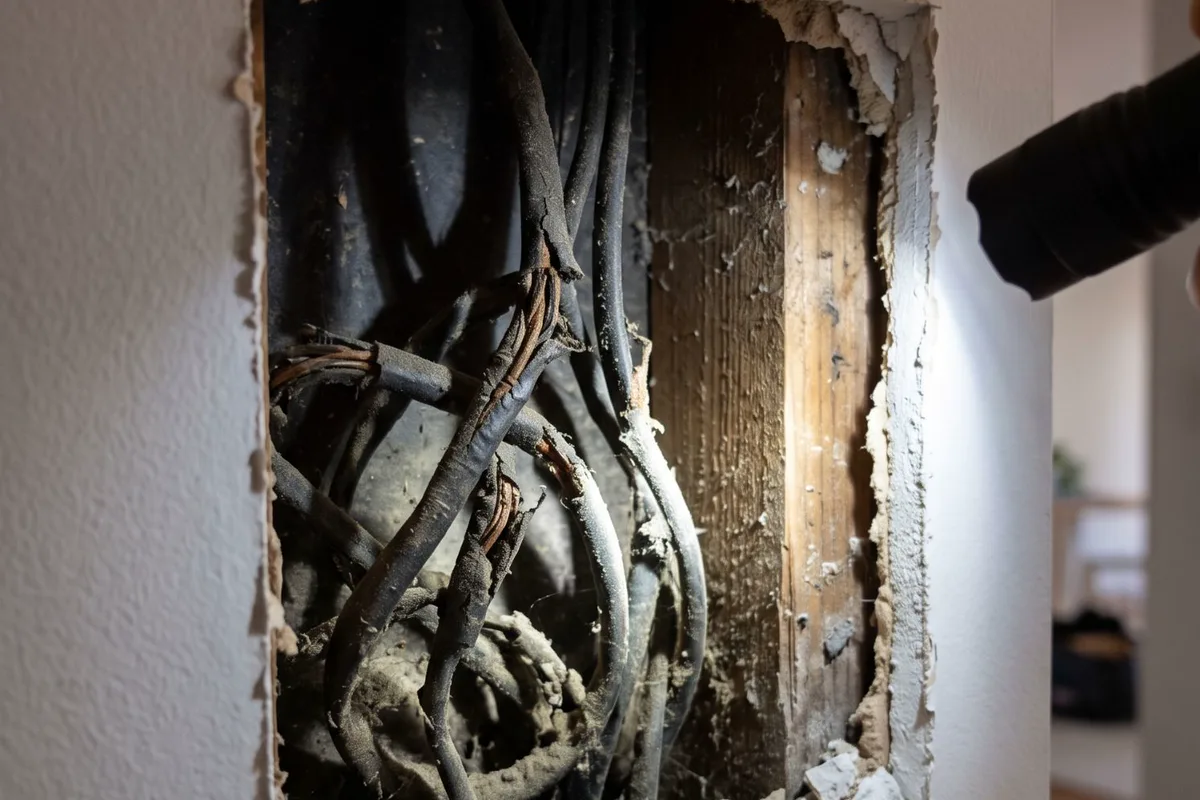
Energy Safe Victoria's list of tell-tale signs of faulty wiring is a good guide to what gets noticed: old switchboards, particularly those without a safety switch, old or broken power points and switches, flickering lights and any sign of sparking. Fix those before listing and a report has less to say.
In Hobsons Bay's older suburbs, from Williamstown, settled in the 1840s, to Altona's post-war brick and weatherboard homes, original fittings and boards can still turn up. That's where a pre-sale check tends to pay off most.
Fix known defects first
Start with anything unsafe or broken: cracked or loose power points, switches that spark or run warm, light fittings hanging by their wires, exposed cable in the garage or roof space, and outdoor points without covers. These are the items a buyer's report lists as defects, and they read badly however good the kitchen looks.
If you've had a recent electrical safety check, or a rental electrical safety check while the home was rented, work through its list. If you have nothing recent, a pre-sale safety check does the same job: a licensed electrician goes through the board, wiring, fittings and safety switches and gives you a list to act on.
Resist the urge to do small fixes yourself before an open inspection. Energy Safe Victoria says not to touch or try to repair a loose, cracked or broken power point, but to cover it and have a licensed electrician replace it.
Smoke alarms
Smoke alarms are quick to get right and easy for an inspector to check. Look at the date on each one. The Building and Plumbing Commission advises replacing alarms according to the maker's specifications, generally after ten years, and new units carry an expiry date under the battery.
Check the type suits the house. Homes built after 1 August 1997 must have alarms connected to 240V mains power with a backup battery, and Fire Rescue Victoria's summary says homes built, largely renovated or extended after 1 May 2014 need interconnected, hard-wired alarms. Alarms belong on or near the ceiling of every storey, between each bedroom area and the rest of the house.
Replacing a hard-wired alarm is a job for a qualified electrician, although anyone can change the battery in a battery-powered alarm.
Tired fittings and first impressions
Yellowed switch plates, cracked oyster light covers, mismatched globes and dead downlights all show up in listing photos. Replacing plates and covers, fitting matching LED globes or simple LED fittings, and getting every light working is a modest job that helps the home photograph and inspect well.
Old halogen downlights are worth a look too. Swapping them for complete LED fittings takes the transformers out of the ceiling, and an inspector looking into the roof space sees a tidy job rather than a question mark.
Keep it simple. A pendant over the dining table or a neat entry light can lift a room, but a full lighting redesign is rarely worth starting just before a sale.
The switchboard: replace it, or just know it?
An old switchboard with ceramic fuses or no safety switches is one of the first things an inspector photographs. Replacing it before sale removes a common objection, and because a main switchboard is prescribed work, a Licensed Electrical Inspector checks the new board before it's switched on. Whether it's worth doing depends on the home and the buyers you expect; at the least, know what's there and what it would take.
Rentals are different. Since 29 March 2023, Victorian rental properties have had to have modern switchboards with circuit breakers and safety switches, so an investment property sold with a tenant in place should already meet that standard.
Black or pitch-type panels in older meter boxes may contain asbestos. WorkSafe Victoria lists pitch-based switchboards and ceramic fuses among asbestos-containing materials. Don't drill or clean them; if the board is replaced, the removal is planned around it.
A labelled board and the paperwork
A switchboard with every circuit clearly labelled tells a buyer the house has been looked after, and makes an inspector's job easier. Faded handwriting or blank labels can be sorted during a pre-sale check by identifying each circuit and relabelling it.
Gather the paperwork buyers ask about: Certificates of Electrical Safety for past work such as a switchboard upgrade, new circuits, air conditioning or an EV charger; manuals and service records for the heating, cooling and hot water; and any recent safety check. A Certificate of Electrical Safety is a legal document recording the work done, and a licensed electrician must provide one whenever they complete electrical installation work.
If you can't find a certificate for older work, ask the electrician or contractor who did it for a copy.
Timing it before you list
Book the electrical check before the photos and the first open inspection, so repairs are finished and the house shows well. It's one less thing to sort out with a buyer under a contract deadline.
Many sellers have the heating and cooling serviced at the same time, so the system runs quietly when buyers walk through and the service record joins the paperwork.
- Damaged points, switches and fittings replaced
- Every light working, with matching globes
- Smoke alarms in date, of the right type and in the right places
- Safety switches tested
- Switchboard labelled and its condition known
- Certificates, manuals and service records in one folder
Common questions
Quick answers
- What happens if extra work is found during the job?We stop and tell you.
- Water is dripping from a light fitting. What should I do?Don't touch the light switch, on or off.
- How do I check when my smoke alarm expires?Twist the alarm off its base or open the battery cover, as you would to change the battery, and look for a date on the back or under the battery.
- Am I allowed to change the smoke alarm battery in my rental?Yes.
Sources for this guide
12 sources, with the date each was checked
- 1.Energy Safe Victoria: When buying a home built before the 1980s it is imperative the wiring is checked by a licensed electrical inspector or registered electrical contractor prior to moving in. Accessed 30 September 2026.
- 2.Energy Safe Victoria: Old switchboards, particularly those without a safety switch Old power switches or power points, particularly broken ones Flickering lights Sparks from switchboards, switches or power points. If your house is over 30… Accessed 30 September 2026.
- 3.Victorian Government, Hobsons Bay Planning Scheme (PDF snapshot, last updated by VC292 on 11/09/2025): The heritage places of Hobsons Bay reflect the key themes that have shaped the development of the city since the establishment of Williamstown in the 1840s as the first port of Melbourne, through the development of… Accessed 30 September 2026.
- 4.Energy Safe Victoria: Do not touch or attempt to repair a loose, cracked or broken power point switch – cover it immediately and arrange for a licensed electrician to replace it. Accessed 30 September 2026.
- 5.Building and Plumbing Commission (formerly Victorian Building Authority): replace the smoke alarm in accordance with manufacturer's specifications – generally after ten years. New units have an expiry date located under the battery. Accessed 30 September 2026.
- 6.Fire Rescue Victoria: Residential home constructed, largely renovated, or extended after 1 May 2014 Interconnected, hard wired smoke alarms that are connected to 240 volt mains power and have a back-up battery. Accessed 30 September 2026.
- 7.Consumer Affairs Victoria: A hard-wired smoke alarm must be installed by a qualified electrician, but anyone can change a smoke alarm battery. Accessed 30 September 2026.
- 8.Energy Safe Victoria: 'Prescribed' certificates are for electrical installation work that requires inspection by a Licensed Electrical inspector. This includes (but is not limited to): Consumer mains cables, main switchboard, meter box and… Accessed 30 September 2026.
- 9.Energy Safe Victoria: The electrician has eight business days after the work is completed to have that work inspected by a licensed electrical inspector (LEI). If an electrician replaces a main switchboard at a property, power cannot go back… Accessed 30 September 2026.
- 10.Consumer Affairs Victoria: The electrical safety rental minimum standard commenced on 29 March 2023. Rental properties must have modern switchboards, with circuit breakers and electrical safety switches installed. Electrical safety switches are… Accessed 30 September 2026.
- 11.WorkSafe Victoria: Fuse blankets and ceramic fuses in switchboards Pitch-based (eg Zelemite, Ausbestos, Lebah) electrical switchboards Accessed 30 September 2026.
- 12.Energy Safe Victoria: Whenever a licensed electrician completes any electrical installation work, they must provide a Certificate of Electrical Safety (COES). Accessed 30 September 2026.
Planning advice for homeowners. Installation requirements depend on the property and equipment. Where this guide refers to Victorian safety or rental rules, use the linked official guidance for the current requirements.