
The key points
- The old supply must be permanently disconnected and the meter removed before demolition, and that takes time to book.
- Builders need a temporary supply on site. Know who's arranging it and where it will sit.
- Agree the new meter box position early: it sets the consumer mains route and has to suit the distributor's access.
- The new connection follows a sequence: mains, meter box and switchboard installed, inspected, then the distributor connects and fits the meter.
- All new homes in Victoria must be built all-electric from 1 January 2027, so size the supply for the finished, all-electric house.
The sequence at a glance
A knockdown rebuild touches the power supply at four points. The old supply comes off before demolition, a temporary supply goes in for construction, the new home's mains, meter box and switchboard are installed, and the distributor connects the new supply. Each step involves different people, and delays usually come from one step not being lodged in time for the next.
Your builder usually manages most of this, but not always all of it, and some parts may be yours to arrange. Ask the builder for a list of who lodges what, and when.
- Before demolition: electricity and gas permanently disconnected, meters removed
- Site set-up: a temporary builder's supply
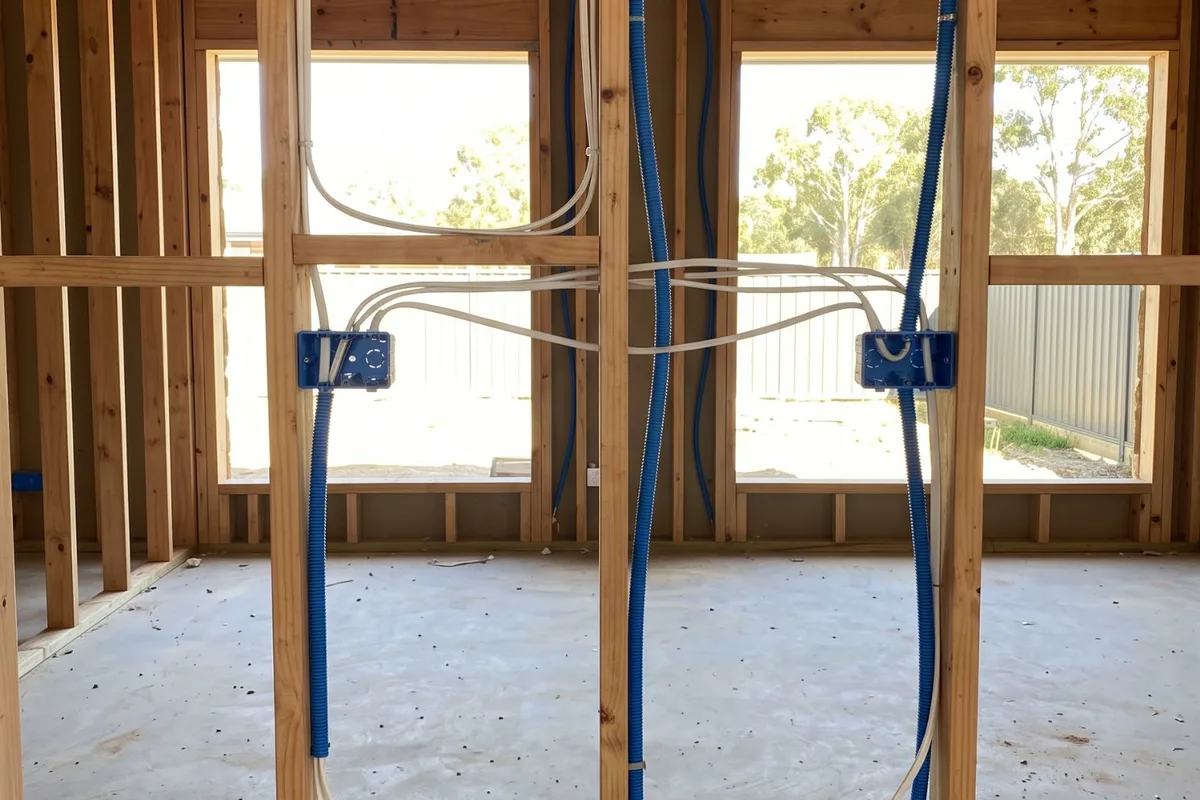
- Construction: consumer mains, meter box and main switchboard in the agreed position
- Completion: inspection, then the distributor connects the supply and fits the meter
Disconnecting before demolition
Before demolition starts, the house's electricity supply has to be permanently disconnected and the meter removed by the network, not just switched off at the main switch. The overhead service line or underground connection is made safe on the network's side. Gas is similar: the gas supply is disconnected and the meter removed through the gas network, with any gasfitting done by a licensed gasfitter.
These requests usually go through your electricity and gas retailers, or through the builder or demolition contractor on your behalf, and they take time to book. Lodge them well before the demolition date, and get written confirmation that both are done before anyone starts pulling the house down.
If the old house is fed through a private pole or overhead line on the property, that's part of your installation. Energy Safe Victoria says the property owner is responsible for the installation from the point of supply, including private electric lines on the property, so plan its removal with the rest.
The builder's temporary supply
Construction needs power for tools, lighting and the site shed, so builders set up a temporary supply: a temporary switchboard on a pole or stand, usually near the front boundary, connected by the network. It's normally the builder's job to arrange, often through their own electrician.
Ask where it will sit and how long it stays. It needs to be clear of the driveway crossover, the new meter box position and any trees, and the network sets requirements for its location and access. Once the permanent supply is connected, it comes out.
Choosing the new meter box position
On the new home, the consumer mains and meter box sit on your side of the point of supply, so their position is your decision as much as the builder's. The meter box has to be where the distributor can reach it, usually on the front or side of the house, and reasonably close to where the supply enters the property.
Look at it on the site plan with the driveway, side gate, fences and landscaping. A meter box behind a locked gate or a future fence creates access problems. A main switchboard close to the meter keeps the mains run short. If you're planning solar, a battery or an EV charger, leave space near the board and an easy route to the roof and garage.
In established streets around Altona, Sunshine or Footscray, the supply often comes from overhead lines on the street, while newer estates are usually supplied underground. The existing connection point shapes where the new mains can come in, so check it on site before the plans are final.
Getting the new home connected
The new home's consumer mains, meter box, main switchboard and main earthing are prescribed electrical work. Energy Safe Victoria says prescribed work must be inspected by a Licensed Electrical Inspector and can't be switched on, or left on, until it has been inspected.
Once the work is done and inspected, the electrician lodges the paperwork with the distributor, which connects the supply and fits the meter. Your retailer needs to set up the account as well. Timing depends on the distributor's booking, so the request should go in before the house is finished, not after.
Which distributor you deal with depends on where you build. Jemena's area reaches Williamstown and Footscray, while Powercor's Altona terminal station supplies areas including Altona Meadows, Point Cook, Werribee, Tarneit and Hoppers Crossing. Each has its own process and booking times.
Plan the supply for an all-electric home
Under Victoria's Building and Plumbing Amendment Regulations 2025, all new homes must be built all-electric from 1 January 2027, and new homes needing a planning permit have had to be all-electric since 1 January 2024. Planning scheme clause 53.03 also stops a permit being granted for a new gas connection when building a new dwelling. Ask your builder or building surveyor how the dates apply to your permit, but for most rebuilds the old gas meter won't be coming back.
That puts cooking, hot water and heating on the switchboard, alongside air conditioning and perhaps an EV charger. Settle the supply size before the connection is applied for. A heavier single-phase supply suits many homes, and three-phase makes sense when large loads run together, such as a big ducted system, two EV chargers or a workshop. It's far simpler to set at the start than to upgrade later.
A checklist for owners
Most hold-ups in a knockdown rebuild come from one step waiting on another. Keep this list beside the build schedule and tick it off with your builder.
Keep the Certificates of Electrical Safety for the mains, switchboard and fit-off with your handover documents. They're the record of what was installed and inspected.
- Disconnection requested for electricity and gas, confirmed before demolition
- Any private pole or overhead line on the property identified and planned for
- Temporary supply position agreed with the builder
- Meter box position marked on the site plan, clear of gates and fences
- Supply size decided for the finished all-electric house
- Space near the switchboard for solar, a battery or EV charging
- Retailer account set up for the new connection
Common questions
Quick answers
- Is my meter box the same as my switchboard?Not quite, though they are often in the same place.
- My meter box door is broken or won't close. Who fixes it?The property owner.
- Will my fridge and freezer be OK during a switchboard upgrade?Usually, with some planning.
- A power line to my house is down or sagging. What should I do?Stay well away and keep everyone else clear.
Sources for this guide
6 sources, with the date each was checked
- 1.Energy Safe Victoria: The point of supply is the changeover point from the electricity distribution network to the electrical installation, where the property owner becomes responsible for the maintenance and repair of the electrical… Accessed 30 September 2026.
- 2.Energy Safe Victoria: 'Prescribed' certificates are for electrical installation work that requires inspection by a Licensed Electrical inspector. This includes (but is not limited to): Consumer mains cables, main switchboard, meter box and… Accessed 30 September 2026.
- 3.Jemena Electricity Networks (Vic) Ltd, 2025 Distribution Annual Planning Report (2 December 2025): Figure 1-1 shows the JEN supply area, which ranges from Gisborne South, Clarkefield and Mickleham in the north to Williamstown and Footscray in the south, and from Hillside, Sydenham and Brooklyn in the west to… Accessed 30 September 2026.
- 4.Powercor Australia, Project Assessment Draft Report: Altona Terminal Station (West) (June 2025): It supplies part of Melbourne’s western growth corridor. This includes the areas of Laverton, Laverton North, Altona Meadows, Werribee, Wyndham Vale, Mount Cottrell, Eynesbury, Tarneit, Hoppers Crossing and Point Cook… Accessed 30 September 2026.
- 5.Department of Transport and Planning (Victoria): Victoria’s new Building and Plumbing Amendment Regulations 2025 have been finalised, advancing Victoria’s shift toward all-electric buildings. From 1 January 2027, all new homes and most new commercial buildings will be… Accessed 30 September 2026.
- 6.Department of Energy, Environment and Climate Action (Victoria): from 1 January 2024, new homes requiring a planning permit are required to be all-electric Accessed 30 September 2026.
Planning advice for homeowners. Installation requirements depend on the property and equipment. Where this guide refers to Victorian safety or rental rules, use the linked official guidance for the current requirements.