
The key points
- Gas safety checks are due every 2 years, and from 13 October 2026 that applies to every rental agreement, whenever it started.
- Only a licensed or registered gasfitter endorsed for Type A appliance servicing can do the check.
- The check includes testing to confirm every Type A gas appliance has been serviced in line with AS 4575.
- Renters must be told the date of the last check and any outstanding recommendations before signing, and can ask for a copy.
- The gas and electrical checks are separate jobs by separate trades, but they work best on the same schedule.
What the rule requires
Under the current rules, rental providers who entered into a new agreement after 29 March 2021 must have a licensed or registered gasfitter carry out a gas safety check every 2 years. Consumer Affairs Victoria lists a change from 13 October 2026: rental providers and their agents must arrange gas and electrical safety checks every 2 years for all rental agreements, whatever date the agreement started.
That second change matters for long-running tenancies. A property with a periodic agreement that began years ago may never have had a rental gas check, and from 13 October 2026 it needs one on the same two-yearly cycle as everything else.
If the property has no gas supply and no gas appliances, there's nothing for a gas check to cover. If it has gas anywhere, even just the hot water, plan for the check.
Who can do the check
Consumer Affairs Victoria says the check must be done by a licensed or registered gasfitter endorsed in the specialised class of Type A gas appliance servicing, shown as 'Gas Servicing Type A' on their Plumbers Identity Card. Ask to see the card. A general plumbing or gasfitting licence without that endorsement isn't enough.
In Victoria the Building and Plumbing Commission registers, licenses and disciplines plumbers and gasfitters. Energy Safe Victoria says Type A appliances include domestic appliances such as space heaters, central heaters and water heaters, and that it's illegal and potentially fatal for unlicensed people to do any gasfitting work. An electrician doing your electrical check doesn't do the gas check unless they also hold that endorsement.
What the check involves
The rental check must include testing to confirm that all Type A gas appliances have been serviced in line with AS 4575. In practice the gasfitter looks at every gas appliance in the property, not just the heater: ducted or space heating, the hot water service and any other Type A appliances.
Energy Safe Victoria says a gas appliance service should include a visual inspection of the appliance and flue, a negative pressure and combustion spillage test for carbon monoxide, internal cleaning, any repair or replacement of parts, and running the appliance to confirm it works safely. For ducted gas heaters it recommends a carbon monoxide test at the heating outlets in every room, and ESV says the gasfitter must use a carbon monoxide analyser to test for spillage.
Renters need to allow reasonable access for the check. Give proper notice, and if the heater outlets are behind furniture in bedrooms, tell the renter in advance so every room can be tested.
- Every gas appliance listed with its location, make and approximate age
- Access to all rooms for outlet carbon monoxide tests
- The previous check report and any outstanding items
- Service history for each appliance
Open-flued heaters and carbon monoxide
Energy Safe Victoria warns that all gas heaters can spill carbon monoxide, a gas you can't see or smell that can make you seriously unwell or kill you. It says open-flued heaters, which draw combustion air from the room, can spill carbon monoxide more easily than other types.
Household habits matter too. ESV advises against running rangehoods or bathroom exhaust fans while a gas heater is on, because the negative pressure can draw carbon monoxide into the living space, and warns that weather-sealing around an open-flued heater may trap carbon monoxide inside. That's why the rental draughtproofing standard, from 1 July 2027, needs a gas safety check before work starts in a property with gas appliances, and stops the draughtproofing if the check finds unflued or open-flued appliances.
Records to keep and share
Consumer Affairs Victoria says the gas check record should include the gasfitter's full name and business details, including their licence or registration number, the date of the check, and the results, including any servicing and repairs required and the action taken.
Two obligations hang off that record. Before entering into a rental agreement, the rental provider must disclose the date of the last gas safety check and any outstanding recommendations. And a copy of the most recent check must be given to the renter within 7 days of a written request. Keep the gas record with the electrical one so the agent can answer both quickly.
Separately, the Building and Plumbing Commission says a gasfitter must give you a compliance certificate after servicing work that reaches a set value, removes an appliance from its fixed location or modifies the gas piping. File those too.
Fitting it with the electrical check
The electrical check follows section 4 of AS/NZS 3019:2022 and is done by a licensed electrician. It's a different job by a different trade, but aligning the two dates means one entry notice, one round of disruption for the renter and one reminder in your calendar every two years.
The two also overlap in the appliances. A ducted gas heater has a fan, igniter, controller and power point, so a no-heat fault is often electrical. And the gas check's findings feed your planning: from 1 March 2027, a rental heater that fails beyond repair must be replaced with efficient fixed electric heating, and a failed gas hot water system can't be replaced with gas. An appliance the gasfitter flags as near the end is the one to plan around.
When the check finds a problem
If the gasfitter finds an appliance unsafe, it shouldn't be used until it's repaired or replaced. A gas leak, or a heating or hot water appliance that has stopped, is an urgent repair, and urgent repairs must be done immediately.
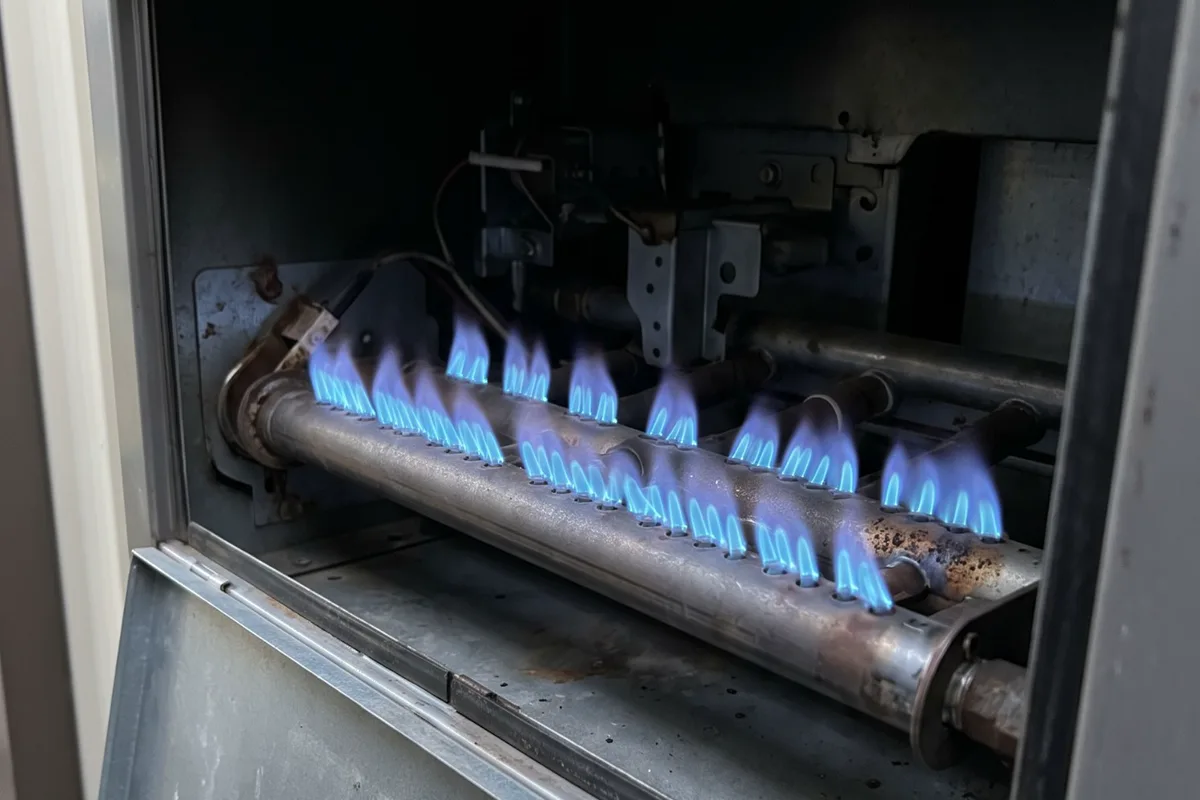
Renters play a part between checks. ESV says any change in how a gas heater runs, such as the flame colour, means a qualified gasfitter should inspect it and check for carbon monoxide leakage, and a carbon monoxide alarm helps but never replaces servicing. Ask renters to report changes in flame, new smells, soot or anyone feeling unwell when the heater is on.
Common questions
Quick answers
- Do older leases now need gas and electrical safety checks?Yes.
- Who is qualified to do a rental gas safety check?A licensed or registered gasfitter endorsed for Type A gas appliance servicing.
- Does my gas ducted heater have a filter I can clean?Many do.
- My gas heater flame looks different. Is that a problem?Yes, treat it as one.
Sources for this guide
13 sources, with the date each was checked
- 1.Consumer Affairs Victoria: Rental providers who enter into a new agreement after 29 March 2021, must have gas safety checks conducted every 2 years by a licensed or registered gasfitter. Accessed 30 September 2026.
- 2.Consumer Affairs Victoria: Mandatory gas and electrical safety checks every 2 years for all rental properties Rental providers and their agents must arrange gas and electrical safety checks by a qualified tradesperson every 2 years for all… Accessed 30 September 2026.
- 3.Energy Safe Victoria: The Building and Plumbing Commission (BPC) is responsible for registering, licensing and disciplining plumbers and gasfitters in Victoria. Accessed 30 September 2026.
- 4.Energy Safe Victoria: Type A appliances include domestic and light commercial type appliances such cookers, space heaters, central heaters, water heaters, catering equipment and leisure appliances. So, when looking to service and repair your… Accessed 30 September 2026.
- 5.Energy Safe Victoria: Gas and electricity are inherently dangerous and it’s illegal and potentially fatal for unlicensed and unqualified people to undertake any gasfitting or electrical work. Accessed 30 September 2026.
- 6.Energy Safe Victoria: A service should include: carrying out a visual inspection of the appliance and flue system, conducting a negative pressure and combustion spillage test (CO test), internal cleaning, the repair or replacement of parts… Accessed 30 September 2026.
- 7.Energy Safe Victoria: All gas heaters can spill carbon monoxide (CO) – a gas you can’t see or smell that can make you seriously unwell or kill you. Accessed 30 September 2026.
- 8.Consumer Affairs Victoria: Definition: From 1 July 2027, draughtproofing means fitting sealing or weather-stripping products to all external doors and external windows to restrict airflow around the entire perimeter of the door or window, without… Accessed 30 September 2026.
- 9.Building and Plumbing Commission: After they have done the servicing work, the gasfitter must provide you with a compliance certificate if the total value of the work is $750 or more or involves removing the appliance from its fixed location, or if they… Accessed 30 September 2026.
- 10.Energy Safe Victoria: Rental providers must ensure an electrical safety check of all electrical switchboards, wiring and fittings in the premises is conducted every two years by a licensed electrician. The safety check must be conducted in… Accessed 30 September 2026.
- 11.Consumer Affairs Victoria: From 1 March 2027, when an existing fixed heating system fails and can't be repaired ,it must be replaced with an energy-efficient fixed electric heating system with an outlet in the main living area. You do not need to… Accessed 30 September 2026.
- 12.Consumer Affairs Victoria: It cannot be replaced with another gas system after 1 March 2027. Accessed 30 September 2026.
- 13.Consumer Affairs Victoria: Anything on this list is legally defined as an urgent repair: burst water service blocked or broken toilet system serious roof leak gas leak dangerous electrical fault flooding or serious flood damage serious… Accessed 30 September 2026.
Planning advice for homeowners. Installation requirements depend on the property and equipment. Where this guide refers to Victorian safety or rental rules, use the linked official guidance for the current requirements.