
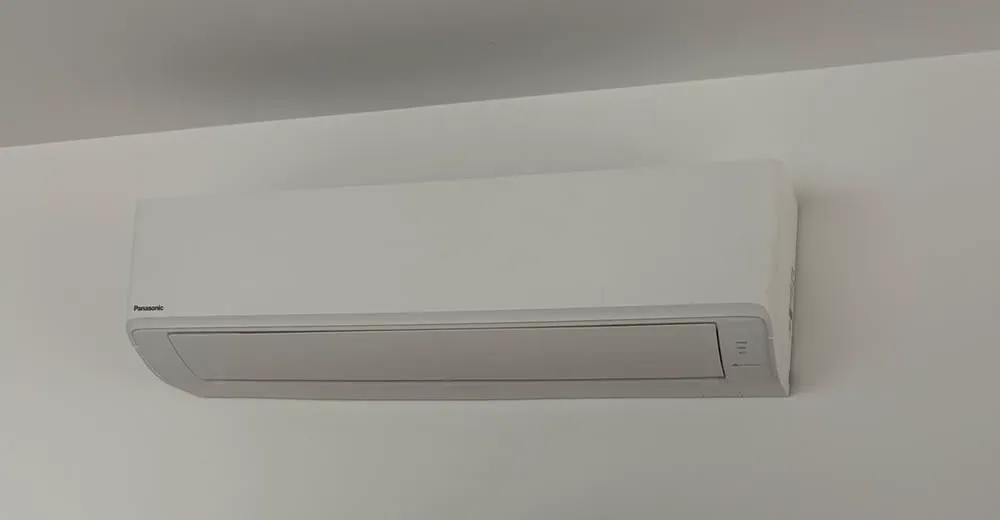
The key points
- On cold, damp mornings the unit pauses for a few minutes to defrost its outdoor coil. Steam and dripping water are normal.
- Start the heating on a timer before you need it, at 18 to 20 °C, rather than switching on late at a high setting.
- Aim the louvres down, leave the fan on auto and close doors to rooms you aren't heating.
- Warm air rises, so tall ceilings, open stairs and draughts cost more comfort than the unit's size suggests.
- Clean filters and a clear outdoor unit keep heating output up when it's coldest.
How reverse-cycle heats on a cold day
A reverse-cycle air conditioner is a heat pump. In heating mode the outdoor unit absorbs heat from the outside air, even on a cold morning, and the indoor unit releases it into the room. Because it moves heat rather than making it, it delivers three to five units of heat for each unit of electricity, where a standard electric heater makes about one.
The colder the outside air, the harder that job gets, and output drops. The Commonwealth's guide to the Zoned Energy Rating Label puts Melbourne in the Cold zone and says performance in frosting conditions, below 5.5 °C, is critical. Laverton's July mean minimum is 5.2 °C, so plenty of winter mornings in the west sit right around that line.
Defrost pauses on frosty mornings
When the outdoor coil runs below freezing in damp air, frost builds on it and blocks the airflow. The unit periodically reverses for a few minutes to melt it off. During defrost the indoor fan usually stops or slows, a light on the head may flash or change colour, and the outdoor unit may hiss, click and give off a cloud of steam while water runs from its base.
All of that is normal. Leave it running and it goes back to heating by itself. Don't switch it off and on to hurry it along, and don't pour hot water over the outdoor unit.
Defrost becomes a concern when ice stays on the outdoor coil after the cycle ends, when the unit defrosts every few minutes all day, or when it keeps blowing cold. Those point to a fault, low refrigerant or a blocked coil, and need a technician.
Warm-up times and timers
When you first switch on the heat, most units hold the indoor fan back until the coil is warm, so you don't get a blast of cold air. After that, a cold room takes time to come up, longer in a big open living area or a house that's been cold all night.
A timer that starts the heating half an hour or so before you get up, or before you get home, works better than switching on in a cold house and setting 26 °C. The Victorian Government suggests 18 to 20 °C for heating and says each degree above that adds around 10% to running costs. A higher setting doesn't heat faster; it just keeps the unit running longer.
Heat pumps like a steady pace. For a room you use all evening, leaving it running at a moderate setting usually beats repeatedly switching it off and on.
Louvres, fan speed and where the warmth goes
Aim the louvres down in heating so warm air reaches the floor before it climbs, and leave swing off if it keeps throwing warmth at the ceiling. Fan on auto lets the unit push harder while the room is cold and ease off as it gets close.
If the ceiling is warm and your feet are cold, the heat is layering. A ceiling fan on its lowest speed, turning in its winter direction, gently pushes that warm air back down without a draught. In tall rooms, a floor console that blows out near the floor can heat more evenly than a high wall head.
The head measures temperature where it sits, near the ceiling. If the controller says 20 °C and the couch feels colder, try a 'follow me' or remote-sensor setting if your model has one, rather than turning the temperature up.
Doors, draughts and curtains
A wall split heats the room it's in. Leave the doors open to the hallway and it tries to heat the whole house, and the room it was meant for stays cool. Close doors to rooms you aren't using, and put a draught stopper under the one that leaks most.
Draughts undo a lot of good heating: gaps around old windows and doors, open fireplaces and wall vents. Close-fitting curtains or blinds drawn at dusk hold heat in, especially on single-glazed windows.
Before sealing vents or draughts, check for a gas heater. Energy Safe Victoria warns that renovating or weather-sealing a home with an open-flued gas heater may change the ventilation it needs to clear carbon monoxide, which could trap dangerous CO inside. Have a licensed gasfitter check first.
The outdoor unit and filters in winter
The outdoor unit needs air to draw heat from. Keep leaves, bins and the clothes airer clear of it, and never cover it while it's running. Make sure the defrost water drains away rather than freezing across a path.
Indoors, clean the dust filters. Energy Rating notes that dirty filters significantly reduce airflow and efficiency and can reduce heating performance, and the Victorian Government suggests cleaning them about twice a year, more often with heavy use. The start of winter is a sensible time for one of those cleans.
Victorians typically use more energy for heating than for cooling, so a pre-winter service makes as much sense as a pre-summer one.
When it isn't keeping up
If the room never gets warm on cold mornings, with clean filters, doors closed and a sensible setting, the unit may be too small for the space, especially in a large open area or a tall room. A unit chosen on its cooling figure can be marginal on a still July morning.
Other signs worth a check: weak or lukewarm air, ice that won't clear from the outdoor unit, a new noise, a tripping circuit or an error code. Low refrigerant, a failing fan or a sensor fault often show up first in winter, when the unit works hardest.
Common questions
Quick answers
- Why does my reverse-cycle heat the ceiling and leave my feet cold?Warm air rises, so a high-wall unit blowing gently forward can leave a warm layer at the ceiling and cool air at floor level.
- Is it safe to leave the heating on overnight?It depends on the heater.
- My rental has no fixed heater in the living area. Is that allowed?No.
- What happens if the heater in my rental breaks after March 2027?If it can be repaired, it's repaired as an urgent repair, as it is now.
Sources for this guide
7 sources, with the date each was checked
- 1.YourHome (Australian Government): A reverse cycle air-conditioner is a type of heat pump that uses electricity to warm your home in winter and cool it in summer (refer to Heat pumps below). In heating mode, the system absorbs heat from the outside air… Accessed 30 September 2026.
- 2.Energy Rating (GEMS Regulator / DCCEEW): Reverse cycle air conditioners are much more efficient at heating than standard electric heaters (bar heaters, convection, or radiant heaters). ... During the normal operating range in Australia for every unit of… Accessed 30 September 2026.
- 3.Commonwealth of Australia (2019), 'The new zoned energy rating label for air conditioners—What installers and retailers need to know', hosted on energyrating.gov.au: Melbourne is in a black ‘COLD’ area—read the black Cold ratings. Accessed 30 September 2026.
- 4.Bureau of Meteorology: Mean minimum temperature (°C) 14.0 14.4 12.7 10.0 7.8 5.9 5.2 5.7 6.8 8.4 10.3 12.2 9.5 81 1943 2026 Accessed 30 September 2026.
- 5.Solar Victoria (updated 20 November 2025): To heat a room, try setting the temperature between 18°C to 20°C. Every 1°C higher will add around 10% to your heating bill. Set your air conditioner thermostat for cooling between 24°C and 26°C for living areas – every… Accessed 30 September 2026.
- 6.Energy Safe Victoria: If you have renovated or weather-sealed your home and kept your open-flued gas heater, you may have inadvertently altered the ventilation your home needs to clear carbon monoxide from your gas heater. This might be… Accessed 30 September 2026.
- 7.Department of Energy, Environment and Climate Action (energy.vic.gov.au), page last updated 14/04/25: Victorians typically use more energy for heating than cooling, so look for a unit with a higher heating efficiency. Accessed 30 September 2026.
Planning advice for homeowners. Installation requirements depend on the property and equipment. Where this guide refers to Victorian safety or rental rules, use the linked official guidance for the current requirements.