
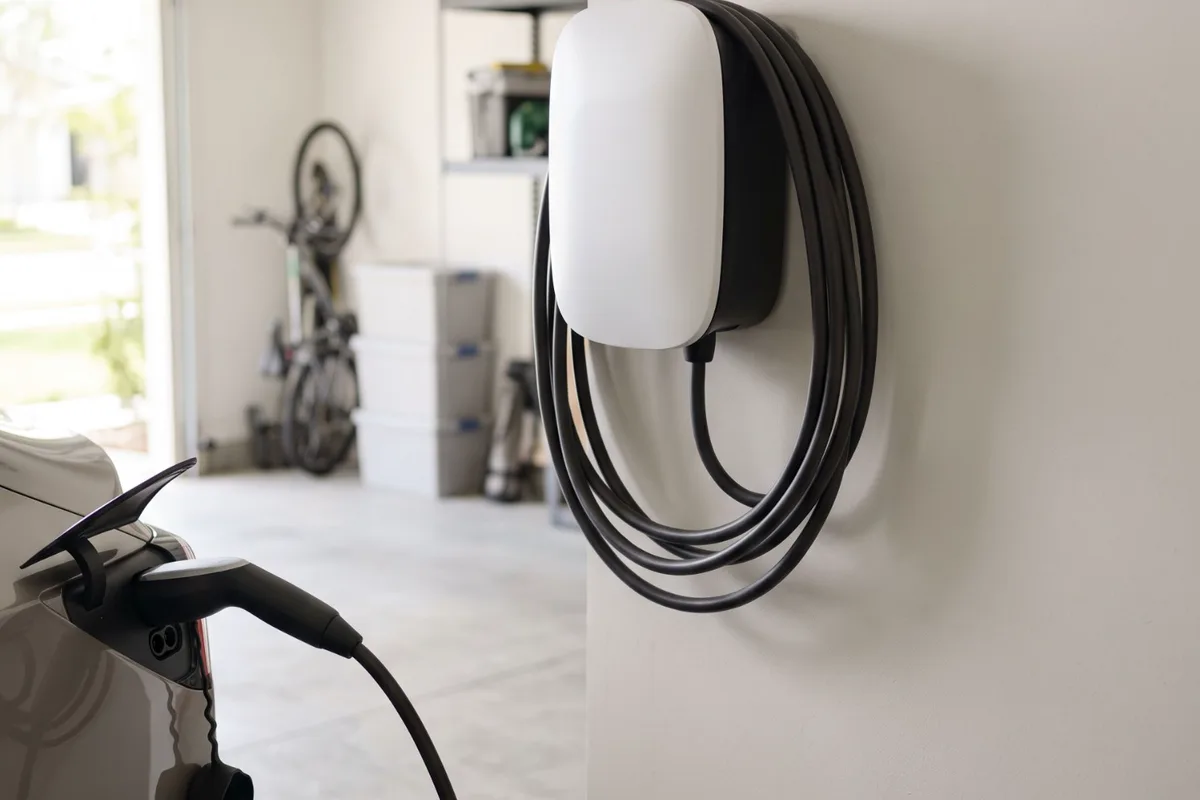
Can I get by with a portable EV charger, or should I install a wall charger?
- A portable lead is often enough for a plug-in hybrid or short daily driving, with the car parked at home overnight.
- It runs a power point at a heavy load for hours, so the outlet and circuit need to be in good condition.
- A dedicated outlet for the portable lead is a sensible middle step before a wall charger.
- Longer daily drives, two drivers, short charging windows or solar charging plans point to a wall charger.
Work out how much charging you actually need
Most cars don't need a full charge every night. What matters is how far you drive on a normal day and how long the car sits at home. If it is parked from early evening to the next morning and your daily round trip is short, a slow overnight top-up replaces what you used.
A portable lead on a standard power point charges much more slowly than a typical wall charger. That suits a plug-in hybrid, a short commute or a second car that does school runs. It falls behind when the daily distance is long, the car is only home for a few hours, or a long Sunday drive leaves the battery low on Monday morning.
The power point is the weak link
Charging pulls a heavy, steady current for hours, which is very different from a kettle that runs for two minutes. An older power point, a loose connection or a circuit shared with the laundry and garage can run warm under that load. A power point that feels warm, looks discoloured or crackles needs checking before you charge from it again.
Energy Safe Victoria says not to touch or try to repair a loose, cracked or broken power point, but to cover it and have a licensed electrician replace it. Don't run a portable lead through a household extension lead or power board, and keep the outlet out of the weather unless it is rated for outdoor use.
The middle step: a dedicated outlet
If the portable lead suits your driving, a dedicated outlet on its own circuit is often the best-value step. The lead gets a power point that isn't shared with anything else, mounted where the cable reaches the car without trailing across a path. Outdoors, the outlet needs a weatherproof rating.
That circuit needs safety switch protection, like every other final sub-circuit in the home under Energy Safe Victoria's guidance on the Wiring Rules. It is a smaller job than a wall charger, and if you move up to one later, at least the route from the switchboard has already been worked out.
When a wall charger is worth it
A wall charger on its own circuit charges much faster, and most can be scheduled from the car or an app. Many also offer load management, which slows charging when the house is busy so a modest supply can carry it.
Our view: if you are charging from a portable lead every night and still finding the battery low, or you are uneasy about the outlet, it is time. If the car is topped up comfortably each morning from a sound, dedicated outlet, there is no rush.
- Longer daily driving, or a car that is only home for a few hours.
- Two drivers sharing one car with back-to-back trips.
- Shift work that leaves short or irregular charging windows.
- Charging timed to solar or a cheaper time of day.
- A second EV likely in the next few years.
Renters, units and shared parking
Renters can usually use a portable lead on a sound existing outlet, but a dedicated outlet or wall charger is a change to the property and needs the rental provider's agreement. In units and townhouses with shared parking, the owners corporation usually has a say over common property and the wiring that runs through it.
Any new outlet or charger is installed by a licensed electrician, who provides a Certificate of Electrical Safety for the work. If you expect to move in a year or two, a dedicated outlet keeps the outlay modest while still giving the lead a safe supply.
Questions that come next
Sources for this article
3 sources, with the date each was checked
- 1.Energy Safe Victoria: Do not touch or attempt to repair a loose, cracked or broken power point switch – cover it immediately and arrange for a licensed electrician to replace it. Accessed 30 September 2026.
- 2.Energy Safe Victoria: Clause 2.6.3.2.2 requires all final sub-circuits in a domestic installation be protected by a residual current device (RCD). A hot water service is included in this requirement Accessed 30 September 2026.
- 3.Energy Safe Victoria: Whenever a licensed electrician completes any electrical installation work, they must provide a Certificate of Electrical Safety (COES). Accessed 30 September 2026.