
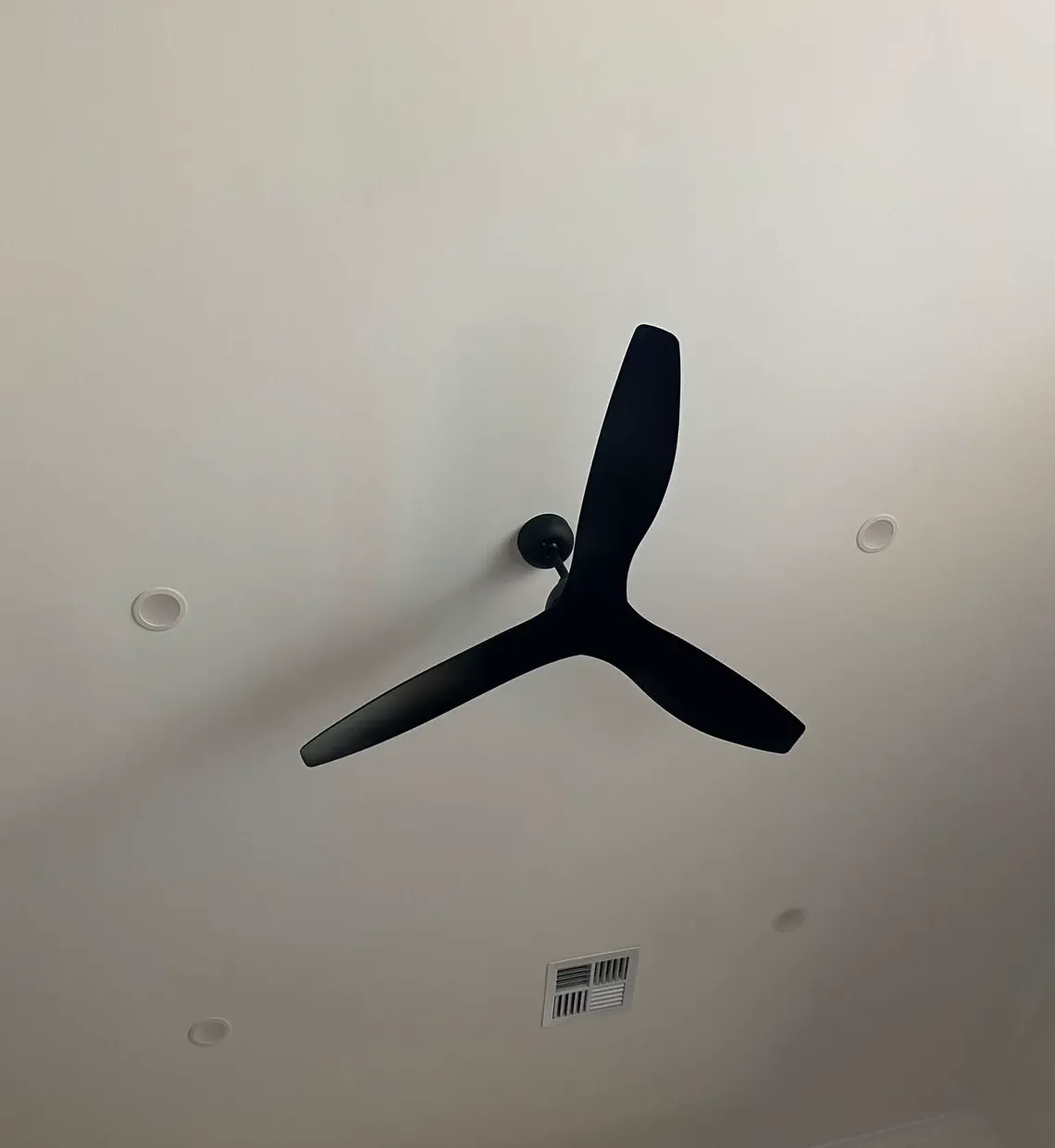
Should I add a fan, change the air conditioner, or investigate the room first?
- A fan creates air movement; it does not perform the same job as an air conditioner.
- Choose placement and controls around the way the room is used.
- Investigate an underperforming air conditioner before expecting a fan to solve it.
Describe the room problem first
A room can feel uncomfortable for several reasons: insufficient heating or cooling, poor air movement where people sit, direct airflow on a bed, or heat entering through a window. Write down when the problem occurs and where people are in the room. That is more useful than starting with a fan diameter or a larger air conditioner.
YourHome explains that fans provide cooling comfort through air movement. Used alongside air conditioning, that can change how the occupied area feels, but it does not establish that the air conditioner is correctly sized or operating properly. A recent decline in performance deserves its own assessment.
Plan placement around furniture and clearances
Give the electrician the room dimensions, ceiling arrangement and intended position of beds, desks or seating. Ask them to check a suitable mounting point and the manufacturer's required clearances for the selected fan. Include nearby lights, doors, cupboards and any sloping ceiling in the discussion.
A centred fan is not automatically the best answer to every furniture layout, and a product suitable for one ceiling may need a different installation arrangement on another. Have the chosen model and mounting method assessed together. Avoid purchasing purely from an image without confirming the physical fit.
- Where occupants sit or sleep
- Ceiling height, slope and available mounting structure
- Nearby lights and opening doors
- The controls each user can comfortably reach
Make normal use easy for the household
Compare the available speed range, controller type and lighting arrangement for the actual room. For a bedroom, ask about low-speed operation and how the controls work in the dark. If a fan also supplies the room's main light, discuss how the light and fan can be operated independently.
Keep the air conditioner's normal instructions in mind when trying a comfortable combination of settings. There is no single thermostat adjustment that suits every person or room. Ask for a demonstration of both the fan controls and any seasonal function the particular model provides, rather than assuming all remotes behave alike.
Use the change to answer the original problem
After installation, assess comfort at the seating or sleeping position you identified in the brief. If the room remains uncomfortable, describe what is still wrong instead of increasing every setting at once. That helps distinguish air distribution, heat gain and an air-conditioning fault that may need a separate visit.
Keep the fan's model and installation documentation accessible. Report unusual movement, noise or control problems for assessment, and do not modify the mounting or wiring yourself. If the room is being renovated later, include the fan and air-conditioning positions in the updated layout rather than treating them as unrelated fittings.
Questions that come next
Official information
Rules and product guidance can change. These sources support the relevant safety, energy or property guidance above.