
Why is my bedroom above the garage hotter or colder than the rest of the house?
- The room is exposed on more sides than any other: an unconditioned garage below, roof above, outside walls around.
- The garage ceiling is often poorly insulated, and that's worth fixing before touching the air conditioning.
- In ducted homes it's usually the longest duct run, so check the duct for crushing, kinks and gaps.
- Its own zone, a room sensor or a dedicated split system fixes what's left.
Why this room is the odd one out
In plenty of double-storey homes across Point Cook, Tarneit, Werribee and Wyndham Vale, one bedroom sits over the double garage. It's the room nobody wants in February and the coldest in July. The reasons are mostly about what's around it, because it's exposed on more sides than any other room in the house.
Below it is a garage that's neither heated nor cooled, often with gaps around the roller door. Laverton's July mean minimum is 5.2 °C, and an unheated garage isn't far off that overnight. On a hot afternoon the garage and the roof space above both run hotter than the outside air, and the room is sandwiched between them, usually with outside walls on two or three sides.
The floor is the garage ceiling
The bedroom floor is the garage's ceiling, and it's often the weakest part of the house's insulation. The batts between the garage ceiling and the bedroom floor can be thin, patchy or missing where pipes and cables pass through. Heat and cold come straight up through the floor, and no amount of air from a vent fixes a cold floor under your feet.
Have it checked first, by an insulation installer or builder. Insulating that cavity properly, sealing gaps around the roller door and weatherstripping the internal door from the garage can change the room more than any change to the air conditioning.
The longest duct in the house
In a ducted home, the room over the garage is often at the end of the longest run from the indoor unit, with flexible duct crossing a roof space that bakes in summer and chills in winter. By the time the air arrives it has lost some of its heating or cooling, and there's less of it. Ducts should be insulated to at least R1.5 with sealed joints, and a crushed, kinked or torn duct to this room is a common find.
A technician can measure the airflow at that outlet, follow the duct's route and check whether the outlet is the right size. Sometimes the fix is as simple as reconnecting a duct that's slipped off its fitting, or straightening one flattened by someone walking through the roof.
Zoning and where the temperature is read
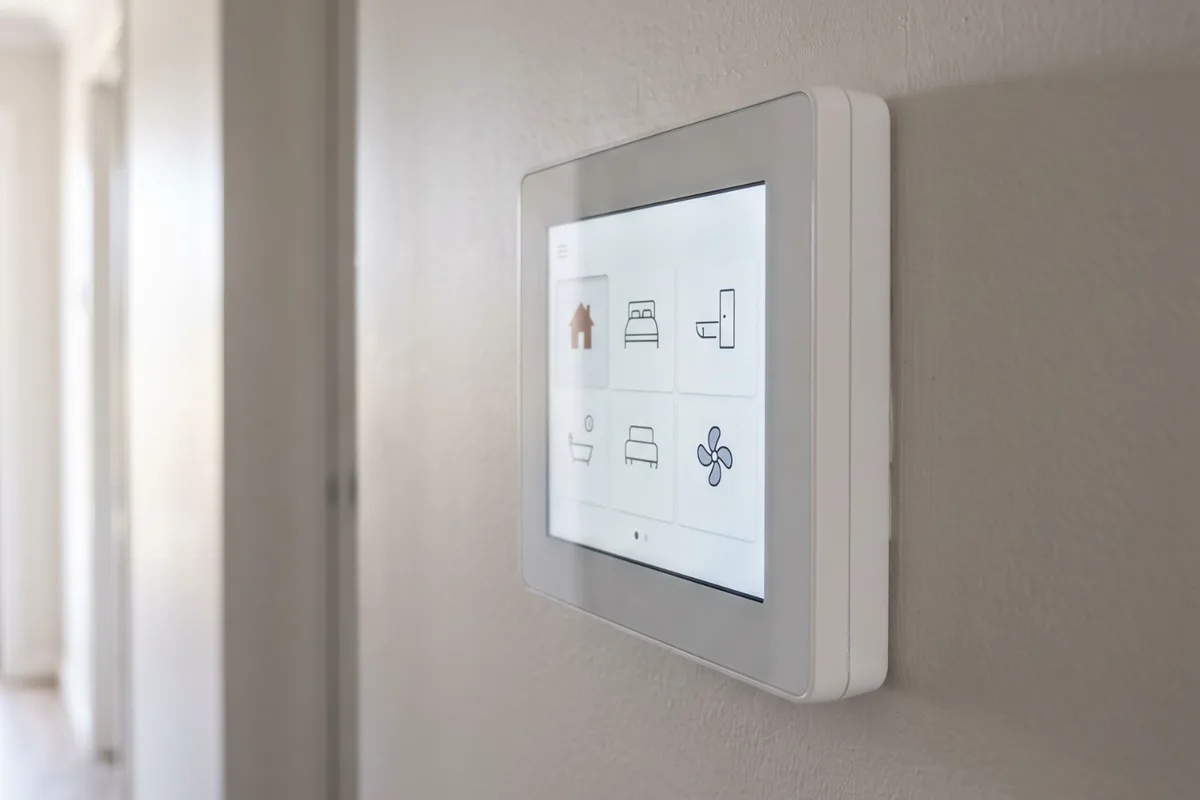
If the room shares a zone with bedrooms on the cooler side of the house, it will always lag behind them. Many older systems also read the temperature at the return air grille in the hallway, so the system stops when the hallway feels right, not when that bedroom does. The Victorian Government recommends zones for ducted systems so each area can be heated or cooled on its own.
Giving the room its own zone, adding a room temperature sensor or moving to a controller with temperature-controlled zones lets it run longer than the rest of the house. Zoning moves air around but doesn't add capacity, so it works best once the duct and insulation problems are sorted.
When a split system is the cleaner answer
If the room still struggles once the floor is insulated and the duct checked, or the home has no ducted system at all, a wall split for that bedroom is often the most reliable fix. It runs on its own schedule and doesn't depend on air travelling across the roof. Split systems carry separate indoor and outdoor noise ratings on the energy label, so compare the indoor figure for a bedroom.
The outdoor unit can go on a wall bracket near the room or on the ground with a longer pipe run, and either way the indoor head needs a drain with a proper fall. In many estate homes the switchboard is on the garage wall, which keeps the circuit run short.
Fixes worth trying, in order
Start with the cheap steps and work up. The early ones cost little and make every later step work better.
In summer, start cooling the room mid-afternoon before the roof heat soaks in, rather than at bedtime. The Victorian Government suggests 24 to 26 °C for cooling and 18 to 20 °C for heating, and says each degree beyond that adds around 10% to running costs, so fixing the room beats pushing the whole system harder.
- Close the blinds on a west- or north-facing window by early afternoon in summer
- Seal gaps around the roller door and weatherstrip the door from the garage
- Have the garage ceiling insulation checked and brought up to scratch
- Get the duct to that room inspected for crushing, kinks and gaps
- Give the room its own zone or a temperature sensor
- Add a split system for that room if it still lags
Questions that come next
Sources for this article
6 sources, with the date each was checked
- 1.Bureau of Meteorology: Mean minimum temperature (°C) 14.0 14.4 12.7 10.0 7.8 5.9 5.2 5.7 6.8 8.4 10.3 12.2 9.5 81 1943 2026 Accessed 30 September 2026.
- 2.YourHome (Australian Government): Ducts must be well insulated, to at least R1.5, and joints sealed to prevent condensation and leakage. The roof should have reflective foil insulation installed and be vented to dispel hot air. Zoned systems cool only… Accessed 30 September 2026.
- 3.Department of Energy, Environment and Climate Action (energy.vic.gov.au), page last updated 14/04/25: We recommend providing 1.1 to 1.4kW of heating output for every 10m² of your home covered by a ducted system, depending on the individual characteristics of your home. ... We recommend zones for your ducted system, as… Accessed 30 September 2026.
- 4.Energy Rating (GEMS Regulator / DCCEEW): On the right of the label after the stars, is the estimated annual energy use or power input in kilowatt hours (kWh) displaying cooling in blue (top number) and heating in red for each climate zone. ... Products are… Accessed 30 September 2026.
- 5.Solar Victoria (updated 20 November 2025): To heat a room, try setting the temperature between 18°C to 20°C. Every 1°C higher will add around 10% to your heating bill. Set your air conditioner thermostat for cooling between 24°C and 26°C for living areas – every… Accessed 30 September 2026.
- 6.Energy Rating (GEMS Regulator / DCCEEW): Reverse cycle air conditioners are much more efficient at heating than standard electric heaters (bar heaters, convection, or radiant heaters). ... During the normal operating range in Australia for every unit of… Accessed 30 September 2026.